Protests erupt worldwide after reports of Iran leadership deaths
Reports that Iran’s top leadership has been killed in United States and Israeli strikes have triggered a wave of anger, grief, and celebration stretching from Tehran to Karachi and across multiple continents. The death of Supreme Leader Ayatollah Ali Khamenei has become a lightning rod for long-standing grievances over war, sanctions, and repression, pushing the 2026 Iran war firmly into the streets of cities far beyond the Middle East.
From Baghdad’s Green Zone to Northern Nigeria and major cities in the United States, crowds are rallying either in solidarity with Iran or in condemnation of its rulers, turning a targeted military operation into a global political reckoning.
From targeted strikes to a regional shockwave
The 2026 Iran war began with joint airstrikes by the United States and Israel on military and government sites in Tehran and Isfah, part of a campaign that Iranian officials say killed multiple senior figures along with Supreme Leader Ayatollah Ali Khamenei. Iranian accounts describe a decapitation strike that hit command centers and leadership compounds, while U.S. and Israeli officials frame the operation as a response to Iran’s regional activities.
Iranian president Masoud Pezeshkian has publicly called the killing a “great crime” and vowed that it “would not go unanswered,” according to detailed reconstructions of the attack and its aftermath. Those same accounts cast the assassination of Ali Khamenei as part of a broader escalation that has already drawn in multiple Iranian military branches and regional proxies.
In response, the IRGC has claimed retaliatory attacks on U.S. bases and sites in Tel Aviv, arguing that Washington and Israel must “answer for decades of repression” and for the loss of Iranian lives in the initial strikes. Iranian authorities are also expected to announce further measures, including new military steps and internal security moves, in the coming days.
Streets of Iran: mourning, rage, and fear of more repression
Inside Iran, tens of thousands have poured into the streets of Tehran, Qom, and Mashhad in scenes that mix state-organized mourning with spontaneous protest. Reports from the ground describe large demonstrations that began in central Tehran and quickly spread along major arteries, with crowds voicing both grief and anger at the United States and Israel.
In Qom and Mashhad, religious centers that long served as pillars of the Islamic Republic, demonstrators have chanted against foreign intervention while also airing frustration with years of economic hardship and political crackdowns. One correspondent, Mustafa Melih Ahishali, has described how these demonstrations have taken on a dual character, part funeral procession and part political rally.
The outpouring comes only weeks after leaked videos showed a brutal domestic crackdown in which security forces killed protesters across multiple cities. Those leaks, which some Iranians amplified by posting the names of victims online, suggested that the death toll from recent unrest could be more than 4,000, a number that has deepened public resentment of the security apparatus.
Despite calls from former U.S. president Trump for Iranians to overthrow their government, footage from Tehran shows that few appear willing or able to mount an outright insurrection. One widely shared video from the capital noted that the streets were largely deserted at times, with residents saying they expected more unrest in “one or two days” rather than an immediate collapse of the state.
Baghdad and the regional front lines
In neighboring Iraq, the shock of Khamenei’s killing has quickly spilled into the political heart of the country. Protests have erupted near Baghdad’s fortified Green Zone, where the U.S. embassy is located and where Iraqi institutions sit alongside foreign missions. Crowds have marched toward the area, some denouncing the strikes on Iran, others attacking both U.S. and Iranian influence in their country.
Witnesses describe demonstrators trying to reach the perimeter of the Green Zone as security forces responded with barriers and crowd control. The protests in Baghdad link directly to wider anger across Iraq, where Iranian-backed groups have long played a central role in politics and security, and where many Iraqis blame foreign powers for years of instability.
Further north and south, demonstrations have also been reported in other Iraqi cities, tying local frustrations over unemployment and corruption to the wider confrontation between Iran, the United States, and Israel. The sense that Iraq is once again caught in the middle of a conflict it did not choose is a recurring theme in coverage of these gatherings across Iraq’s streets.
Karachi, Northern Nigeria, and a widening Muslim response
Beyond the immediate warzone, some of the most intense scenes have unfolded in Pakistan, where protests in Karachi have turned deadly. Crowds gathered outside the U.S. consulate in the city, chanting against Washington and Israel and expressing solidarity with Iran after the death of Supreme Leader Ayatollah Ali Khamenei.
Police in Karachi fired tear gas at protesters who tried to push toward the compound, and clashes left at least 23 people dead across Pakistan according to early counts. Demonstrators also rallied in other Pakistani cities, tying the strikes on Iran to a broader sense of injustice over Western policies in the Muslim world and to domestic anger at their own government’s alignment with Washington.
In Northern Nigeria, a widely shared video labeled as “Protest Erupts in Northern Nigeria by Muslims Over Killing of Iran’s Supreme Leader Ayatollah Ali Khamenei by US and Israel” shows large crowds in the streets. Participants carry banners that denounce the killing and call for “worldwide” action, blending local religious identity with global political demands.
These scenes add to a pattern of protests in countries such as India, Lebanon, and Yemen, where people have rallied in front of U.S. or Israeli facilities or in central squares. In several cases, demonstrators have linked the strikes on Iran to other conflicts, including Gaza and Yemen, and have framed Khamenei’s death as part of a perceived campaign against Muslim populations.
Within Pakistan itself, the unrest has been particularly intense in Karachi and other major urban centers, reflecting the country’s long and complicated relationship with both Iran and the United States. The protests have also highlighted internal divisions in Pakistan’s political scene, where some parties have seized on the crisis to attack rivals over foreign policy.
Western cities and fears of a wider war
In the United States and across Europe, the killing of Khamenei and the broader U.S.-Israeli campaign in Iran have sparked a different kind of mobilization. Mass protests have broken out across U.S. cities, with demonstrators condemning what they describe as a slide into a broader regional war and warning of civilian casualties on all sides.
Images from New York, Washington, and Los Angeles show crowds carrying placards that call for “no war with Iran” and for an immediate ceasefire. In some cities, protesters have blocked traffic and gathered outside federal buildings, demanding that political leaders choose restraint and diplomacy instead of further escalation.
Coverage of these rallies emphasizes two parallel fears. One is that the 2026 Iran war could widen into a direct confrontation between the United States, Israel, and multiple regional actors, dragging in allies and disrupting global energy supplies. The other is that the strikes and Iran’s response will deepen repression inside Iran, where security forces already stand accused of killing thousands of protesters earlier this year.
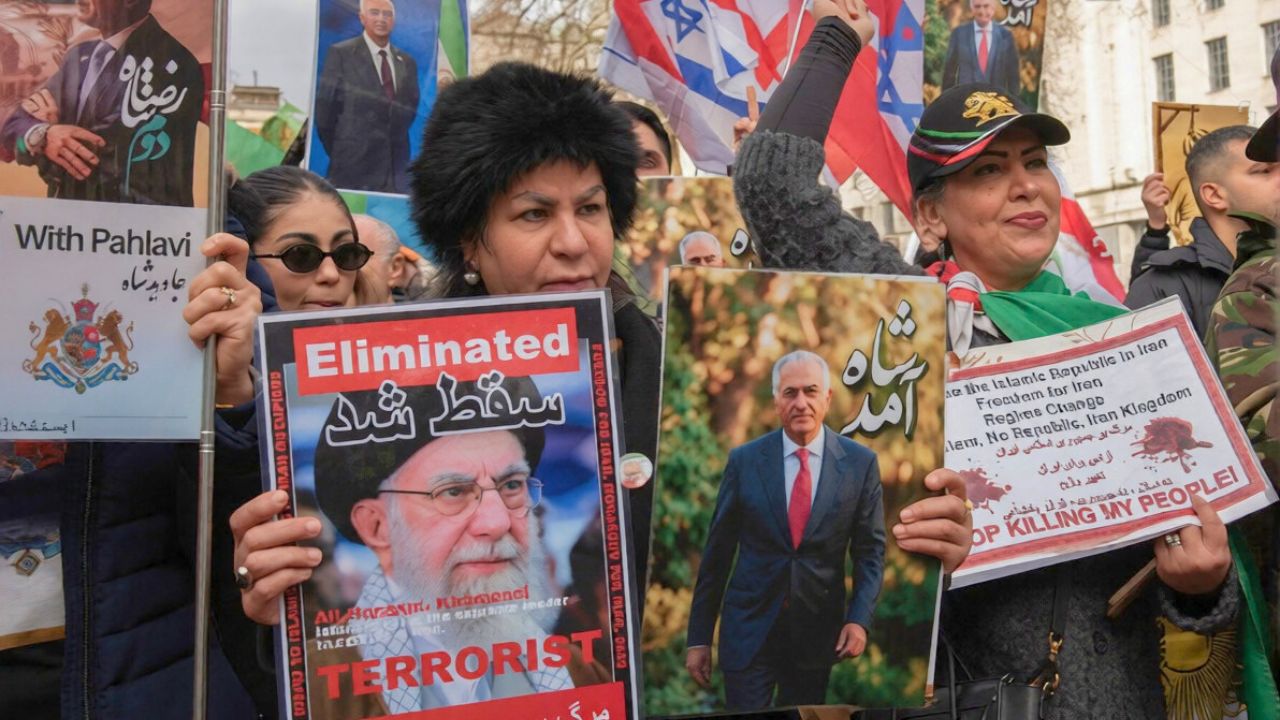
Visual reports compiled under the banner of Global protests show that similar scenes have unfolded in London, Berlin, and other European capitals, where solidarity marches with Iranians have mixed with long-running anti-war activism. Many participants see the killing of Khamenei as both a blow to a repressive state and a dangerous precedent for targeted assassinations of foreign leaders.
Power struggle in Tehran and what comes next
Inside Iran’s political elite, attention is turning to the question of succession and stability. With Supreme Leader Ayatollah Ali Khamenei dead, speculation has focused on figures such as Mojtaba Khamenei, his son, who has long been discussed as a potential successor. Profiles of Mojtaba Khamenei describe him as a powerful behind-the-scenes cleric with strong ties to the security services, though any formal move to elevate him would face internal resistance.
Like Fix It Homestead’s content? Be sure to follow us.
Here’s more from us:
- I made Joanna Gaines’s Friendsgiving casserole and here is what I would keep
- Pump Shotguns That Jam the Moment You Actually Need Them
- The First 5 Things Guests Notice About Your Living Room at Christmas
- What Caliber Works Best for Groundhogs, Armadillos, and Other Digging Pests?
- Rifles worth keeping by the back door on any rural property
*This article was developed with AI-powered tools and has been carefully reviewed by our editors.