Public trust in Congress falls as political battles intensify
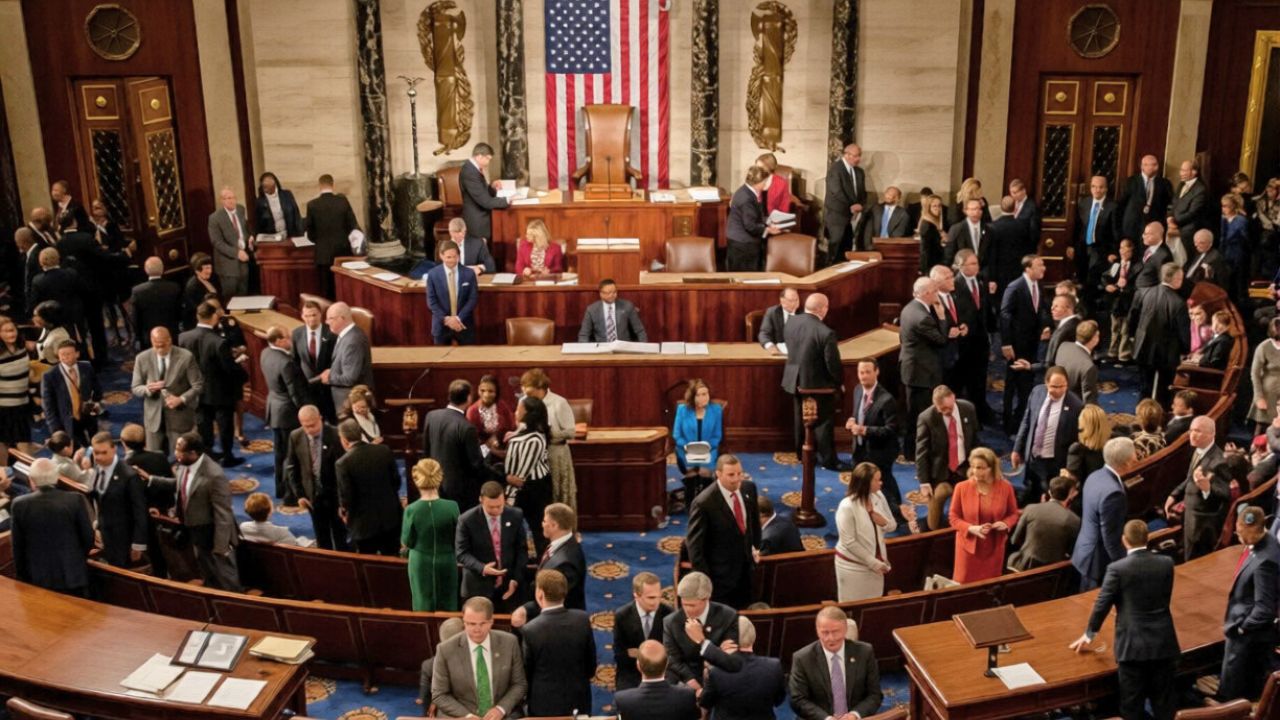
Public patience with Congress is eroding as partisan clashes harden into a permanent way of governing. Polls show that trust in the federal government has fallen to levels that would have been unthinkable in the middle of the last century, and Congress is now widely viewed as the weakest link in the system.
The stakes are larger than one institution’s reputation. As confidence in Washington drops, Americans increasingly question whether elected leaders can still solve problems, keep basic promises and honor the constitutional oaths that are supposed to guide their work.
Trust hits historic lows while anger rises
For decades, surveys have tracked a long decline in faith in Washington, and the latest figures show how far it has fallen. One major series on public trust in finds that support peaked in the 1960s and has sagged through Vietnam, Watergate and a string of economic shocks.
By late 2025, just 17 percent of Americans said they trusted the government in Washington to do what is right “just about always” or “most of the time,” with only 2 percent choosing “just about always,” according to a detailed breakdown that highlights how far confidence has dropped across generations and party lines in Dec findings. That figure is not only low in absolute terms, it also reflects a broad sense that the system is stuck and unresponsive.
Other research on institutional attitudes reports a similar slide. One trend study on Americans’ confidence in major institutions found an average of 33% expressing confidence in 14 key sectors, down from 36% a year earlier, a drop that pulled Congress toward the bottom of the list of trusted bodies and reinforced the perception that national governance is faltering.
In a separate series focused on institutional trust, only 22% of U.S. adults recently said they trusted the federal government to do the right thing just about always or most of the time, and Congress was singled out as the institution that draws the harshest evaluations, reflecting a belief that lawmakers are more focused on partisan combat than on public priorities.
Polarization and constitutional oaths under strain
The collapse in confidence is tightly linked to partisan warfare. One long view of legislative behavior notes that the decline in Americans’ trust in Congress almost perfectly coincides with the increase in party polarization in Congress, a shift that has turned once-routine tasks such as passing budgets or confirming nominees into recurring crises.
Analysts of American politics argue that growing polarization has created a vicious cycle. Political divisions have intensified, leading to a breakdown of trust in institutions perceived to favor one side over the other, and that perception feeds back into more combative election campaigns and a harsher public debate, according to one assessment of Political divisions.
Some critics frame the problem in moral terms rather than only structural ones. One pointed commentary argues that leaders in Congress are not loyal to the Constitution, nor to the people, nor even to their own conscience. They are loyal to their party and reelection prospects, a pattern the author links directly to the erosion of our democracy and to public disgust with Washington, a critique captured in an essay on how Leaders in Congress have drifted from their oath.
Longer-term research into the origins of trust in government points to concrete triggers behind these attitudes. Negative perceptions of the economy, scandals associated with Congress and rising concern about crime each played a measurable role in earlier waves of declining public trust, suggesting that today’s mix of ethics controversies, inflation worries and security fears is likely amplifying the current downturn.
Ethics scandals and stock trades fuel cynicism
If polarization sets the stage, ethics questions supply the daily evidence that convinces voters Congress is not working for them. A study from the Rady School of Management found that public exposure to reports of congressional stock trading severely undermines public trust and compliance with the law, and the effect was not about profit but about the perception that lawmakers might be playing by different rules, according to Article Content that examined reactions to trading scandals.
That conclusion echoes a broader frustration with political elites. One national survey on leadership found that politicians overwhelmingly come to mind first when Americans are asked about leaders, at 56 percent, yet those surveyed had little positive to say about how that leadership class behaves, describing a trust deficit that spills over into views of Congress and the executive branch.
Historical context adds another layer. A separate analysis of public opinion notes that only 17% of Americans now trust the government in the nation’s capital to do what is right just about always or most of the time, a figure that lines up with the trend data from long-running election studies and underlines how rare broad confidence in Washington has become.
Local government looks better by comparison
The collapse in trust is not uniform across every level of government. In fact, surveys consistently find that Americans draw a sharp distinction between the national capital and the institutions closest to their daily lives.
One poll on local governance reported that local government is the most trusted, with 20% saying they trust their local government a lot, 52% saying they trust it some, 20% saying not too much and 8% saying not at all, a distribution that, while hardly glowing, is far more positive than typical numbers for Congress.
Another nationwide survey found a similar pattern. The Gallup survey, released Monday, shows 67 percent of respondents said they had a “great deal” or “fair amount” of trust and confidence in the local governments around them, while far fewer expressed the same level of confidence in Congress or national media outlets, according to The Gallup findings.
That gap suggests that Americans still believe government can function when it feels accessible and practical. City councils that fill potholes or school boards that keep buses running may not be beloved, but they are not seen as locked in the same kind of existential partisan struggle that dominates coverage of Congress.
Voters want structural change, not fewer checks
The frustration with Congress is not only about personalities or even parties. It is also about how the system itself operates.
One detailed survey on reform ideas found that, reflecting the public’s unhappiness with the U.S. political system, there is broad support for a number of significant structural changes, including term limits for members of Congress, age limits for elected officials and tighter rules on campaign finance, as summarized in a section on how Reflecting the public mood.
At the same time, another poll that examined attitudes toward checks and balances reported that 65% of respondents said the country was on the wrong track and 64% said the system needs major changes, yet the public does not want fewer checks and balances. Instead, many respondents favored reforms that would make Congress more responsive without weakening institutional constraints on power, according to a poll breakdown.
Public opinion research over the last two decades also points to growing dissatisfaction with both major parties. Analysts describe growing dissatisfaction with the Democratic and Republican parties, noting that in the early 2000s very few Americans had unfavorable views of both parties at once, while today many describe the system as “exhausting” and “messy,” a shift traced in a long-term review of Growing dissatisfaction.
What a trust deficit means for Congress
The consequences of this trust deficit are already visible. When only a small slice of the public believes lawmakers act in good faith, even routine compromises can look like sellouts and every negotiation can be framed as a zero-sum fight.
Research on mistrust notes that when Americans lose confidence in institutions, they are less likely to accept shared facts, less willing to comply with laws they perceive as unfair and more open to outsider candidates who promise to disrupt the system entirely. Those dynamics make governing harder even for leaders who want to lower the temperature.
Like Fix It Homestead’s content? Be sure to follow us.
Here’s more from us:
- I made Joanna Gaines’s Friendsgiving casserole and here is what I would keep
- Pump Shotguns That Jam the Moment You Actually Need Them
- The First 5 Things Guests Notice About Your Living Room at Christmas
- What Caliber Works Best for Groundhogs, Armadillos, and Other Digging Pests?
- Rifles worth keeping by the back door on any rural property
*This article was developed with AI-powered tools and has been carefully reviewed by our editors.