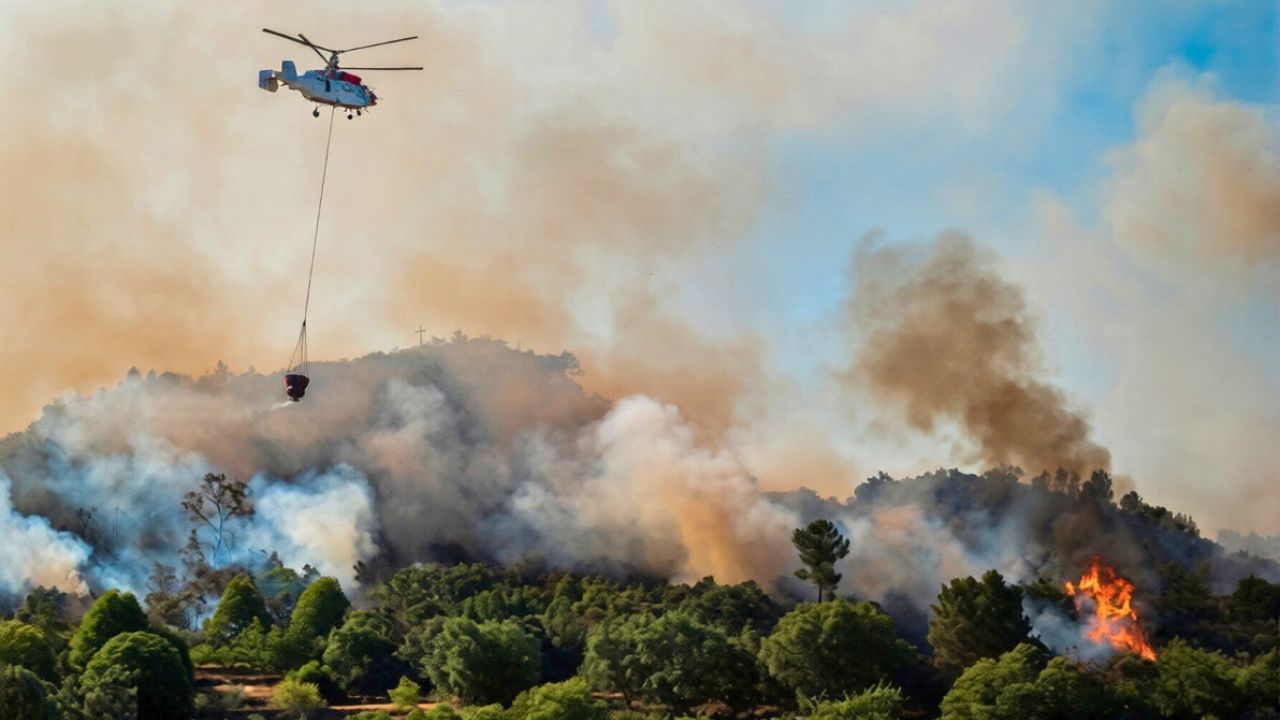
Record heat and fast-moving wildfires are ripping across the Southern Hemisphere — even with La Niña in place
SANTIAGO, Chile — Record heat and destructive wildfires are sweeping across large parts of the Southern Hemisphere at the start of 2026, with major blazes and extreme temperatures reported from South America to Australia and South Africa — a pattern scientists say is unfolding even as the world remains under the cooling influence of a weak La Niña. Researchers and forecasters warn the risk could climb further if the climate shifts toward a neutral pattern or an El Niño later this year, conditions that typically push global temperatures higher.
Reuters reported that in January a heat dome over Australia drove temperatures close to 50 degrees Celsius (122 Fahrenheit), while heat and “catastrophic” fires hit parts of South America, including remote areas of Argentina’s Patagonia. In Chile, fires that began in the south spread into the greater Concepción area — the country’s third-largest metropolitan region — destroying hundreds of homes and killing 21 people in coastal communities. South Africa is also seeing what Reuters described as its worst wildfire season in a decade, hitting tourist destinations and killing wildlife.
Scientists say the timing is what stands out. La Niña, which began in December 2024, is typically associated with a cooling influence from ocean conditions in the central and eastern Pacific. But the current extremes are showing up anyway, a sign — researchers argue — that long-term warming is overwhelming the usual year-to-year variability. Climate scientist Theodore Keeping of Imperial College London and World Weather Attribution told Reuters that the signal from human-caused climate change is now strong enough to “overwhelm” natural swings, and that a shift toward El Niño could amplify extreme-heat events further.
The scale of the impacts is visible in personal accounts from Chile’s burned communities. About 80% of Punta de Parra, a small coastal town surrounded by hills and forests, was destroyed. Residents said they had little time to evacuate, and one family described being trapped as embers rained down and winds whipped flames toward the coast. Officials and researchers say those details matter because the highest death tolls in wildfires often come down to evacuation challenges — narrow routes, fast-moving wind-driven flames, and limited warning time.
In Argentina, fires in Los Alerces National Park, a UNESCO World Heritage site home to trees more than 3,000 years old. A lightning strike initially sparked a blaze that was considered under control, but a heat wave and strong winds helped it spread roughly 20 kilometers (about 12 miles) in a single day, making it the worst wildfire there in two decades. Researchers cited by Reuters said the region has faced drought conditions since 2008, and temperatures in early January ran about 6 degrees Celsius (11 Fahrenheit) above normal — the kind of baseline shift that turns “manageable” fires into major disasters.
Beyond the human toll, the economic costs are climbing. An Aon analysis estimated global insured wildfire losses at $42 billion in 2025, sharply higher than the 2000–2024 average. The reinsurer Swiss Re has also found wildfire losses rising as a share of global insured natural-disaster losses compared with the years before 2015. Those costs show up in insurance premiums, housing markets, and public budgets — and they also shape how governments approach fuel management, building codes and evacuation planning.
Experts say adaptation decisions now matter as much as emergency response: managing vegetation near communities, improving evacuation routes and warning systems, and encouraging fire-resistant construction where risk is climbing. But scientists also warn that there are limits to what suppression can accomplish once fires become very large and wind-driven. Some of the most intense mega-fires simply cannot be stopped once they reach a certain scale — making preparation and evacuation planning the difference between a disaster and a mass-casualty event.