Rifles every new homesteader thinks they need but don’t
New homesteaders get sold a fantasy: one rifle that handles predators, puts meat in the freezer, stays by the back door, and somehow does it all with no downsides. That’s how people end up buying rifles that sound right on paper but don’t fit how homestead life actually works—close-range problems, awkward angles around buildings, limited safe backstops, and the need for a gun you’ll actually practice with.
This isn’t anti-rifle. It’s anti-buying the wrong rifle because the internet told you it was “homestead essential.”
AR-10 in .308 (budget builds)
A lot of new homesteaders jump straight to an AR-10 because it feels like the “serious” choice. The reality is most homestead shots—predator control, nuisance animals, barnyard issues—don’t need .308 power or AR-10 weight. AR-10s are heavy, expensive to feed, and they’re not always plug-and-play reliable in cheaper builds.
If you’re not already a competent rifle shooter, starting with a heavy semi-auto that costs more per trigger pull is a quick way to practice less. Most people would be better served by a good .223 bolt gun or a basic AR-15 and spending the rest on ammo and training.
Ruger Precision Rifle
The RPR looks like the answer to everything if you spend time watching long-range content. On a homestead, it’s usually the wrong kind of tool. It’s heavy, it’s built around supported shooting, and it’s not something you’re casually grabbing to deal with a problem near a coop or fence line.
It’s also the type of rifle that pushes people into “I need a huge scope, a bipod, and a range day” thinking. Homestead rifles need to be fast, practical, and easy to carry. The RPR is none of those.
Savage 110 BA / other heavy “tactical” bolt guns
New shooters see a heavy tactical bolt gun and assume it equals accuracy and capability. Then they realize they don’t want to lug it around the property, it doesn’t handle quickly, and it spends most of its life leaning in a corner because it’s a pain to carry.
A heavy tactical bolt gun makes sense for deliberate shooting. Homestead reality is quick shots, weird angles, and shooting from imperfect positions. A lighter, better-balanced rifle gets used more.
Any ultra-light magnum like a Tikka T3x Lite in 7mm Rem Mag
People buy magnums because they want “more reach” and “more knockdown.” Then they pair that with an ultra-light rifle because it’s easy to carry. That combo is brutal for new shooters. Recoil is sharp, practice becomes unpleasant, and accuracy suffers when it matters.
Most homesteaders don’t need magnum performance for predators or basic hunting. They need a rifle they can shoot well offhand and under stress. Light magnums are the opposite of confidence-building for beginners.
Remington 700 SPS in a bargain stock
The Remington 700 name still pulls people in. A new homesteader grabs an SPS thinking it’s a future-proof “forever rifle,” then realizes the factory stock feels cheap, flexes, and doesn’t inspire confidence. Then the “easy buy” turns into a project: new stock, bedding, rings, optics.
If you want a build platform and you enjoy tinkering, fine. But most new homesteaders need a rifle that works now. Buying a rifle that instantly makes you plan upgrades is a distraction.
Mossberg Patriot in .300 Win Mag
This is a classic new-guy move: “I want one rifle that can do anything.” So they buy a budget rifle in a hard-hitting magnum. The result is usually recoil that discourages practice and a rifle that’s unpleasant to shoot from awkward positions.
You can kill anything in North America with a .300 Win Mag. That’s not the point. The point is you won’t shoot it much if it beats you up, and a rifle you don’t practice with won’t help you when a predator shows up.
Ruger American in .450 Bushmaster (when you don’t need straight-wall)
Straight-wall cartridges have a purpose, but new homesteaders often buy them because they’ve heard they’re “hammer” rounds. Then they realize recoil is real, trajectory drops faster than expected, and the rifle is overkill for most everyday homestead problems.
If you don’t live in a straight-wall-only zone and you’re not hunting in thick woods at close range, you’re usually better off with a flatter, cheaper, easier-to-shoot setup.
Marlin 1895 (.45-70) as a “one rifle solution”
A .45-70 lever gun is cool, and it can be a great woods rifle. New homesteaders buy it thinking it’s the perfect ranch gun. Then they learn recoil can be stout, ammo is expensive, and the rifle isn’t as easy to shoot accurately at distance as they assumed.
It has a place—especially for big animals in thick cover. But for everyday homestead work, it’s often more cartridge than you need and less practical than a mild-shooting .223 or .22.
Springfield M1A
The M1A is one of those rifles people buy because it feels like history and power. Then they try to set it up with optics and realize it’s heavier, more awkward, and less practical than modern options for the kind of shooting most homesteaders actually do.
It can be dependable, but it’s not efficient. If your goal is a do-it-all homestead rifle, the M1A usually ends up being the rifle you admire more than the one you grab.
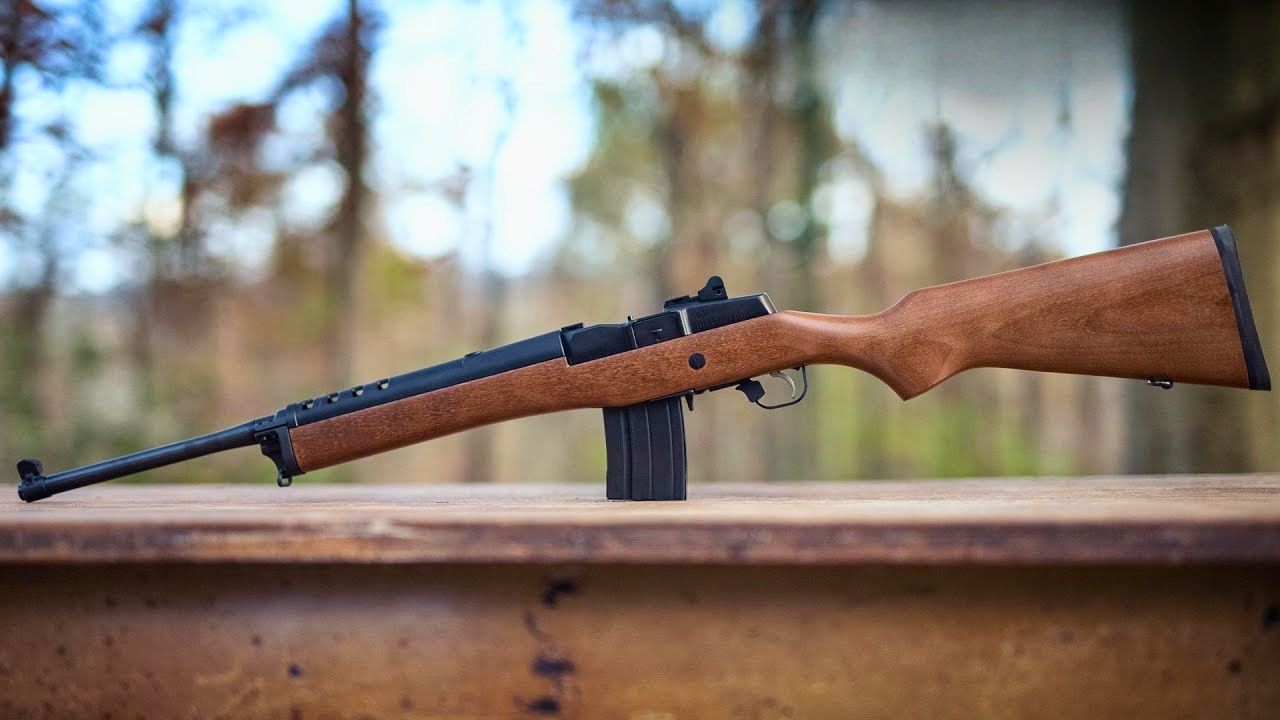
Ruger Mini-14 as a “predator rifle”
A Mini-14 can be a good rifle, but it often gets bought as an AR alternative by people who think it’s automatically more “ranch friendly.” Then they realize mags can be expensive, optics setups can be quirky, and accuracy can vary more than they expected depending on model and ammo.
If you want a semi-auto .223 for property use, a solid AR-15 usually gives you better support, better parts availability, and easier customization. The Mini can work, but it’s not the obvious choice new homesteaders think it is.
Kel-Tec RFB
Bullpups look perfect for a property: compact, powerful, handy. Then reality shows up: expensive mags, more complicated manual of arms, and a platform that can be more sensitive or idiosyncratic than a conventional rifle. New shooters don’t need “unique.” They need simple.
If you’re already skilled and you want one, fine. But for a new homesteader trying to get competent fast, this is usually a distraction purchase.
Ruger Gunsite Scout in .308 (as your first rifle)
Scout rifles get sold as “do everything” tools. New homesteaders buy them thinking they’re making a smart, practical choice. Then they realize .308 recoil and cost can limit practice, and the scout optic concept isn’t automatically better for the average shooter.
A scout can be great for some people. For most beginners, a standard bolt rifle with conventional optics is easier to learn, cheaper to feed, and easier to shoot well.
Like the article? Make sure to give me a follow!