Rifles that are easy to shoot well in awkward positions around a barnyard
On a working farm, you rarely get the luxury of a perfect shooting bench. Shots come from the hayloft ladder, over a gate, or around a tractor tire, and the rifle that feels steady on a bench can suddenly feel unwieldy. If you want to shoot accurately in those awkward barnyard angles, you need a rifle and setup that help you, rather than fight you, when the footing is uneven and the target is small.
That means thinking beyond brand loyalty or raw accuracy and focusing on balance, weight, sighting systems, and how the rifle behaves when you are twisted around a stall post or braced on a fence rail. With the right combination of platform, caliber, and ergonomics, you can make clean, confident hits on pests and small game without tearing up buildings, equipment, or livestock.
Why barnyard shooting is its own discipline
When you shoot around buildings, animals, and equipment, your priorities shift from pure ballistics to control and safety. You are often firing at pests like squirrels or rats that are perched on rafters, fence posts, or feed bins, and you may be leaning out a doorway or crouched behind a stack of hay. The rifle that excels here is one you can shoulder quickly, keep on target while off balance, and run without snagging on gates or machinery.
Those constraints also change how you think about backstops and overpenetration. A miss with a high powered centerfire can punch through tin, lumber, or even a tractor cab, so you are better served by cartridges and platforms that deliver enough energy for small game but lose steam quickly. That is why so many small game specialists still lean on classic rimfires and air rifles that are purpose built for tight spaces and close ranges rather than long range power.
Rimfire classics that shine in tight quarters
For most barnyard jobs, a well set up .22 remains the most forgiving tool you can carry. The cartridge is quiet, controllable, and unlikely to damage structures when you pick your angles carefully, yet it has more than enough authority for squirrels, rabbits, and similar pests. In lists of the best small game rifles, models like the Marlin 39A stand out because they combine smooth handling with proven accuracy, and the fact that Annie Oakley trusted a lever action .22 for precision work underscores how capable a compact rimfire can be when you are shooting from improvised positions, as highlighted in coverage of The Best Squirrel Rifles.
On rabbits and squirrels, the .22 LR has long been described as having a theoretical edge in versatility, especially when you are working around buildings and livestock where you want minimal recoil and noise. Detailed small game guidance notes that, Honestly, there are few other choices that match the balance of lethality and control that a .22 LR offers on these animals, which is why it remains the default recommendation for small game hunters who need to operate in close around barns and hedgerows, as explained in advice on best rifles for small game hunting.
Air rifles built for barns and sheds
When you are shooting inside or immediately around structures, air rifles offer a level of precision and discretion that even a .22 LR cannot always match. Modern designs give you repeatable accuracy with pellets that shed energy quickly, which is ideal when you are firing up into rafters or along the inside of a metal-sided building. A lightweight and compact air rifle is particularly well suited to this role because you can maneuver it through doorways and around beams without banging into everything.
Manufacturers that focus on pest control explicitly recommend compact platforms for work in and around farm buildings, noting that a lightweight and compact air rifle from the Stoeger AIRGUNS line is the best choice for the hunter who wants to move efficiently in confined spaces such as barns and around the farm, especially when dealing with predator control and small to medium game, as described in guidance on Stoeger AIRGUNS rifles. If you are left handed or have specific ergonomic needs, experienced airgun shooters also emphasize that it is hard to find an all in one perfect rifle, which is why building a small library of airguns with different cocking systems and stock designs can be more practical than chasing a single do everything setup, a point echoed in discussions about how Thank you messages from readers highlight the challenge of Shooting left with certain platforms in resources on how to build a good airgun library.
Weight, balance, and why “light” is not always easier
It is tempting to assume that the lightest rifle will always be the easiest to manage when you are twisted around a stall post or leaning over a gate. In practice, extremely light rifles can be harder to hold steady in unsupported positions because they lack the inertia that helps you resist small tremors. Shooters who spend time firing offhand often report that they find themselves constantly trying to manipulate the sling to hold steady because the stocks have almost no weight to them, which can make a featherweight rifle feel twitchy when you are standing or kneeling in the barnyard.
That experience has led some shooters to prefer a slightly heavier rifle that balances between the hands and settles naturally on target, especially for offhand shots at modest distances. In one detailed discussion, a user posting in Oct described how a moderate weight rifle with a simple sling works just fine for them in offhand shooting, while ultra light builds required more effort to control, a perspective captured in a thread on why lightweight rifles are not always easier for offhand shots. For barnyard work, that suggests you should prioritize a rifle that feels neutral and stable in your hands over one that simply wins the scale contest.
Sights and optics that work from awkward angles
In cramped spaces, your sighting system can matter as much as the rifle itself. You may be shooting from a ladder, around a tractor tire, or while stepping over a gate, and you will not always have time to build a perfect cheek weld. A large, highly visible front sight can be a major asset when you are shooting on the move or from improvised positions, because it lets you pick up the sight picture quickly even when your head position is less than ideal.
Some trainers also point out that Both a bold front sight and a laser can help you maintain awareness of your surroundings, since you can keep your eyes on the target and the ground so you do not trip and fall while still confirming your point of aim, a principle laid out in guidance on shooting from unusual positions. On the optics side, low power variables and compact red dots shine in barnyards because they offer a wide field of view and quick target acquisition at close range, while still giving you enough precision to pick a safe backstop behind a squirrel on a fence post.
Versatile centerfires when you need more reach
Although rimfires and air rifles cover most barnyard chores, there are times when you need a centerfire that can handle predators at the edge of the pasture while still being manageable around buildings. In that case, you are looking for a rifle that balances power with controllability, so you can make fast, accurate shots from hasty positions without being punished by recoil. Versatility becomes the key metric, since the same rifle might be called on for coyotes in the back field and for quick shots near the barn when larger threats appear.
Comprehensive overviews of general purpose hunting rifles point out that calibers like .308 Winches are highly recommended for their adaptability to different hunting situations, with 308 specifically cited as a benchmark for all around performance in discussions of the most versatile hunting rifle. If you prefer a semi automatic platform, community advice often notes that Your typical 556 AR with a 16 inch barrel, paired with a 1 8 LPVO or a red dot, can cover both close quarters and mid range work, giving you a single rifle that can move from the barnyard to the back pasture without feeling out of place, as described in a Comments Section on rifle setup.
Rimfire trainers as barnyard workhorses
Even if you own larger rifles, a dedicated rimfire trainer can be the most used gun on your property. The low cost and minimal recoil encourage you to practice from the same awkward positions you actually use around the farm, which pays off when a real pest problem appears. There are a variety of options in .22 rimfires, and the most popular and most available of these is the .22 Long Rifle, which gives you a huge range of ammunition choices from quiet subsonics to more energetic loads, as explained in training focused guidance that notes There are strong reasons you need a rimfire training gun for both skill building and practical chores, detailed in resources on rimfire training guns.
Because the handling of a rimfire trainer can mirror your larger rifles, you can rehearse mounting the gun, working the safety, and breaking clean shots while leaning around posts or shooting from kneeling in the mud. Over time, that repetition builds an instinctive feel for your rifle that translates directly to more decisive, humane shots on pests and small game. In a barnyard context, that familiarity can matter more than raw power, because the faster you can get a stable sight picture and press the trigger without disturbing the rifle, the less likely you are to send a stray round into a roof panel or water trough.
Lever actions and instinctive pointing
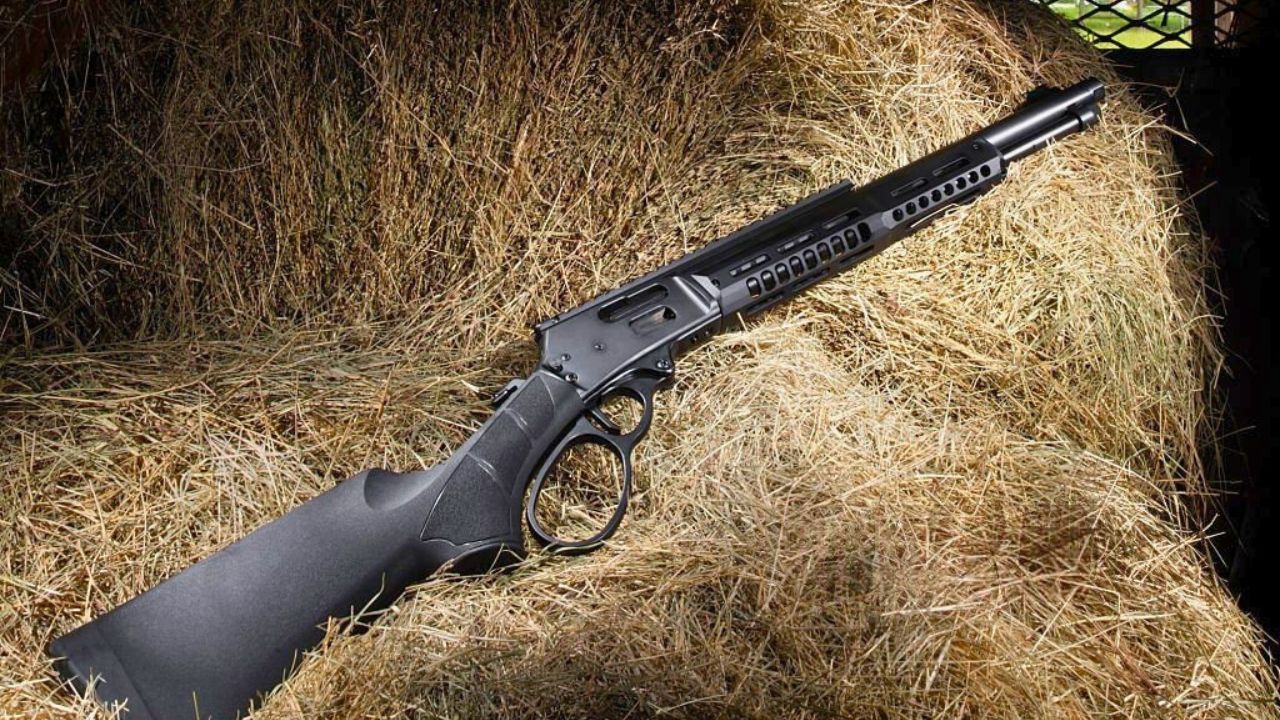
Lever action rifles occupy a sweet spot for many barnyard shooters because they combine compact dimensions with fast follow up shots and a natural point of aim. The slim receivers and rounded edges slip easily past gate posts and stall doors, and the manual of arms is intuitive even when you are wearing gloves or working in the cold. When you are tracking a squirrel along a fence rail or a raccoon near the chicken coop, that instinctive handling can make the difference between a clean hit and a missed opportunity.
Some modern lever guns are designed specifically to enhance that natural pointing quality with sighting systems that are very instinctive to use and that give you a very quick sight picture. Paired with the natural point of aim of the lever action platform, these setups can be among the fastest iron sights to shoot on the market, which is exactly what you want when you are swinging on a moving target in tight quarters, as described in evaluations of Henry All-Weather rifles. When you combine that with moderate calibers and corrosion resistant finishes, you end up with a rifle that can live in the truck or the barn and still be ready for precise work whenever you need it.
Building a small, purpose driven barnyard battery
If you want rifles that are easy to shoot well in awkward positions around a barnyard, the most effective approach is to assemble a small, purpose driven battery rather than chasing a single do everything gun. A practical trio might include a compact air rifle for indoor and very close work, a .22 LR rimfire for general pest control and training, and a versatile centerfire or lever action for predators and longer shots. Each fills a distinct niche, and together they give you options that match the angle, distance, and backdrop you are facing.
As you refine that battery, pay attention to how each rifle feels when you shoulder it from a crouch, lean around a post, or shoot offhand with no support. Favor stocks that give you a consistent cheek weld, triggers that break cleanly without excessive weight, and sighting systems that you can read instantly even when your stance is compromised. With that mindset, you will find that the rifles you reach for most often are not necessarily the flashiest or most powerful, but the ones that let you make calm, confident shots in the messy, unscripted reality of life around the barn.
Like Fix It Homestead’s content? Be sure to follow us.
Here’s more from us:
- I made Joanna Gaines’s Friendsgiving casserole and here is what I would keep
- Pump Shotguns That Jam the Moment You Actually Need Them
- The First 5 Things Guests Notice About Your Living Room at Christmas
- What Caliber Works Best for Groundhogs, Armadillos, and Other Digging Pests?
- Rifles worth keeping by the back door on any rural property
*This article was developed with AI-powered tools and has been carefully reviewed by our editors.