Satellite traffic surge raises concerns about orbital collisions
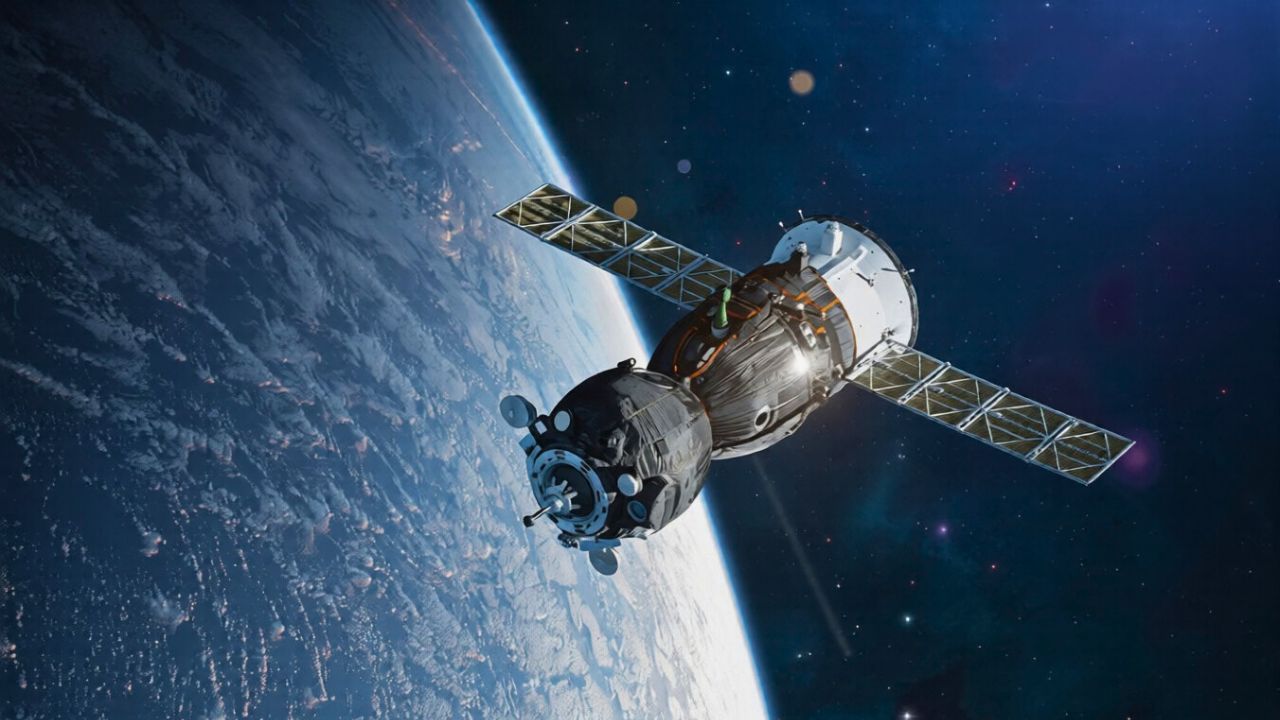
Low Earth orbit has shifted from quiet frontier to busy infrastructure zone in little more than a decade, and the traffic spike is starting to look dangerous. Researchers now warn that the clock is ticking toward the first major chain reaction of satellite crashes, with potential fallout for navigation, weather data, and the global internet.
With nearly 10,000 active satellites circling Earth, the risk is no longer theoretical. It has become a practical question of how long operators can keep dodging trouble in a sky that never gets a reset.
From boom to bottleneck
Commercial megaconstellations, military craft, weather platforms, and scientific missions all crowd the same orbital highways, especially in low Earth orbit. One analysis of Earth’s expanding satellite fleet put the number of active spacecraft at nearly 10,000, a figure that would have sounded fanciful only a few years ago.
The European Space Agency, formally identified as The European Space Agency (ESA), estimates that 36,500 objects larger than ten centimeter, along with about 1 million smaller fragments, are already orbiting Earth at different altitudes. Each piece is a potential bullet moving at several kilometers per second.
Government and industry leaders are beginning to treat orbital crowding as a mainstream policy problem rather than a niche concern. A technology survey described rising Concern among agencies, astronomers, and satellite operators about collisions, radio interference, and light pollution.
A collision clock measured in days
The most arresting warnings come from researchers who tried to quantify how long the system can run before something hits something else. A theoretical model known as a CRASH Clock suggests that Earth orbit could reach a point where satellites begin colliding with one another in less than three days if operators stopped maneuvering.
One study of Earth orbit traffic found that the average time before an unavoided collision shrank from years to only a few days, and in some scenarios to 2.8 days. A separate summary of the same work reported that the collision interval fell from long lead times in 2018 to just 2.8 days today, a compression that stunned even the research team.
An explanation video framed the result starkly, telling viewers that “we are just 2.8 days away from a space disaster” in low Earth orbit, the region that powers internet, weather forecasts, and GPS. The punchline is not that a crash is guaranteed in three days, but that the buffer for error has nearly vanished.
Another analysis of Earth orbit conditions suggested that the system might have only 5.5 days before a potential satellite crash if operators stopped making avoidance maneuvers. That study highlighted the “Gannon storm” in May 2024, when during the event nearly half of active LEO satellites reportedly had to adjust their paths within just three days because of heightened drag and debris motion.
The underlying research, described in detail in a study on Earth orbiting satellites, tries to answer a simple question that air traffic controllers never face: how long would the system last if everyone suddenly lost the ability to steer.
For now, active collision avoidance masks some of the danger. Satellite operators already receive on the order of 1,000 alerts per day that two objects might pass uncomfortably close, according to one report on collision warnings. Only a fraction turn into actual maneuvers, but the sheer volume shows how narrow the margins have become.
From Kessler Syndrome to daily operations
Behind these numbers sits a longer running worry known as Kessler Syndrome. The idea, first raised decades ago, is that a single destructive collision could produce a cloud of shrapnel that in turn hits other satellites, creating a cascading chain of impacts that multiplies the debris count and gradually renders parts of orbit unusable.
Scientists now debate whether Kessler Syndrome is a distant tipping point or a process already in motion. One analysis of space junk around Earth noted that, given the noninstant nature of Kessler Syndrome, the phenomenon might already be underway, slowly increasing the number of objects in orbit even if launches stopped.
Public explainers on orbital crowding now routinely ask what is Kessler Syndrome, and point to the risk that uncontrolled growth in debris could make some orbits too hazardous for crewed missions or critical satellites.
One space scientist, identified as Boley, has stressed that “The Real Threat Is Often the Debris You Cannot Track.” In his view, the scariest hazard is not the large junk that tracking networks can see, but the small fragments that slip below radar thresholds and still carry enough energy to cripple a spacecraft when a satellite orbit path intersects tiny fragments.
Internet, astronauts, and astronomy on the line
The stakes go far beyond the satellites themselves. Low Earth orbit underpins broadband constellations, remote sensing fleets that feed agriculture and disaster response, and navigation services that keep aircraft and ships on course.
One analysis warned that uncontrolled growth in debris could eventually create a future with no reliable internet from orbit or regular astronaut missions, as fragments spread across key altitude bands and raise the risk to crewed vehicles and sensitive electronics. That report noted that The European Space Agency (ESA) is already funding projects such as Clearsat with Swiss startup ClearSpace to capture and deorbit defunct satellites.
Ground based astronomy is another casualty. Researchers have documented how sunlight reflecting off dense satellite fleets leaves bright streaks across long exposure images, while radio transmissions disrupt sensitive receivers. One study of satellite fleets found that Sunlight glints and radio noise already affect galaxy surveys and could complicate future searches for faint objects.
Astronomers and aviation experts have also started to worry about interactions between satellites and aircraft. One briefing pointed to the rapid growth of constellations from companies such as Starlink and suggested that falling hardware or reentry debris could pose safety risks to flying passengers if not carefully managed.
Managing the traffic jam
Against this backdrop, space agencies and private firms are scrambling for tools that can stretch the collision clock back out. One project known as CREAM is designed to help prevent collisions by improving how operators share orbit data and coordinate maneuvers. A report on the system explained that CREAM aims to make spaceflight safer as space gets more crowded and every new launch adds more objects around Earth.
Some operators are also building disposal into their business models. One social media post described how around one to two Starlink satellites fall back to Earth each day by design. They orbit low, they feel atmospheric drag, and they are safely deorbited as part of modern space operations, which helps prevent long lived junk.
National agencies are also sounding the alarm. One widely shared video showed NASA astronomers issuing a fresh warning that the race to fill Earth orbit with satellites could ruin space for future users if debris and interference are not controlled. The clip framed the threat from Dec Earth orbit congestion as a long term sustainability challenge rather than a short term engineering puzzle.
Canadian researchers have voiced similar worries in a briefing that described how the space around Earth is becoming increasingly crowded, a trend that could raise the risk of collisions between satellites if better tracking and coordination are not put in place. That analysis, featuring a Canadian perspective, stressed that no single country can solve the problem alone.
From warnings to rules
For now, most collision avoidance relies on voluntary coordination and a patchwork of national guidelines. There is no global equivalent of air traffic control for orbit, and no binding rule that forces operators to remove dead satellites quickly.
Some regulators have started to push back. One policy trend has been to shorten the time that defunct satellites are allowed to linger in key orbits before they must be deorbited, a shift that aligns with ESA’s support for active cleanup missions such as Clearsat and ClearSpace.
Like Fix It Homestead’s content? Be sure to follow us.
Here’s more from us:
- I made Joanna Gaines’s Friendsgiving casserole and here is what I would keep
- Pump Shotguns That Jam the Moment You Actually Need Them
- The First 5 Things Guests Notice About Your Living Room at Christmas
- What Caliber Works Best for Groundhogs, Armadillos, and Other Digging Pests?
- Rifles worth keeping by the back door on any rural property
*This article was developed with AI-powered tools and has been carefully reviewed by our editors.