Security forces clash with demonstrators near U.S. Embassy in Baghdad
Security forces and demonstrators faced off near the U.S. Embassy in Baghdad after a tense gathering outside the fortified Green Zone escalated into clashes, tear gas and warning shots. The confrontation unfolded against a backdrop of rocket and drone attacks on American diplomatic sites in Iraq and an ordered drawdown of some U.S. personnel, turning the embassy district into a focal point of regional anger over the widening conflict involving Iraq, Iran and the United States.
The scene around the compound showed how quickly symbolic protests can slip toward a direct challenge to heavily guarded facilities, and how fragile security has become for both Iraqi authorities and foreign missions in the capital.
Escalation at the edge of the Green Zone
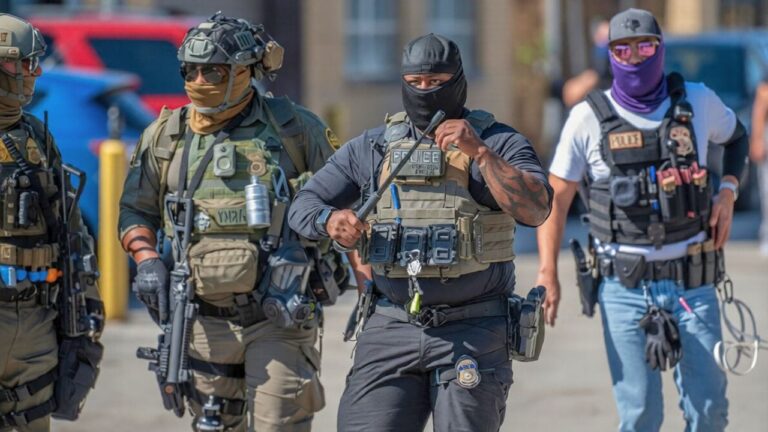
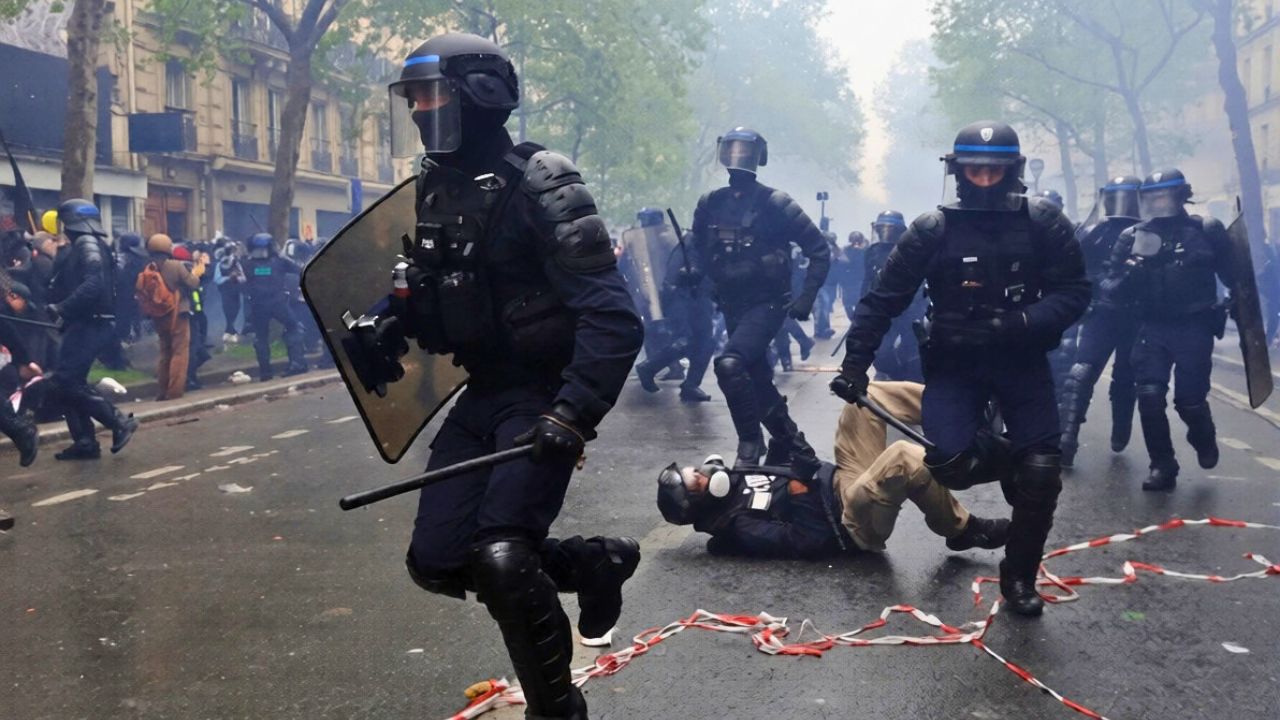
Security forces in Baghdad moved to block crowds that had gathered near the U.S. Embassy compound, according to Iraqi reports that described a deployment of units around the Green Zone and the use of tear gas to prevent any storming attempt on the perimeter walls of the diplomatic complex in the Iraqi capital of Baghdad.
Witness accounts and local coverage described demonstrators waving flags and chanting against U.S. policy as they pressed toward the outer checkpoints, prompting Iraqi forces to fire gas canisters and live warning rounds into the air to push them back.
Earlier video from the same area showed Iraqi riot police confronting pro Iran groups near the embassy, where officers fired warning shots and tear gas to disperse protesters and mourners who approached the compound in Baghdad, underscoring how the site has become a magnet for anger tied to Iran and its allies.
Online posts amplified the imagery, with one prominent political page characterizing the confrontation as CHAOS AT THE GATES and describing Pro Iran Mobs Clash with Iraqi Forces near the U.S. Embassy, language that reflected a sharply polarized narrative around who was driving the unrest and what it represented.
The geography of the compound, located inside a secured district that also holds Iraqi government offices and foreign missions, has long made it a flashpoint whenever regional tensions spike.
Protests collide with a wider security crisis
The street clashes did not occur in isolation but instead formed part of a rapid deterioration in security for U.S. facilities in Iraq, which has included rocket fire, drones and a sweeping tightening of travel guidance for Americans.
Security sources reported that Katyusha rockets targeted the U.S. Embassy in Bagh, with the attack described as using multiple Katyusha projectiles against the compound and nearby areas, although there were no American casualties reported from that barrage.
In a separate incident, a Drone struck a U.S. diplomatic facility in Iraq, an attack that security officials linked to the broader Mideast conflict and to efforts by armed groups to pressure Washington as fighting involving Iran and its partners intensified.
Regional coverage stressed that Iraq did not want to be dragged into war, but Iran and its aligned paramilitary forces are attacking U.S. hubs there, with one report framing the embassy strike as part of a wider U.S Israel confrontation with Iran and urging audiences to Listen to the growing concern inside Iraq over being used as a battleground.
The cumulative effect has been to turn American diplomatic sites into both military and political targets, with each new incident feeding calls from some Iraqi factions for the removal of foreign forces and from others for stronger protection of state institutions.
Travel warnings and ordered departures
As the situation deteriorated, The Department of State renewed its Travel Advisory for Iraq in Mar as part of a broader Travel Advisory for Iraq that warned of serious threats to security due to terrorism, kidnapping, armed conflict and civil unrest, and urged people to leave if they could do so safely.
The advisory summary was updated again in Mar, with officials saying Thank you to those already following guidance and stressing that There were no changes to the advisory level or risk indicators, even as the language was sharpened to reflect new attacks on U.S. facilities.
In a separate security message, officials announced the ordered departure of some personnel, stating that the Location was Iraq, countrywide, and that the Event was that The Department of State had updated its guidance and instructed non emergency U.S. government staff at U.S. Mission Iraq to leave while commercial options remained available.
Another notice circulated on social media referred to an Iraq Travel Advisory Level 4 and used the wording Iraq Travel Advisory Level 4: Do Not Travel Updated to reflect the ordered departure, a signal that Washington viewed the risk environment as severe for both government personnel and private citizens.
For many Americans already in the country, the combination of street clashes, indirect fire and tightened checkpoints has made movement difficult and raised questions about how long regular travel or business can continue.
Embassy alerts and restricted operations
The U.S. Embassy in Baghdad supplemented the broad advisory with a series of specific alerts that laid out practical steps for those still in country and described a progressively more constrained operating posture.
One alert on security conditions reminded readers that Embassy and Consulate Operations The Embassy Baghdad and Consulate General Erbil had suspended all routine consular services, and that only emergency assistance would be available through remote channels or limited in person contact.
Another message urged recipients to Follow the Department of State guidelines to protect themselves from scams and to be careful of anyone asking for money, reflecting a concern that criminal groups might exploit the confusion around evacuations and flight cancellations.
A separate alert referenced Türkiye and urged travelers to Read the Turkey Travel Advisory and understand that areas of Turkiye near the Iran and Iraq borders are designated Level 4, a reminder that the security crisis was affecting cross border routes as well as Iraq itself.
Embassy messaging also warned that airspace is closed and commercial flights are limited or suspended, stating that Americans should plan for the possibility of sheltering in place for extended periods and that any evacuation options could change rapidly as Iraq adjusted its own controls.
In one detailed shelter in place message, officials advised people to stay indoors, secure their Shelter and Place, and monitor updates from the Emb and consular channels, including information on how the FBI could assist victims of scams or fraud tied to the crisis.
Local forces, regional politics
The Iraqi security response around the embassy has been shaped as much by domestic politics as by pure force protection, with authorities seeking to contain crowds linked to Iran while avoiding a perception of cracking down on legitimate mourning or protest.
Video from earlier in the month showed Iraqi riot police confronting groups described as pro Iran in Baghdad, where officers fired warning shots and tear gas to disperse protesters who had joined a funeral procession near the embassy walls, an episode that fed into the later confrontation that drew heavier security deployments.
Social media amplification, including posts that used phrases like CHAOS and THE GATES to describe Pro Iran Mobs Clash scenes, has raised the stakes for Iraqi commanders who must weigh how each tactical decision might echo across a population already divided over the presence of U.S. forces.
At the same time, official U.S. messaging has tried to keep attention on practical safety steps, directing people to Discovered embassy resources and consular pages, such as the main mission site at iq.usembassy.gov, where updated alerts and travel information are posted.
Additional links shared by the mission, including Discovered notices about scams and emergency contacts and Untitled alerts about specific incident dates, have tried to consolidate fragmented information into a single reference point for those navigating the crisis.
Location data from mapping services, including a listing for the embassy compound that appears in a Discovered Google viewer entry, has also circulated among Iraqis and foreigners seeking to understand how close attacks or protests have come to residential districts.
Uncertain path ahead
Like Fix It Homestead’s content? Be sure to follow us.
Here’s more from us:
- I made Joanna Gaines’s Friendsgiving casserole and here is what I would keep
- Pump Shotguns That Jam the Moment You Actually Need Them
- The First 5 Things Guests Notice About Your Living Room at Christmas
- What Caliber Works Best for Groundhogs, Armadillos, and Other Digging Pests?
- Rifles worth keeping by the back door on any rural property
*This article was developed with AI-powered tools and has been carefully reviewed by our editors.