Shotguns that actually make sense for chickens, goats, and the garden
When you’re protecting chickens, goats, and a garden that’s way too close to everything else, you don’t need the biggest, baddest shotgun in the rack. You need something you can control, pattern, and trust not to destroy the coop or blow holes in fence boards. The right setup keeps predators honest without turning every shot into a repair job.
Here are the shotgun setups that actually make sense for real homestead distances.
20-gauge pumps with light field loads
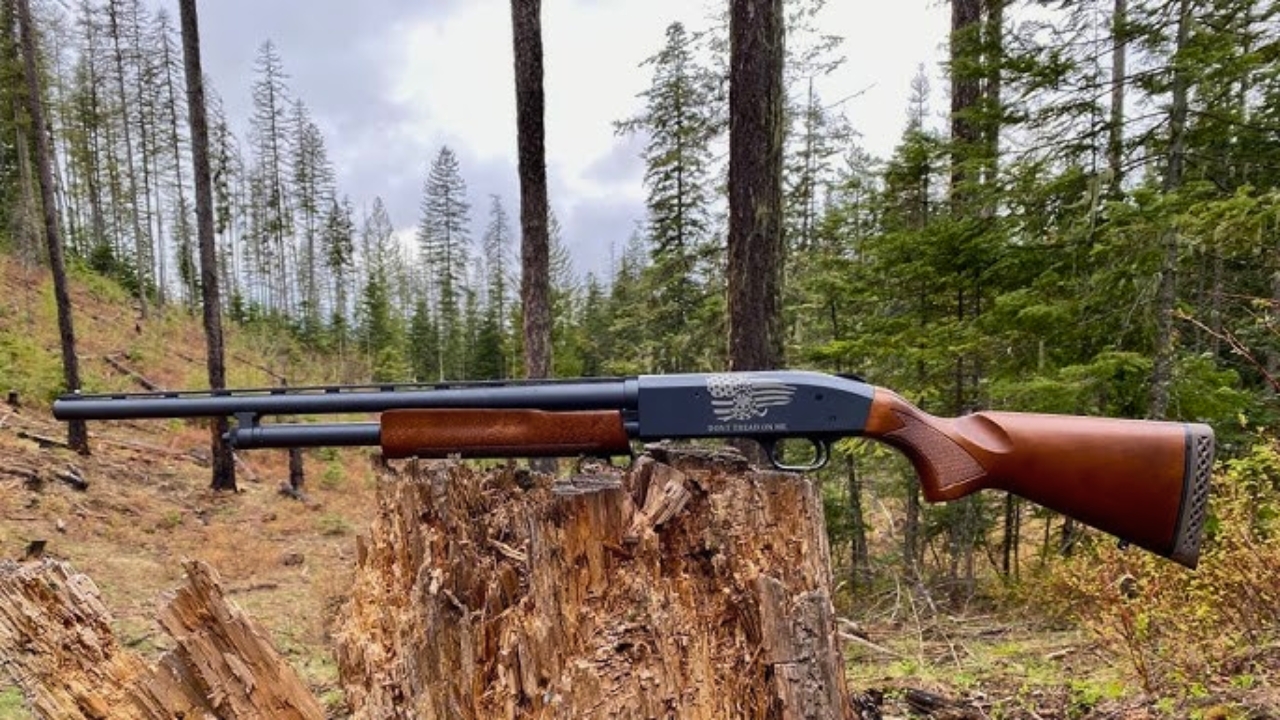
For most people and most pests, a 20-gauge pump is the sweet spot. A Mossberg 500 or Maverick 88 in 20 gauge with an 18.5″–22″ barrel and an improved cylinder choke gives you plenty of pattern on raccoons, possums, and foxes without the recoil of a 12. Loaded with 2¾” #4–#6 shot, it hits hard at normal yard ranges but is more forgiving around wood, wire, and siding.
If you’ve got smaller-framed shooters in the house, a compact/youth stock in 20 gauge makes it something everyone can actually run well under stress.
12-gauge field pumps with 2¾” shells
If you already own a 12, you don’t have to abandon it. A basic Mossberg 500, 590, or Remington 870 with a 20″–26″ barrel, an improved cylinder choke, and standard 2¾” field loads works just fine around the barn. The key is skipping 3″ and 3½” magnums and turkey loads for close work.
Pattern your gun at 10, 15, and 25 yards with #4–#6 shot, and you’ll know exactly what it does around the coop. That knowledge matters way more than the extra reach you’d get from hotter, tighter loads you don’t need.
Youth and compact models that actually fit the shooter
A shotgun that doesn’t fit is hard to mount, slow to use, and more likely to get yanked off target. Youth and compact models like the Mossberg 500 Youth, 510 Mini, or 870 compact in 20 gauge are built with shorter stocks and often shorter barrels.
If your spouse, teen, or you yourself have a shorter reach, a compact gun means faster, more repeatable mounts and better control in tight barn aisles. Fit matters more than brand when the shot needs to be quick and controlled.
Simple 20-gauge semi-autos for softer recoil
If you’re recoil-sensitive or doing most of the shooting yourself, a plain 20-gauge gas semi-auto like a Beretta A300 or Weatherby SA-08 makes life easier. Gas systems soak up recoil, so you’re less likely to flinch or dread practice. That matters when you actually want to be confident in the dark.
Paired with 2¾” field loads and an open choke, a 20-gauge semi-auto gives you quick follow-ups on multiple pests without beating up your shoulder or your nerves.
Short barrels with interchangeable chokes
Whatever gauge you pick, a barrel in the 18.5″–22″ range with screw-in chokes is ideal around coops and barns. Shorter barrels are easier to maneuver through doors, around equipment, and in tight runs. Interchangeable chokes let you keep things more open (improved cylinder) for close work or tighten up a bit if you do need more reach in open pasture.
Fixed full-choke bird guns can work, but they’re less forgiving up close. Being able to tune your pattern to your actual yard and buildings is a big plus.
.410s as niche tools, not your main gun
A .410 pump or single-shot can work on small pests and snakes, and kids’ .410s absolutely have a place for training. But as your main “something’s in the coop” gun, they’re easy to outgrow. Limited shot count and tight patterns make them less forgiving, especially at night.
Keep one for specific jobs if you like, but most homesteaders are happier long term with a 20-gauge they can run confidently on a wider range of critters.
Guns already set up with a simple light
Whatever shotgun you choose, putting a simple, durable light on it turns it from “guessing in the dark” to “I can actually see what I’m shooting.” A basic forend or rail-mounted light on a Mossberg 500, Maverick 88, or 870 makes a huge difference when something’s thrashing in the shadows.
You don’t need a full tactical build—just a bright, reliable light and a switch you can reach. If you can see eyes and background, you’re a lot less likely to send a pattern where it shouldn’t go.
Shotguns you’re willing to scratch, ding, and actually practice with
At the end of the day, the shotgun that makes sense for chickens, goats, and the garden is the one you’re not afraid to train with and get dirty. A mid-priced 20- or 12-gauge pump or semi with synthetic furniture and a matte finish beats a gorgeous safe queen every single time.
If you’re willing to pattern it, carry it, and leave it by the mudroom door, it’s the right kind of “homestead gun”—even if it’s not the fanciest thing you own.
Like Fix It Homestead’s content? Be sure to follow us.
- I made Joanna Gaines’s Friendsgiving casserole and here is what I would keep
- Pump Shotguns That Jam the Moment You Actually Need Them
- The First 5 Things Guests Notice About Your Living Room at Christmas
- What Caliber Works Best for Groundhogs, Armadillos, and Other Digging Pests?
- Rifles worth keeping by the back door on any rural property
*This article was developed with AI-powered tools and has been carefully reviewed by our editors.