Shotguns that tear up more property than pests
A shotgun can be the perfect tool around a coop or barn—if it’s set up and handled for close-range work. The problem is a lot of people grab a “tactical” setup or an oversized magnum and end up with blown-up fence boards, shredded siding, and a whole lot of regret. These are specific shotguns that commonly lead to more collateral damage than critter control—because of how they’re typically configured and used on rural property.
Mossberg 590 Shockwave
The Shockwave looks handy, and it is compact. The issue is control. With no stock and a short sight plane, a lot of people end up “point shooting” under stress and sending buckshot where it shouldn’t go. Around outbuildings and livestock, that’s how you turn pest control into property repair.
It’s also easy to get overconfident with it. Folks buy it thinking it’s a simple back-door solution, then learn fast that fast handling doesn’t mean easy hits—especially at night or at odd angles.
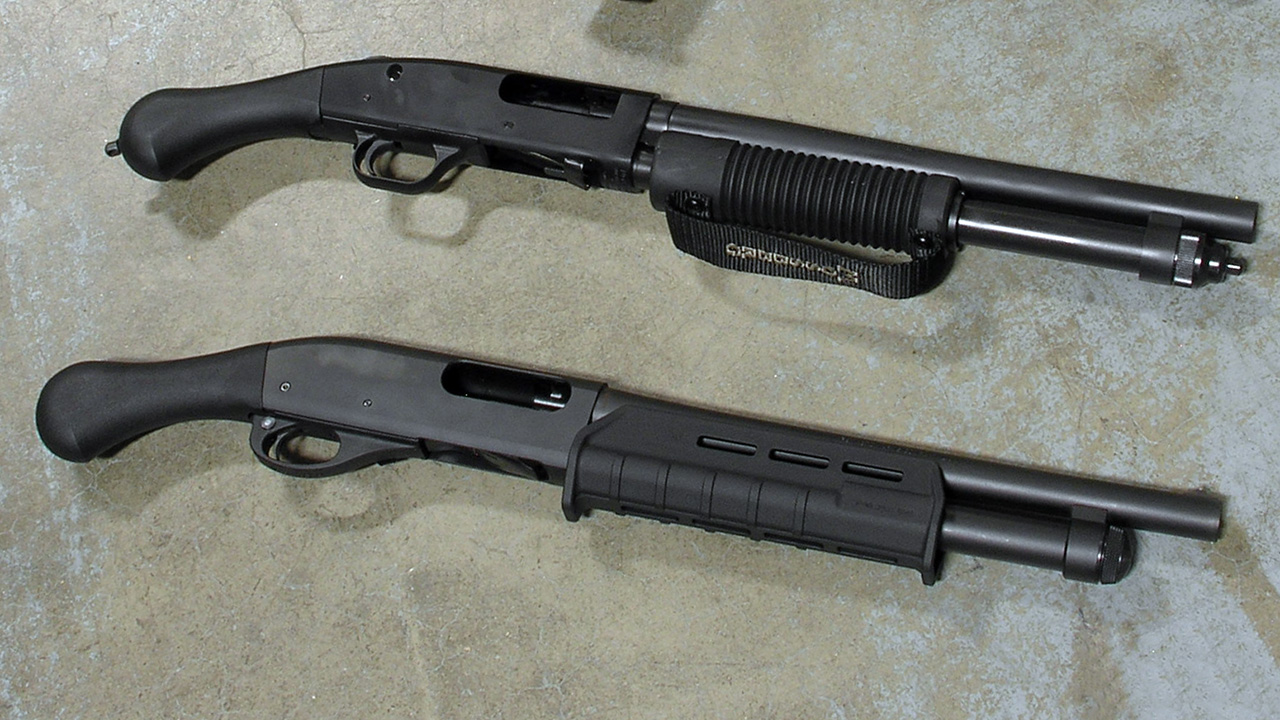
Remington Tac-14
Same problem as the Shockwave: no stock, short barrel, and a setup that encourages quick, sloppy shots. The Tac-14 can put pellets into tin roofing, stall doors, and the side of a shed before it ever solves the pest problem.
Most people don’t practice enough with these to be precise. If you want a close-range shotgun for real work, a stocked gun with a light and a simple sight setup tends to make fewer “oops” holes.
Black Aces Tactical Pro Series S (14”)
These budget “compact” shotguns get bought because they look tough and feel like a deal. Then you start running them fast and you see why they’re risky around property—stiff recoil, rough controls, and inconsistent handling can make you rush shots.
When your shotgun doesn’t mount clean and doesn’t cycle smoothly, you’re more likely to fling a second shot just to “make it happen.” That’s how you end up repairing gates instead of dealing with pests.
Charles Daly Honcho (12 gauge)
The Honcho is another compact “door gun” style option. It’s small and loud, and it encourages the same bad habit: shooting before you’ve got a real sight picture or a stable mount. That’s a recipe for stray pellets around barns and coops.
It’s also easy to carry one-handed or from awkward positions, which feels convenient—until you realize convenience doesn’t equal accuracy when you’re trying to thread a shot safely.
Kel-Tec KSG
The KSG can work, but it’s not forgiving. Short overall length, unusual balance, and the potential for shooter-induced mistakes under stress can lead to sloppy shots, especially when someone bought it as a “cool farm gun” and didn’t put real reps in.
The manual of arms is different enough that newer shooters fumble reloads and get flustered. Flustered plus buckshot near property is exactly how holes show up where they shouldn’t.
UTAS UTS-15
Same lane as the KSG, with even more “different” controls and feel. When a shotgun has a learning curve and the owner treats it like a simple grab-and-go tool, misses become more likely—especially at night or when shooting from bad angles.
These bullpup pumps also make it easy to short-stroke if you’re rushing. Misses and rushed follow-up shots are what destroy property.
Saiga-12 (typical “drum mag” setups)
A Saiga-12 with a drum mag tends to get used like a spray tool by people who didn’t buy it for careful, aimed shooting. On a homestead, that kind of mindset is how you pepper the barn wall while the pest runs off.
It’s also common to see questionable mags and mixed reliability. When a gun hiccups, people speed up and get sloppy. Speed plus buckshot equals repairs.
Kalashnikov USA KS-12
The KS-12 is a modern Saiga-style shotgun, and the same issue shows up: many owners set it up like a range toy. Big mags, fast shooting, and a “more is better” approach can turn close-range pest control into a pellet storm.
If you’re using a semi-auto 12 gauge around structures, you need discipline and a pattern you understand. Most people don’t pattern these the way they should.
Benelli M4 (with buckshot at very close range)
The M4 is reliable, but it can still “tear up property” because it tempts people to shoot fast. The gun cycles smooth and encourages quick follow-ups, and that can lead to hasty shots in tight spaces.
At close range, buckshot hasn’t had time to spread much—so misses are misses. If you’re shooting around buildings, speed is not your friend unless your aiming is locked in.
FN SLP
Another fast-cycling semi-auto that’s excellent… and therefore easy to get careless with. The SLP makes repeat shots effortless, which can turn into “send another” instead of “slow down and place it.”
This is one of those guns where the capability can outpace the shooter’s judgment. Around barns and coops, judgment is the whole game.
Mossberg 835 Ulti-Mag
The 835 gets people in trouble because it’s tied to 3.5″ shells and “bigger is better” thinking. Heavy loads, heavy recoil, and a lot of blast can lead to flinching and poor shot placement—especially under stress.
If you’re trying to solve a close-range pest problem, you don’t need a cannon. The more the gun beats you up, the more likely you are to yank a shot into something you own.
Remington 870 Super Mag
Same idea as the 835: it’s built to run heavy shells, and many owners use that capability even when they shouldn’t. Hard recoil plus a rushed shot near property turns into damaged panels and broken light fixtures.
A 2¾” load out of a normal 12 gauge solves most problems around a homestead. The Super Mag tempts people into using more gun than the job needs.
Stoeger P3500
The P3500 is a budget 3.5″ pump, and budget magnum pumps can be a rough combo. Heavy recoil and stiff cycling lead to rushed follow-up shots and sloppy mounts, especially when someone bought it as their “everything shotgun.”
If your shotgun makes you dread practice, you won’t practice. Then the first real use happens with zero confidence and a lot of property in the background.
H&R Pardner / single-shot 12 gauges
Single-shots cause property damage for a different reason: they push “make it count” pressure. When you’ve got one shot and a pest is moving, people tend to rush—and rushed buckshot is where stray pellets come from.
Single-shots also kick hard because they’re often light with basic stocks. Hard recoil plus one-shot pressure is a bad recipe near structures.
Stevens 320 Security (common short-barrel setups)
The 320 isn’t automatically a problem, but many are bought in short “security” trims with simple beads, no light, and no real thought to patterning. People aim by feel, shoot too fast, and end up with collateral damage.
A plain bead gun can work great—if you pattern it, mount it well, and use it like a tool. Most “security trim” buyers skip that part.
Like Fix It Homestead’s content? Be sure to follow us.
- Man Says He Found Out the Fence He Paid For Wasn’t Actually on His Property
- Woman Says Her Neighbor Started Taking Mulch From Her Delivery Pile Before She Could Even Spread It
- I made Joanna Gaines’s Friendsgiving casserole and here is what I would keep
- What Caliber Works Best for Groundhogs, Armadillos, and Other Digging Pests?
*This article was developed with AI-powered tools and has been carefully reviewed by our editors.