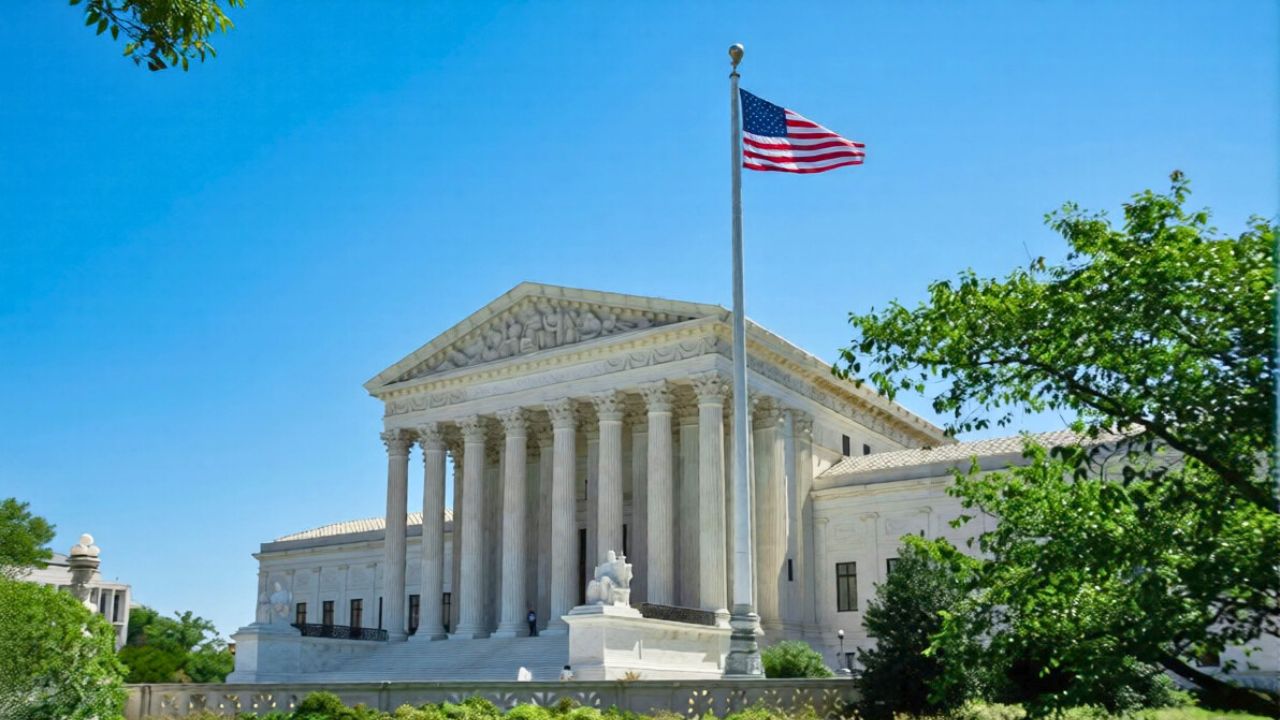
Supreme Court lets California use a Democrat-friendly map — and the redistricting arms race just got louder
WASHINGTON — The U.S. Supreme Court has allowed California to use a new congressional map designed to give Democrats a better shot at flipping five Republican-held seats, a decision that ramps up the national mid-decade redistricting fight as both parties maneuver for control of the House ahead of November’s midterm elections. The court denied a challenge from the California Republican Party and did so without a detailed explanation and without noted public dissent.
At the center of the dispute is California’s Proposition 50 map — crafted with clear partisan intent, Democrats argue, to counter Republican-led redistricting in Texas that was similarly aimed at gaining five seats. Republicans attacked California’s plan as an unlawful racial gerrymander, arguing it relied on race to bolster Latino support for Democrats and violated the Constitution and the federal Voting Rights Act. But Reuters reported a lower federal court found the evidence of racial motivation weak and concluded the map’s driving force was partisan advantage, not race — a distinction that matters because the Supreme Court has repeatedly signaled it will not police purely partisan gerrymandering in federal court.
What’s making this story blow up isn’t just “California redrew lines.” It’s the broader message: if your party controls a big state, you’re under pressure to use it. Reuters’ recent reporting describes an escalating “arms race” in which both parties treat maps like movable chess pieces rather than once-a-decade housekeeping. The dynamic traces back to the Supreme Court’s 2019 ruling that pulled federal courts out of partisan gerrymandering disputes, pushing the fight into state courts, ballot initiatives, and raw political muscle — which helps explain why mid-decade redistricting is becoming normalized instead of taboo.
California’s move also matters because Democrats don’t need a huge swing to change control of the House. A handful of seats can decide the chamber, and a map built to flip five is the kind of tool that can reshape the battlefield before a single ad runs. The practical impact will depend on candidates, turnout, and local dynamics, but the legal and political impact is immediate: it signals that aggressive maps can survive if they’re framed as partisan rather than racial, and it invites copycat moves elsewhere. In short, the Supreme Court didn’t just clear a California plan — it strengthened the incentive for both parties to keep redrawing until they like the math.