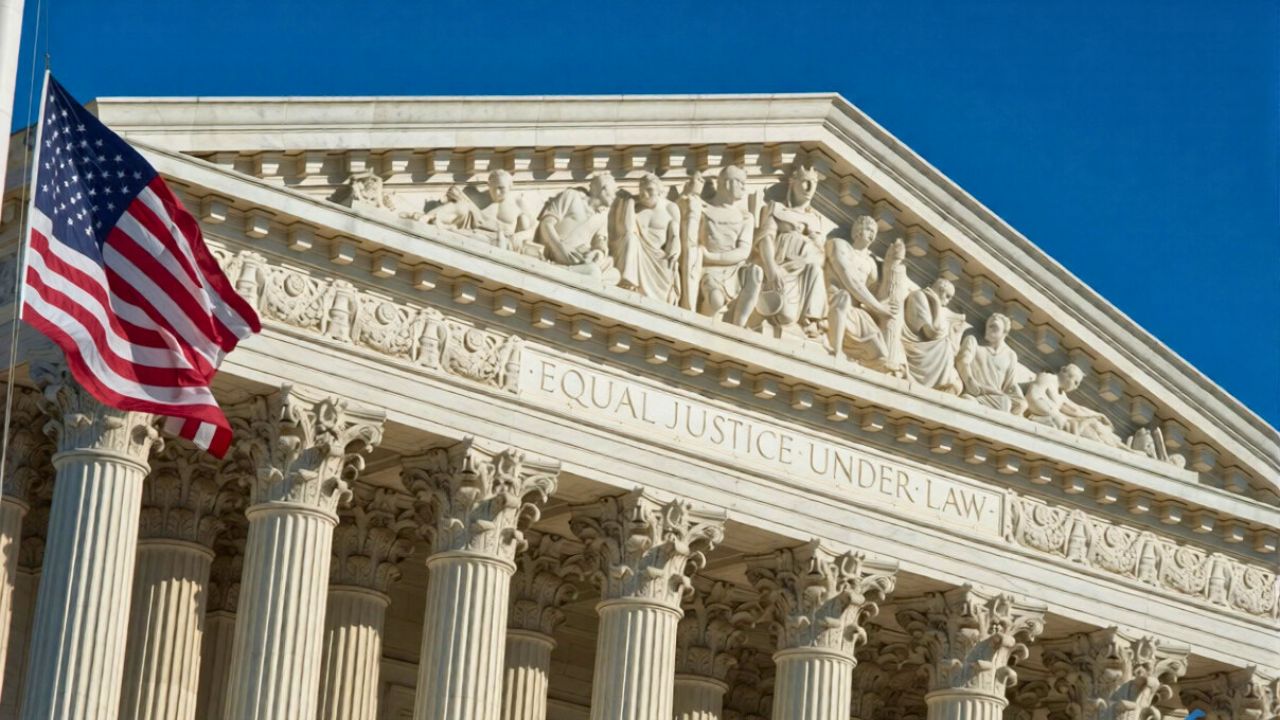
Supreme Court signals opinions may be coming Friday as tariff case attention builds
The Supreme Court has signaled that opinions are likely coming on Friday, focusing attention on a high-stakes tariff dispute that could reshape presidential power over trade. Investors, businesses and legal analysts are watching closely as the justices weigh President Trump’s use of emergency authority to impose sweeping tariffs on trading partners. The outcome will test how far the court is willing to let the White House stretch economic emergency laws and could unlock a wave of refund claims from companies that paid the duties.
The tariff fight sits at the intersection of constitutional limits, global commerce and domestic politics, with billions of dollars and key diplomatic relationships on the line. As anticipation builds for the next opinion day, the court’s handling of this case is emerging as an early defining moment for how it will police the boundary between Congress and the presidency on economic policy.
Signals from the court and a rare tariff showdown
The Supreme Court rarely telegraphs its moves, but it has put the public on notice that opinions are expected on Friday, and legal watchers are treating that signal as a likely window for a major ruling on tariffs. An announcement that the justices would release opinions in one or more argued cases on a specific Friday has already prompted close tracking on specialist sites such as SCOTUS statistics, which follow how the court sequences big decisions. With the docket featuring a high-profile clash over presidential trade powers, that kind of scheduling notice quickly becomes a market-moving event.
The case that has drawn so much attention centers on President Trump’s decision to invoke emergency authority to impose what he described as “reciprocal” tariffs on most countries, a move framed as a response to trade deficits that he called a national security threat. The legal question is whether statutes like the International Emergency Economic Powers Act, often shortened to IEEPA, actually permit tariffs of this breadth in peacetime or whether Congress reserved that tool for more targeted financial sanctions. By flagging an opinion day while this dispute is pending, the court has effectively focused Washington and Wall Street on the possibility that the justices are ready to define those limits.
How Trump’s reciprocal tariffs set up the legal clash
President Trump rolled out his reciprocal tariffs as a signature part of his economic agenda, arguing that matching other countries’ duties on United States exports would correct what he described as unfair trade practices. According to reporting on the tariff rollout, Trump set these reciprocal rates on most countries in early April 2025 and justified them as a response to persistent trade deficits that he labeled a national emergency for American workers. That framing allowed the administration to rely on emergency powers rather than the more traditional trade authorities that run through Congress, a choice that now sits at the heart of the Supreme Court dispute.
Businesses that import everything from industrial components to consumer goods quickly felt the impact of the new duties, and some began organizing to challenge the policy in court. Companies in states such as Colorado, which depend heavily on global supply chains, have tracked the tariffs’ costs and are already preparing to seek refunds if the justices rule that the duties were unlawful. Coverage of how Trump set what has highlighted the way the administration’s legal theory departed from past uses of emergency economic tools, which typically targeted specific adversaries rather than a broad swath of trading partners.
The legal stakes: emergency powers and presidential limits
At the center of the case is the International Emergency Economic Powers Act, which was written to give presidents flexibility to respond to extraordinary foreign threats but has rarely been used to impose across-the-board tariffs in peacetime. In the tariff litigation, The Government has conceded that the President enjoys no inherent authority to impose tariffs during peacetime and instead relies on IEEPA as the statutory hook. A key filing in Learning Resources, Inc. v. Trump, cataloged on Justia’s summary of, underscores that the administration’s case rises or falls on whether that law can bear the weight of a global tariff program.
Chief Justice John Roberts has already signaled skepticism about that theory in an opinion released on a related challenge, writing that Trump’s unprecedented use of the International Emergency Econo authority pushed past the statute’s text and history. In that decision, Roberts stressed that emergency powers are not a blank check for long-running trade campaigns and that ordinary separation-of-powers principles continue to apply even when presidents cite foreign affairs. Reporting on his opinion, which described why normal foreign affairs concerns render the doctrine inapplicable, has been widely read as a preview of how the court might treat the broader reciprocal tariffs case that is now drawing so much attention.
Economic fallout and the fight over refunds
Whatever the court decides, the tariff case carries major financial consequences for companies that have already paid the contested duties. Analysts at The Budget Lab at Yale University have tracked the structure and impact of the tariffs and have described how the reciprocal duties rolled out over the course of 2025 as part of a broader shift in trade policy. Their research on the state of United explains that SCOTUS is now examining whether the President’s use of IEEPA to impose those tariffs is consistent with the statute, a question that could determine if importers are entitled to recover large sums.
Businesses and trade lawyers are already gaming out what happens if the court rules that many of President Trump’s tariffs are illegal. One analysis has projected that a decision against the administration will trigger a process in which billions of dollars in refunds flow back to companies, with United States Customs tasked with sorting out how to issue payments. That prospect has energized firms that have kept meticulous records of their tariff bills and has raised concerns inside government about the administrative burden of unwinding a global tariff regime. Investors, who have been warned to brace for a knee-jerk market reaction to a coming Supreme Court tariff decision, are watching closely to see whether the justices side with The Supreme Court critics of expansive emergency powers or with those who argue that the President needs maximum flexibility on trade.
From ports and factories to global markets
The stakes of the tariff ruling are visible not just in legal briefs and economic models but in the daily operations of ports and factories. Photographs of Trucks lining up to enter a Port of Oakland shipping terminal in Oakland, Calif, captured the physical bottlenecks that emerged as companies rushed to move goods before and after tariff announcements. Those images, highlighted in coverage of how Trucks line up, brought home how policy shifts in Washington can ripple through container yards, warehouse shifts and trucking routes within days.
Globally, trading partners have responded to Trump’s tariffs with a mix of retaliation and negotiation, while keeping a close eye on how the Supreme Court handles the challenge. One detailed account of the litigation has described the decision as a significant loss to President Trump on an issue that is critical for his economic agenda, explaining that the court concluded his use of a 1977 law exceeded his authority. That same analysis of the Supreme Court striking has already been read closely in foreign capitals that are weighing whether to treat the ruling as a sign that United States trade policy is becoming less volatile. For American workers and consumers, the decision will help determine not only the price of imported goods but also the stability of the legal framework that governs how quickly presidents can rewrite the rules of global commerce.
Like Fix It Homestead’s content? Be sure to follow us.
Here’s more from us:
- I made Joanna Gaines’s Friendsgiving casserole and here is what I would keep
- Pump Shotguns That Jam the Moment You Actually Need Them
- The First 5 Things Guests Notice About Your Living Room at Christmas
- What Caliber Works Best for Groundhogs, Armadillos, and Other Digging Pests?
- Rifles worth keeping by the back door on any rural property
*This article was developed with AI-powered tools and has been carefully reviewed by our editors.