The $10 upkeep step that protects a $10,000 system
You spend thousands on heating and cooling so your home stays comfortable without a second thought. The smallest part of that system, a disposable filter that costs around ten dollars, quietly decides whether your investment lasts for decades or fails early. When you treat that $10 upkeep step as non‑negotiable, you protect a system that can easily cost $10,000 or more to replace.
Rather than obsessing over every line in your budget, you can lock in big savings by defending the infrastructure that runs your home. A simple habit of changing one part on schedule cuts energy waste, avoids emergency breakdowns, and keeps more of your money available for bigger goals.
Why your HVAC is a $10,000 asset hiding in plain sight
Your heating and cooling equipment is one of the most expensive systems in your home, even if you rarely see it. Central air, a high‑efficiency furnace, or a heat pump plus ductwork can easily rival the price of a car, yet you probably think about your vehicle maintenance far more often. In markets like Tampa, where summers are long and humid, guidance on home finances points out that replacing major home systems can be a substantial expense starting from $10,000, which is exactly the territory your HVAC falls into.
Service providers that see failures up close are even more blunt about the stakes. When you skip routine attention, they warn that Neglecting regular care can lead directly to system failure and a full replacement that costs $10,000 or more. If you rent, property managers explain that when damage from poor upkeep is irreparable, a new unit for the HVAC system starts at around $10,000 as well. Once you see that number in writing, a ten dollar filter suddenly looks like cheap insurance on a very expensive asset.
The $10 part that quietly runs the whole show
The least glamorous piece of that $10,000 system is the one that keeps it alive. Hidden behind a return grille or inside the air handler, your filter decides how easily air moves through the equipment. New homeowner guides spell out that one of the first skills you need is to Change Your HVACself, because your landlord is no longer doing it for you. They peg the Cost of basic Filters at $10 to $40 each, which means you can protect a five‑figure system for less than you might spend on a streaming subscription in a single month.
The job that $10 part performs is simple and unforgiving. As air returns from your rooms, the filter catches dust, hair, and debris before they hit the blower motor and coils. If you let it clog, that same guide explains Why this matters so much: the system has to work harder, components run hotter, and wear accelerates. Technical references on how an air filter works make the same point in more detail, describing how restricted flow raises pressure and forces the fan to draw more power just to move the same amount of air.
How a dirty filter burns money every hour it runs
Leave an old filter in place, and the damage starts quietly on your utility bill long before anything breaks. As dust builds up, Restricted airflow makes your furnace work harder, which means it burns more energy just to hit the same thermostat setting. Guidance on winter efficiency explains that a clogged filter becomes a roadblock, so the blower has to push against extra resistance and the system wastes more energy just to.
The same drag shows up in summer cooling. When the filter is clogged, the evaporator coil receives less warm air, so it cannot absorb heat efficiently and may start to ice over. Service plans for annual care in places like North Palm Beach describe how neglected filters force the system to run longer cycles, which inflates your bill and shortens the life of the equipment. Over a season, the extra kilowatt‑hours you pay for because of a $10 shortcut can easily rival the cost of replacing the filter on schedule.
From short cycling to burnout: how neglect kills a $10,000 system
Higher energy use is only the first symptom. Ignore the warning signs long enough, and that cheap filter can start a chain reaction that ends with major repairs or a full replacement. Heating specialists describe Dirty Filter Dilemma in stark terms: a clogged air filter is the number one cause of furnace short cycling. When the filter is dirty, your system overheats, shuts down to protect itself, then restarts again and again. That rapid on‑off pattern batters the blower motor, igniter, and control board, all because air cannot move freely through the HVAC cabinet.
Property managers see the end stage of that process when the air handler fails outright. They explain that a dirty filter restricts the air flow into your HVAC system’s air handler, which then strains and often burns out the motor. When that damage is irreparable, the bill for a new unit starts at around $10,000, and you may be responsible if neglect is the documented cause. On the cooling side, technicians point out that a clogged filter can cause your system to overheat and trip safety switches, a problem that regular maintenance and a clean filter would have prevented.
Why landlords, techs, and Tampa money coaches all say the same thing
Compare advice from very different corners of your financial life, and you find surprising agreement about this one habit. Personal finance guidance aimed at homeowners in Tampa opens with the reminder that Saving money is a universal goal, and one of the cleanest ways to do that is by maintaining the systems in your home. When coaches talk about building savings, they often frame $10,000 as a milestone, the same $10,000 figure that shows up again when you look at what it costs to replace a failed HVAC unit.
On the practical side, both new homeowner checklists and tenant FAQs put filter changes at the top of the list. Guides on Maintenance Skills All highlight the filter as a low‑cost task you can handle without a contractor, while rental policies spell out that failing to change it can be considered negligence. Even professional maintenance plans in places like Greater Minneapolis explain that maintenance now can prevent a major expense later. When everyone from your landlord to your HVAC tech to your money coach is pointing at the same ten dollar chore, it is a signal you should treat it as non‑negotiable.
How often you should change the filter, really
Once you accept that the filter is a financial safeguard, the next question is timing. The answer depends on how your home is built and how you live in it, but you can use a simple rule of thumb. For a typical suburban house with a standard one‑inch filter and average occupancy, many technicians recommend checking it monthly and replacing it at least every 60 to 90 days. If you have pets that shed, live in a dusty area, or keep windows open frequently, you should lean toward the shorter end of that range because hair and debris load up the media much faster.
Some modern systems use thicker media filters that last longer, but even those need regular inspection. Service plans for annual preventative care in Florida describe how technicians visually inspect and replace filters as part of every visit so they can ensure steady airflow. When you handle the task yourself, you can mirror that discipline by tying filter checks to a fixed date, such as the first weekend of each month, or by setting a recurring reminder in your calendar app. The cost of a few extra filters per year is tiny compared with what you risk by stretching them too far.
Picking the right filter without overpaying
Not every filter is a good fit for every system, so you want to balance air quality with airflow. Retail shelves are full of options that promise to catch the smallest particles, but if you pick a very restrictive media for a system that was not designed for it, you can choke off the air and recreate the same problems as a dirty filter. References on HVAC system installation explain that equipment is sized with a certain pressure drop in mind, which means you should match the filter’s rating to the manufacturer’s specifications rather than chasing the highest number on the box.
At the same time, you do not need to chase premium branding to get solid performance. Guides for new homeowners point out that basic pleated Filters in the $10 to $40 range are sufficient for most households, especially if you replace them on time. If someone in your home has allergies or breathing issues, you can step up one level in filtration while still watching for signs of restricted airflow, such as whistling vents or rooms that suddenly feel stuffy. The key is to treat the filter as a regular purchase in your budget, not as an occasional emergency buy when something already feels wrong.
The five‑minute routine that protects your system
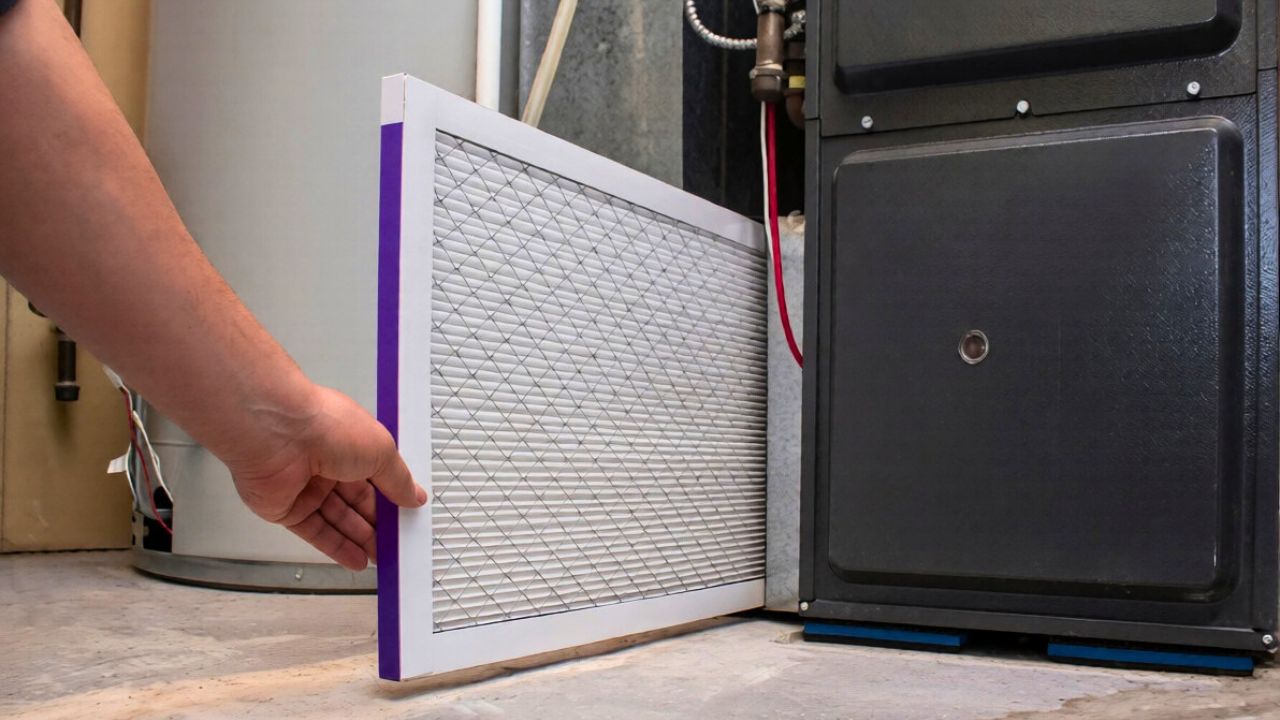
Once you know where your filter lives, the physical act of changing it takes less time than making coffee. You turn off the system at the thermostat, open the return grille or air handler door, slide out the old filter, and check the arrows on the new one so they point in the direction of airflow back toward the equipment. Then you slide the new filter into place, close everything up, and restart the system. During every maintenance visit, During inspections, companies like Champion and Nash follow a similar routine, which shows you that this is not a complicated procedure reserved for experts.
While you are there, you can use the moment to scan for other warning signs. Look for any gaps around the filter rack where air might bypass the media, listen for unusual noises when the system restarts, and feel for consistent airflow at a few supply registers. If you notice weak flow in one room or hot and cold spots, that is a cue to call for professional help before a small issue grows. Resources that outline 5 essential HVAC for summer stress that a clean filter not only preserves efficiency but also protects sensitive components from debris, which means your five‑minute habit pays off in multiple ways.
Turning a $10 habit into long‑term financial leverage
Once you build the filter change into your routine, you can treat the avoided costs as money you are effectively paying yourself. Financial coaches who talk about hitting your first $10,000 in savings without tracking every receipt emphasize that you get there faster by cutting big, infrequent expenses rather than obsessing over coffee. Avoiding a premature $10,000 HVAC replacement fits that strategy perfectly. Every year you extend the life of your system by keeping airflow healthy is a year you do not have to raid your emergency fund or take on financing for new equipment.
The same logic applies to your monthly bills. When you prevent the Restricted airflow that makes your furnace or air conditioner work harder, you lower your baseline energy use without sacrificing comfort. Over a decade, the difference between a system that runs efficiently and one that labors through every cycle can add up to thousands of dollars. By committing to a ten dollar upkeep step on a fixed schedule, you protect a $10,000 system, smooth out your cash flow, and give yourself more room to pursue larger goals, from renovations to investments, without the shadow of an avoidable breakdown hanging over your budget.
Like Fix It Homestead’s content? Be sure to follow us.
Here’s more from us:
- I made Joanna Gaines’s Friendsgiving casserole and here is what I would keep
- Pump Shotguns That Jam the Moment You Actually Need Them
- The First 5 Things Guests Notice About Your Living Room at Christmas
- What Caliber Works Best for Groundhogs, Armadillos, and Other Digging Pests?
- Rifles worth keeping by the back door on any rural property
*This article was developed with AI-powered tools and has been carefully reviewed by our editors.