The 2026 home trend nobody brags about, building resilience for outages, storms, and price spikes
In 2026, the most valuable home upgrade is not the one that shows up in listing photos or social feeds. It is the quiet shift toward houses that can ride out outages, storms, and energy price spikes with minimal disruption. You are moving into a decade when resilience, not just style or square footage, will decide how livable and financially stable your home really is.
Instead of treating blackouts and volatile bills as rare annoyances, you now have to plan for them as recurring features of daily life. That means thinking of your home as a small-scale infrastructure project, one that can generate, store, and manage its own power while protecting your health and budget when the wider system falters.
Why resilience is the 2026 home upgrade nobody boasts about
Resilience is becoming the quiet dividing line between homes that merely look modern and homes that actually function under stress. As you head into 2026, energy reliability is emerging as one of the biggest concerns for homeowners, with grid instability and rising demand making outages more common and less predictable. Industry voices are already warning that, as you enter 2026, energy reliability is becoming a central worry, a shift captured in messaging that explicitly links the Grid and power outage protection to everyday life. Yet most of the work that makes a home resilient, from wiring to insulation to backup systems, is invisible once installed.
That invisibility is exactly why resilience rarely shows up in cocktail party bragging rights, even as it quietly shapes property value and quality of life. Housing analysts are already seeing a shift in what Buyers prioritize, with more listings highlighting smart safety features and systems designed with natural disasters in mind, and a higher share of homes advertising things like backup power and hardened structures for 2026 than in prior years. When you look closely at those trends, you see that the real status symbol is not a waterfall island or a soaking tub, it is a house that keeps the lights on, the air breathable, and the fridge running when the neighborhood goes dark, a house that reflects what Buyers now want from their next move.
The new risk landscape: outages, storms, and price shocks
Your home is sitting inside an energy system that is under growing strain from both climate and markets. Forecasts for 2026 point to a Market on Edge, with Low Gas Prices coexisting alongside Rising Power Prices as utilities juggle fuel costs, infrastructure needs, and policy shifts. Analysts expect that the period of relatively stable electricity rates is likely to come to an end, with retail tariffs and average prices facing upward pressure as the grid modernizes and demand grows, a dynamic captured in a detailed Energy Forecast that explicitly links low gas prices to rising power prices and a Market on Edge.
At the same time, climate risk is no longer theoretical background noise. Utilities are rethinking their entire planning approach, acknowledging that there is no one-size-fits-all solution as they confront wildfire mitigation, storm hardening, and flood prevention tailored to the specific hazards their systems face. Industry events now feature sessions on tailored resilience that walk through how utilities are mapping local threats and redesigning networks accordingly, as seen in a 2026 Event Schedule focused on how natural hazards are shaping planning across the United States. For you, that means more localized outages, more extreme weather events, and more volatility in monthly bills, unless your home is prepared to buffer those shocks.
Price spikes are not a hypothetical anymore
Energy price volatility is moving from the fine print of utility filings into your household budget. The latest projections from the Energy Information Agency show that residential electricity prices, measured in cents per kilowatt hour, are expected to climb significantly by the end of 2026, with some scenarios pointing to increases of up to +18 percent over current levels. That kind of jump can erase the savings you thought you had locked in from efficient appliances or a smaller footprint, a reality spelled out in detail by analysts who track how the Energy Information Agency expects residential electricity prices to increase by up to +18% by the end of 2026.
Natural gas is not a simple escape hatch either. Another set of forecasts for 2026 notes that Peak power prices will remain tied to natural gas market fundamentals, and that Seasonal heating and cooling cycles will continue to drive demand spikes that ripple through both wholesale and retail tariffs. In other words, even if headline gas prices look low, the structure of the power market means you can still see sharp swings in what you pay for electricity, especially during extreme heat or cold. Analysts warn that this fossil fuel linked dynamic will keep influencing retail tariffs and average prices, a pattern laid out in an energy prices forecast that connects Peak power prices and Seasonal cycles directly to your bill.
From backup to true resilience: how your home’s energy system is changing
For years, backup power meant a portable generator you dragged out of the garage when the lights went off. In 2026, that definition is outdated. Specialists now draw a clear line between Home Energy Backup and energy Resilience, explaining that backup is about short term supply during an outage, while resilience is about designing your entire system to anticipate, absorb, and adapt to disruptions. In other words, resilience is a strategy, not a gadget, and it covers how your home uses, stores, and manages power every day, a distinction spelled out in guidance that contrasts Home Energy Backup vs. Resilience and asks What the Difference really means for your Home.
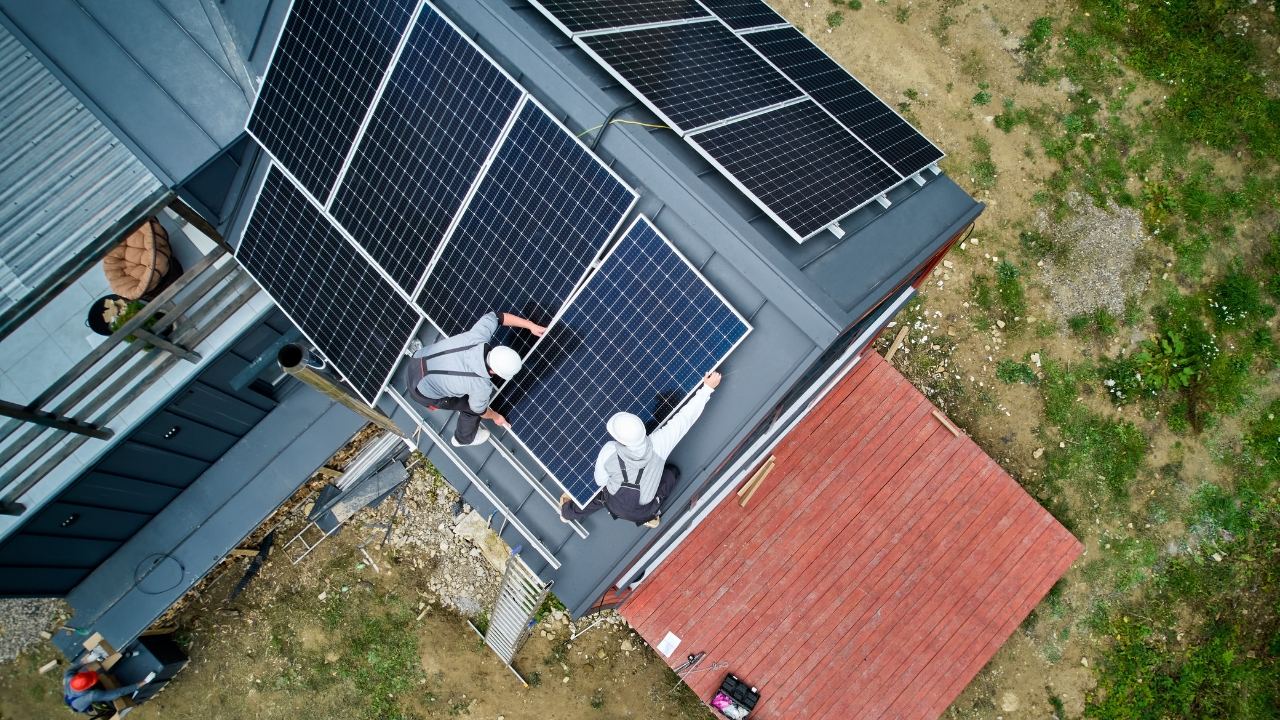
That shift is visible in the technology now entering mainstream homes. Analysts tracking 2026 Trends in The Future of Home Energy Storage Solutions describe a landscape where batteries are no longer just emergency reserves, they are intelligent management hubs that empower households to optimize when they draw from the grid, when they store solar, and when they power critical loads. These systems integrate with rooftop panels, smart inverters, and load controllers to create a flexible microgrid inside your walls, a direction highlighted in reporting on how 2026 Trends are turning storage into The Future of Home Energy Storage Solutions that function as management hubs.
Storage, solar, and “energy independence” at the household level
As outages and price spikes become more common, you are seeing a new ambition emerge: household scale energy independence. Reporting on American Homes Declare Energy Independence in 2026 describes how advancements in smart energy solutions and design are redefining what it means to be self sufficient, with solar panels and batteries working together to enhance self consumption from solar and reduce reliance on the grid. The analysis notes that, like solar panels, batteries are now central to this strategy, allowing you to capture midday generation and deploy it in the evening or during outages, a pattern that underpins the narrative of American Homes Declare Energy Independence and explains How smart design is redefining self reliance.
Market data backs up that shift. Research into the Residential Back up Power Market Trends, Opportunities, and Forecasts to 2030 finds that a leading trend is the growing convergence of solar photovoltaic systems with battery storage, as homeowners seek seamless solutions that can both cut bills and provide backup. The same analysis notes that high initial costs remain a challenge in expanding accessibility, even as major players like Atlas Copco Group invest in the space, a reminder that policy incentives and financing models will matter as much as technology. For you, the takeaway is clear: pairing solar with storage is no longer a niche experiment, it is becoming the default template for resilient homes, as documented in detailed Residential Back up Power market research that tracks convergence with solar PV and the role of Atlas Copco Group.
Resilience is also about walls, windows, and the air you breathe
Energy resilience is not just about electrons, it is also about how your building envelope and indoor environment respond when the outside world turns hostile. Technical guidance on Energy Resilience from building code experts emphasizes that a variety of building technologies and materials can contribute to improved performance, including an Enhanced envelope with better insulation, high performance windows, and air sealing that keeps conditioned air inside longer during outages. These measures reduce the power needed to maintain comfort and buy you extra hours of livable conditions when heating or cooling systems are offline, a strategy embedded in evolving Enhanced building envelope standards that link resilience and building energy codes.
Indoor Air Quality is another underappreciated pillar of resilience. Official Home Resilience Guide materials explain that Indoor Air Quality, often shortened to IAQ, refers to the air quality in buildings as it relates to the health of occupants, and that There are multiple sources of indoor pollution, from combustion appliances to outdoor wildfire smoke that infiltrates through leaks. In a prolonged outage, when you may rely on unvented backup heaters or keep windows closed against smoke, poor IAQ can become a serious health risk. That is why resilient design now includes filtration, ventilation strategies, and material choices that limit pollutants, as outlined in county level Indoor Air Quality guidance that defines IAQ and notes There are many sources that contribute to climate change and indoor pollution.
How buyers and investors are quietly repricing resilience
Even if you never use the word resilience in a listing, the market is starting to price it in. Housing forecasts for 2026 describe what some analysts call The Great Housing Reset, with U.S. homebuyers finally getting some relief on inventory and affordability compared with the tightest years since the Great Recession era. As more options return, buyers can be choosier, and they are increasingly drawn to homes that promise lower operating costs and better protection from disruption, a trend captured in predictions that were Published by Chen Zhao and Daryl Fairweather as part of a broader look at how the market is resetting.
Investors are making similar calculations. Sustainability and climate focused analyses for 2026 argue that, for limited and general partners, anticipating how physical risk will evolve is becoming just as critical as understanding financial metrics, and that resilience can be a potential source of relative returns. In practice, that means capital is flowing toward assets and neighborhoods that are better positioned against floods, fires, and grid failures, and away from those that face repeated disruption. If you own or are shopping for a home, you are effectively competing in a market where resilience features are becoming a quiet but powerful differentiator, a point underscored in commentary that urges investors to treat climate risk as a potential source of relative returns rather than a side note.
Smart tech, EVs, and the cyber side of keeping the lights on
Resilient homes are increasingly digital, which introduces both new capabilities and new vulnerabilities. Energy trend analysts describe 2026 as the year when energy moves from transition to precision, with intelligence, efficiency, and resilience defining performance and becoming the core of business strategy. That same mindset is filtering into residential systems, where smart panels, connected thermostats, and app controlled batteries orchestrate when and how your home uses power, a direction captured in an Energy Trends Report 2026 that frames intelligence and resilience as central to performance.
Electric vehicles are part of that ecosystem. With EVs becoming mainstream, real estate analysts note that a dedicated charging setup is quickly turning into a must have feature, and that buyers are starting to look for future ready infrastructure that can support both current and next generation vehicles. In some cases, that includes bidirectional charging that lets your car feed power back into the house during an outage, effectively turning a 2025 or 2026 model year EV into a rolling battery. At the same time, the more connected your home becomes, the more you have to think like a security professional. Cybersecurity experts observing 2026 technology budgets say the technologies CISOs are investing in reflect a shift toward Less experimentation, More control, and Fewer tools with clearer accountability, a philosophy you can apply at home by consolidating platforms and hardening your network, as described in analysis of how Less experimentation and More control are shaping 2026 security spending. Real estate advisors already warn that Dec trends show buyers prioritizing money saving green tech and Future Ready Infrastructure, especially around EV charging.
What utilities and grid planners are doing, and what that means for you
Resilience is not just a homeowner project, it is also a utility level transformation that will shape what is possible at the property scale. At the Power Resilience Forum 2026, leaders like Lisa Tiffin, Chief Commercial Officer, Tri State Generation, Transmission Association, Inc, are outlining how distributed energy resources such as rooftop solar and community batteries can support grid stability in an age of climate extremes. As climate risks intensify, utilities are being pushed to accelerate their own resilience journeys, which in practice means more programs that reward you for installing flexible resources and more opportunities to participate in demand response or local microgrids, themes highlighted in the forum agenda that features Lisa Tiffin and Tri State Generation and Transmission Association, Inc.
At the same time, energy professionals are candid that the grid is entering a period of heightened stress. Some analysts even frame the coming years in stark terms, warning of a potential grid collapse in 2026 and painting vivid scenarios of life with No Wi Fi, no background noise, and the realization that You are suddenly cut off from the digital and electrical infrastructure you take for granted. While such scenarios are at the dramatic end of the spectrum, they underscore a real point: the more you depend on centralized systems, the more exposed you are when they fail. Watching a detailed breakdown of Nov warnings about No Wi Fi and how You might experience a grid failure can be unsettling, but it also clarifies why building your own layers of resilience is no longer optional.
Like Fix It Homestead’s content? Be sure to follow us.
Here’s more from us:
- I made Joanna Gaines’s Friendsgiving casserole and here is what I would keep
- Pump Shotguns That Jam the Moment You Actually Need Them
- The First 5 Things Guests Notice About Your Living Room at Christmas
- What Caliber Works Best for Groundhogs, Armadillos, and Other Digging Pests?
- Rifles worth keeping by the back door on any rural property
*This article was developed with AI-powered tools and has been carefully reviewed by our editors.