The “48-hour rule” for stomach bugs that keeps families from passing it around again
When a stomach bug hits your household, the first instinct is often to get everyone back to school, work, and normal life as quickly as possible. The “48-hour rule” flips that impulse on its head, asking you to wait a full two days after symptoms stop before rejoining the world. Used consistently, that pause can keep a single night of vomiting from turning into a week-long relay of illness through your family, your child’s classroom, and your workplace.
Understanding why those extra hours matter, how long you are actually contagious, and what practical steps you can take at home helps you apply the rule with confidence instead of guesswork. With a clear plan, you can protect vulnerable relatives, avoid repeat infections, and still get back to normal as soon as it is genuinely safe.
Why stomach bugs keep boomeranging through families
Stomach bugs that cause vomiting and diarrhea are usually viral infections of the gut, often grouped under the label viral gastroenteritis. Noroviruses and rotaviruses are among the most common culprits, and they spread easily in close quarters where people share bathrooms, kitchens, and soft furnishings. In a family setting, that means one sick child can quickly be followed by a sick sibling, then a parent, then a grandparent, as the virus moves from hands to surfaces to mouths.
Part of the problem is that you can shed virus particles before you feel ill and continue to shed them after you feel better. Reporting on how long a Stomach virus remains contagious notes that You may spread it for up to two weeks in stool, even though the worst symptoms last only a day or two. When you send a child back to school the morning after their last episode of vomiting, you are often sending them out while they are still shedding large amounts of virus, which is why classrooms and daycare centers see such rapid chains of infection.
What the “48-hour rule” actually means
The “48-hour rule” is a simple idea: you keep yourself or your child at home for 48 hours after the final episode of vomiting or diarrhea. Health guidance on viral gastroenteritis explains that a person usually develops Signs and symptoms of Norovirus 12 to 48 hours after exposure, and that you should stay home for at least 48 hours after symptoms stop. In practice, that means if your child’s last bout of diarrhea is at 8 p.m. on Tuesday, the earliest safe return to school is Thursday evening or Friday morning, not Wednesday.
Parents sometimes hear this rule from schools or nurseries without much explanation, so it can sound arbitrary or overly cautious. In reality, it is grounded in how long People with norovirus remain contagious. One clinical summary notes that People who have norovirus are still contagious for 48 to 72 hours after recovering, which is why You are advised to limit certain activities even when you feel back to normal. The 48-hour buffer is a compromise that dramatically cuts the risk of spreading the virus while still allowing families to resume normal life in a reasonable timeframe.
Norovirus, rotavirus, and the science behind the timing
Norovirus is the leading cause of vomiting, diarrhea, and foodborne illness in the United States, and it is notorious for how efficiently it spreads in households, schools, and cruise ships. A public health Norovirus factsheet explains that How it spreads includes direct contact with an infected person, touching contaminated surfaces, or eating contaminated food, and that if you are sick you may expose people to norovirus even while you are recovering. That lingering shedding is exactly what the 48-hour rule is trying to cover.
On social media, pediatric clinicians have tried to translate this science into practical advice for parents. One widely shared clip titled Is the 48 hour rule for gastroenteritis really important?! spells out that Bugs like Norovirus and Rotavirus which cause winter vomiting are still being shed after symptoms ease, so sending a child back too early almost guarantees more cases. When you understand that the virus is still leaving the body in stool and sometimes in tiny particles when a child uses the toilet, the logic of waiting those extra hours becomes much clearer.
How long you are contagious, even when you feel fine
From your perspective, the illness often feels short and sharp: a miserable night, a rough morning, then a rapid return of appetite and energy. Clinically, though, the contagious window is wider. Guidance on viral gastroenteritis notes that the virus can stay in stool for days or longer after symptoms stop, and that people can spread it whenever they vomit or have diarrhea, according to expert answers on Mar and Noroviruses. That means the risk does not end the moment the bucket is rinsed and the sheets are changed.
Consumer health guidance on how long You should stay home with a stomach virus reinforces that these infections are highly contagious and that You can spread them before symptoms start and for up to two weeks afterward, as summarized in the Key Takeaways. The 48-hour rule does not eliminate all risk, but it targets the period when viral shedding is still high and when people are most likely to have minor “aftershocks” like a loose stool or brief nausea. By staying home through that window, you dramatically reduce the chance of contaminating shared bathrooms, office kitchens, or classroom tables.
Why schools and nurseries insist on 48 hours
When a school or nursery tells you to keep a child home for 48 hours after a stomach bug, it is not just about your child’s comfort, it is about protecting dozens of other families. Public health messaging directed at PARENTS has urged them to keep kids with tummy bug symptoms off school and nursery for 48 hours to avoid passing winter vomiting infections to vulnerable people. In a classroom, one child who returns too soon can contaminate shared toys, door handles, and bathroom taps, setting off a chain of cases that is hard to stop.
Hospitals and clinics echo this caution when they advise families on when it is safe to resume group activities. One hospital guide on avoiding highly contagious stomach flu explains that it is safest to stay home for another 48 to 72 hours after symptoms resolve, because that is when the virus is still being shed, a point highlighted in advice on Dec guidance. When you respect the 48-hour rule, you are not just following a school policy, you are helping to protect classmates who might have asthma, immune conditions, or younger siblings at home who would struggle more with dehydration.
How official guidance backs up the 48-hour pause
Public health agencies have been explicit that staying home beyond the last symptom is a key part of stopping Norovirus. National guidance on Prevention of Norovirus advises you to stay home when sick for at least 2 days (48 hours) after symptoms stop, because you are still contagious during that time. This is not framed as a suggestion for only the most severe cases, but as a standard step for anyone who has had vomiting or diarrhea from a suspected stomach virus.
Food safety guidance is even stricter, because one contagious food handler can infect large numbers of people. A fact sheet for food workers notes that Any food served raw or handled after being cooked can get contaminated with norovirus, and it offers 4 Tips to Prevent Norovirus from spreading in kitchens. Those tips include staying off work while sick and for a period afterward, which mirrors the 48-hour rule families are asked to follow at home. When you keep your child out of a restaurant shift or skip a catering job for those extra days, you are aligning your choices with the same standards that protect diners nationwide.
Cleaning, handwashing, and other ways to stop the cycle
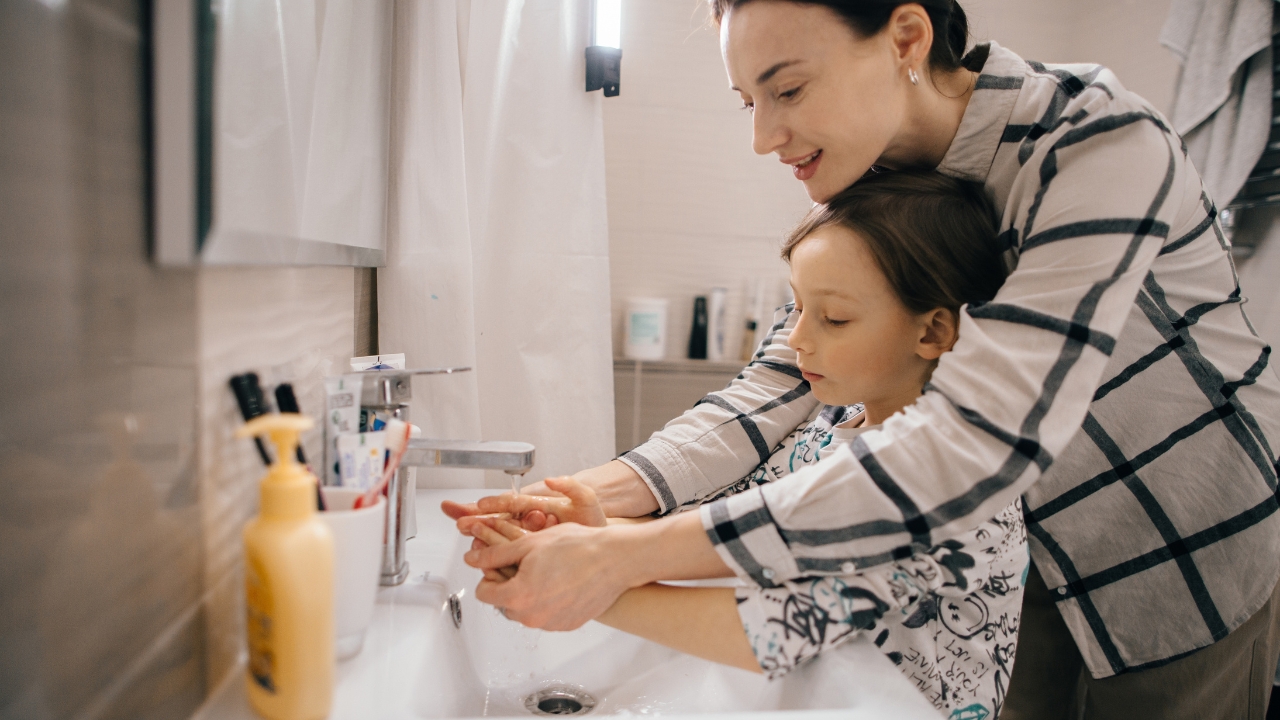
Staying home is only part of the equation, because viruses that cause gastroenteritis are tough and can survive on surfaces for days. Disease Information on Norovirus explains that Symptoms usually include sudden vomiting and diarrhea, and that staff should wash their hands carefully because alcohol-based sanitizers may not remove norovirus from hands. At home, that translates into a simple rule: use soap and water, not just gel, and scrub for at least 20 seconds after every bathroom trip, diaper change, or clean-up of bodily fluids.
Environmental cleaning matters just as much. National prevention advice on Norovirus stresses that it is very contagious but that you can take steps to stop it from spreading, including using bleach-based cleaners and washing laundry on hot cycles. The same guidance emphasizes that if you are sick you should avoid preparing food for others because you may expose people to norovirus, and that you should Wash hands well with soap and water. When you combine the 48-hour stay-home window with rigorous handwashing, careful bathroom cleaning, and separate towels for each family member, you sharply reduce the odds that the virus will find a new host in your household.
Food, work, and social plans: what to avoid in that 48–72 hour window
Even once you feel better, certain activities carry a higher risk of spreading a stomach virus and are worth delaying a bit longer. Clinical advice on how long People with norovirus remain contagious notes that People are still shedding virus for 48 to 72 hours after symptoms resolve, and that You should limit activities like swimming, food preparation, and close-contact sports during that time. If you are the default cook in your home, that might mean relying on packaged foods, takeout, or another family member to handle raw ingredients for a couple of days.
Workplaces that involve food, healthcare, or childcare often have their own policies that mirror or extend the 48-hour rule. A Norovirus factsheet for food workers underscores that Any food served raw or handled after being cooked can get contaminated with norovirus, so staying off the line until you are well past the contagious window is not optional. For social plans, the same logic applies: skipping a crowded birthday party or indoor playdate in that 48 to 72 hour period is a small inconvenience compared with the guilt of knowing you may have seeded an outbreak among friends.
How to talk about the rule with employers, schools, and relatives
Applying the 48-hour rule can be stressful if you are worried about missing work or frustrating a teacher, but clear communication helps. When you call a school office, you can explain that your child had vomiting or diarrhea, that their last symptom was at a specific time, and that you are following the recommended 48-hour exclusion to avoid spreading Norovirus and Rotavirus. Pointing out that national guidance on Norovirus advises people to stay home for at least 2 days after symptoms stop, as set out in Apr Prevention advice, shows that you are not being overcautious, you are following best practice.
With employers, it can help to frame your decision as a way to protect colleagues and business continuity. Sharing that Norovirus is the leading cause of vomiting and diarrhea in the United States and that it spreads quickly in workplaces, as described in public health How Norovirus spreads, underlines that one person returning too soon can knock out half a team. With relatives, especially those eager to visit a recovering child, you can simply explain that you are waiting a full 48 hours after the last symptom so that hugs and shared meals are genuinely safe. That small, evidence-based delay is one of the most effective tools you have to keep stomach bugs from making a second, or third, unwelcome appearance.
Like Fix It Homestead’s content? Be sure to follow us.
Here’s more from us:
- I made Joanna Gaines’s Friendsgiving casserole and here is what I would keep
- Pump Shotguns That Jam the Moment You Actually Need Them
- The First 5 Things Guests Notice About Your Living Room at Christmas
- What Caliber Works Best for Groundhogs, Armadillos, and Other Digging Pests?
- Rifles worth keeping by the back door on any rural property
*This article was developed with AI-powered tools and has been carefully reviewed by our editors.