The attic wiring shortcut that becomes a big deal during a claim
In many homes, the most expensive electrical problem is not the one that trips a breaker today, but the shortcut buried in the attic that only surfaces when you file a fire claim. What looks like a harmless cable draped across insulation or a quick splice outside a box can become the detail an adjuster seizes on to argue that your loss was preventable. If you own a house with older or heavily modified wiring, the way those cables run overhead can quietly shape both your safety and your leverage with your insurer.
Understanding how attic wiring should be installed, and how insurers view outdated or makeshift work, lets you fix small issues before they become life‑changing disputes. It also helps you push back if a company tries to turn a technicality into a reason to walk away from a legitimate claim.
Why attic shortcuts matter when the adjuster shows up
When a fire or electrical incident hits, the story of what happened is often written in your attic. Investigators and adjusters look for patterns that suggest long‑term neglect, such as cables lying loose across joists, open splices, or junction boxes buried under insulation. If they can point to a visible shortcut, they have a ready argument that the loss stemmed from improper installation rather than a covered accident, which can shift thousands of dollars of damage back onto you.
That scrutiny is especially sharp when the wiring itself is known to be higher risk. Aluminum branch circuits, for example, expand and contract more than copper, which can loosen connections and increase resistance heat at terminations. Guidance for landlords notes that aluminum wiring can be a fire hazard because of these inherent qualities, and it flags older systems like Knob and Tube as safety concerns when they are left unmodified in modern homes. If a blaze starts near a loose aluminum splice or a brittle porcelain support, the insurer has a clear path to argue that the hazard was known and unaddressed.
The classic attic “shortcut” that causes outsized trouble
The shortcut that most often comes back to haunt you is deceptively simple: running nonmetallic cable loosely across the tops of attic framing where it can be stepped on, snagged, or buried under stored boxes. Electricians sometimes call this “clothesline wiring,” and it is tempting because it is fast and avoids drilling joists. The problem is that every foot of exposed cable is another chance for a roofer, HVAC tech, or homeowner to damage the insulation or conductor without noticing, which can later show up as arcing or a hot spot.
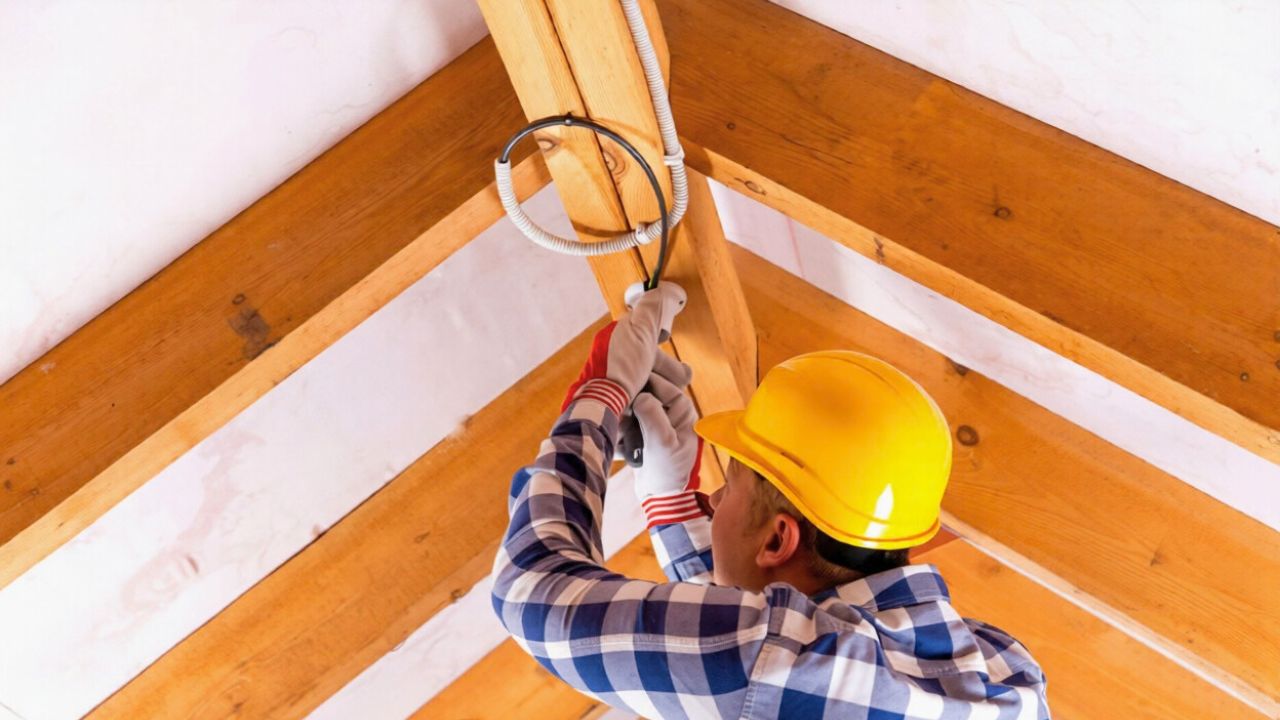
Professional guidance on attic electrical work stresses that you should Use conduit or protective plates where cables might be hit and that you must Secure wiring to framing so it cannot be kicked aside. When those basics are ignored, the attic becomes a patchwork of vulnerable runs and hidden splices. In a claim file, photos of that kind of layout can overshadow the rest of your maintenance history, because they give the insurer a simple visual narrative: the system was not installed or protected in a reasonable way.
What code actually expects above your ceiling
Building codes do not just care that a cable reaches its destination; they care how it gets there. In unfinished attics where people might step, the National Electrical Code requires that cables running across the tops of joists be protected by guard strips that are at least as high as the cable itself. One detailed explanation of section 320.23(A) notes that if there is less than a specified clearance above the joists, you must install these protective boards in any area within reach of a scuttle hole or attic entrance. The goal is to keep feet, tools, and stored items from crushing or abrading the cable jacket.
Working electricians echo that expectation in practical terms. In one discussion among tradespeople, a licensed pro explained that They have to run cables through holes bored in floor joists or on running boards fastened in place, with wires secured at proper intervals, rather than just draped loose. Another electrician summarized it by saying that is Basically the standard for a safe attic run. When your wiring clearly follows those patterns, you are not only safer, you are also better positioned to show an adjuster that your installation met accepted practice.
Red flags inspectors and insurers see in Your Attic
From the ground, your home might look well maintained, but in Your Attic the story can be very different. Inspectors routinely find Electrical Hazards such as Exposed Wiring, Uncovered Junction Boxes, and Overcrowded Junction Boxes where too many conductors are crammed into a small space. Each of these conditions increases the chance of overheating or arcing, especially when insulation blankets the area and traps heat. Improperly terminated cables, labeled in one guide as Improperly Termin, are another common find, with bare conductors twisted together and taped instead of being secured in a proper connector.
Video walkthroughs of attic inspections show how stark these problems can look. In one clip from Nov, an inspector explains that improper attic wiring poses significant safety hazards and points to “typem wiring often called roommix” that is not properly secured or supported with staples. Another video on attic work shows a cable identified as Romx practically coming out of the attic, with the narrator calling it “crazy” and “dangerous in every way.” When an adjuster sees similar scenes in your home after a loss, it becomes much easier for them to argue that the risk was obvious and that you failed to correct it.
Old systems insurers already distrust
Even if your attic wiring looks neat, the underlying system can still trigger skepticism. Many carriers treat older methods like Knob and Tube Wiring as inherently higher risk, especially when they are still serving modern loads such as air conditioners, space heaters, and large kitchen appliances. One detailed Blog from Vargas and Vargas Insurance explains that a key problem is Lack of Grounding, which leaves you without a safe path for fault current and increases the risk of shock and fire. When that ungrounded system is spliced to newer cable in the attic without proper junction boxes, the risk compounds.
Homeowners swapping notes on coverage have seen how this plays out. In one discussion among new buyers, a poster explained that Insurance companies will often extend coverage even when some Knob and Tube Wiring remains, but if you later lose the house to fire, the carrier can point to that outdated system as a reason to deny the claim. The same thread described a case where a neighbor’s insurer refused to cover their claim after a fire, citing the presence of old wiring that had been disclosed but not upgraded. When that wiring runs through your attic, every visible shortcut around it becomes another data point against you.
How insurers frame “faulty wiring” versus covered loss
On paper, most homeowners policies cover fire and many types of electrical damage, but the fine print draws a line between sudden, accidental events and problems tied to age or poor maintenance. One major carrier explains that Electrical panels are typically covered if the damage results from a sudden and accidental loss, but not if the failure stems from age or improper maintenance. In practice, that means a lightning‑induced surge that fries your panel is treated very differently from a slow‑burning fault in a loose attic splice that has been heating up for years.
Specialty insurance advisers field Frequently Asked Questions about where that line sits. One common query is, Will insurance cover a power surge that damages electronics, and the answer is often Yes if the surge is caused by a covered peril such as a storm. By contrast, if the surge traces back to overloaded attic circuits or makeshift junctions feeding too many outlets, the carrier can argue that the damage falls on the wrong side of the sudden‑versus‑maintenance divide. The more your attic looks like a deliberate shortcut, the easier it is for them to make that case.
Denial tactics that turn wiring into a pretext
When a claim is large, some insurers look for any plausible reason to narrow or deny it, and wiring is a convenient lever. Legal advocates who track these disputes describe a pattern of Claiming the Damage covered by pointing to policy exclusions or arguing that the loss stems from wear and tear. One common tactic is summarized as “Covered One of” most frequent strategies, where the company asserts that the damage falls outside the scope of your policy because it is tied to faulty construction or long‑term neglect.
In the context of attic wiring, that can mean an adjuster photographing every exposed cable, open junction, and improvised splice, then arguing that the fire originated in a part of the system that was never up to standard. Consumer‑facing videos on old wiring, such as one from Mar featuring John of Backyard Maine, warn that insurers “hate” certain legacy systems and may use them as a reason to hike premiums or walk away after a loss. When your attic shows both outdated methods and obvious shortcuts, you give the company a ready‑made narrative that the risk was foreseeable and unmitigated.
Warning signs you should act on before a loss
You do not need to wait for a claim to find out how your attic wiring is holding up. Electricians flag a set of clear warning signs that should prompt an inspection, including Frequent blown fuses, breakers that trip repeatedly, lights that dim when large appliances start, and outlets that feel warm to the touch. If your house still has older wiring methods or an electrical system that predates today’s technology, one guide notes that the original supply design may be exceeded by modern loads, which is a strong cue to call an electrician for an inspection.
In the attic itself, you should look for cables lying loose across joists, junction boxes hidden under insulation, or any sign of melted or brittle insulation on wires. Professional advice on avoiding electrical fires stresses that aluminum conductors and older systems like Knob and Tube Wiring are particularly vulnerable when they are modified by amateurs or tied into newer circuits without proper connectors. If you see splices wrapped only in tape, or porcelain knobs dangling loose from rafters, you are looking at conditions that could both start a fire and give an insurer ammunition to argue that you ignored obvious risks.
How to talk to pros and your insurer about fixes
Once you know your attic has issues, the next step is to bring in a licensed electrician and, in some cases, loop in your insurer before a loss ever occurs. When you meet the electrician, be specific: point out any cables that cross walking paths, boxes without covers, or areas where Knob and Tube Wiring transitions to modern cable. Ask them to bring the runs into line with code, including guard strips where required and proper support for every cable. Video guides on attic work show how professionals secure “typem wiring often called roommix” with staples and supports, and how they correct dangerous layouts like the Romx cable that was “practically coming out of the attic.” Those are the kinds of corrections you want documented on an invoice.
On the insurance side, it can be worth notifying your carrier once major upgrades are complete, especially if you have replaced aluminum or Knob and Tube Wiring with modern copper circuits. Some companies will reconsider surcharges or coverage limitations when you can show that high‑risk systems have been removed. If you ever face a claim, having a paper trail of professional work, code‑compliant layouts that follow 320.23(A), and visible protections like running boards and guard strips makes it much harder for an adjuster to reduce your loss to a story about one careless shortcut in the attic.
Like Fix It Homestead’s content? Be sure to follow us.
Here’s more from us:
- I made Joanna Gaines’s Friendsgiving casserole and here is what I would keep
- Pump Shotguns That Jam the Moment You Actually Need Them
- The First 5 Things Guests Notice About Your Living Room at Christmas
- What Caliber Works Best for Groundhogs, Armadillos, and Other Digging Pests?
- Rifles worth keeping by the back door on any rural property
*This article was developed with AI-powered tools and has been carefully reviewed by our editors.