The Calibers That Pattern Well With Common Homestead Loads (And the Ones That Don’t)
On a working homestead, you do not have the luxury of a different firearm for every chore. You need a handful of calibers and loads that pattern predictably for predators, livestock dispatch, and home defense, and you need to know which combinations fight you every step of the way. Getting that right is less about chasing exotic gear and more about matching gauge, choke, and payload so your patterns land where you live and work.
When you understand which common calibers concentrate pellets efficiently and which ones scatter or underperform with typical homestead loads, you can stock fewer shells, train more effectively, and avoid dangerous surprises at close range. The goal is not perfection on a pattern board, but repeatable performance in the barnyard, the back pasture, and the hallway at three in the morning.
Why Patterning Matters More on a Homestead Than at the Range
On a homestead, you are rarely shooting under ideal conditions. You may be leaning over a fence post at dusk, trying to stop a coyote without endangering your own animals, or you may be inside a cramped mudroom with family on the other side of a thin wall. In those moments, the way your chosen caliber and load actually patterns, not how it looks on the box, determines whether pellets stay on target or drift into something you cannot afford to hit. Patterning is how you verify that your “do everything” shotgun really does what you think it does at the distances you are likely to face.
Pattern testing also exposes the myth that all shotguns of the same gauge behave alike. Controlled work comparing a 12 gauge to a .410 has shown that if you fire identical charge weights from a Winchester Model 12 12-gauge and a Model 42 .410 with fixed chokes, the smaller bore can keep a surprisingly tight pattern, even though both are launching the same payload through different bores, according to Brister’s data on shotshell patterns. That kind of result is a reminder that you cannot assume a big bore always patterns better, or that a light, handy gun will automatically be forgiving at close range.
The Workhorse Gauges That Usually Pattern in Your Favor
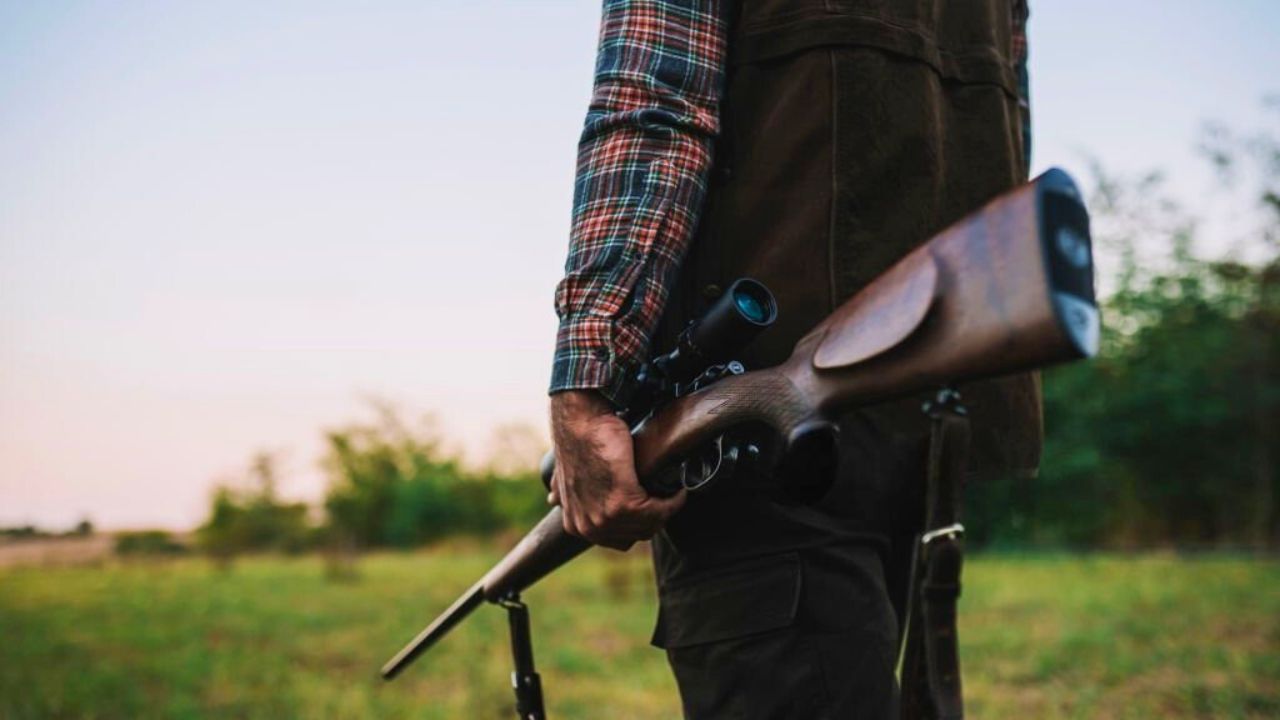
If you want a gauge that patterns well with the widest range of homestead loads, the 12 gauge is still the default. It is considered the most versatile option, with the broadest variety of ammunition available, from light birdshot to heavy buckshot and slugs, which makes it ideal when you are juggling chores that range from pest control to serious defensive work, as outlined in a general guide to shotgun gauges. That variety matters because it lets you tune patterns with off-the-shelf shells instead of hunting for obscure loads that may not be available when supply chains tighten.
The 20 gauge is the other practical workhorse for many homesteads, especially if you or family members are smaller framed or recoil sensitive. When you compare 12 gauge and 20 gauge for defensive use, the 12 gauge offers more power and a denser pattern potential, but the 20 gauge can be easier to control and quicker to get back on target, which matters when you are tired or layered in winter clothing, as highlighted in a discussion of how to choose between 12 gauge and 20 gauge. In practice, both gauges can pattern very effectively with common homestead loads if you match them to appropriate chokes and keep ranges realistic.
Classic 12-Gauge Loads That Pattern Reliably Around the Farm
For daily chores, a moderate 12-gauge field load is often more useful than the heaviest magnum shell you can find. A 1 oz 12-gauge load traveling at 1200 fps or less gives you a controllable pattern that still carries enough energy for small predators and barnyard pests out to about 40 yards, provided you do your part on the trigger and with your hold, a performance window that has been emphasized in guidance on choosing loads for classic guns at 40 yards. That kind of load is also gentle enough for older break-action guns that may still be in service on a homestead, reducing the risk of cracking stocks or loosening actions.
When you shift from general chores to serious defensive use, pattern control becomes even more critical. One widely respected 12-gauge option is a Federal LE 2 ¾ inch 00 8 Pellet FliteControl load, often referred to as Federal LE133, which is singled out as a top home defense choice because its specialized wad design keeps the 8 Pellet column together longer, tightening patterns at typical indoor distances and reducing stray pellets, according to testing of Federal LE defensive shells. For a homesteader, that kind of predictable pattern can mean the difference between stopping a threat in a narrow hallway and unintentionally peppering a wall that backs onto a bedroom.
Where 20 Gauge Shines, and Where It Starts to Struggle
The 20 gauge earns its place on many homesteads because it balances pattern performance with manageable recoil. With modern loads, a 20 gauge can throw dense patterns of small shot for pest control and can carry buckshot or slugs that are fully capable of stopping a threat inside typical home-defense distances, especially when you pattern the gun carefully and keep ranges conservative, a point echoed in comparisons of how well you can use a 20 gauge if you respect its limits in home-defense choices. For smaller shooters or those who need to run a gun repeatedly in a single day, that softer push can translate into better real-world accuracy and faster follow-up shots.
Where the 20 gauge starts to struggle is when you ask it to do everything a 12 gauge does at the same distances with the same pellet sizes. The smaller bore and lighter payloads can mean thinner patterns at the edge of their effective range, particularly with larger buckshot, which can leave gaps big enough for a coyote or feral dog to slip through at longer ranges. You can mitigate some of that with premium wads or tighter chokes, but you should treat the 20 gauge as a tool optimized for moderate ranges and carefully chosen loads, not as a one-for-one replacement for a 12 gauge in every scenario.
The Temptation and Limits of Small Bores Like .410
Compact small bores such as the .410 are attractive on a homestead because they are light, easy to carry, and often chambered in inexpensive single-shot guns that you can leave by the back door. Pattern testing has shown that when you fire identical charge weights from a Winchester Model 12 12-gauge and a Model 42 .410 with fixed chokes, the .410 can keep a surprisingly tight pattern, which challenges the assumption that a tiny bore always throws a ragged cloud of pellets, as documented in detailed work on shotgun bores. In close quarters, that tight pattern can be an advantage if you need to thread pellets through a narrow gap without endangering animals or structures nearby.
The tradeoff is that the .410 gives you very little margin for error. Its small payload means that any inconsistency in your mount, your choke, or your ammunition can open up the pattern or shift it off target, and you have fewer pellets to spare if some land outside the vital zone. On a homestead where shots are often improvised and taken under stress, that lack of forgiveness can be a serious liability, especially for defensive use. You can make a .410 work, but you should treat it as a specialist tool for very close, very controlled shots rather than a general-purpose homestead gun.
How Choke and Barrel Length Shape Real-World Patterns
Even with the right gauge and load, your choke and barrel length can make or break your pattern. A tighter choke can keep pellets together longer, which is useful if you need to reach across a pasture, but it can also create a pattern that is so tight at close range that a small aiming error sends most of the payload past the target. Practical patterning work with common pump guns like the Remington 870 has shown that small changes in choke and barrel configuration can dramatically alter how evenly pellets spread, a point driven home in hands-on demonstrations that feature an 870 being patterned with different setups. For a homesteader, that means you should pattern your gun with the exact choke and barrel you plan to keep on it, not just rely on generic expectations.
Barrel length also affects how a gun handles in tight spaces, which indirectly influences pattern placement. A long barrel may give you a smoother swing on flying pests in the orchard, but it can be unwieldy in a hallway or a cramped barn aisle, where you are more likely to bump into door frames or stall posts and throw off your shot. Shorter barrels are handier indoors but can feel whippy outdoors, which can lead to inconsistent mounts and erratic patterns if you are not practiced. The key is to choose a configuration that matches your most critical tasks and then confirm on paper how that setup actually patterns at the distances you care about.
Modern Materials, Old Guns, and the Risk of Mismatched Loads
Homesteads often rely on older shotguns that have been in the family for decades, and those guns can be very effective if you feed them appropriate loads. However, pairing modern high-pressure or hard-pellet ammunition with thin-walled vintage barrels can be dangerous. One widely shared cautionary example involves advice that you should not even shoot buckshot out of some older guns because it might blow the barrel, with the safer recommendation being to stick to all lead ammunition, including birdshot and buckshot, in anything made post-1890, as discussed in a detailed thread on using buckshot in old guns. That kind of guidance underscores the need to know exactly what your barrels were built to handle before you start experimenting with heavy or exotic loads.
At the other end of the spectrum, modern materials like Tungsten have opened new possibilities for small bores and lighter gauges. Tungsten payloads with smaller shot size can increase both distance and density on target, effectively stretching the range and pattern performance of guns that would otherwise be limited, a point that shooters have emphasized when discussing a small-caliber philosophy for shotguns. For a homesteader, that means you can sometimes get 12-gauge-like performance out of a 20 gauge or even smaller, but you must balance that against cost and the need to ensure your particular gun is rated for such loads.
Single-Shot Utility and the Reality of Limited Capacity
Many homesteaders still rely on simple single-shot shotguns because they are affordable, rugged, and easy to maintain. The most affordable type of shotgun has long been a basic, break-action, single-shot, which is more than adequate for eliminating pests, putting down injured livestock, or taking the occasional game animal, as described in a detailed look at why such guns remain popular among homesteaders. With a well-chosen load and a properly patterned barrel, a single-shot can deliver precise, predictable patterns that are perfectly suited to deliberate, one-shot tasks around the property.
The limitation comes when you need multiple rapid shots, such as when a pack of predators hits your flock or when you are dealing with a fast-moving threat inside the home. In those scenarios, the slow reload of a single-shot can be a serious handicap, no matter how well it patterns. Some homesteaders address this by pairing a single-shot for routine chores with a pump or semi-automatic that has a magazine tube capable of holding four shells or more for defensive use, a capacity that is specifically noted as a practical advantage in discussions of tube-fed guns that can accommodate four shells. The key is to be honest about which situations you are likely to face and to pattern each gun with the loads you intend to keep in it so you are not surprised when it matters.
Buckshot, Distance, and the Loads That Do Not Fit Homestead Reality
Buckshot is often treated as the default answer for defensive use, but its effectiveness is tightly tied to distance and pattern behavior. Buckshot is at its most effective inside 50 yards, and it is best at closer ranges, where the pattern is still tight enough to deliver multiple pellets into the vital zone, a performance envelope that is clearly described in a detailed explanation of what Buckshot can do. Within 50 yards, it is a lethal cartridge for medium game and a powerful option for home defense, but beyond that, patterns can open up to the point where you are throwing pellets into space rather than into the target.
On a homestead, that means heavy buckshot loads that promise extreme range are often a poor fit for real-world conditions. They can produce harsh recoil, erratic patterns, and excessive penetration that is dangerous around buildings, vehicles, and livestock. Loads that pattern too loosely at typical barnyard distances or that punch through multiple walls inside a house do not align with the controlled, accountable shooting you need when your family and animals are never far from the line of fire. Instead, you are usually better served by moderate buckshot or even well-chosen birdshot at very close range, paired with careful pattern testing so you know exactly how your chosen caliber and load behave where you live and work.
Like Fix It Homestead’s content? Be sure to follow us.
Here’s more from us:
- I made Joanna Gaines’s Friendsgiving casserole and here is what I would keep
- Pump Shotguns That Jam the Moment You Actually Need Them
- The First 5 Things Guests Notice About Your Living Room at Christmas
- What Caliber Works Best for Groundhogs, Armadillos, and Other Digging Pests?
- Rifles worth keeping by the back door on any rural property
*This article was developed with AI-powered tools and has been carefully reviewed by our editors.