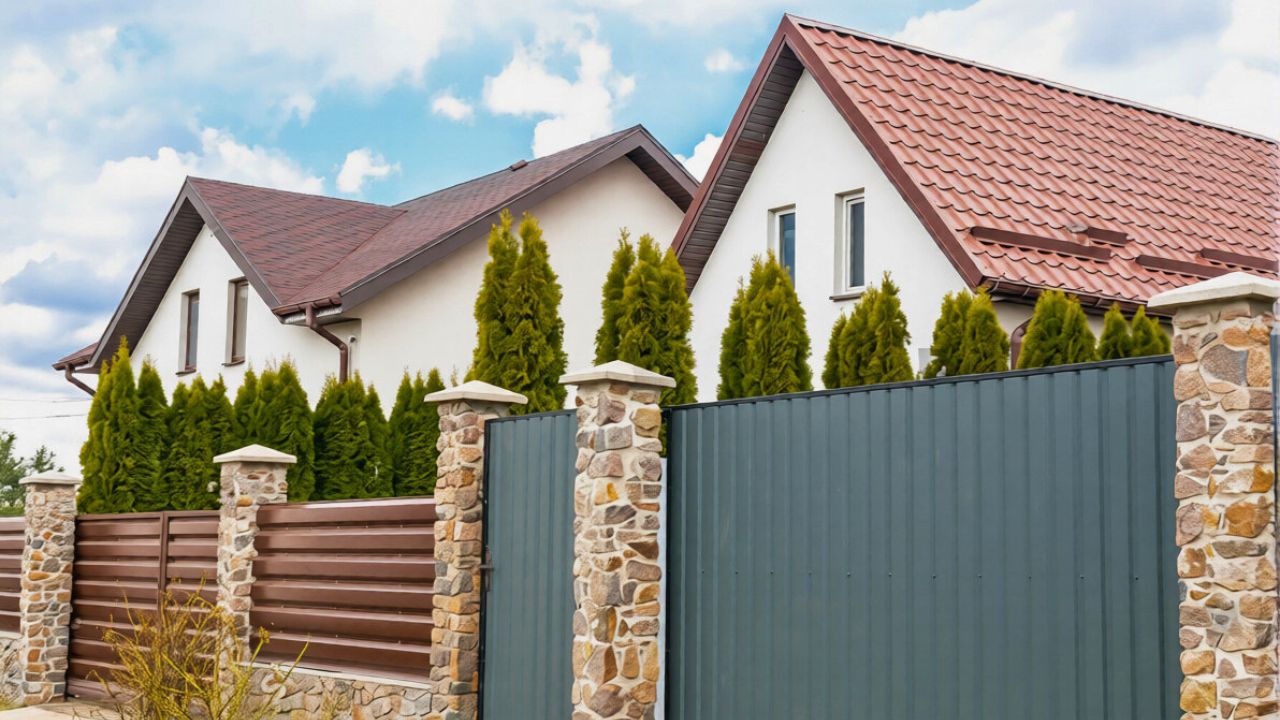
The celeb-home privacy upgrade people copy that doesn’t work on normal neighborhoods
Celebrity real estate has turned privacy into a design feature, with towering hedges, fortress-like gates, and secluded compounds marketed as much for secrecy as for square footage. You see those images and it is tempting to copy the same tricks in your own yard, assuming the right fence or hedge will deliver the same sense of safety. In an ordinary neighborhood, though, the most copied “celeb-home” upgrade often looks impressive while doing surprisingly little to protect you.
The hedge-and-wall fantasy you are sold
When you scroll through glossy property tours, the first thing that jumps out is how aggressively the exterior is used as a shield. High-profile owners are advised that Exterior Design Considerations should turn the front of a house into a visual barrier, with tall walls, layered landscaping, and controlled sightlines. The message is simple: if no one can see in, no one can bother you. That logic is powerful marketing, and it is why so many suburban remodels start with a contractor quoting the height of a new fence before asking about anything else.
In practice, you are buying into a fantasy that treats your street like a red carpet and your neighbors like paparazzi. The hedge-and-wall package is designed for people who attract crowds and long-lens cameras, not for someone whose biggest daily risk is a package thief or a nosy dog walker. When you import that aesthetic into a normal block, you often get the worst of both worlds: a house that looks defensive without the layered security, staffing, and legal planning that make those barriers meaningful for celebrities.
Why a 20‑foot hedge works for Jeff Bezos and not for you
Few images capture the new privacy arms race better than the reports on Jeff Bezos in Beverly Hills. Accounts describe how Reports detail a 20 foot green hedge wrapping his Beverly Hills compound in a dense cloak, turning the property into a private world hidden from the street. For someone whose movements are tracked globally, that kind of vertical landscaping is not just decoration, it is a response to drones, tour buses, and professional photographers who treat the sidewalk as a workplace.
If you copy that move on a standard lot, you are not recreating Bezos-level privacy, you are building an expensive screen that solves a problem you probably do not have. A 20 foot barrier in a quiet subdivision will not stop a determined intruder, and it will not keep your address off public records or delivery apps. What it will do is block natural surveillance from neighbors who might otherwise notice a broken window or a strange car in your driveway. In a normal neighborhood, that hedge can reduce the casual oversight that actually keeps you safer, while signaling that whatever is behind it might be worth targeting.
The “paparazzi-proof” myth in everyday life
Designers who work with entertainers talk openly about building homes to defeat cameras. Some recommend layouts where garages, entryways, and outdoor spaces are tucked behind layers of planting and walls so that long lenses cannot catch a candid shot. In guides on Designing for Privacy, the focus is on Strategic choices that let public figures move between cars, doors, and interior rooms without ever crossing an exposed line of sight. The goal is not just comfort, it is control over when and how images reach the media.
In your daily routine, the threat model is completely different. You are not trying to avoid a telephoto lens from across the canyon, you are trying to keep a contractor from peering into your kitchen or a passerby from seeing when your kids are home alone. When you import “paparazzi-proof” thinking into that context, you risk overbuilding for a rare scenario while underinvesting in basics like good locks, lighting, and digital hygiene. The myth is that if a design can defeat a professional photographer, it must be more than enough for you, when in reality it may be misaligned with the risks you actually face.
Extreme celebrity measures that collapse on a cul‑de‑sac
At the far end of the spectrum, some celebrities are advised to remove themselves from neighborhoods altogether. One guide to “paparazzi-proof” living highlights the appeal of a Private Island, where you Put a body of water between you and any potential photo takers, or high security buildings like Palazzo del Sol, where Celebs such as Johnny Depp can rely on staff and controlled guest lists. These setups are less about architecture and more about geography and gatekeeping, turning distance and access control into the primary privacy tools.
On a cul de sac, you cannot conjure a moat or a private elevator bank, yet you can still be tempted by the same logic. You might try to simulate that separation with long driveways, oversized gates, or elaborate entry systems that feel out of place on a modest street. Instead of making you safer, those gestures can isolate you from the very community that would notice if something is wrong. The more you chase island-style seclusion in a dense neighborhood, the more you trade away the informal support network that actually functions as your first line of defense.
How tall hedges and fences can backfire on safety
From a distance, a tall fence or hedge looks like a shield. Up close, it can be a blindfold. Crime prevention specialists often talk about “natural surveillance,” the idea that people are less likely to break into a home if they feel watched by neighbors or passersby. When you wrap your property in a solid wall of greenery, you may block the view of your patio, but you also give anyone who hops the fence a private workspace where they can move slowly, test doors, and search for valuables without being seen from the street.
Even landscaping experts who encourage you to Think about privacy urge you to balance height with visibility. Guides on backyard design suggest that Even if you have a privacy fence, you should mix in layered plantings, partial screens, and thoughtful sightlines so you do not create dark, hidden corners that feel unsafe. One resource on landscaping ideas points out that tall elements should be combined with lighting and open areas, not used as a single, monolithic barrier. In a normal neighborhood, that nuance matters more than sheer height.
The security staffing gap no hedge can fill
When celebrities invest in fortress-like exteriors, they rarely rely on the wall alone. Behind those hedges are security teams, cameras monitored in real time, and protocols for everything from deliveries to emergency evacuations. In discussions of Exterior Design Considerations, advisers emphasize that physical barriers are only one layer in a broader system that can include guards, vetted staff, and rapid response plans. When Lady Gaga’s dogs were kidnapped, for example, the incident highlighted how personal security extends beyond the property line into routines, staff movements, and public appearances.
Most homeowners do not have, and do not need, that level of staffing. If you copy the visible parts of a celebrity’s setup without the invisible infrastructure, you end up with a façade of security. A tall gate without someone to monitor who comes and goes is just a heavy doorbell. Cameras that no one watches are only useful after something has gone wrong. The gap between your resources and a celebrity’s is not just about budget, it is about the ability to coordinate people, technology, and procedures in a way that makes those dramatic design choices actually work.
Digital exposure that landscaping cannot hide
Another problem with importing celebrity-style privacy tricks is that they focus your attention on what strangers can see from the sidewalk, not what they can learn from a screen. High profile clients are coached on Privacy Management in Everyday Life, including how to share media in a controlled manner so that posts do not reveal addresses, routines, or security weaknesses. That guidance recognizes that a single geotagged photo can undo the protective value of a hedge or gate by pinpointing where someone lives and when they are away.
In an ordinary neighborhood, your exposure is often even more digital. Your address is in property records, your house is visible on mapping apps, and your social media may reveal when you are on vacation. No amount of landscaping will change that. If you pour your budget into a wall while leaving your online footprint wide open, you are protecting the least informative angle of your life. A more realistic approach is to combine modest physical privacy with careful control over what you post, how you share photos of your home, and which services you allow to track your location.
What actually works in a normal neighborhood
When you strip away the celebrity theatrics, effective privacy in a regular neighborhood looks less like a fortress and more like a well tuned instrument. You start by mapping your real risks: street level views into bedrooms, a side gate that does not latch, a dark path from the driveway to the door. Then you layer solutions that fit the scale of your block, such as waist high fences that define boundaries without blocking sightlines, motion activated lights, and window treatments that let in daylight while obscuring direct views at night. These are not glamorous upgrades, but they address the situations you are actually likely to face.
Landscaping can still play a role, just not as a single, towering wall. You might use staggered shrubs to soften views into a ground floor office, a small trellis with climbing plants to shield a patio, or a row of trees that filters sightlines without creating a solid barrier. Combined with simple habits like locking doors, getting to know your neighbors, and using smart doorbells or cameras that you actually monitor, these choices create a web of privacy and security that fits your life. The result is a home that feels calm and protected without pretending it sits on a Beverly Hills hillside.
How to borrow from celebrity design without copying the mistakes
You can still learn from the way high profile homeowners think about privacy, as long as you translate their strategies instead of imitating their set pieces. The useful lesson in Jeff Bezos’s Beverly Hills hedge is not the 20 foot height, it is the idea of using greenery to soften and obscure direct views into key areas. The takeaway from a Private Island or Palazzo del Sol is not to chase isolation, but to recognize the value of controlled access, whether that means a simple gate on a side yard or a clear policy about who gets a spare key.
When you look at guidance on fame and privacy or Strategic home design for public figures, the throughline is planning, not spectacle. You can adopt that mindset by thinking through how you arrive home after dark, where packages are left, how visible your kids are when they play outside, and what someone can see from the sidewalk with a casual glance. Then you can invest in targeted fixes that respect your budget, your block, and your actual risk profile. The result is a quieter kind of privacy, one that works precisely because it is designed for a normal neighborhood instead of a red carpet.
Like Fix It Homestead’s content? Be sure to follow us.
Here’s more from us:
- I made Joanna Gaines’s Friendsgiving casserole and here is what I would keep
- Pump Shotguns That Jam the Moment You Actually Need Them
- The First 5 Things Guests Notice About Your Living Room at Christmas
- What Caliber Works Best for Groundhogs, Armadillos, and Other Digging Pests?
- Rifles worth keeping by the back door on any rural property
*This article was developed with AI-powered tools and has been carefully reviewed by our editors.