The claim note that matters when damage spreads room to room
When water, smoke, or impact damage jumps from one room to the next, the story your claim tells can decide whether you are made whole or left patching gaps yourself. The single note that matters most is how clearly you connect each damaged space to a specific cause, timeline, and set of repairs. If you treat every room as a separate mystery instead of one unfolding event, you invite your insurer to slice the loss into smaller, cheaper pieces.
Handled well, your documentation turns a chaotic scene into a coherent narrative that adjusters, contractors, and, if necessary, courts can all follow. That means you need more than a stack of photos and a contractor’s estimate, you need a structured record that tracks how damage spread, what you did to contain it, and why the full scope belongs under one claim number.
When damage does not stay in one room
Property losses rarely respect doorways. A burst pipe in an upstairs bathroom can stain ceilings in the living room, buckle hardwood in the hallway, and creep into a bedroom closet before you even find the shutoff valve. Fire in a kitchen can leave soot in distant rooms and force you to remove drywall far from the original flames. The more rooms involved, the more tempting it becomes for an insurer to argue that some of what you see is old wear, unrelated moisture, or a separate incident entirely.
Your job is to lock in the idea that you are dealing with one continuous event, not a handful of unrelated blemishes. That starts with immediate safety checks and efforts to stop the loss from spreading, which guides on documenting home damage describe as the first priority once you know everyone is out of harm’s way. When you can show that you moved quickly to contain the problem and then recorded what you found room by room, it becomes much harder for an adjuster to carve off later rooms as “unrelated.”
The claim note that ties rooms together
Inside your file, the most important sentence is often the one that explains how the loss progressed. Adjusters call it a claim note, and it should read less like a guess and more like a timeline: where the problem started, how it moved, and which rooms were affected in sequence. If you simply report “water in multiple rooms,” you leave space for someone else to fill in the blanks. If you instead describe a supply line failure in the upstairs hall bath that ran for thirty minutes, soaked the subfloor, and dripped through the ceiling into the dining room and entry, you are already drawing a straight line from one space to the next.
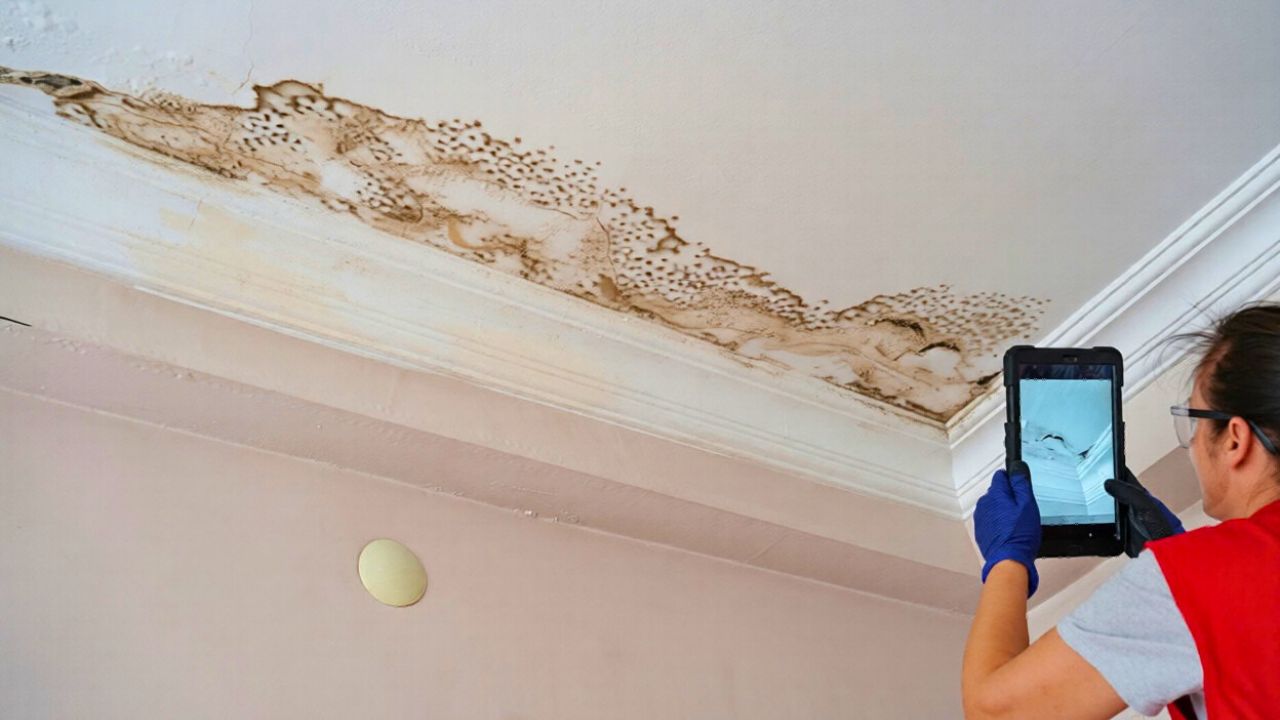
That narrative should be backed by photos, video, and written observations that match what you told the insurer. Practical guides on how to capture property damage stress shooting from multiple angles and not relying on a single snapshot. When you pair that visual record with a clear claim note, you are not just saying the damage spread room to room, you are showing how and why it did, which is what claim reviewers and supervisors look for when they decide whether to approve a broader scope of repairs.
Safety, containment, and the first walkthrough
Before you think about forms or estimates, you need to prove that you acted responsibly in the first minutes and hours. That means checking whether the structure is safe to enter, shutting off water or power if needed, and taking basic steps to prevent further damage, such as laying down towels, moving furniture, or opening windows to vent smoke. Detailed guidance on Immediate Assessment and emphasizes that insurers expect you to prioritize safety and mitigation before anything else. If you skip that, you hand them an argument that part of the loss was avoidable and therefore not fully covered.
Once the scene is stable, your first walkthrough should be deliberate, not rushed. Start in the room where the problem began, then move outward in a consistent pattern, noting every surface that looks, smells, or feels affected. That might mean spotting faint water rings on baseboards in a hallway or a light dusting of soot on closet shelves that share a wall with a burned kitchen. When you later explain in your claim note that you followed the path of the leak or smoke from the source outward, you are echoing the structured Assessment methods insurers themselves recommend to their own staff.
Room-by-room documentation that actually holds up
Insurers do not pay for vague impressions, they pay for documented loss. That is why you should treat each room as its own mini file, with a set of photos, short video clips, and notes that capture what changed. Start wide, then move closer: a shot of the entire room, then each wall, then close-ups of damaged materials like flooring, cabinets, or electronics. Practical checklists on how to Don’t skip angles remind you not to rely on a single perspective, because adjusters and later experts need to see context as well as detail.
As you move from room to room, keep your language consistent. If you call the first space “north bedroom” in your notes, use the same label in your emails, file names, and conversations with the adjuster. That consistency matters when your claim is reviewed by someone who never set foot in your home. Guides on how to Document Property Damage a Successful Insurance Claim stress that organized, repeatable descriptions help your file stand up to scrutiny, especially if it is later challenged or audited.
Why cause and timeline matter more than you think
When damage spreads, the question that quietly drives coverage decisions is not “how bad is it” but “what caused it and when.” If your living room ceiling collapses today but the insurer believes the leak started months ago, you may face arguments about long-term seepage, maintenance, or excluded causes. Legal analysis of Proximate Cause explains that when multiple events combine to damage your property, the law often focuses on the dominant cause that set everything in motion. Your documentation should do the same, tracing the chain back to the first failure or event that triggered the rest.
That is where a precise timeline becomes your ally. Note when you first noticed the problem, when you took each mitigation step, and when you observed damage in each additional room. If a storm knocked out power at 3 p.m., the sump pump failed by 4 p.m., and water reached the finished basement by 6 p.m., write that down. When you later explain that the family room carpet, adjacent storage room, and downstairs office were all soaked within a three hour window, you are reinforcing that they belong to one covered event, not three separate maintenance issues. Attorneys who handle complex property disputes often build their arguments around this kind of cause-and-effect record, because it aligns with how Tampa Property Damage that answer what happened, why it happened, and how much it will cost to fix.
The hidden damage problem in adjoining spaces
Visible damage is only part of the story when a loss crosses rooms. Water can wick behind baseboards, smoke can seep into insulation, and impact vibrations can crack framing or loosen fasteners in walls that look untouched. If you only document what you can see on day one, you risk locking in an estimate that ignores what is inside cavities, under flooring, or above ceilings. Restoration specialists warn that early inspections often miss issues in areas that are hard to reach, and that Without follow-ups, those early estimates may never be updated to reflect new findings.
To protect yourself, build follow-up inspections into your claim strategy. After initial drying or cleaning, revisit each affected room and look for secondary signs like cupping hardwood, musty odors, or staining that was not present in your first photos. Pay particular attention to areas that require access, such as behind appliances, inside cabinets, and around Identifying Hidden damage near electrical panels and junction boxes. When you discover new issues, update your claim note and send additional photos promptly, so the official record reflects that these problems emerged as part of the same event, not as late, unrelated defects.
Multiple events, one house, and how insurers slice claims
Sometimes your home is unlucky enough to be hit by more than one event in a short span, for example, hail one week and a falling tree limb the next, or a collision that damages both the front and rear of your car in separate impacts. In those situations, insurers often try to treat each impact as its own claim, each with its own deductible and coverage limits. A widely discussed Comments Section example involves multiple areas of vehicle damage that were classified as separate collision claims, each subject to a deductible, even though the owner experienced them as one long headache.
For a home, the same logic can apply if a storm, plumbing failure, and later mold growth are not clearly tied together in your file. That is why your claim note should spell out whether you are dealing with concurrent causes or a sequence of distinct events. Legal discussions of Oct scenarios where multiple events combine to cause property damage show how critical it is to identify which cause is covered and how it interacted with any excluded risks. If you can demonstrate that one covered event set off the chain that damaged each room, you are in a stronger position to argue for a single, comprehensive claim rather than a patchwork of partial payouts.
Paper trails, timelines, and when to bring in help
Every time you email an adjuster, text a contractor, or upload a photo to a claim portal, you are adding to the story that will decide your outcome. Keeping those communications organized by date and topic is not busywork, it is evidence. Legal practitioners who focus on disputes with insurers advise policyholders to Pay close attention to timelines, because delays in communication or unexplained denials can later support a bad faith argument. If your file shows that you reported new damage in an adjacent room promptly and the insurer ignored it, that pattern matters.
There is a point, though, where you should not try to carry the entire burden alone. If your claim involves structural repairs, extensive mold remediation, or a dispute over whether multiple rooms belong under one loss, consider consulting a public adjuster or attorney who regularly handles property cases. Firms that market themselves as Tampa Property Damage by gathering evidence, tracking statutory deadlines, and challenging stalled decisions, and that same approach can help you if your carrier is slow to acknowledge the full spread of damage. Bringing in help early can also keep you from making casual statements that later get twisted into admissions about preexisting conditions or poor maintenance.
Turning a chaotic loss into a coherent claim
When you step back from the debris, the pattern is clear. The claim note that matters most is the one that turns scattered damage into a single, credible narrative. You do that by starting with safety, walking the property methodically, and documenting each room in a way that shows how the loss moved through your home. Practical guides that start with Ensure safety and then move into structured documentation, and that same discipline is what separates strong claims from weak ones.
From there, you anchor everything to cause and time. You explain how the event began, when each room was affected, what you did to limit the damage, and how hidden problems emerged as the work progressed. You keep receipts, photos, and messages in order, as lawyers who urge clients to document After a disaster recommend, so that if anyone later questions your story, you have more than memory to rely on. In the end, you are not just filing a claim, you are presenting a case, and the clearer that case is from room to room, the harder it is for damage to fall through the cracks.
Like Fix It Homestead’s content? Be sure to follow us.
Here’s more from us:
- I made Joanna Gaines’s Friendsgiving casserole and here is what I would keep
- Pump Shotguns That Jam the Moment You Actually Need Them
- The First 5 Things Guests Notice About Your Living Room at Christmas
- What Caliber Works Best for Groundhogs, Armadillos, and Other Digging Pests?
- Rifles worth keeping by the back door on any rural property
*This article was developed with AI-powered tools and has been carefully reviewed by our editors.