The contractor payment trend that’s getting homeowners burned and how to protect yourself
Homeowners are increasingly being pushed into contractor payment schedules that front-load cash long before meaningful work is done, and the results are ugly: half-finished additions, gutted kitchens, and savings wiped out while you fight to get someone back on site. The pattern is not a one-off misunderstanding, it is a deliberate tactic that bad actors use to lock in your money and limit your leverage. If you understand how these payment schemes work and reset the terms before you sign, you can keep your project on track and keep your money from becoming someone else’s exit strategy.
The new payment trap: big money up front, little accountability later
The most damaging trend in home improvement right now is the shift from milestone-based payments to heavy deposits and flat, linear schedules that ignore actual progress. Instead of tying checks to inspections, passed permits, or visible stages of work, some contractors push you to hand over a large share of the budget before they have delivered anything you can verify. Once you have paid half or more of the contract price in the first week, your negotiating power collapses, and walking away becomes far more painful for you than for them.
Construction attorneys warn that healthy projects usually follow a bell-curve pattern, with payments starting Small, rising as labor and materials peak, then tapering off as punch-list items wrap up. When you are steered into a straight-line schedule or a giant initial draw, you are not just paying early, you are underwriting all the risk that should be shared. That imbalance is exactly what lets some contractors disappear midstream, stall for months, or demand change orders you feel forced to accept because so much of your money is already gone.
Why storms and “urgent” repairs supercharge the risk
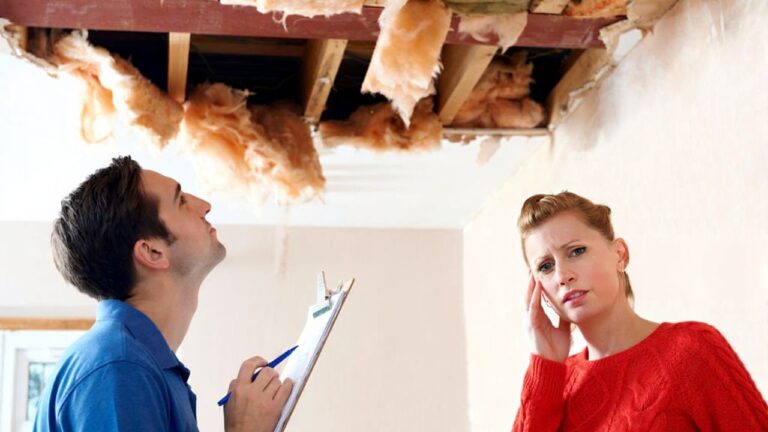
Pressure to pay early spikes after severe weather, when you are staring at a blue tarp on the roof or water stains on the ceiling and just want the damage gone. In that moment, a contractor who promises to start tomorrow if you hand over a big deposit today can sound like a lifeline. The problem is that urgency makes you skip the slow, boring steps that protect you, like checking licenses, calling references, or confirming what your insurance will actually cover.
Regulators warn that When natural disasters occur, fake contractor scams surge because fraudsters know you are vulnerable and may not question a demand for cash or wire transfers. Licensing boards advise that before you let anyone start repairs, you should Contact your insurance company to understand approved vendors, documentation requirements, and whether the contractor must show proof that materials are acquired before construction begins. That single phone call can keep you from paying out of pocket for work your insurer will not reimburse or for a contractor who never intended to finish.
Red flags in how contractors show up and sell the job
Payment problems usually start with how a contractor first appears at your door or in your inbox. A common pattern is the unsolicited pitch: someone knocks, says they are already “working in the neighborhood,” and claims they noticed damage to your roof, siding, or driveway that needs immediate attention. The sales script is designed to move you from surprise to fear to signing, often in a single conversation, with a “today only” discount that depends on a big deposit.
Consumer advocates highlight that Some red flags include contractors who show up uninvited, refuse to give you time to compare bids, or insist on cash to “hold your spot.” Remodel specialists describe The Door to Door Approach If someone claims they are already mobilized nearby and can give you a deal if you pay now, while reputable firms do not operate this way. During Spring and summer, when home improvement demand peaks, scammers lean especially hard on this tactic, asking for a large upfront payment to reserve your spot and then either never starting or abandoning the job before completion.
How much to pay up front, and what the law may already limit
One of the most practical ways to protect yourself is to cap the initial payment and tie every later check to specific work that has been completed. You should be the one to “Negotiate” the structure, not simply accept whatever the contractor’s template says. A reasonable down payment should reflect actual early costs like permits and a modest portion of materials, not half the project price just to get on the calendar.
Federal consumer guidance explicitly urges you to Negotiate a reasonable down payment and notes that Some states limit how much a contractor can legally collect before work begins, which means a demand for a huge deposit may not only be risky but also unlawful where you live. Broader scam alerts on upfront fees stress that How you pay matters too, and that you should Watch for contractors who behave like Criminals by insisting on wire transfers, gift cards, or peer-to-peer apps that are hard to reverse. If a contractor pushes you toward those channels instead of checks or credit cards, treat it as a sign that they do not expect to be around if something goes wrong.
Licenses, insurance, and contracts: your leverage before money moves
Before you talk numbers, you should verify that the person asking for your money is even allowed to do the work. That means confirming state or local licenses, checking for complaints, and making sure they carry liability and workers’ compensation coverage. If a contractor hesitates when you ask for their license number or proof of insurance, that is not a personality quirk, it is a warning that you may be paying someone who cannot legally pull permits or stand behind the job.
Consumer agencies urge you to Consider only firms that are licensed and insured and to Check with your state or county government to confirm that the license is current and unrestricted. In California, for example, homeowners are told that Before you sign a contract or agree to any work, you should require the contractor to provide you with a Cal license number and then verify that the license is current, valid, and unrestricted. Recent guidance on avoiding being burned in the new year adds that Before hiring a contractor, you should do thorough research, check state records, confirm the contractor has insurance, and have a signed construction contract that spells out payment timing, not just total price.
The contract fine print that quietly shifts risk onto you
Even when a contractor is properly licensed, the wrong paperwork can still leave you exposed. Blank spaces in a contract, vague descriptions of work, or missing dates give the other side room to rewrite the deal after you sign. If the payment schedule is buried in small print or described only as “per contractor’s draw schedule,” you are effectively agreeing to terms you have not seen, which is exactly how homeowners end up paying for work that has not been done.
Consumer protection videos warn you explicitly not to sign agreements with empty lines, noting that Shady contractors will fill in the spaces later with higher costs or extra work you never approved, and that you should never let a contractor waive a deductible in a way that could amount to insurance fraud. Social media alerts on Types of Home Construction and Repair Scams Consumers face also flag fraudulent or inaccurate mechanic’s lien filings as a risk when contracts are sloppy, since a bad actor can claim you owe more than you agreed and cloud your title. To protect yourself, insist that every page is complete, that the payment schedule is detailed and tied to specific milestones, and that you receive a copy of the fully filled-out contract before you pay a cent.
Real-world fallout when payment schedules go wrong
The damage from bad payment terms is not theoretical, it shows up in driveways, kitchens, and bank accounts across the country. In one region, PREVIOUS COVERAGE described how Last fall, Taylor County homeowners paid for a driveway repavement job that was never properly completed, a pattern local station WSAW tied to contractors taking large sums and then failing to finish. Online case studies note that There are numerous news reports of homeowners who hired contractors through digital platforms, paid substantial deposits, and were left with half-done work or no work at all, especially when they relied on online reviews instead of independent verification.
Video investigations into renovation disputes show how emotionally and financially draining this can be. In one widely shared segment, a homeowner described how a project seemed fine until a structural engineer inspected the job and, as he put it, that is when his bubble burst, a story captured in Dec footage that underscores how problems often surface only after you have paid most of the contract. Broader consumer advocates warn that Home Improvement Fraud Is Evolving, Not Disappearing, and that Home improvement scams are a perennial threat that can feel like bankruptcy by a thousand charges when you keep paying to fix what a bad contractor broke. These stories are not meant to scare you away from renovating, but to show how quickly things unravel once you have paid too much, too soon.
Digital twists: online leads, smarter fraud, and new pressure tactics
As more homeowners search for help online, scammers have adapted their playbook. Fake profiles, stolen photos of other people’s work, and fabricated testimonials can make a fly-by-night operator look like a seasoned pro. Once you reach out, the conversation often shifts quickly from messaging apps to demands for deposits through instant payment tools, with reassurances that this is “how everyone pays now.” The technology is new, but the underlying goal is the same: get your money before you have time to think.
Analysts tracking fraud trends note that Dec reports show Together, these patterns signal a shift From reaction to anticipation, with Fraud becoming smarter, more targeted, and harder to spot in advance. Broader scam briefings for 2026 emphasize that criminals increasingly Watch for opportunities to charge upfront fees and then vanish, a pattern that applies as much to bogus “consulting” services as to home repairs, and that you should treat any request for large prepayments as a high-risk moment. When you combine that with the fact that fake contractor scams spike after disasters, the message is clear: the more digital and urgent the pitch, the more carefully you should slow down and verify.
How to structure a safer project from first call to final check
Protecting yourself is not about assuming every contractor is a crook, it is about building a process that makes it hard for anyone to take advantage of you. Start by interviewing multiple firms and paying attention to how they communicate. Remodel experts advise that you Start with comfort and communication, asking Are you comfortable talking with the contractor and whether Good communication sets the tone for how problems and payment questions will be handled later. A professional who explains their process clearly, welcomes your questions, and offers references is far less likely to push you into a lopsided payment plan.
Once you choose a contractor, put your safeguards into writing. Use a detailed contract that spells out scope, materials, start and completion dates, and a bell-curve payment schedule that begins with a modest deposit, rises with visible progress, and holds a meaningful final payment until after inspections and punch-list work are complete. Follow official advice to Check that the document includes an estimated start and completion date, and keep copies of all change orders for your records. If a contractor resists these basics, you are not “being difficult,” you are spotting a problem early, before your money is on the line.
Supporting sources: Don’t Be Fooled by Contractor Scams – CSLB.
Like Fix It Homestead’s content? Be sure to follow us.
Here’s more from us:
- I made Joanna Gaines’s Friendsgiving casserole and here is what I would keep
- Pump Shotguns That Jam the Moment You Actually Need Them
- The First 5 Things Guests Notice About Your Living Room at Christmas
- What Caliber Works Best for Groundhogs, Armadillos, and Other Digging Pests?
- Rifles worth keeping by the back door on any rural property
*This article was developed with AI-powered tools and has been carefully reviewed by our editors.