The energy upgrade that people assume qualifies, but often doesn’t
Homeowners are racing to upgrade their properties before key federal energy tax breaks disappear, and one project keeps coming up in sales pitches as a slam dunk for savings: a new roof tied to solar. The catch is that this upgrade, which many people assume automatically qualifies, often does not meet the rules that actually govern energy credits. If you are planning a major project in the next year, understanding where the line really falls between eligible and ineligible costs can save you thousands of dollars and a painful surprise at tax time.
The upgrade everyone thinks qualifies
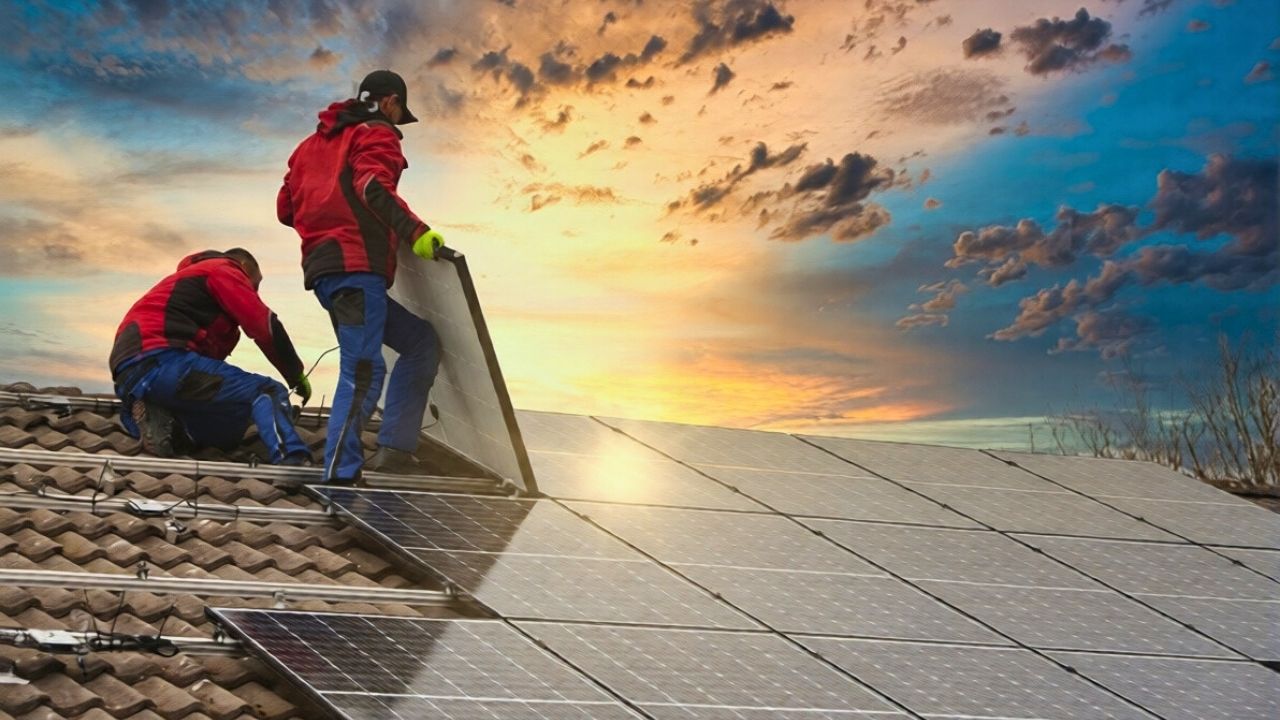
If you talk to solar sales reps or roofing contractors, you will hear a familiar script: replace your aging shingles, add panels, and write off a big slice of the whole package as a federal clean energy credit. The pitch sounds logical, because the roof and the solar array are installed together and both are marketed as part of a greener home. In practice, the tax code treats them very differently, and the assumption that the entire roof is part of a clean energy system is where many homeowners get tripped up.
Specialists who work with rooftop systems are blunt about this misconception. One installer explains that when it comes to the federal solar incentive, “No, It Doesnt Cover Your New Roof,” even though Cover Your New Roof is exactly what Many national sales teams promise. The panels, inverters and wiring may qualify, but the shingles or tiles under them are usually treated as a standard home repair, not an energy device. That gap between marketing and reality is the energy upgrade that people assume qualifies, but often does not.
What the IRS actually rewards
To understand why your roof is treated differently from your solar array, you have to look at how the Internal Revenue Service defines clean energy property. The Residential Clean Energy Credit is aimed at equipment that directly generates or stores renewable power, such as solar electric panels, certain solar water heaters, and battery systems. The focus is on hardware that produces clean kilowatt hours, not the structural surfaces that support it.
Under the rules for the Residential Clean Energy Credit, Equipment like solar electric panels and related components are eligible precisely because they generate clean energy, and Qualified expenses can include labor costs for onsite preparation, assembly and installation. Used property is explicitly excluded, which is why Used systems bought secondhand do not count. The roof deck or shingles are not listed as qualifying devices, so they are treated as part of your home’s structure rather than as energy equipment, even if they are installed on the same day as your panels.
Why “comfort” projects rarely count
Another reason homeowners overestimate their tax savings is that many popular upgrades are sold as “energy efficient” when they are really about comfort. You might be encouraged to install radiant floor heating, luxury windows, or high-end insulation products that make rooms quieter and more pleasant. Those improvements can be worthwhile, but if they do not measurably change how much energy your home uses, they are unlikely to qualify for federal credits.
Guidance on ineligible projects points out that “Comfort” add ons that do not change energy use are a common trap, and that Many of the most tempting home upgrades improve how your home feels without meaningfully cutting your utility bills. A list of 10 energy upgrades that won’t qualify highlights how Dec marketing language can blur the line between comfort and efficiency. If your project is mainly about aesthetics or convenience, you should assume it will not earn a federal credit unless the equipment itself appears in the IRS definitions.
The strict rules for home eligibility
Even if your project involves the right kind of equipment, your home itself has to meet specific criteria. Federal guidance stresses that Your home must be in the U.S., and it must be an existing home that you improve or add onto. That means a brand new build that has never been occupied does not qualify for these particular incentives, even if you outfit it with the latest high efficiency systems from day one.
The same rules clarify that this credit does not apply to a newly constructed home, and that you cannot carry the unused portion of this particular benefit to future tax years. The focus is on encouraging you to retrofit or upgrade an existing residence, not subsidizing new construction. If you are planning a ground up build, you may still benefit from local or utility programs, but the federal federal tax credits for efficiency are structured around improving what you already live in.
Two different credits, two different rulebooks
Part of the confusion around roofs, windows and solar comes from the fact that there are actually two major federal incentives in play, each with its own rulebook. The Energy Efficient Home Improvement Credit is designed for upgrades that reduce how much energy your home consumes, such as better insulation, efficient windows, or advanced heat pumps. The Residential Clean Energy Credit, by contrast, is focused on systems that generate or store renewable power, like rooftop solar or battery storage.
Tax professionals emphasize that Who can claim the Energy Efficient Home Improvement Credit depends on owning an existing home and making qualifying upgrades, and that new homes do not meet that test. At the same time, consumer energy advocates note that Keep in mind, however, that while the Residential Clean Energy Credit applies to both new and existing homes, the Ener efficient home credit is only applicable to upgrades made to existing properties. If you assume that anything labeled “energy efficient” qualifies under both programs, you risk misclassifying your project and overestimating your refund.
How much money is really on the table
Even when your project qualifies, the federal government caps how much you can claim in a given year. For efficiency upgrades, the IRS explains that There are limits on the allowable annual credit and on the amount of credit for certain types of qualified expenses. The structure is designed to spread benefits across many households rather than letting a single large renovation absorb an outsized share of the program.
Tax guidance spells out that the maximum credit that is available each year is $1,200 for energy property costs and certain energy efficient home improvements, with separate treatment for items like Battery storage technology. The IRS also notes that the annual limit for the Energy Efficient Home Improvement Credit is $1,200 for energy efficient property and related improvements, and that There is no provision to carry forward any unused portion of this credit to future tax years. For clean energy systems, the percentage based Residential Clean Energy Credit can be more generous, but it still does not convert your entire roof replacement into a deductible expense.
The ticking clock on federal incentives
Timing is just as important as the type of upgrade you choose. The IRS has already signaled that some of the most generous residential clean energy incentives are winding down. In its instructions for Form 5695, the agency notes that Termination of credits will affect homeowners who wait too long, and that You cannot claim residential clean energy credits for expenditures made after December 31, 2025. That cutoff means projects installed in 2026 may not receive the same federal support that has been available in recent years.
Industry analysts echo that warning, explaining that Effective January 1, 2026, the primary federal tax credits that have driven the residential solar and high efficiency HVAC markets will no longer be available in their current form. One overview of post credit economics stresses that this shift will change project economics and payback calculations for rooftop systems and advanced heating and cooling. If you are counting on today’s incentives to justify a big investment, you need to understand how Effective January policy changes could affect your bottom line.
Where credits still deliver real value
Despite the looming deadlines and strict definitions, there is still meaningful money on the table if you choose your projects carefully. Financial planners highlight that Residential energy tax credits can apply to the purchase of energy efficient home upgrades such as windows, doors and heat pumps, and that these benefits may continue to be available starting in 2026 in some form. The key is to focus on equipment that directly improves efficiency or generates clean power, rather than on structural or cosmetic work that happens to be done at the same time.
For drivers, there is also a separate incentive for home charging hardware. Clean energy advocates point out that a 30% tax credit (up to $1,000 per item) is available for installing EV charging equipment at home, with the figure of $1,000 serving as the cap per device. Tax software providers explain that Generally, expenses made to upgrade or replace a roof in preparation for installing solar panels and related equipment can qualify for the credit only when they are directly tied to the performance of the solar system, not when they are simply part of a broader renovation. If you focus on the parts of your project that clearly meet the criteria described in Residential energy tax credits, you can still capture substantial savings without relying on shaky assumptions.
How to plan upgrades so you are not disappointed
To avoid learning the hard way that your “energy” project does not qualify, you need to reverse the usual order of operations. Instead of starting with a contractor’s sales pitch, begin with the IRS definitions and work backward. Review how the Energy Efficient Home Improvement Credit treats specific categories of equipment, and then map your wish list to those categories. If a component is not clearly listed, assume it is ineligible until a tax professional tells you otherwise.
Tax guidance from consumer tools explains that Dec summaries of which equipment qualifies for the Residential Clean Energy Credit and how those rules interact with roof work can help you structure your project. Another overview of how energy tax credits work notes that Generally, you must install qualifying equipment in your primary or secondary residence and meet all technical standards to claim the benefit. The IRS itself reminds homeowners that Oct guidance on the Energy Efficient Home Improvement Credit sets annual caps and clarifies that There is no option to carry unused amounts forward, so you may want to phase projects over multiple years rather than bundling everything into a single season. By treating the tax rules as the blueprint and your contractor’s proposal as the follow up, you can make sure the energy upgrade you are counting on for savings actually qualifies.
Like Fix It Homestead’s content? Be sure to follow us.
Here’s more from us:
- I made Joanna Gaines’s Friendsgiving casserole and here is what I would keep
- Pump Shotguns That Jam the Moment You Actually Need Them
- The First 5 Things Guests Notice About Your Living Room at Christmas
- What Caliber Works Best for Groundhogs, Armadillos, and Other Digging Pests?
- Rifles worth keeping by the back door on any rural property
*This article was developed with AI-powered tools and has been carefully reviewed by our editors.