The extension cord setup that looks neat but traps heat and starts trouble
The extension cord corner that looks tidy in your living room or home office can quietly turn into a heat trap that stresses wiring and raises the odds of a fire. When you coil cords tightly, bury them under rugs, or stack multiple plugs into one outlet, you create a setup that appears organized but forces electricity through a path it was never meant to handle. If you rely on extension cords daily, you need to treat that “neat” arrangement as a temporary workaround, not a permanent part of your home’s wiring.
The deceptively tidy corner that overloads everything
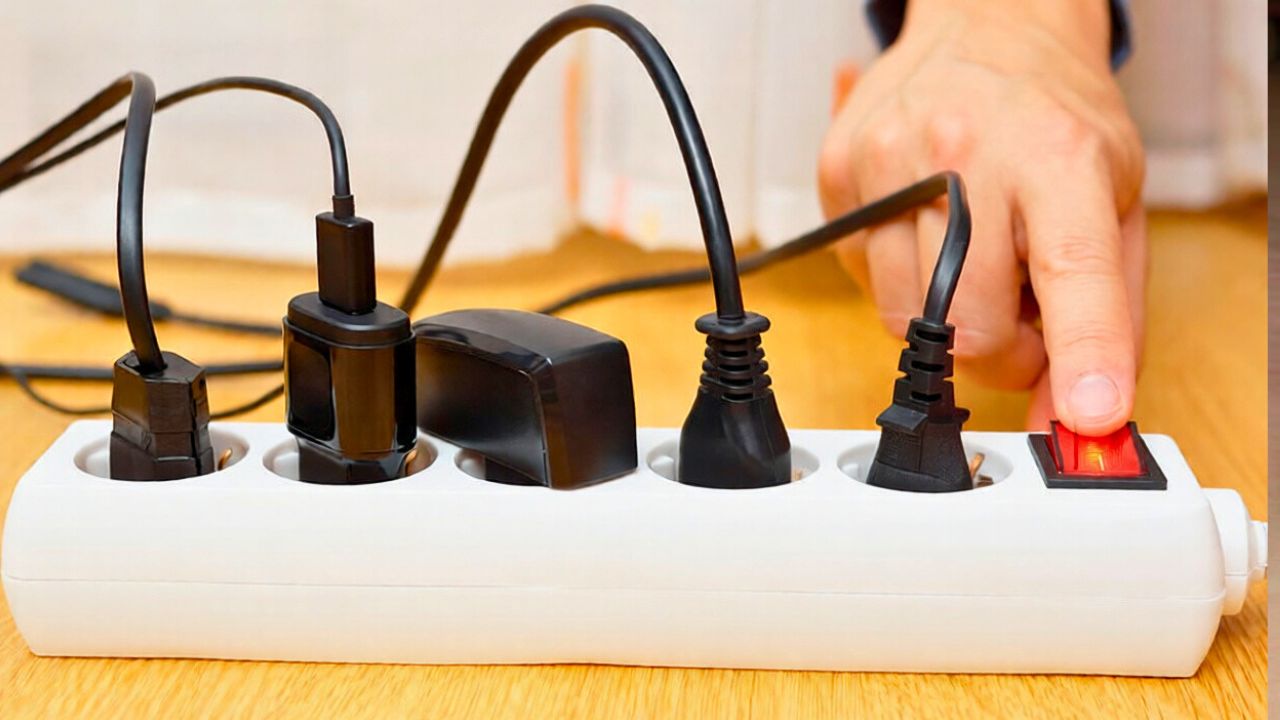
The most common risky setup starts with a single wall outlet that has to do too much work, usually behind a TV stand, desk, or nightstand. You plug in a small power strip, then add one or two extension cords, then stack on chargers, lamps, a space heater, maybe a gaming console, all in the name of keeping cables hidden and the floor clear. It looks controlled from the outside, but behind the furniture you have a cluster of plastic, copper, and insulation that is quietly heating up as current flows through every added device.
That hidden cluster is dangerous because extension cords are often treated as if they are permanent wiring, even though they are not designed to carry heavy loads for long periods. When you daisy chain cords and strips, you can easily exceed what the system can safely handle, especially if you are running high draw devices like heaters or hair dryers, a pattern highlighted in reporting on why the neat extension-cord corner is not as harmless as it looks. The more you try to hide and consolidate, the more heat you trap in a tight space with flammable dust, wood, and fabric close by.
Why hiding cords under rugs and furniture traps heat
One of the most tempting tricks for a clean-looking room is to run cords under a rug or behind a heavy sofa so you never see them. You get the aesthetic payoff of a cable-free floor, but you also strip the cord of the air circulation it needs to shed heat. As current moves through the copper conductors, some of that energy is always lost as warmth, and when you sandwich the cord between a rug and a hard floor or pinch it under furniture legs, that warmth has nowhere to go.
Guidance on common mistakes singles out Mistake #4: Hiding Cords Under Rugs or Furniture as a classic example of a neat look that masks a fire hazard. When cords are trapped, the insulation can dry out and crack faster, and any damage from foot traffic or furniture pressure is hard to spot until it is severe. You also lose the early warning sign of a problem, because you cannot feel the cord getting hot or see scorch marks until the situation is already dangerous.
How tight coils and cord reels turn into heat sinks
Another popular way to tame visual clutter is to wind extra length into a tight coil or onto a cord reel and leave it that way while the cord is in use. The loop looks organized, but every turn of that coil is another layer of insulation around the inner conductors. As current flows, the heat that would normally dissipate along a straight run gets trapped in the bundle, and the temperature inside the coil can climb much higher than you expect, especially under continuous load.
Safety guidance for cord reels stresses that using them correctly means unwinding most or all of the cable so it can lie straight and free of kinks while power is flowing. Advice on using the extension cord reel safely explains that a tightly wound reel concentrates heat in the inner layers, which can soften insulation and damage the cord long before you see visible melting. The same principle applies when you hand coil a cord into a tight loop and leave it under a desk, because the neat circle you are proud of is functioning like a small, unventilated heater.
The physics of trapped heat in everyday extension cords
At the heart of these problems is a simple reality: every extension cord has a specific capacity, and any resistance in the conductors turns some electrical energy into heat. When a cord is fully extended and lying in the open, that heat spreads out along the length and into the surrounding air. When you compress the cord into a tight coil, bury it under a rug, or wedge it behind furniture, you reduce the surface area that can release heat and you surround it with materials that insulate rather than cool.
Research on storage practices reinforces that you should never store cords in tight coils, because those coils trap heat and can cause overheating when the cord is in use. Guidance that notes you should never store your cords in tight coils points out that a looser arrangement keeps the cable cooler and reduces stress on the insulation. The same logic applies to daily use: if you want a cord to run safely at its rated load, you need to give it room to breathe instead of turning it into a compact, self-insulating bundle.
Why “temporary” cords quietly become permanent wiring
Most people plug in an extension cord with the idea that it is a short term fix, maybe to reach a holiday display or a new lamp. Over time, that temporary solution becomes part of the room, especially if you have taken the trouble to hide it neatly. Once the cord is tucked under a rug or wrapped on a reel behind a cabinet, you stop thinking about it, even as you add more devices or rearrange furniture in ways that increase the load or pinch the insulation.
Reporting on everyday setups notes that extension cords are often used as if they were permanent wiring, even though they are not designed for that role and can be overloaded when you keep adding devices to the same outlet. The warning that extension cords are often treated as permanent underscores how easy it is to forget that the cord is a weak link in the chain. When you combine that complacency with hidden routing and tight coils, you create a long term hazard that no one in the household is actively monitoring.
Spotting the warning signs before insulation fails
Because the riskiest setups are usually hidden, you need to be deliberate about checking for early signs of trouble. If a plug feels hot to the touch, if you notice a faint burning smell near a power strip, or if a breaker trips when you turn on a heater or vacuum, those are all signals that your neat cord arrangement is under strain. You should also look for discoloration on outlets, brittle or stiff sections of cord, and any spots where the cable has been sharply bent or crushed under furniture.
Guidance on common mistakes highlights that using damaged or frayed cords is a major risk, especially when the damage is hidden under rugs or behind furniture where you are less likely to see it. The same advice that flags hiding cords under rugs also stresses the importance of inspecting the full length of a cable before you plug it in. If you cannot easily access and examine a cord because of how you have hidden it, that is a sign the setup itself needs to change.
Safer ways to route and store cords without the clutter
You do not have to choose between a safe home and a tidy one, but you do need to rethink how you route and store cords. Instead of running a cable under a rug, you can use low profile cord covers that sit on top of the floor and are designed to dissipate heat while protecting the insulation from foot traffic. Behind furniture, you can mount power strips on the wall or the back of a desk so air can circulate around them, and use clips or channels to keep cords straight rather than coiled.
When a cord is not in use, the safest approach is to coil it loosely, avoiding sharp bends or tight loops that stress the insulation and trap heat. Guidance that urges you to store cords properly when not in use recommends keeping them free of tangles and away from objects that could crush or cut them. The same principles apply to active setups: keep cords as straight as practical, avoid tight bundles, and give every plug and strip enough space that you can reach it, inspect it, and feel whether it is getting warmer than it should.
Using cord reels and organizers the way they were intended
Cord reels and organizers can be part of a safer setup if you use them as intended instead of as permanent storage while the cord is energized. The key is to treat the reel as a transport and deployment tool: unwind the length you need, then unwind a bit more so the remaining loops are loose and the inner layers are not packed tightly together. If you are running a high draw tool or appliance, you should fully extend the cord so every part of it can release heat into the air.
Safety advice on using the extension cord reel safely emphasizes keeping the cable straight and free of kinks during use, which reduces both overheating and mechanical stress on the conductors. Complementary guidance that you should never store your cords in tight coils reinforces that a reel is not a license to compress a live cord into a compact, hot bundle. If you find yourself relying on a reel as a permanent fixture behind a piece of furniture, that is a sign you should consider adding outlets or rearranging the room instead.
When to upgrade from extension cords to real solutions
If you are using extension cords every day in the same spots, the safest long term move is to reduce your dependence on them. That might mean hiring a licensed electrician to add outlets where you actually need them, such as behind a wall mounted TV or next to a home office desk. It can also mean replacing a chain of cords and strips with a single, properly rated power strip that has built in overload protection and is mounted where it can stay cool and accessible.
Guidance that urges you to treat cords as temporary tools rather than permanent infrastructure reflects a broader principle: your home’s wiring should carry the everyday load, not a patchwork of hidden cables. When you invest in permanent fixes, you not only eliminate the heat traps created by tight coils and buried cords, you also make your space easier to clean, easier to rearrange, and far less likely to surprise you with a tripped breaker or a scorched outlet.
Like Fix It Homestead’s content? Be sure to follow us.
Here’s more from us:
- I made Joanna Gaines’s Friendsgiving casserole and here is what I would keep
- Pump Shotguns That Jam the Moment You Actually Need Them
- The First 5 Things Guests Notice About Your Living Room at Christmas
- What Caliber Works Best for Groundhogs, Armadillos, and Other Digging Pests?
- Rifles worth keeping by the back door on any rural property
*This article was developed with AI-powered tools and has been carefully reviewed by our editors.