The fast way to tell if your alarms are installed in the worst spots
Fire deaths in homes rarely come from cinematic infernos; they come from ordinary rooms where smoke builds quietly while people sleep. The fastest way to know whether your alarms will actually warn you in time is to look at where you have put them, because a badly placed device can be almost as useless as no device at all. With a few quick checks, you can tell in minutes whether your alarms are sitting in the worst spots or positioned to give you and your family a real chance to get out.
The one-minute map of your home
Your first fast test is simple: sketch your home in your head, then count how many alarms you have and where they sit in relation to bedrooms, hallways, and main living spaces. You should be able to walk from any Bedrooms and sleeping areas to an exit and hear at least one alarm clearly the entire way, without closing doors or turning on fans. If you already know there are rooms, especially sleeping spaces, with no alarm nearby, that is a red flag that your coverage is built on luck rather than planning.
Fire safety guidance is blunt that you need alarms on every level and near all sleeping zones, not just a token device in the hallway. Recommendations for RECOMMENDED LOCATION OF ALARMS stress that if more than one sleeping area exists, you should locate additional units in each sleeping area, not try to stretch a single device across the whole floor. Broader advice on Home Smoke Detectors also calls for at least one alarm on every level of the home, including basements, so if your mental map reveals gaps on a floor or in a bedroom cluster, you have already found one of the quickest signs your alarms are in the wrong places.
Ceiling, wall, or nowhere near the smoke?
The next quick check is height. Smoke rises first, then spreads sideways, so if your alarms are mounted low on walls or sitting on shelves, they are watching the wrong part of the room. You want them where the smoke will go first, which means on the ceiling or high on the wall, not at eye level where they may only react once the room is already filling with toxic gases.
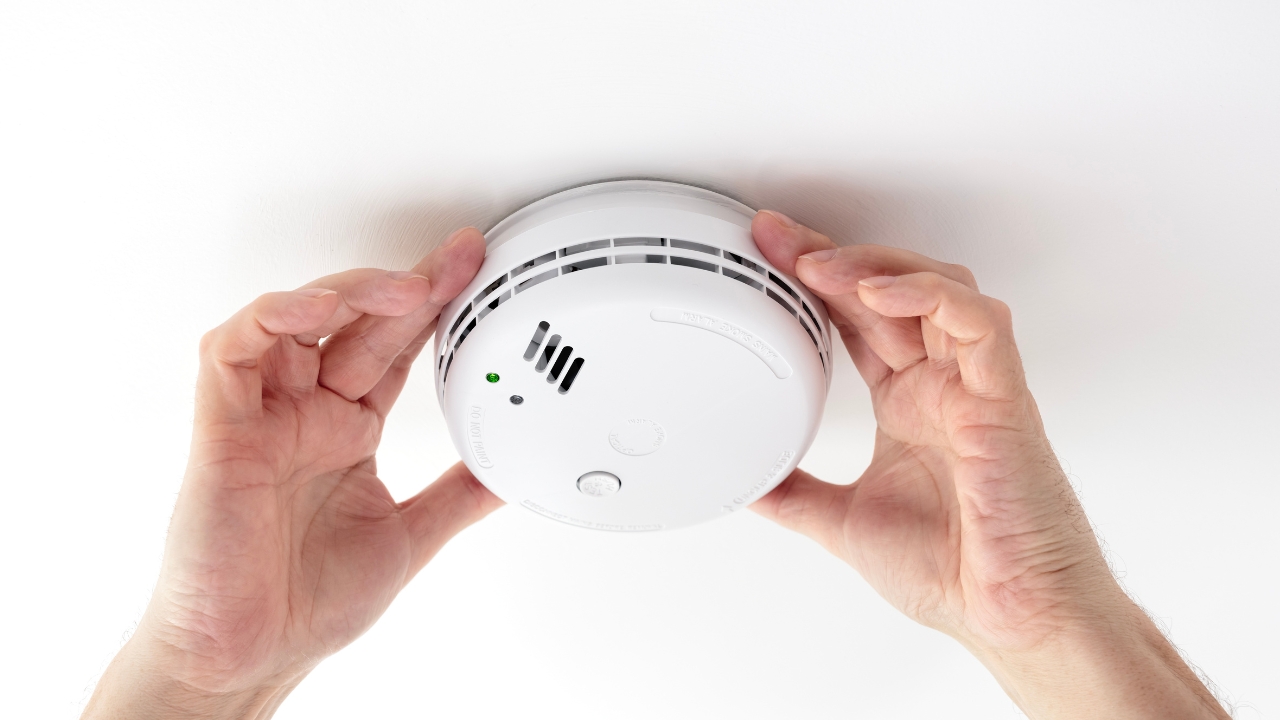
Guidance on Ideal Smoke Detector Placement Height and Position explains that alarms should always go on the ceiling, or if that is not possible, high on the wall, because Smoke naturally collects at the top of a room before it descends. Manufacturers echo this, advising you to Mount units on the Ceiling or upper wall in or near bedrooms and living areas so they can sense smoke early. If you look up and see bare ceilings while your alarms sit halfway down the wall, that is a fast visual cue that they are not where they need to be.
Kitchen and nuisance alarms: the 10-foot rule
Many people deliberately put alarms in terrible spots because they are tired of nuisance beeping every time they cook. If your kitchen alarm goes off whenever you sear a steak or toast bread, you may have installed it too close to the stove, which encourages you to disable it or remove the batteries. The quick test here is distance: if you can stand at your main cooking appliance and almost touch the alarm, it is likely in the wrong place.
Fire safety guidance for the Kitchen recommends you Place a detector at least 10 feet from cooking appliances to reduce false alarms, while still keeping it close enough to catch a real fire quickly. Advice on Where Should you Put My Smoke and Carbon Monoxide Detectors reinforces that keeping units about 10 feet away from ovens and other appliances balances safety and sanity. If your detector is right above the stove, or directly over a toaster or air fryer, you have a textbook example of a “worst spot” that almost guarantees nuisance alarms and, eventually, a disabled device.
Dead air, beams, and corners that never see smoke
Even if your alarms are on the ceiling, they can still be in dead zones where smoke does not reach quickly. The fast way to spot this is to look for corners, ceiling peaks, and heavy beams near your alarms. If a device is tucked into a tight corner or jammed right against a beam, it may be sitting in stagnant air that delays detection.
Guidance on Dead Air Space warns that alarms should be at least 300 mm from corners so they are not trapped where smoke curls around them instead of flowing through the sensor. Video advice on Where Should You Place Your Smoke Alarms notes that beams can block airflow, so detectors should be positioned around them rather than directly beside or behind them, because the beam blocks airflow which can delay detection. A related clip on Chances are you have at least one alarm in the wrong place drives home that beams, corners, and tight spots are classic problem areas. If your quick scan shows alarms jammed into those spaces, you have found another fast indicator that they are installed in the worst spots.
Drafts, ducts, and the invisible enemies of your sensor
Another rapid check is airflow. Stand under each alarm and look for vents, fans, or openable windows nearby. If a ceiling fan, HVAC register, or bathroom exhaust can blow air directly across the device, it may never “see” the smoke that is building in the room, because the air current is constantly sweeping particles away from the sensing chamber.
Fire safety tips that focus on how to Keep alarms effective warn you to avoid drafts created by fans or air ducts, because moving air can blow smoke away from the sensor and undermine the research-backed design of the sensing technology. Broader placement guidance from the NFA also cautions against installing alarms near Windows or mirrors where air movement and reflections can interfere with performance. If you can feel a steady breeze where your alarm sits, that is a fast sign it is in a compromised location.
Bathrooms, garages, and other false-alarm factories
Some rooms are notorious for triggering nuisance alarms, which tempts you to silence or remove them. If you have a detector right outside a steamy bathroom or directly inside an attached garage, you may have created a false-alarm factory that conditions everyone in the home to ignore the sound. The quick test is to think about where you most often hear “false” alarms and then look at what is nearby: showers, dryers, or idling cars.
Guidance on These locations explains that areas with high humidity, dust, or exhaust are likely to cause false alarms, which can lead people to disable protection entirely. Advice on false alarms is echoed by guidance that These locations are likely to cause false alarms, especially when combined with the sensitivity of Ionization detectors that are prone to nuisance beeping. If your quick mental list of “annoying alarms” lines up with these spaces, you have a strong clue that those units need to be relocated rather than silenced.
Bedrooms, hallways, and the night-time test
The most important question is whether your alarms will wake you up. To test this quickly, stand in each bedroom with the door closed and imagine an alarm sounding in the hallway or adjacent room. If you suspect you would only hear a faint chirp, or if there is no device anywhere near the sleeping area, that is a clear sign your layout is flawed.
Fire safety advice on Bedrooms and sleeping areas notes that regulations often start by requiring alarms in or near bedrooms, because that is where people are most vulnerable. Broader guidance on Where and When to install alarms stresses that devices should be tested at least once a month to confirm they can be heard throughout the home. If pressing the test button in the hallway produces only a muffled sound in the bedroom, or if you have to strain to hear it over a box fan or white-noise machine, you have a fast, practical sign that you need additional units inside the sleeping rooms themselves.
Carbon monoxide: the silent placement problem
Smoke alarms are only half the story. If you have fuel-burning appliances, an attached garage, or a fireplace, you also need to think about carbon monoxide, which is odorless and invisible. The quick test is to ask yourself whether you have a dedicated carbon monoxide device on each level with such equipment, and whether it is placed where the gas is likely to travel, not hidden in a corner far from bedrooms.
Guidance on Where Should you Place a Carbon Monoxide Detector explains that because carbon monoxide is slightly lighter than air, detectors can be mounted on walls or ceilings, but they should be located near sleeping areas and near any fuel-burning furnace, water heater, or fireplace. Advice on How these devices work underscores that they need unobstructed air flow to sense dangerous levels. If your combined smoke and CO unit is tucked behind furniture or far from any potential source, your quick scan has just revealed another “worst spot” that needs correcting.
What to avoid outright: bugs, heat, and incompatible gear
Some locations are so problematic that you can rule them out immediately. If you see an alarm in a dusty attic, an insect-prone porch, or right above a radiator, you can safely assume it is in a bad spot. The fast test is to look for extreme conditions: heat, cold, moisture, or pests that could clog or damage the device.
Placement guidance on Locations to avoid warns against installing alarms in insect infested areas, because Insects can clog openings to the sensing chamber, and also cautions that units should not be mounted less than 12 inches (305 mm) from the highest point of a sloped ceiling. Broader safety advice on installing and maintaining alarms stresses that you should not put devices near appliances or in places where they might be damaged, and that interconnected units must be compatible or they may not sound together, as highlighted in guidance on installing and maintaining smoke alarms. If your quick walk-through reveals alarms in these clearly unsuitable environments, you have strong evidence that your system needs more than a battery change.
Like Fix It Homestead’s content? Be sure to follow us.
Here’s more from us:
- I made Joanna Gaines’s Friendsgiving casserole and here is what I would keep
- Pump Shotguns That Jam the Moment You Actually Need Them
- The First 5 Things Guests Notice About Your Living Room at Christmas
- What Caliber Works Best for Groundhogs, Armadillos, and Other Digging Pests?
- Rifles worth keeping by the back door on any rural property
*This article was developed with AI-powered tools and has been carefully reviewed by our editors.