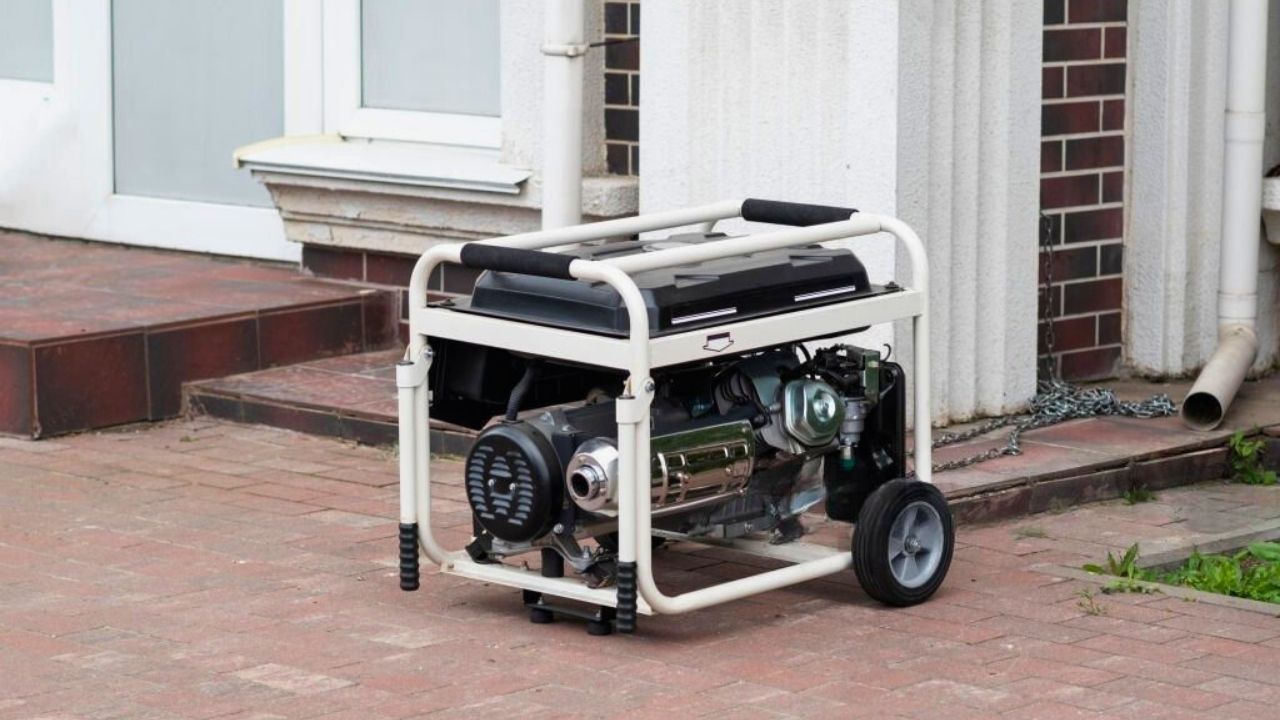
The generator mistake CPSC keeps begging people to stop, and why “open doors” doesn’t help
Every winter, as storms knock out power and temperatures drop, you see the same tragic pattern repeat: families pull portable generators closer to the house for convenience and warmth, and carbon monoxide silently fills the air. Safety officials keep warning that cracking a window or propping open a door does not make this practice safe, yet the deaths and hospitalizations continue. If you rely on a generator, you need to understand why this one mistake is so dangerous and how to power your home without turning it into a gas chamber.
The core problem is not bad luck or freak accidents, it is a mismatch between how you think exhaust behaves and how it actually moves through your home and garage. Once you grasp how carbon monoxide works, why “just for a little while” is still lethal, and what the Consumer Product Safety Commission (CPSC) is urgently trying to get you to change, you can set up your generator in a way that keeps the lights on without putting your family at risk.
The deadly misconception behind “just inside the garage”
When the power goes out, running a generator just inside the garage or under a carport feels like a reasonable compromise. You keep the machine out of the rain, you shorten the extension cords, and you tell yourself that leaving the overhead door open will let the fumes drift away. The CPSC has been blunt that this is exactly the behavior that keeps killing people, because even a partially enclosed space lets carbon monoxide collect and seep into living areas faster than you can smell or see it.
In recent winter guidance, federal safety officials stressed that you must NEVER operate a portable generator inside a home, garage, basement, crawlspace, shed, or any similar structure, even if doors and windows are open and even if you think you are standing out of the path of its exhaust. That warning is not about legal liability, it is about physics: the exhaust plume bounces off walls and ceilings, curls back toward the house, and finds every crack and gap. When you park a generator in a garage with the big door open, the smaller door into your kitchen or hallway becomes a funnel that pulls those gases straight inside.
Why “open doors and windows” do not dilute carbon monoxide
You might assume that fresh air solves everything, that if you open enough doors and windows, any dangerous gas will simply blow away. Carbon monoxide does not cooperate with that intuition. It mixes quickly with indoor air, spreads through rooms, and lingers in pockets where airflow is weak. Even with cross-breezes, you can end up with invisible hot spots of high concentration in bedrooms, stairwells, or basements while the room where the generator sits feels breezy and safe.
That is why the CPSC’s winter storm safety tips do not offer any ventilation workarounds, they flatly instruct you to keep generators outside and far from the home, at least 20 feet away from doors, windows, and vents, with the exhaust pointed away from the building. The agency’s guidance is built on repeated investigations where families believed that cracked windows or propped doors would protect them, only to be overcome by fumes that slipped in through attic vents, dryer ducts, or tiny gaps around window frames. Ventilation is helpful, but it is not a substitute for distance.
How carbon monoxide actually behaves around your house
To understand why the “open doors” strategy fails, you need to picture how exhaust behaves once it leaves the muffler. A portable generator produces a concentrated jet of hot gases that rises, curls, and clings to surfaces as it cools. Around a house, that plume hits siding, soffits, and eaves, then slides along them until it finds a vent or opening. Wind can push the cloud back toward the structure, trapping it under overhangs or in alcoves where it slowly seeps indoors.
Even if you place the generator outside, tucking it under a deck, next to a basement window, or beneath an awning can create a pocket where carbon monoxide builds up and then migrates into the building. Safety materials that insurers share with homeowners emphasize that you should position a generator on a dry, level surface in the open air, away from any structure, and then run heavy-duty outdoor extension cords back to your appliances. One widely circulated set of portable generator safety tips underscores that the safest setup is the one that keeps exhaust far from walls, soffits, and vents, even if that means a longer walk through the snow to refuel.
The CPSC’s repeated warnings, and why they sound so absolute
If you read federal safety advisories closely, you will notice that the language around generators is unusually firm. There is no “use with caution” or “avoid when possible.” Instead, the CPSC uses capital letters and absolute terms, telling you to NEVER operate a portable generator inside any part of a building and to keep it well away from the home. That tone reflects years of incident data showing that partial measures, like cracking a window or running the unit in an attached garage, do not reliably prevent poisoning.
In its latest cold-weather alert, the CPSC framed these instructions as life-saving tips for families facing power outages during winter storms, pairing generator rules with reminders about smoke alarms and carbon monoxide detectors. The agency’s guidance on winter storm safety is not theoretical, it is a direct response to patterns investigators see after every major outage, when people improvise with equipment they rarely use and underestimate how quickly exhaust can turn deadly indoors.
Why attached garages are as dangerous as living rooms
Many homeowners draw a mental line between “inside the house” and “inside the garage,” as if the latter were an outdoor space with a roof. In reality, an attached garage is part of your building’s air system. Warm air rising through your living areas pulls cooler air from the garage through gaps around doors, wiring penetrations, and shared walls. When you run a generator in that space, you are feeding carbon monoxide directly into the same pressure-driven airflow that normally brings in fresh air.
Local safety notices that point residents to the Consumer Product Safety Commission’s guidance on portable generators make this connection explicit, warning that garages, carports, and breezeways are all risky locations because they allow fumes to accumulate and then migrate indoors. One city bulletin that directs readers to the Consumer Product Safety Commission for more information stresses that even with the overhead door open, the smaller door into the house and any shared ductwork can act as a conduit for exhaust. Treating the garage as “indoors” for generator purposes is not overcautious, it is a realistic assessment of how your home breathes.
The role of carbon monoxide alarms, and their hard limits
Carbon monoxide alarms are essential, but they are not a license to bend the rules. You should have detectors on every level of your home and outside each sleeping area, and you should test them regularly. However, these devices are designed to alert you before levels become immediately life-threatening, not to make unsafe generator placement acceptable. If you run a generator in a garage or too close to the house, you are gambling that the alarm will sound in time, that you will wake up, and that you will be able to get everyone out quickly.
Federal safety tips for winter storms pair generator rules with reminders to install and maintain carbon monoxide alarms, but they never present the alarms as a workaround for distance and ventilation. The CPSC’s guidance that you must NEVER operate a portable generator inside any enclosed or partially enclosed space, and that you should keep it outside and away from the home, stands on its own, even if you have the latest interconnected detectors. One section of the agency’s life-saving tips makes clear that alarms are a second line of defense, not a substitute for proper placement.
Safe placement: what “20 feet away” really looks like
When officials tell you to keep a generator at least 20 feet from your home, it can be hard to visualize what that means in a cramped yard or driveway. In practice, you should measure from the nearest door, window, or vent, not from the edge of the foundation. That distance should be clear of overhangs, decks, and other structures that could trap exhaust. If your property is small, you may need to angle the generator so the exhaust points toward the open street or a neighbor’s yard boundary, while still respecting noise and safety considerations.
Insurance-oriented safety guides recommend planning this layout before a storm hits, identifying a stable, level spot that stays above standing water and snowdrifts. They also urge you to invest in outdoor-rated extension cords long enough to reach that safe zone without daisy-chaining power strips or running cords through doorways that must stay closed. By treating the 20-foot rule as a non-negotiable design constraint, rather than a suggestion, you force yourself to solve the practical problems of distance in advance, instead of improvising in the dark when the power fails.
Refueling, maintenance, and the temptation to “just move it closer”
Another reason people drag generators into garages or under carports is simple convenience. Refueling in sleet or subzero wind is miserable, and the idea of trudging across the yard with a gas can every few hours is not appealing. That is exactly when you are most likely to tell yourself that pulling the unit just inside the garage “for tonight only” will be fine, especially if you plan to stay awake and “keep an eye on it.” The CPSC’s incident data shows that this kind of exception-making is where many fatal exposures begin.
You can reduce that temptation by planning your fuel storage and maintenance routine around a safe, outdoor location. Store gasoline in approved containers in a detached shed if possible, shut the generator off and let it cool before refueling, and schedule refills during daylight when you are less likely to rush. Safety materials that insurers and local governments share with homeowners emphasize that you should never refuel a hot generator, never modify the exhaust system, and never bypass built-in safety features. The more you treat the generator as a fixed outdoor appliance rather than a portable gadget you can drag wherever it is convenient, the less likely you are to rationalize risky shortcuts.
Practical steps you can take before the next outage
Staying safe with a generator is not about memorizing a long list of technical rules, it is about building a few non-negotiable habits. Decide now that you will never run the unit in a garage, basement, or shed, no matter how cold or wet it is outside. Walk your property and pick a spot that is at least 20 feet from doors, windows, and vents, on a stable surface, with the exhaust pointed away from the house. Buy the cords you need to reach that spot comfortably, and label them so you are not hunting through a tangle of cables when the lights go out.
It also helps to share these rules with everyone in your household so you are not the only one who understands the risks. Point family members to official guidance from the CPSC and related safety resources, and make generator setup part of your broader storm preparation checklist alongside checking flashlights, stocking nonperishable food, and testing alarms. If you treat carbon monoxide safety as a core part of your outage plan rather than an afterthought, you are far more likely to avoid the generator mistake that federal officials keep pleading with people to stop making.
Like Fix It Homestead’s content? Be sure to follow us.
Here’s more from us:
- I made Joanna Gaines’s Friendsgiving casserole and here is what I would keep
- Pump Shotguns That Jam the Moment You Actually Need Them
- The First 5 Things Guests Notice About Your Living Room at Christmas
- What Caliber Works Best for Groundhogs, Armadillos, and Other Digging Pests?
- Rifles worth keeping by the back door on any rural property
*This article was developed with AI-powered tools and has been carefully reviewed by our editors.