The generator “safe spot” that still sends fumes into your house
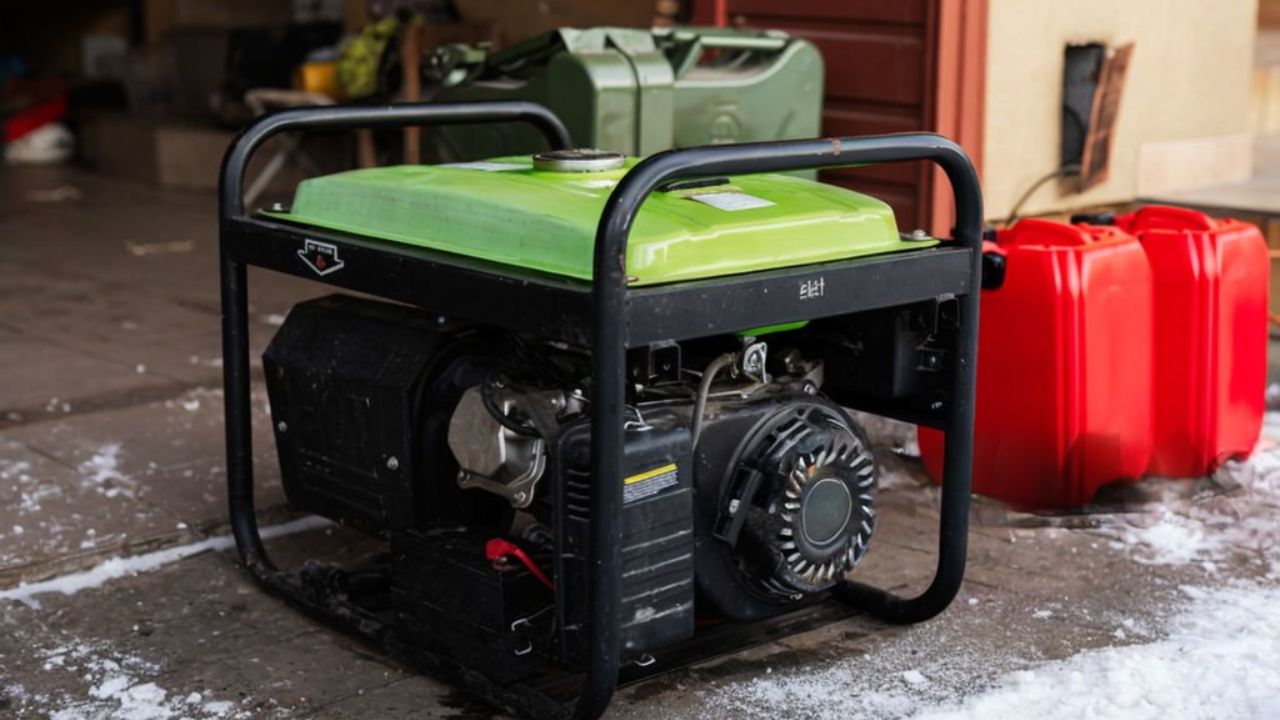
When the lights go out, you probably have a mental picture of a “safe spot” for your portable generator: tucked just outside the garage, under the deck, or beside a cracked-open window. It feels close enough to watch, far enough to trust. In reality, those familiar setups can still funnel deadly exhaust straight into your home, even when you think you are doing everything right.
The gap between what feels safe and what actually protects you is where carbon monoxide injuries happen. To close it, you need to rethink distance, airflow, and even the direction your generator faces, treating the machine less like a backyard appliance and more like a small engine that can quietly fill your house with poison.
The invisible danger that follows exhaust, not distance alone
You experience a generator as noise and vibration, but the real threat is what you cannot sense at all. Portable generators produce carbon monoxide, a colorless and odorless gas that can build up quickly in enclosed or semi-enclosed spaces and cause poisoning before you realize anything is wrong. Federal safety guidance on What you should Know About Generators and Carbon Monoxide labels this risk as a clear DANGER, warning that Using a generator indoors CAN kill you in minutes, and that same exhaust can drift into your living room from outside if it is placed carelessly.
That drift is what makes the “almost outside” locations so deceptive. A survey cited in federal outreach on carbon monoxide hazards found that 62 percent of respondents believed it was safe to run a generator in a garage as long as the garage door was open, or outside near windows and doors. The same outreach stressed that both scenarios have caused deaths, because exhaust can be pulled indoors by fans, HVAC systems, or simple wind patterns that push fumes toward the structure instead of away from it.
The “safe spot” that is not: garages, decks, and cracked windows
When you are scrambling during an outage, it is tempting to slide the generator just inside the garage door, under a carport, or beneath a wooden deck to keep it out of the rain. Those locations feel like a compromise between convenience and caution, but they are exactly where carbon monoxide can pool and then seep into your home. Safety guidance on generator placement stresses that putting a unit too close to the house or under overhangs can trap exhaust and send it through nearby openings, which is why experts emphasize a clear buffer when you Place the machine during an emergency.
Even if you keep the unit technically outdoors, the structure around it can still act like a funnel. Guidance that walks through how to set up your portable generator explains that if you crowd it against walls or under low roofs, you increase the chance that exhaust will be redirected toward vents, soffits, or small gaps in siding, and that poor placement can also stress cords and Setting up connections to the point where they fail under heavy electrical loads. The “safe spot” you can see from your kitchen window is often the one that quietly routes fumes back inside.
Why 20 feet is the new bare minimum
To counter that false sense of security, safety campaigns have converged on a simple rule of thumb: keep your generator at least 20 feet from your home and any openings. Local emergency planners frame it as the “20-20-20” rule, urging you to Keep generators 20 feet away from the house, doors, and windows, and to pair that distance with a working carbon monoxide alarm. Consumer advocates echo that guidance when they tell you to Follow the basic steps for safe setup, starting with getting the machine well away from any place exhaust could drift indoors.
Manufacturers and accessory makers have built on that standard, pointing to research that explains why experts recommend at least 20 feet of separation. One safety checklist from Jul that walks through outdoor placement notes that many owners underestimate how far exhaust can travel and highlights a Generator Safety Checklist that reinforces the need to keep units away from doors, windows, vents, wooden decks, or spilled fuel. A related discussion of why experts insist on that buffer, framed under Jul and Why Experts Recommend At Least 20 Feet, notes that even a modest breeze can push exhaust back toward the house and that cutting that distance could lead to poisoning.
Distance is not enough if the fumes face your house
Even if you hit the 20 foot mark, you can still get into trouble if the exhaust is pointed straight at your siding. Guidance on permanent standby units underscores that Carbon Monoxide (CO) Risk is not just about distance, it is about how Generators vent and how nearby structures shape airflow, which is why some systems use housings designed specifically to prevent exhaust from being directed toward openings. Portable units do not have that kind of engineered envelope, so you have to create your own margin by thinking about wind direction and where the muffler is aimed.
Practical placement advice for small gas units urges you to Point the exhaust away from your home and garage and away from nearby homes, and to Run Portable Generators Outdoors at least as far as the owner’s manual recommends. Electricians who specialize in backup power add that Portable generators produce carbon monoxide in volumes that make exhaust direction and housing design critical, so you should treat the muffler like a loaded nozzle and never aim it at a wall, window, or soffit vent, even if you think the distance is adequate.
Why “indoors but ventilated” is a deadly myth
The most persistent misconception is that you can run a generator indoors or in a semi-enclosed space as long as you crack a window or open a door. Safety officials in Texas warn bluntly to Never use a generator indoors, including in garages, even if the door is open, because carbon monoxide can build up faster than it can escape. They frame their outreach under “Using a generator? Stay safe from carbon monoxide,” and describe the Signs of poisoning from this “silent killer,” underscoring that Carbon monoxide can overwhelm you before you feel seriously ill.
Real-world tragedies often start with the belief that a little ventilation is enough. Reporting on the Windows and airflow problems in homes that rely on indoor generators notes that rooms may not have proper circulation and that people underestimate how quickly exhaust can accumulate when machines run for hours. Apartment-focused guidance adds that While gas-powered units are effective, Gas models simply are not suitable for indoor use, which is why you are urged to look at battery-based alternatives if you live in a building where you cannot safely meet the outdoor distance rules.
How to reset your mental map of “safe” generator use
To truly protect your household, you need to replace the old mental shortcuts with a stricter checklist. State safety officials advise that if you own a portable unit, you should place it outdoors at least 20 feet from your home’s doors, windows, or vents and remember that carbon monoxide is colorless, odorless, and potentially deadly, guidance that is spelled out in a Jan blog on how to safely set up and run portable generators from Jan. Local emergency managers echo that message, urging residents to install working CO alarms on every level of the home and to treat any alarm as a reason to get outside and call for help, not as a glitch to be reset.
Community safety campaigns reinforce the same core habits. Municipal guidance on Generator safety tells you to Use portable units outdoors in well ventilated areas at least 20 feet from all doors, windows, and vents, and to keep them away from downed utility lines and fuel sources. Electricians who answer the question of How Far Should a Portable Generator Be From Your House explain that the answer starts with What Is The Minimum Safe Distance to Keep a Portable Generat away from openings, and then extends to cord management, fuel storage, and transfer switches so that every part of your setup respects that invisible danger zone.
To visualize what a safe layout looks like, you can watch practical demonstrations that walk through outdoor placement, cord routing, and exhaust direction, such as a detailed setup video on Untitled generator safety. Local emergency planners in Apr also remind residents preparing for storms to Apr their plans by mapping out a safe outdoor location in advance, rather than improvising in the dark. When you combine that planning with the consistent 20 foot rule, careful exhaust direction, and a healthy skepticism of any “almost outside” location, you turn your generator from a hidden hazard back into the lifeline it is supposed to be.
Like Fix It Homestead’s content? Be sure to follow us.
Here’s more from us:
- I made Joanna Gaines’s Friendsgiving casserole and here is what I would keep
- Pump Shotguns That Jam the Moment You Actually Need Them
- The First 5 Things Guests Notice About Your Living Room at Christmas
- What Caliber Works Best for Groundhogs, Armadillos, and Other Digging Pests?
- Rifles worth keeping by the back door on any rural property
*This article was developed with AI-powered tools and has been carefully reviewed by our editors.