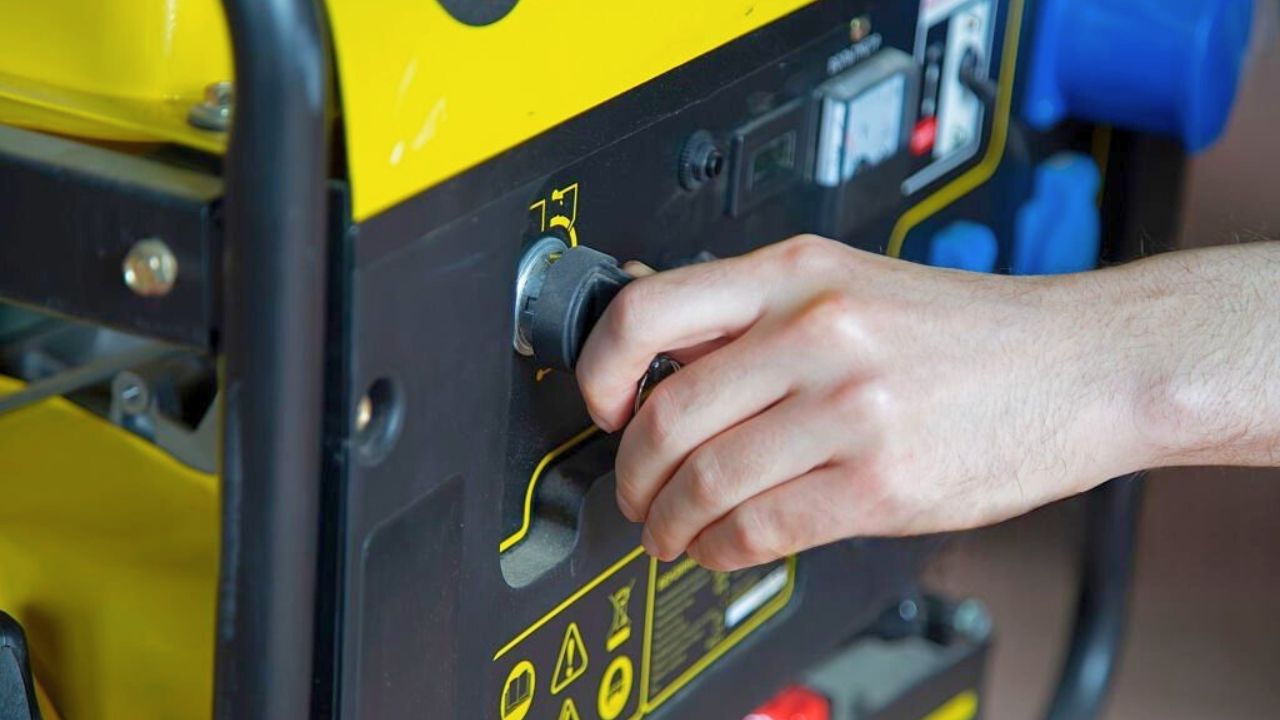
The generator startup order that keeps you from tripping breakers all night
When the grid goes dark, the difference between a calm night and a cascade of tripped breakers usually comes down to the order in which you bring your generator and circuits online. A backup unit that is perfectly sized on paper can still stumble if you dump the wrong loads on it at the wrong moment. With a deliberate startup sequence, you turn that same machine into a steady, predictable power source that keeps your essentials running without drama.
The goal is not just to “get the lights back on,” but to energize your home in a way that protects the generator, your wiring, and every appliance you care about. That means treating startup as a checklist, not a scramble, and following a structure that professional installers, industrial operators, and experienced homeowners already rely on.
Know what you are asking the generator to do
Before you ever pull a recoil cord or hit an electric start button, you need a clear picture of what you expect the generator to carry. The most reliable way to avoid nuisance trips is to decide in advance which circuits are essential and how much power they draw. One practical approach is to Start by making a list of refrigerators, heating systems, medical devices, and other must‑run items, then note both their running wattage and the higher wattage they need to start.
That distinction matters because many household staples behave like motors, which draw a sharp inrush of current when they kick on. Guidance on extension cord sizing points out that a refrigerator is a motorized appliance and that, However efficient it may be once running, you still have to take into account the startup power requirement. The same logic applies to well pumps, furnace blowers, and air conditioners, which can momentarily pull several times their normal load and easily push a marginal generator over the edge if you bring them on carelessly.
Respect the breaker as your early warning system
If your generator’s main breaker keeps snapping off, it is not being finicky, it is doing its job. The main circuit protection on a portable unit is designed to shield the alternator and windings from damage, and Main circuit breakers protect the generator against overload, handling only a brief surge before they trip and all the outlets stop working. When that breaker opens repeatedly, it is almost always a symptom of high demand or a fault, not a random annoyance.
Owners of standby units see the same pattern. In one discussion of a 16 kW system that kept shutting down, a technician noted that what the homeowner really needed was What load shedding equipment to ensure that all of the loads cannot run at once, or at least not all of the heavy ones. Another user was RUNNING the generator on MANUAL and found the breaker DOES NOT TRIP overnight, which highlighted how automatic transfer and stacked loads during peak times, not the machine itself, were pushing it past its limits.
Isolate from the grid before you do anything else
The first structural rule of any safe startup order is simple: your house must never be tied to the utility and the generator at the same time. That is not just a code issue, it is a life‑safety requirement. Engineers discussing improvised power sharing have been blunt that Isolating the house by the main breaker would absolutely be required in all cases before bridging the houses, because any backfeed into utility lines can endanger crews and damage equipment.
In a typical home, that isolation happens either through a transfer switch or an interlock. A step‑by‑step hookup guide stresses that you should Write down instructions and place them in your breaker box, including confirming the power outage and ensuring the Main can be turned off before any generator connection is made. Another walkthrough of order of operations spells it out even more plainly: First shut off main breaker, then work through the transfer panel, and only restore power on that panel once the generator is running and stable.
Prep the generator itself with a no‑load start
Once the house is electrically isolated, your next priority is to bring the generator up to speed without any load attached. Starting under load is a classic way to bog down a small engine and create low voltage conditions that are hard on electronics. A quick start guide is explicit that Before starting the generator, you should disconnect all cords and avoid having any load attached during the startup so the engine can reach operating speed cleanly.
The mechanical steps are straightforward but worth doing in order every time. A detailed setup checklist advises you to Turn the fuel valve on to allow fuel to reach the carburetor, then Move the choke lever as directed for a cold start, and only after that use the starter. A beginner‑friendly video on Dec shows the same rhythm: switch the unit on, set the choke, start the engine, let it warm up, and only then think about connecting it to your home or appliances.
Make the physical connection in a controlled way
With the generator running smoothly at no load, you can turn to the cord and inlet that bridge it to your house. The safest practice is to connect in a way that keeps any exposed prongs away from live power. One homeowner guide recommends that you Twist the lock collar to secure the plug after you Connect MALE END of the electrical cable to the generator first, then plug the female end into the house inlet, so you are never holding energized blades in your hand.
Owners using a transfer switch or inlet box often ask whether it matters which side they plug in first. In one discussion, a user named Dec was told to Connect the cord to the transfer switch inlet and then to the generator outlet, with the key point being that the generator breaker should remain off until the cord is fully seated. That way, even if you brush a connector or drop the cable, you are not dealing with live contacts, and the only thing that changes when you flip the generator breaker is the internal connection inside a closed panel.
Use transfer switches and interlocks the way they were designed
The heart of your startup order is the device that decides whether your panel is fed by the grid or the generator. A manual transfer switch gives you a dedicated set of circuits to energize, while an interlock lets you choose any branch circuits as long as you respect the generator’s limits. A detailed explainer on interlocks notes that Nov is a good example of how an interlock kit is nothing more than a safety device that physically prevents the main breaker and the generator backfeed breaker from being on at the same time.
Modern interlock kits are built around a simple principle: you slide a plate that blocks one breaker while the other is on, and only after disconnecting from the grid can you energize the generator feed. A guide to these devices explains that After disconnecting from the grid, you can turn on the generator breaker to power selected circuits, which both protects the generator from damage and ensures you never accidentally backfeed the utility. Used correctly, that hardware becomes the backbone of your routine: main off, interlock slid, generator breaker on, then branch circuits added in sequence.
Bring loads on in deliberate “steps,” not all at once
Once the generator is connected and its breaker is on, the temptation is to flip every branch breaker back to “on” and celebrate. That is exactly how you end up in a loop of trips and resets. Industrial operators avoid that by using structured Load Steps, where loads are introduced in a controlled and sequential manner, Typically initiated approximately every 15 to 20 seconds, so the generator can absorb each new demand and stabilize before the next one arrives.
You can mirror that discipline at home. A utility safety guide advises that you should never connect all appliances at the same time, but instead start with the largest and progressively add successive ones up to the generator’s maximum output. In practice, that means turning on the fridge and a few lights first, waiting for the engine note to settle, then adding a well pump or furnace blower, and leaving heavy, resistive loads like electric dryers for last, if you run them at all.
Prioritize and manage heavy hitters like dryers and HVAC
Some household loads are so demanding that they can dominate your entire startup strategy. Electric clothes dryers are a prime example. Appliance specialists point out that Why Your Dryer Keeps Tripping the Breaker Electric dryers require a lot of power to operate, typically running on a 240 volt circuit, and that high draw can easily cause a breaker to trip to prevent overheating or electrical fires. On a generator that is already carrying refrigeration, heating, and lighting, trying to start a dryer can be the last straw.
The same caution applies to central air conditioners and other large motor loads. Guidance on preventing overloads emphasizes using a transfer switch or interlock that is properly sized How to Prevent Generator Overload and that Tips for Safe Use include matching the generator to your home’s electrical system rather than assuming it can handle every 240 volt appliance. In many outage scenarios, you are better off leaving the dryer and central AC off the list entirely and focusing your startup order on essentials that keep food safe and rooms habitable.
Shut down with as much care as you started
The way you power down at the end of an outage is just as important as the way you started. Before you touch the generator breaker, you should reduce its workload to near zero. A standard electrical procedure is to Turn off all branch circuit breakers, which in this context means shedding every load on the transfer panel so the generator is idling with no significant demand when you open its breaker and shut it down.
Large power plants follow a similar philosophy at a different scale. Technical guidance on turbine units notes that Sequential tripping of a turbine generator minimizes exposure to overspeed by motoring the generator after tripping the turbine to drain residual power before opening breakers. At home, the stakes are smaller but the logic is the same: drop loads first, open the generator breaker, let the engine cool at no load, then shut it off and only then restore the utility main when the grid is back.
When trips keep happening, troubleshoot the sequence, not just the hardware
If you follow a disciplined order and still find yourself in the dark, it is time to look beyond the obvious. A video guide on fixing a unit that keeps shutting off explains that your generator’s breaker trips to prevent damage from overloads or faults, and that this usually means the electrical circuit demand is too high or there is a wiring issue, not that the breaker itself is bad, as outlined in a tutorial released in Sep. In many cases, simply rethinking which circuits you energize first, or leaving one problematic appliance off, will stop the cycle.
It is also worth remembering that generators are part of a broader ecosystem of power equipment. Industrial setups sometimes use General Motor generator sets to maintain stable frequency to the load, precisely because sensitive systems react badly to sudden swings. At the residential level, you are playing the same game with simpler tools: a clear plan, a transfer device that enforces isolation, and a startup order that treats your generator as a finite resource to be managed, not a bottomless well of power.
Like Fix It Homestead’s content? Be sure to follow us.
Here’s more from us:
- I made Joanna Gaines’s Friendsgiving casserole and here is what I would keep
- Pump Shotguns That Jam the Moment You Actually Need Them
- The First 5 Things Guests Notice About Your Living Room at Christmas
- What Caliber Works Best for Groundhogs, Armadillos, and Other Digging Pests?
- Rifles worth keeping by the back door on any rural property
*This article was developed with AI-powered tools and has been carefully reviewed by our editors.