The hidden splice problem that shows up the second drywall comes down
Once drywall comes down, the story your wiring tells is often very different from what you expected. Behind finished walls, you can find quick twists of copper, buried junction boxes, and improvised fixes that quietly raise the risk of fire and shock while putting your renovation plans on hold. The hidden splice problem is not just an aesthetic nuisance, it is a structural and legal issue that can reshape your budget, your schedule, and your sense of how safe your home really is.
Understanding what you are looking at, what the electrical code actually requires, and how to correct past shortcuts is the difference between a clean inspection and a costly do‑over. With a little grounding in how splices are supposed to work, and how professionals now deal with them in concealed spaces, you can walk into any opened wall with a clear plan instead of a sinking feeling.
Why splices appear the moment walls open up
When you strip a room back to studs, you are not just exposing lumber and insulation, you are revealing every decision previous owners and tradespeople made when they thought no one would ever look again. Renovations, additions, and quick repairs all leave traces in the wiring, and the most common sign is a splice where a cable has been cut and reconnected mid run. A splice is simply a connection between two or more wires, but when it is made casually and then buried, it becomes one of the worst electrical code violations you can inherit, because it combines hidden heat, mechanical weakness, and no straightforward way to inspect or service it later.
Electricians point out that these hidden joints often show up where someone shortened a cable to move a receptacle, tied into an existing circuit to feed a new light, or worked around other trades like plumbing without pulling new wire. Guidance on splices stresses that these connections are especially risky when they are made during remodeling or while upgrading old plumbing pipes, because the temptation is to twist and tape, then close the wall to stay on schedule. Once the drywall is back, the hazard is locked in place, waiting for a heavy load or a loose connection to turn into arcing.
What the code actually says about buried connections
When you discover a splice in a stud bay, your first question is usually whether it is even allowed to exist there. Under the National Electrical Code, every splice or joint must be contained in an approved enclosure that remains accessible after the wall is finished, which is why inspectors treat loose connections behind drywall as a serious defect. Advice to homeowners consistently notes that a splice is illegal and dangerous if it is not inside a proper junction box or if that box is later concealed, and that rule applies whether the work was done by a licensed contractor or a weekend DIYer.
Online discussions about whether you can splice outside a junction box behind drywall tend to land in the same place: you cannot simply twist wires together and bury them. One explanation aimed at lay readers warns that if you try to run cable behind the drywall but in front of the stud, or hide a joint without a box, you are inviting many problems, from physical damage to failed inspections, and instead you are expected to route and protect the cable correctly so any connection is in an accessible enclosure that meets code. That is why inspectors are quick to flag any sign that a box has been covered or a splice left floating in a cavity.
Why hidden splices are more than a paperwork problem
Even if a buried splice never causes a visible failure, it changes how your electrical system behaves every time you flip a switch. Technical explanations aimed at non electricians emphasize that every splice or joint creates resistance in the circuit, and that resistance creates heat and higher amperage at the connection point. Over time, that extra stress can loosen a marginal joint, dry out tape, or degrade insulation, especially when the splice is not supported by a box that keeps conductors separated and contains any arcing.
Safety guidance on common violations explains that when wires are simply twisted together and left loose in an attic, crawlspace, or wall cavity, perhaps with a casual wrap of tape, you are increasing the risk of fire, equipment failure, and a shock hazard for anyone who later opens the space. One overview of twisted connections notes that this kind of loose joint is a textbook example of what inspectors are trained to find and fail, because it concentrates heat in a place with no designed path for dissipation or containment. When you multiply that by several hidden splices on a single circuit, the risk compounds quickly.
How inspectors and pros spot the telltale signs
By the time you see an open splice, the violation is obvious, but professionals are trained to read more subtle clues long before a wall is fully open. They look for patched drywall where a box might have been, oddly placed cable staples, or circuits that disappear into a wall and reappear a few feet away with no visible junction. In one detailed Q and A, an electrician responds to a homeowner who discovered ceiling boxes covered during remodeling, confirming that, Yes, it is a code violation and a potential safety issue when wall or ceiling boxes are buried, because covering any electrical box prevents access that the rules explicitly require for future work and inspection.
Once a cavity is exposed, pros also pay attention to how crowded the wiring looks. Lists of common safety violations highlight Overcrowded Wires and note that cramped conductors are a major cause of serious fires, because heat builds up where cables are tightly bundled or stuffed into small spaces. Another breakdown of Overcrowded Junction Boxes and Wiring Issues warns that tightly packed boxes and sloppy splicing are not just untidy, they are dangerous, since there is no room for conductors to dissipate heat or for devices to be installed correctly. When you see a stud bay with multiple cables twisted together mid span, or a box so full that you can barely push a device back in, you are looking at the same underlying problem of cramped wiring.
Real world examples of shortcuts hiding in plain sight
If you feel like you are the only homeowner who has opened a wall and found a tangle of bare copper, you are not. Social media is full of photos of mid span joints where someone simply twisted conductors together and pushed them back into the cavity. In one widely shared post, the caption notes that Many DIYers and handymen cut corners, twisting wires together and burying them behind drywall without a junction box, and then warns about The da, a shorthand for the danger that hidden connections pose when they are never inspected or enclosed. That kind of casual language reflects how routine these discoveries have become for people who renovate older homes.
Electricians who are called in after the fact often find entire circuits built on this kind of improvisation. One homeowner who posted about an actual wire splice found behind a wall in a recently purchased house described multiple joints wrapped in aging tape with no box in sight, a pattern that suggests the work was done quickly to feed new outlets without pulling new cable. Safety campaigns that reference these stories use them to underline that an open splice, where two electrical lines are connected but left uncovered outside a junction box, is not a minor defect but a known contributor to residential fires, injuries, and deaths.
Why a junction box is not optional hardware
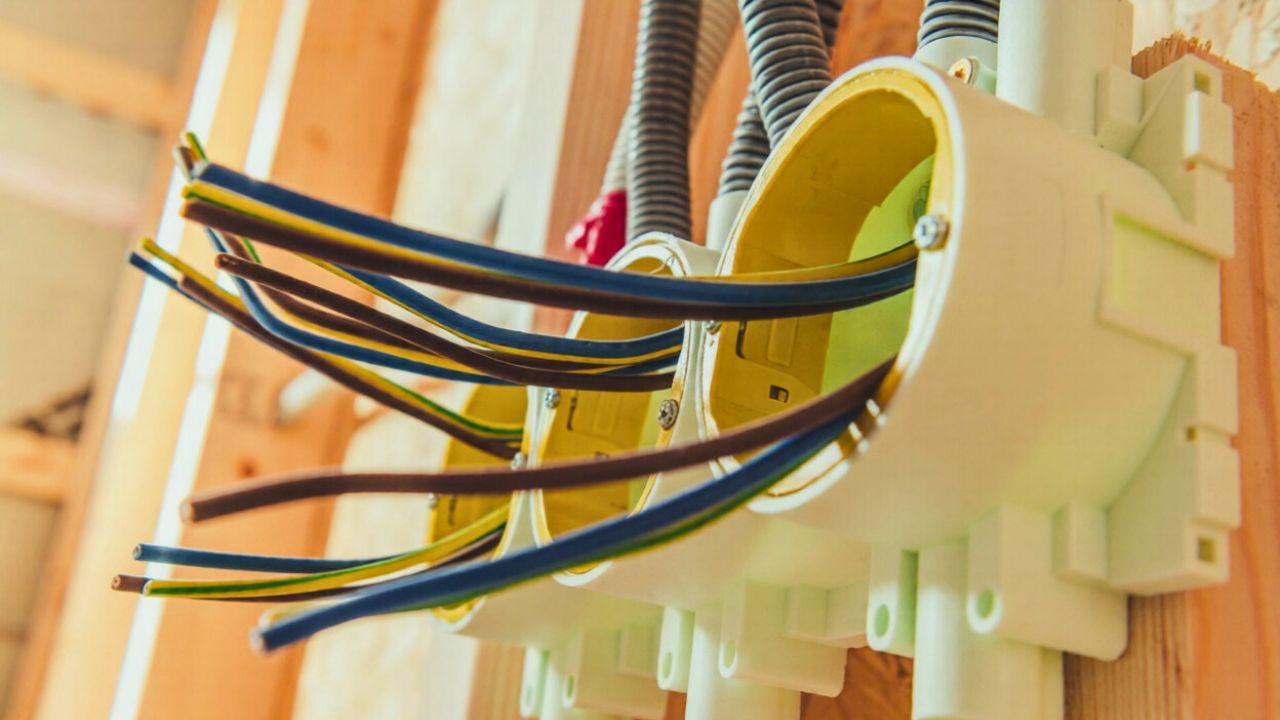
Once you understand the risks, the role of a junction box stops feeling like a bureaucratic requirement and starts to look like what it is, a piece of safety equipment. A properly sized box keeps conductors separated, provides strain relief for cables, and contains any arcing or heat that might occur at a connection. Guidance on electrical boxes stresses that you should Always check that the box meets NEC standards for safety, and that you cannot hide it behind walls, ceilings, floors, or other structures if it contains active splices. According to the National Ele standards, the box opening must remain accessible, which is why inspectors fail any remodel where a finished surface covers a live enclosure.
That accessibility rule can feel inconvenient when you are trying to keep a clean design, but it is what allows future electricians to troubleshoot and expand your system without tearing your house apart. When you discover a buried box during demolition, the fix is usually to extend it to the new wall surface with an approved extension ring or to relocate the connections entirely. One detailed explanation of junction box rules makes it clear that hiding a box is treated the same as leaving a splice loose in a cavity, because in both cases the connection is no longer inspectable or serviceable.
Modern products that change what “buried” means
In recent years, manufacturers have tried to solve the practical problem you face when you need to repair or extend nonmetallic cable in an existing wall without gutting the entire run. There is a product currently available in the United States that is advertised as listed and NEC compliant for splicing NM cables within concealed spaces, installed specifically for rewiring in existing walls where you cannot easily add a traditional box. Explanations of how it works note that There are devices designed so that, when installed according to the NEC and the Code, you can legally join cables in a cavity while still meeting the requirement that the splice can later be accessed, often through a small cover or panel rather than a full size box opening.
These insulated tap devices are not a free pass to hide any connection you like, but they do give electricians more flexibility when repairing damage or rerouting circuits in finished spaces. One technical breakdown explains that Which means an insulated tap device, sometimes called a splicing device, can be used in earlier Code cycles without being installed in a junction box, provided it is listed for the purpose and installed so the splice can later be accessed. That nuance matters when you are weighing whether to open more wall or to use a specialized connector that has been tested and approved under the NEC, rather than improvising with tape and hope.
Practical options when you uncover a bad splice
Once you find a questionable connection, you have three broad choices: remove it by running new cable, enclose it properly, or replace it with a listed device that meets code. Many working electricians and experienced DIYers argue that the Proper fix is to eliminate the splice entirely by pulling a continuous run from the source to the load. In one discussion about spliced Romex in a wall, a commenter named GSZ1959 advises you to Run new wire or else put a plug there as a junction box, while another, Phydoux, says the Proper thing to do is to install a 2×4 junction box at the splice location so the connection is enclosed and accessible. That kind of peer advice reflects the same priorities inspectors bring to the job: fewer joints, better enclosures.
Tools and hardware built specifically for open splices
Like Fix It Homestead’s content? Be sure to follow us.
Here’s more from us:
- I made Joanna Gaines’s Friendsgiving casserole and here is what I would keep
- Pump Shotguns That Jam the Moment You Actually Need Them
- The First 5 Things Guests Notice About Your Living Room at Christmas
- What Caliber Works Best for Groundhogs, Armadillos, and Other Digging Pests?
- Rifles worth keeping by the back door on any rural property
*This article was developed with AI-powered tools and has been carefully reviewed by our editors.