The home charging trend that’s stressing old circuits more than ever
Home charging has shifted from a novelty to a daily ritual, and your electrical panel is quietly carrying the weight of that change. As more drivers plug in overnight, older circuits that once handled a few lights and a refrigerator are now being asked to feed power-hungry chargers for hours at a time. The result is a growing mismatch between modern charging habits and infrastructure that was never designed for this kind of sustained load.
If you own an electric vehicle or are thinking about buying one, you are not just choosing a car, you are effectively adding a new major appliance to your home. Understanding how that decision stresses aging wiring, panels, and outlets is now as important as comparing battery ranges or fast‑charge times at the dealership.
The quiet surge in home charging demand
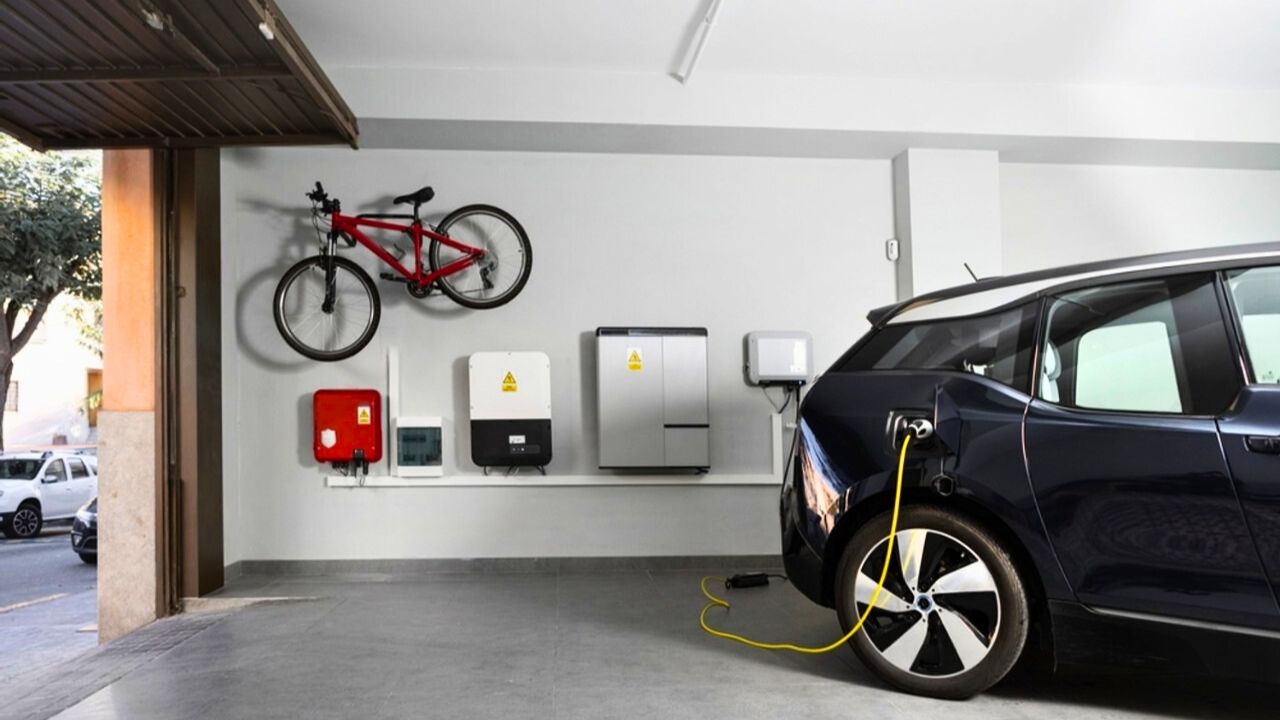
You feel the shift most clearly in your daily routine: instead of hunting for a public fast charger, you expect to plug in at home and wake up to a full battery. Early adopters were often content to trickle charge from a basic outlet, but as EVs have moved into the mainstream, home charging has grown up into a more demanding, always‑on utility. For many drivers, a dedicated wall unit is no longer a luxury, it is becoming a baseline expectation that your garage can deliver reliable overnight power without drama, which is exactly where older circuits start to struggle.
That expectation collides with the reality that your house was likely wired for a very different era of loads. A modern EV can easily draw more power than a central air conditioner, and it can do so for six to ten hours straight. When you layer that on top of existing appliances, lighting, and electronics, the total demand on your service can spike far beyond what the original builder imagined. As more vehicles are deployed on the roads, home charging fundamentally impacts household power systems, turning your panel into the front line of the energy transition.
Why older panels are the weak link
If your house predates the 1980s, your electrical panel was likely sized for a world of incandescent bulbs, small televisions, and maybe a single window AC unit. You might still be relying on a 60‑amp or 100‑amp service that has never been meaningfully upgraded. When you bolt a high‑demand EV charger onto that system, you are asking a decades‑old panel to juggle loads it was never meant to handle, which is why so many electricians now start by evaluating the age of the panel before they even talk about charger models.
Guidance for homeowners is blunt about this. Under the heading Signs Your Panel, one checklist points to the Age of the Panel as a primary red flag, especially if the home was built before the 1980s and has not had an electrical upgrade. An undersized or obsolete panel is not just an inconvenience when breakers trip, it is described as a safety hazard, because overloaded buses and breakers can overheat internally long before you see or smell anything wrong at the surface.
How EV charging stresses household circuits
What makes EV charging uniquely stressful is not only how much power you draw, but how long you draw it. A Level 2 residential EV charging station can draw up to 80 amps for the highest‑performing models, while a typical household dryer would not draw more than 10 amps. That kind of sustained current on a branch circuit magnifies every weakness in your wiring, from loose terminations to undersized conductors, and it leaves far less margin for error if another large appliance kicks on at the same time.
Researchers looking at the Impact on the Electrical System have documented how EV charging can skew the balance between phases in a residential network. In section 4.1, they describe the Impact of Phase Imbalance Induced by EV Charging, where a heavy single‑phase load on one leg of the service can increase neutral currents and losses. For you, that technical imbalance shows up as flickering lights, nuisance breaker trips, or unexplained voltage dips when the car starts to charge, all of which signal that your circuits are being pushed closer to their limits than the original design intended.
Why ordinary sockets are not up to the job
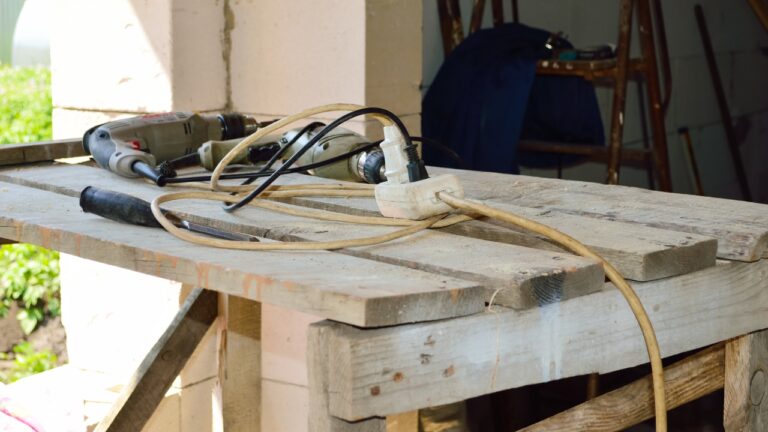
It is tempting to treat your EV like a phone and just plug it into the nearest outlet, especially if you are trying to avoid the cost of a dedicated charger. The problem is that standard wall sockets were never meant to deliver high current for hours on end. They were designed around intermittent loads, like a vacuum cleaner or a toaster, that cycle on and off or run for short bursts, not a vehicle that quietly pulls power all night while you sleep.
Technical guidance on Why Home Socketst Safe for Charging Your EV explains that Home sockets are typically meant for household appliances that draw moderate power and do not run continuously. When you plug in an EV, the prolonged high current can cause contacts to heat up, plastic housings to soften, and wiring to degrade, especially if the supply itself is prone to fluctuations. Over time, that combination of heat and unstable voltage can turn a seemingly harmless extension cord or outlet into a point of failure that is hidden behind furniture or drywall.
The hidden risks inside aging wiring
Even if your panel looks modern, the wiring inside your walls may tell a different story. Older cables can have brittle insulation, undersized conductors, or improvised splices that were never inspected. When you add a nightly EV charge on top of that, the weak spots heat up first, often in places you cannot see, such as junction boxes buried in ceilings or runs stapled too tightly to wooden studs. The risk is not just a tripped breaker, it is a slow buildup of thermal stress that can eventually char insulation and nearby materials.
Safety specialists warn that Home Charging Risks are amplified by Aging Wires, Hidden Overheating, and Fire Hazards, particularly in regions where Many Indian homes still rely on outdated electrical infrastructure. They point to night‑time fire incidents linked to improvised charging setups, where the combination of long charging sessions and marginal wiring created conditions for ignition. The same physics applies in any market: if your conductors and connections are not rated and installed for the load, the heat they generate has to go somewhere.
Why a professional assessment is no longer optional
Before you add a charger, you need to know what your system can safely handle. That starts with a structured look at your total load, not just a guess based on how often your breakers trip. A comprehensive assessment of your home’s total electrical demand tallies existing appliances, HVAC, lighting, and plug loads, then compares that to the capacity of your service. In many cases, that process reveals that an upgrade from 100 amps to 150 amps or even 200 amps or more is the only way to accommodate an EV without routinely flirting with overload.
Guides on assessment emphasize that this is not a back‑of‑the‑envelope exercise. Under the heading Assessing Home Electrical Demand, they describe how a licensed electrician should calculate both continuous and peak loads, then size the panel and feeder accordingly, often recommending a jump to 200 amps or more for households that plan to run an EV charger alongside other large appliances. That kind of methodical review gives you a clear answer on whether your current setup is adequate or whether you are one heavy charging session away from a serious problem.
Why DIY installation can make things worse
Once you decide to install a charger, it can be tempting to treat it like a weekend project. After all, you can buy wall units online, and the wiring diagrams look straightforward. The catch is that EV charging combines high current, continuous duty, and code requirements that are far less forgiving than swapping a light fixture. A mis‑sized breaker, an underspecified cable, or a loose lug can all turn into chronic overheating that only shows up after months of use.
Professionals stress that Ensuring Safety and means more than just making the charger turn on. Using inadequate wiring for EV charging can cause the wires to run hot, leading to insulation degradation and melting over time, even if the system appears to work at first. A licensed installer will size conductors for continuous load, verify grounding and bonding, and confirm that the panel and breakers are compatible with the charger, which is the only way to be confident that your new circuit will not quietly cook itself behind the drywall.
Planning upgrades in an electrifying housing stock
Your EV is arriving in a housing landscape that is already under pressure from broader electrification. One influential analysis notes that It All Starts at Home, pointing out that the United States has 128 m housing units, of which 81.7 m were built before modern efficiency and electrification standards. Businesses, of course, will need to do the same kind of upgrades, but for now the front line is your breaker panel, which has to absorb not only EV charging but also electric heat pumps, induction cooktops, and other high‑demand devices.
That context makes it clear that your EV charger should be part of a broader plan, not a one‑off fix. When you work with an electrician, you can map out a path that might include a panel upgrade, strategic subpanels for garages or accessory units, and future circuits for additional vehicles or electric appliances. Resources that focus on Before you embark on an upgrade stress that you should assess the current capacity of your electrical panel and ensure it can handle both existing loads and the new EV charger, rather than treating the car as an isolated add‑on.
How to future‑proof your charging setup
If you are planning your first EV, you have an opportunity to get ahead of the stress on your circuits instead of reacting to it. Start by assuming that your charging needs will grow, either because you add a second vehicle or because battery capacities increase. That means sizing conduit and panels with extra room, choosing chargers that can be load‑managed or networked, and leaving physical space in your electrical room or garage for additional breakers and equipment. You are not just solving for the next year, you are building the backbone for a decade of electrified living.
Industry roadmaps on Assessing Home Electrical and on how How EV charging affects household systems both point toward smarter, more integrated charging as the norm. Consumer products are already moving in that direction, with platforms like Plug‑in solutions that coordinate charging schedules and power levels. If you design your home setup to work with those tools, rather than against them, you can enjoy the convenience of overnight charging without turning your aging circuits into the weakest link in your electrified life.
Like Fix It Homestead’s content? Be sure to follow us.
Here’s more from us:
- I made Joanna Gaines’s Friendsgiving casserole and here is what I would keep
- Pump Shotguns That Jam the Moment You Actually Need Them
- The First 5 Things Guests Notice About Your Living Room at Christmas
- What Caliber Works Best for Groundhogs, Armadillos, and Other Digging Pests?
- Rifles worth keeping by the back door on any rural property
*This article was developed with AI-powered tools and has been carefully reviewed by our editors.