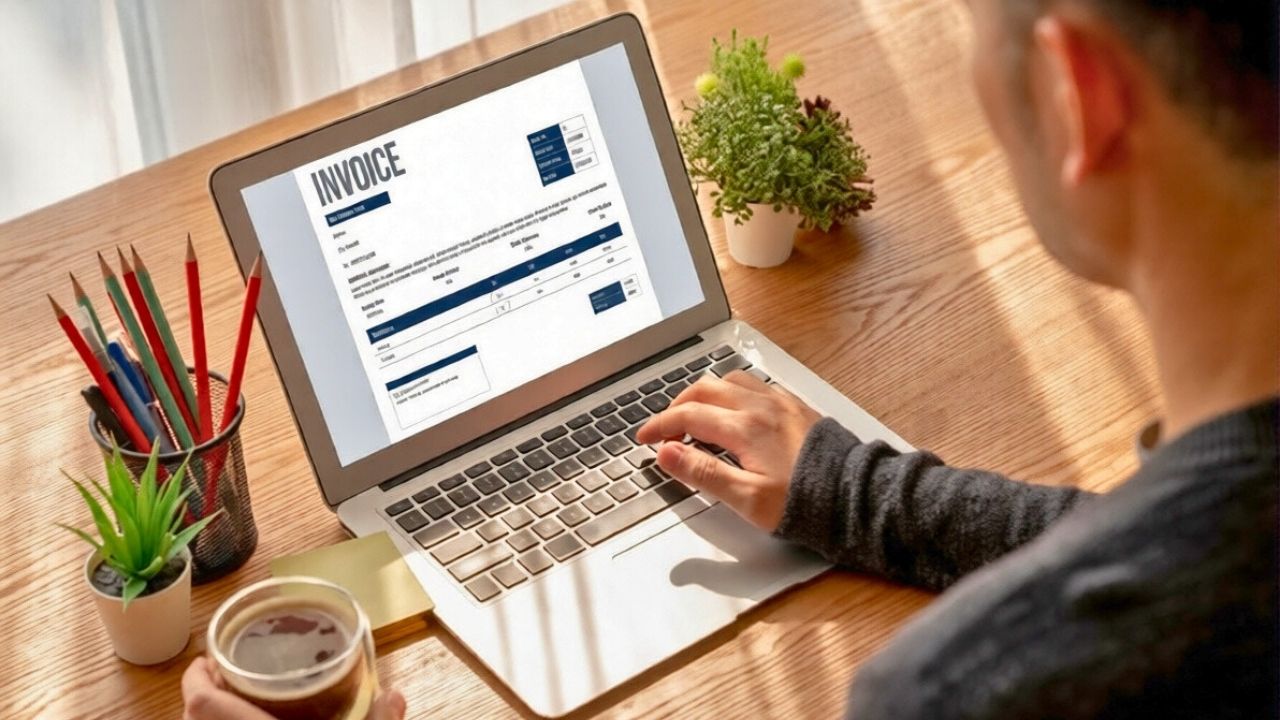
The invoice format scammers use that should make you pause
Invoice scams rarely arrive looking like obvious cons. They land in your inbox dressed up as routine bills, using familiar layouts and language to slip past your defenses. The format is the weapon, and knowing what that format looks like is what lets you pause before money leaves your account.
Once you understand how fake invoices are structured, you can train yourself and your team to spot the small inconsistencies that give them away. The goal is not to turn you into a forensic accountant, but to help you recognize the patterns that should make you stop, verify, and only then pay.
1. The polished template that feels “almost” right
Modern invoice scams are not usually crude PDFs with Comic Sans and clip art. They are often built on clean, professional templates that mimic what you already use, right down to the logo placement and color palette. That is why your first line of defense is not how pretty the invoice looks, but whether the formatting feels slightly off, from spacing and alignment to the way totals are presented, which is exactly the kind of subtle cue experts flag when they urge you to look for formatting that seems inconsistent with your usual documents from a trusted vendor like Watch.
Scammers lean on this “almost right” look because they know accounts payable teams process large volumes of bills and rely on visual familiarity to move quickly. They copy common layouts, including standard fields for invoice number, due date, and payment terms, then quietly alter the details that matter, such as bank account information or remittance address. When you see a document that mirrors your usual template but uses a slightly different font, spacing, or footer language, that is your cue to slow down and compare it against a verified invoice on file rather than trusting the design at a glance.
2. Vendor details that do not quite add up
The most reliable giveaway in a suspicious invoice is often the vendor information block. Fraudsters know you scan for a familiar name, so they use company names that are one letter off, abbreviations that your real supplier does not use, or generic labels like “IT Services” instead of a full legal name. Guidance on invoice fraud warns that unfamiliar vendors or invoices from vendors you have not worked with before, especially when they contain incorrect company details, are a core red flag, which is why you are urged to treat unfamiliar vendors with caution.
Even when the name looks right, the address, phone number, or email domain can betray a fake. Practical checklists advise you to “Check the Vendor Details Fake” by looking for a missing or incorrect company name, address, or contact information, and to treat those Missing pieces as a reason to pause. Other experts describe “Unusual” vendor information and “Inconsistencies or discrepancies in vendor details” as classic warning signs that someone is trying to bypass your standard verification processes, which is why you should treat any such Inconsistencies as a trigger to verify the supplier independently.
3. Language, layout, and amounts that feel off
Once you move past the header, the body of a fake invoice often starts to wobble. Attackers know they need to sound professional, but their copy frequently includes awkward phrasing, inconsistent capitalization, or spelling mistakes that would not survive your real vendor’s billing system. Security specialists point out that if you receive an invoice request with misspelled words or clumsy grammar, you should treat it as a potential scam, because those language slips are among the easiest warning signs to spot when you are moving quickly.
The numbers themselves can also betray the fraud. An inexperienced scammer will often create an invoice for an outrageous sum that stands out from your normal spending patterns, rather than trying to make it seem more routine, which is why guidance on fake invoice emails notes that “the dollar amount is unusual” is a key clue and that such an unusual figure should send you back to your purchase records. When you see a bill that combines clumsy language, vague line items, and a total that does not match any known contract or purchase order, you are looking at a format designed to exploit inattention, not a legitimate request for payment.
4. The urgency play built into the format
One of the most effective tricks in the invoice scammer’s playbook is urgency, and they bake it directly into the document. You will see bold red “OVERDUE” stamps, subject lines that shout about suspension of service, and due dates that appear to have already passed. Analysts of invoice fraud describe how “Creating Urgency Fraudsters” mark invoices as urgent or overdue to avoid scrutiny and force the recipient to act quickly, using the layout and typography of the bill itself to create urgency before you have time to verify.
That pressure is often reinforced in the accompanying email. Scammers lean on phrases like “Your account will be suspended,” “This is your final notice,” or “Immediate action required,” all designed to make you feel that any delay is dangerous. One practical guide notes that “They might even try to scare you with phrases like” these, and that your job “Yours is to stay calm” and check the details instead of reacting to the threat, which is why you should treat such They statements as a psychological tactic, not a genuine reflection of your account status.
5. Payment instructions that quietly redirect money
Behind the polished template and urgent language, the core objective of invoice fraud is simple: to reroute your money. Fraudsters typically change either the payment address or the bank account information while leaving the rest of the invoice looking normal, because that single alteration is enough to divert funds without raising suspicion. One detailed guide notes that “There is just one exception” in an otherwise legitimate looking invoice, and that exception is usually the altered remittance details, which is why you should treat any change in account or address as a reason to confirm the request through a trusted channel before paying There.
Experts emphasize that the key to their scheme is to redirect funds to themselves, so they insert bank details that they control, not the legitimate company’s, while keeping everything else intact. In that sense, “The key to their ( Fraudsters ) scam is to redirect funds to themselves ( Fraudsters )” and “Thus, they ( Fraudsters ) increase the chances that the victim will pay into an account under the Fraudsters control, not the legitimate company’s,” which is why any invoice that combines familiar branding with new payment instructions should be treated as a high risk Fraudsters pattern.
6. Ghost bills, phishing formats, and other common structures
Not every fake invoice pretends to be tied to a real purchase. Some arrive completely out of the blue, hoping that a busy finance team will pay them simply because they look routine. These “ghost invoices” or “ghost notes” are described as fake bills that are sent in the hope that the recipient will not check and will pay for something they never ordered, which is why you should treat any such Ghost Bills as suspicious by default and verify that there was an underlying order or contract.
Other scams use the invoice format as a lure in phishing campaigns. Security trainers list “Unexpected invoice or payment requests” as one of the core phishing red flags, especially when the message contains incorrect details or unusual formatting that does not match your normal billing communications, which is why you should treat such Unexpected requests as potential credential theft attempts rather than simple billing errors. In some cases, the invoice is just a pretext to get you to click a malicious link or open a malware-laced attachment, so the safest response is to verify the request through a separate channel before you interact with any links or files.
7. How scammers exploit your processes, not just your inbox
Invoice fraud is not limited to random emails; it often targets the way your organization approves and pays bills. Attackers do their research and interweave multiple tactics, from spoofed domains to compromised email accounts, to make their invoices look like they are part of your normal workflow. Analysts explain that “Attackers” know invoice fraud can come from a fake or a hijacked vendor account, and that it may appear to come from an unfamiliar vendor or a trusted contact, which is why you need controls that do not rely solely on who appears to be sending the Invoice.
On the process side, traditional template based invoice tools can make things worse by assuming every bill will look exactly the same every time. Industry analysis notes that in both instances where invoices deviate from the template, such systems lack the flexibility to adapt, which slows processing, increases errors, and drives up costs, creating gaps that fraudsters can exploit when a slightly altered fake slips through as “close enough” to the expected format, a risk highlighted when it is observed that such template systems struggle with real world variation. Strengthening your process means building in verification steps that focus on vendor identity, purchase orders, and payment instructions, not just whether the PDF looks familiar.
8. Practical checks you can build into every review
To turn awareness into protection, you need a short, repeatable checklist that every invoice must pass before it is approved. Fraud detection frameworks recommend steps such as verifying sender details, reviewing invoice numbering for gaps or duplicates, scrutinizing the goods or services listed, and checking payment instructions against known records, because these “Content” checks help you spot red flags for invoice fraud and reduce the risks associated with such attacks, which is why you should embed controls like “Verify Sender Details,” “Review Invoice Numbering,” and “Scrutinize Goods or Services” into your standard Services workflow.
On top of that, you should conduct due diligence on any new supplier before doing business with it, including verifying the identity of the company, researching its ownership and operating history, and confirming its contact information through independent channels. Practical advice stresses that you should “Conduct” this kind of background check and “Verify the” supplier’s legitimacy rather than relying on what appears in a single email, and that you should “Research” the business before you trust its invoices, which is why building these steps into your vendor onboarding process is one of the most effective ways to block fraudulent bills before they ever reach your accounts payable queue Research.
9. Training yourself and your team to pause
Even the best controls fail if the people using them feel pressured to click and pay without thinking. That is why awareness training around invoice scams focuses on teaching staff to pause when something feels off, whether it is a vague description of services, a new bank account, or an unexpected bill. One guide for freelancers warns that “Vague Service Descriptions One of the” biggest mistakes is using overly general descriptions, and that the solution is to be specific about what was done, which is why you should treat vague line items as a reason to ask questions rather than approve payment, drawing on that Vague Service Descriptions One of the insight when you review incoming bills.
At the same time, you should normalize verification as a routine step, not an accusation. Security teams advise that if you have any reason to be skeptical of the authenticity of an invoice, you should reach out to the purported billing or finance contact using a known phone number or email, and not the contact details in the suspicious message, before following any payment instructions, which is why they stress that “If you have any reason to be” unsure, you should confirm before acting on the instructions. When you combine that culture of double checking with clear payment terms like “What are Net 30 payment terms?” that define how long customers have to pay, you reduce the power of artificial urgency and give your team the confidence to slow down, verify, and only then send money, using standard concepts like Net 30 as a baseline rather than whatever deadline a scammer prints on a fake bill.
Finally, remember that scammers operate at scale. They ( Scammers ) may send thousands of fake invoices, betting that even a small percentage of successful hits will yield a profit, which is why you should map out who receives invoices, how payments are processed, and who authorizes them, so that no single rushed employee can approve a fraudulent bill alone, a risk underscored when it is noted that They rely on volume and weak internal controls. If you notice any discrepancies, errors, or missing information in an invoice, you should contact the sender directly using a verified channel or find their details on the official website to ask for clarification, which is why guidance stresses that “If you notice any discrepancies, errors, or” gaps, you should verify before paying, a habit you can reinforce by following advice on how to verify sender details.
Supporting sources: Fraud Risk Management: How to Identify Invoice Scams, Invoice fraud: What it is and how to protect your business – Ramp, You don’t need to be an expert to spot a fake invoice. Just …, Invoice fraud: prevention and detection guide – Medius, 10 Warning Signs You’ve Received a Fake Invoice Email, 10 Warning Signs You’ve Received a Fake Invoice Email, Invoice Fraud and Scams: Prevention and Detection Guide – Medius, Invoice Fraud Explained: Spot It Early, Stop It Fast – Precoro, Invoice Fraud Detection: What It Is & 5 Ways to Prevent It, Invoice Fraud: 5 Things To Know About Fake Billers – Billdu, What are Ghost Bills? And what can I do against it? – Invoice Office, The 14 Phishing Red Flags Your Users Need to Know (2026), Don’t Fall for Invoice Fraud Schemes – Porte Brown, Watch Out: That Strange Invoice Email Could Be a Scam., What is Invoice Fraud? – Ironscales, Invoice Fraud Detection: How to Identify Invoice Scams | MineralTree, Businesses: 3 Scams Disguised as Invoices, How to Prevent Fake Invoice Scams and Protect Your Business Finances, The Ultimate Guide to Itemized Invoices for Freelancers (With Templates \u002…, Net 30 Payment Terms Explained: Examples -Sage Advice US, Invoice Fraud Explained: Spot It Early, Stop It Fast, fraud-awareness-deepfakes, Traditional Invoice Processing Tools Fall Short for Multifamily: What’s Next?, Real or Fake: Keeping Your Business Safe from Invoice Fraud, Scam of the Month: Fake (Real) Invoice Scam | Office of Information Security…, How to Verify Invoice Email Sender and Avoid Scams.
Like Fix It Homestead’s content? Be sure to follow us.
Here’s more from us:
- I made Joanna Gaines’s Friendsgiving casserole and here is what I would keep
- Pump Shotguns That Jam the Moment You Actually Need Them
- The First 5 Things Guests Notice About Your Living Room at Christmas
- What Caliber Works Best for Groundhogs, Armadillos, and Other Digging Pests?
- Rifles worth keeping by the back door on any rural property
*This article was developed with AI-powered tools and has been carefully reviewed by our editors.