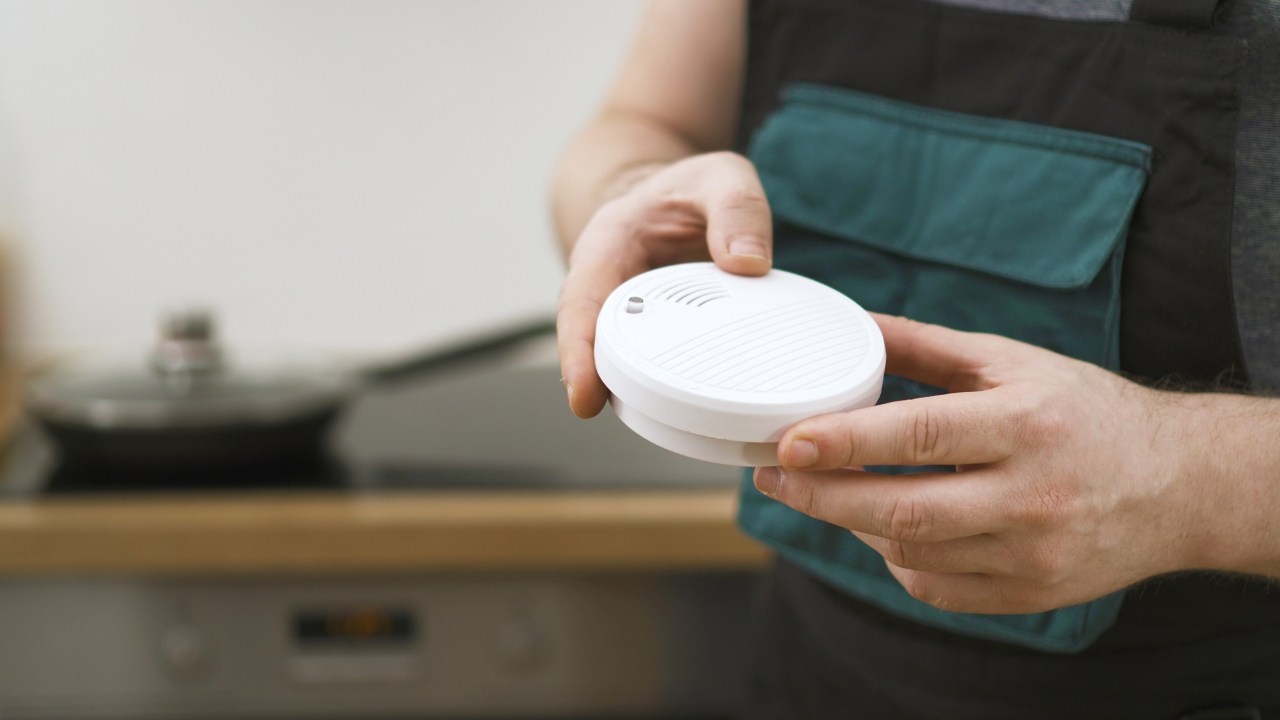
The kitchen smoke alarm mistake that’s basically asking for nuisance alarms
Kitchen smoke alarms are supposed to protect you from the leading cause of home fires, not punish you every time you sear a steak. Yet one common placement mistake virtually guarantees nuisance alarms, and it quietly pushes people toward dangerous workarounds like disabling protection altogether. If you fix where and how your detectors sit around the kitchen, you can keep real fire coverage without living in fear of the next shrill blast.
The real problem: not cooking, but where your alarm is
The core mistake is treating the kitchen like any other room and planting a standard smoke alarm right above the stove or in the direct path of cooking fumes. When you do that, you are asking the device to interpret everyday vapors as life‑threatening smoke, so it behaves exactly as designed and screams at you. Over time, that pattern conditions you to see the alarm as an annoyance instead of a safety net, which is the opposite of what you need in the room where most residential fires start.
Fire safety guidance stresses that smoke alarms are essential in sleeping areas and on every level of your home, but it does not tell you to bolt one directly over your cooktop. National recommendations explain that you should install smoke alarms inside and outside bedrooms and on each floor, while kitchens are treated more carefully because of steam, grease and heat. When you ignore that nuance and put a detector in the hottest, smokiest pocket of your home, you create a perfect recipe for nuisance alarms that eventually tempt you to silence or remove the device entirely.
How nuisance alarms push you toward risky behavior
Every time your alarm shrieks over toast or bacon, you are more likely to reach for the broom handle, the dishrag or the breaker panel instead of asking why the device is reacting that way. Repeated false alerts erode your trust, so when a real fire starts you may hesitate, assume it is “just the alarm again,” or even disable the unit beforehand to avoid embarrassment during a dinner party. That erosion of trust is not a minor inconvenience, it is a direct threat to your ability to respond quickly when seconds matter.
Fire officials describe how Cooking is the top reason people disable alarms, often because steam or humidity keeps triggering them. Guidance on false alarm actions warns that covering or disconnecting a detector to stop nuisance beeping leaves you unprotected if a real fire breaks out minutes later. When you place a device where it will constantly misinterpret normal cooking as danger, you are effectively nudging yourself toward exactly those unsafe shortcuts.
Why the sensor inside your alarm matters near the kitchen
Even if you get the location roughly right, the type of sensor inside your alarm can make the difference between constant chirping and quiet vigilance. Ionization units tend to react faster to fast‑flaming fires but are also more sensitive to tiny particles from cooking, which is why they are notorious for going off when you fry or broil. Photoelectric models, by contrast, are better at detecting slower, smoldering fires and are less likely to be fooled by a quick puff of steam or a whiff of toast.
Research on Most nuisance alarms from cooking points to ionization‑type sensors as the main culprit, which is why switching to photoelectric or dual‑sensor designs can dramatically cut false alerts. Consumer guidance on Two Types of Smoke Detectors notes that photoelectric models are best suited to areas near kitchens precisely because they are less prone to the kind of nuisance alarms that make you want to rip the device off the ceiling. When you combine a more appropriate sensor with smarter placement, you dramatically reduce the odds that normal cooking will set everything off.
The distance rule: how far is “too close” to the stove?
The biggest placement mistake is putting a detector directly above the range or within a few feet of the oven hood, where every plume of steam and atomized fat rises. You might think that closer is safer, but in practice it just means the alarm is constantly bathed in particles that look like smoke to its sensor. That is why professionals talk about keeping a buffer zone between the cooking surface and any standard smoke alarm, while still ensuring the device can “see” real fire conditions quickly.
Fire safety guidance explains that smoke detectors should not be installed in kitchens, garages or near ducts, exterior doors or windows where drafts can interfere with operation, instead they should sit in adjacent areas that still capture smoke movement from a fire. One set of recommendations on Where to place alarms stresses avoiding direct kitchen installation and instead covering nearby spaces outside of each separate sleeping area. Commercial system specialists echo this logic, warning that devices Too Close to the Kitchen Fire line are frequently triggered by cooking emissions and should be moved back to prevent false alarms resulting from culinary activities.
What the national rules actually say about kitchen coverage
It is easy to assume that more alarms in more rooms is always better, but national standards are more nuanced, especially around cooking spaces. The goal is to blanket your home with early warning while recognizing that some locations, like directly over a stove or inside a steamy bathroom, are inherently hostile to accurate sensing. Understanding those rules helps you see why that detector over your cooktop is not just annoying, it is out of step with how professionals design protection.
National guidance on Frequently Asked Questions explains that you should install alarms inside and outside every bedroom and on every level, and that larger homes should use hardwired interconnected units so all devices sound together. A room‑by‑room guide to Where and When to place detectors notes that basements need alarms near stairways and that you should follow spacing rules to avoid dead zones. Complementary advice on NFPA Guidelines and Rules About Smoke Detector Placement highlights that the kitchen is the most common source of home fires, yet it recommends putting a smoke alarm just outside the kitchen rather than directly above the cooking area to balance early warning with fewer nuisance trips.
How cooking fumes and humidity trick your alarm
From the alarm’s perspective, there is not much difference between a cloud of burnt crumbs and the early stages of a real fire. Tiny particles from browning, frying or broiling scatter light or disrupt ion flow inside the sensor chamber, which is exactly what the device is built to detect. Add in steam from boiling water or a dishwasher cycle, and you have a constant stream of triggers that can make even a brand‑new detector seem “oversensitive” when it is simply overwhelmed by your cooking habits and layout.
Fire departments list Burnt Food and minor kitchen mishaps among the top reasons for smoke detector false alarms, noting that even slightly overdone toast can set off a poorly placed unit. Local fire marshals point out that Steam or Humidity can also trigger alarms or signal that a device is contaminated and needs to be replaced. Broader system guidance on Defining False Alarms and Nuisance Alarms explains that nuisance activations often come from non‑fire sources like cooking or heat sources, which is why managing fumes and moisture around detectors is as important as the hardware itself.
Smarter hardware choices that cut down on nuisance alerts
You are not stuck with a one‑size‑fits‑all alarm that treats every wisp of steam as a five‑alarm blaze. Modern devices use smarter sensing, better filters and tailored algorithms to distinguish between real danger and everyday kitchen life. Choosing the right technology for the spaces near your stove can dramatically reduce nuisance alerts without sacrificing the speed or reliability you need if a pan actually ignites.
Guidance on How to Reduce Carbon Monoxide and Smoke Detector Nuisance Alarms notes that contaminated alarms should be replaced and that devices should be kept away from fuel‑burning sources as much as possible. Kitchen‑focused advice from appliance makers explains that Photoelectric smoke detectors are a better choice near cooking because they are less likely to react to steam and atomized fats. Some manufacturers now offer specialized units like the Sensing Plus 10 year battery smoke alarm, which is designed to differentiate between fast‑flaming or smoldering fires and some of the most common nuisance triggers in kitchens, and similar descriptions appear in product listings accessed through Sensing Plus search results.
Placement tweaks that keep protection without the noise
Once you understand that the main mistake is putting a standard alarm in the direct blast zone of your cooking, the fix becomes more straightforward. You want detectors close enough to catch smoke from a real kitchen fire quickly, but far enough from the stove and oven that normal cooking fumes have a chance to dissipate. That usually means shifting devices into adjacent hallways, dining areas or ceilings just outside the kitchen doorway, while leaving the actual cooking zone to ventilation and, if needed, a heat detector instead of a smoke sensor.
Home security guidance lists Improper smoke detector placement as the first of the most common causes of false alarms, emphasizing that even a few feet can make a big difference in performance. Practical how‑to advice on How to stop false alarms near the kitchen recommends changing the Smoke Detector’s Location so it is not directly in the path of cooking fumes, which reduces nuisance alarms while maintaining fire safety. Fire and security specialists who investigate random activations note that Cooking Fumes and Burnt Food are perhaps the most frequent trigger for false fire alarms in homes, and they recommend ensuring detectors are not immediately adjacent to the cooker so that ventilation can do its job before particles reach the sensor.
Ventilation and everyday habits that make alarms behave
Even with better placement and smarter hardware, your day‑to‑day habits around the stove can either support or sabotage your alarms. Good ventilation, from a properly used range hood to simply cracking a window, helps carry away steam and aerosols before they drift toward detectors. Small changes like using lids, preheating pans gradually and keeping toasting cycles in check can further reduce the bursts of particles that most often trigger nuisance alerts.
Kitchen ventilation specialists outline both long and short‑term solutions for what to do when your kitchen smoke alarm keeps going off, starting with using your hood on higher settings and ensuring it vents effectively to the outside. They also emphasize that how to prevent your smoke detector from going off when you cook is as much about airflow as it is about electronics. When you pair those habits with correctly placed alarms that follow national smoke alarm guidance, you stop making the classic kitchen mistake of putting detectors where they are doomed to misfire and instead turn them back into the quiet, reliable guardians they were meant to be.
Like Fix It Homestead’s content? Be sure to follow us.
Here’s more from us:
- I made Joanna Gaines’s Friendsgiving casserole and here is what I would keep
- Pump Shotguns That Jam the Moment You Actually Need Them
- The First 5 Things Guests Notice About Your Living Room at Christmas
- What Caliber Works Best for Groundhogs, Armadillos, and Other Digging Pests?
- Rifles worth keeping by the back door on any rural property
*This article was developed with AI-powered tools and has been carefully reviewed by our editors.