The most overrated “homestead defense” calibers people keep pushing anyway
When you start planning how to defend a homestead, caliber myths arrive faster than any intruder ever will. Friends, forums, and even some instructors keep pushing certain rounds as cure‑alls, even when the ballistics, reliability, and real‑world performance say otherwise. If you want a setup that actually protects your household instead of just sounding good on paper, you need to separate nostalgic favorites and internet legends from cartridges that truly fit the job.
The most overrated “homestead defense” calibers tend to fall into two camps: tiny rounds that struggle to stop determined attackers, and oversized options that create more risk to your family and neighbors than to the threat in front of you. By looking at how these cartridges behave in flesh, through walls, and under stress, you can avoid the hype and build a defense plan that matches your skills, your property, and your legal responsibilities.
.22 LR handguns: the internet’s favorite bad idea
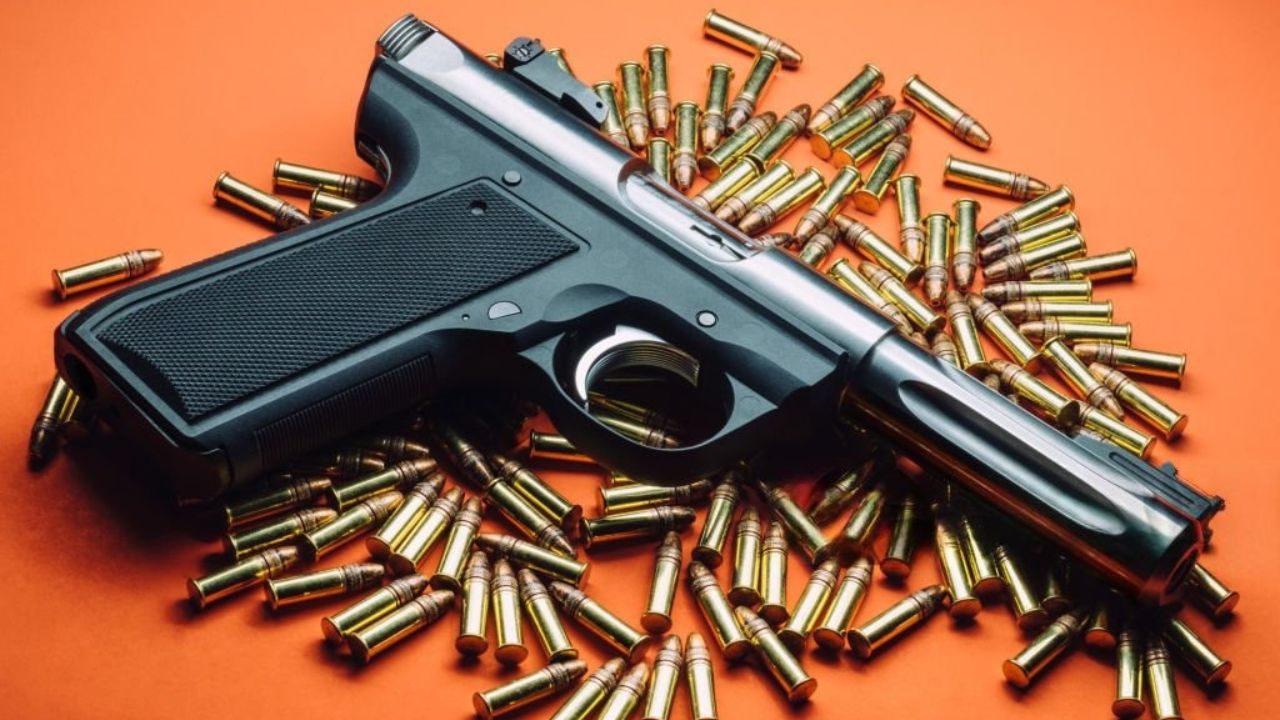
You will hear constant praise for .22 Long Rifle pistols as “perfect” for home defense because they are cheap to shoot and easy on the hands. The problem is that a defensive shooting is not a plinking session, and a cartridge that relies on an attacker changing their mind instead of being forced to stop is a poor anchor for your safety plan. Even advocates of rimfire self‑defense concede that true “involuntary surrender” of an attacker is much harder to achieve with a small, low‑pressure round, which is exactly the concern raised in detailed testing of 22 LR from handguns.
On paper, .22 LR can reach useful velocities, and some loads will penetrate deeply enough in gel to matter, but that is only part of the story. Rimfire ignition is inherently less reliable than centerfire, and bulk .22 ammunition is notorious for inconsistent powder charges and soft bullets that deform or fail to feed. Shooters on dedicated firearm forums point out that 22 is discount grade bulk ammo in many households, which compounds the problem when you need every shot to fire and cycle correctly in a crisis.
.22 LR rifles for homesteads: better, but still oversold
A .22 LR rifle is undeniably easier to shoot accurately than a tiny pistol, and for pest control or training new shooters it is hard to beat. That is why some homesteaders talk themselves into using it as their primary defensive long gun, arguing that fast follow‑up shots and low recoil will make up for limited power. Yet even enthusiasts who enjoy the cartridge for survival scenarios warn that you should not assume you can simply “pop 2 rounds off in a row” and solve a threat, because that logic ignores how unpredictable both zombies and hostile humans can be under stress.
Ballistic data shows that .22 LR hollow points can penetrate roughly 10 to 12 inches in gel, which just barely meets the low end of the FBI’s recommended range for defensive use. That might be acceptable as a backup or for someone who cannot manage recoil from larger calibers, but it leaves little margin when shots must pass through clothing, bone, or intermediate barriers inside a home. When you add the same rimfire reliability concerns that plague pistols, a .22 rifle becomes a niche tool that is useful to have on the property, yet overrated when people promote it as a primary homestead shield.
Mouse‑gun centerfires: .380 ACP and the “better than nothing” trap
Once you move beyond rimfire, the next overrated category is the so‑called mouse‑gun calibers, especially .380 ACP. You will often hear that a small .380 Automatic Colt Pistol is ideal because it is easy to carry and simple to stash in a nightstand. The cartridge, also known as .380 Auto and .380 ACP, was designed for compact pistols, and its low recoil does make concealing them a breeze. That same mild recoil, however, reflects limited energy and penetration, which becomes a liability when you must shoot through heavy clothing or at imperfect angles.
Experts who rank defensive calibers consistently warn that very small handgun rounds can be “too small to save your life” when they fail to reach vital organs after passing through clothing, past bone, and into the torso. One analysis of 7 handgun calibers that professionals avoid highlights this exact problem, noting that shot placement matters but cannot fully compensate for insufficient penetration. On a homestead, where you may have to defend against larger, stronger intruders or even aggressive animals, relying on a cartridge that barely meets minimum standards is a classic case of overrating convenience at the expense of stopping power.
.22 LR as “primary” home‑defense: ballistics versus reality
Some shooters try to rescue .22 LR’s reputation by pointing to gel tests and arguing that modern loads are “good enough” if you place your shots perfectly. Ballistic charts do show that certain high‑velocity .22 LR loads can reach respectable speeds, and that a well‑placed hit can be lethal. Yet when you examine detailed ballistics discussions, the recurring theme is that stopping an attack with this cartridge often depends on the assailant deciding to quit rather than being physically forced to stop by massive tissue disruption.
Other analysts who walk through 22LR ballistics for self and home defense reach a similar conclusion. They acknowledge that it is certainly better than nothing, but they also stress that it falls short of more capable options like a 9 mm handgun or a 12 gauge shotgun when you need rapid incapacitation. For a homestead, where law enforcement response may be slow and you might be alone against multiple intruders, building your plan around a cartridge that only barely works in ideal conditions is a gamble that looks more like wishful thinking than sound preparation.
Big‑bore handgun nostalgia: .45 ACP and the myth of magic knockdown
On the opposite end of the spectrum, you will find people who insist that only a big‑bore like .45 ACP is “serious” enough for home defense. The appeal is understandable, since the .45 has a long history in American service pistols and a reputation for heavy, slow bullets that hit hard. Yet modern comparisons of 9 mm versus .45 ACP pistols show that the smaller round offers reduced recoil and higher magazine capacity while still delivering adequate power for defense, which is why an Overview of 9 mm vs 45 ACP Pistols explicitly notes that 9 mm combines manageable recoil with enough power for home protection.
Detailed breakdowns of the 9 mm versus .45 ACP debate emphasize that both cartridges are battle tested and have played important roles in American history, but they also highlight that modern bullet design has narrowed any practical gap in “stopping power.” One widely cited comparison describes the 1911 in .45 as a “battle‑tested gun” that mattered in the 20th century, yet concludes that capacity, controllability, and shot placement matter more than raw diameter, a point underscored when Measuring the Twentieth‑century legacy of these calibers. For homestead defense, clinging to .45 ACP out of nostalgia can leave you with fewer rounds on tap, slower follow‑up shots, and more difficulty training family members, all for marginal real‑world benefit.
Overpowered rifles indoors: AR‑10 and full‑power 7.62/.308
Rifle enthusiasts sometimes push full‑power battle rifle calibers like 7.62/.308 as the ultimate answer for any defensive scenario, including inside a farmhouse or cabin. The logic is that if a cartridge can reach out hundreds of yards, it will certainly handle a close‑range threat. Yet even fans of the platform admit that an AR‑10 chambered in 7.62, 308 is better suited to long‑range “Range” work or SHTF fantasies than to clearing a hallway at night.
Practical assessments of whether an AR‑10 is suitable for home defense point out that these rifles are loud, heavy, and more likely to overpenetrate typical residential walls. One detailed Conclusion is blunt: AR‑10s are not the best choice for most home defense situations because They carry a higher risk of overpenetration that can endanger people in adjacent rooms or neighboring properties. On a homestead with outbuildings, livestock, or family members sleeping in separate structures, that extra power can become a liability rather than an asset.
Obscure and outdated calibers that refuse to die
Beyond the usual suspects, there is a long tail of obscure or outdated cartridges that still get recommended in niche circles, often because someone inherited a gun or found cheap surplus ammunition. These rounds may have earned a place in history, but that does not make them smart choices for defending your home today. Analyses of calibers that should fade away argue that Some cartridges have simply hung around long after the world moved on, taking up space on shelves without offering any real advantage over modern, widely supported options.
Relying on such fringe calibers for homestead defense introduces several problems at once. Ammunition availability can dry up quickly in any disruption, leaving you with a gun you cannot feed, and spare parts or magazines may be equally scarce. When experts compile lists of 8 handgun calibers that professionals recommend against for everyday carry or home defense, the common thread is not just ballistics but also inconsistent performance and limited support. On a remote property, you are better served by mainstream calibers that you can stock deeply and maintain easily.
Calibers experts actively warn you away from
When you step back from individual pet favorites, a clearer pattern emerges in what trainers and ballistics specialists actually advise. They tend to steer you away from very small handgun rounds that struggle with penetration, from ultra‑light boutique cartridges that lack proven track records, and from heavy magnums that are difficult to control indoors. One widely shared analysis opens with the blunt question, “Can a bullet be too small to save your life,” and answers “yes,” explaining that History and statistics show that some calibers simply do not perform reliably once you factor in clothing, bone, and imperfect shot angles.
Another breakdown of What calibers professionals recommend against highlights that In the world of high‑stakes self‑defense, you cannot afford a round that fails to expand, fails to penetrate, or fails to ignite when you press the trigger. For homestead defense, where you may be far from immediate medical help, the margin for error is even smaller. That is why the most overrated calibers are often those that sound clever in theory but fall apart when you apply the same hard standards that law enforcement and serious defensive shooters use.
What actually works: mainstream, controllable, and supported
Once you strip away the hype, the calibers that consistently rise to the top for home and homestead defense are boring in the best possible way. Standard pressure 9 mm in a reliable handgun, 223 or 556 in a quality carbine, and 12 gauge in a well‑set‑up shotgun all offer a balance of controllability, terminal performance, and ammunition availability. Even in online debates where people argue about 9 mm versus .45 ACP for home defense, experienced voices point out that 223, 556 can actually penetrate interior walls less than heavy buckshot if you miss, which challenges the assumption that more power always means more danger to bystanders.
Preparedness‑focused creators echo this mainstream consensus when they talk about which calibers to stockpile before potential shortages. One widely viewed video on looming ammunition scarcity urges viewers not to be caught short on 9 mm because it is your “front line in every scenario,” from home defense to training, and warns you to short stockpile 9 mmter at your own risk. Another breakdown of handguns you should not trust in 2025 drives home that there are simply better options than quirky, unreliable platforms, a point underscored when a list of six handguns is held up as cautionary examples. For a homestead, the smart move is to lean into proven calibers and platforms that you can train with regularly, maintain easily, and count on when everything else goes wrong.
Like Fix It Homestead’s content? Be sure to follow us.
Here’s more from us:
- I made Joanna Gaines’s Friendsgiving casserole and here is what I would keep
- Pump Shotguns That Jam the Moment You Actually Need Them
- The First 5 Things Guests Notice About Your Living Room at Christmas
- What Caliber Works Best for Groundhogs, Armadillos, and Other Digging Pests?
- Rifles worth keeping by the back door on any rural property
*This article was developed with AI-powered tools and has been carefully reviewed by our editors.