The most relatable part of the “Home Alone” house story, privacy gets complicated fast
You probably remember the “Home Alone” house as a fantasy of suburban comfort, a place where a kid could sled down the stairs and out the front door without anyone calling the homeowners association. The real story of that house, and the people who have lived in it, is far messier, filled with crowds, camera phones, and a constant negotiation over who gets to look and who gets to be left alone. When you follow that story forward into today’s world of smart locks, street‑view cars, and always‑on cameras, you see how quickly the simple wish for privacy turns complicated.
The house that turned a family home into a landmark
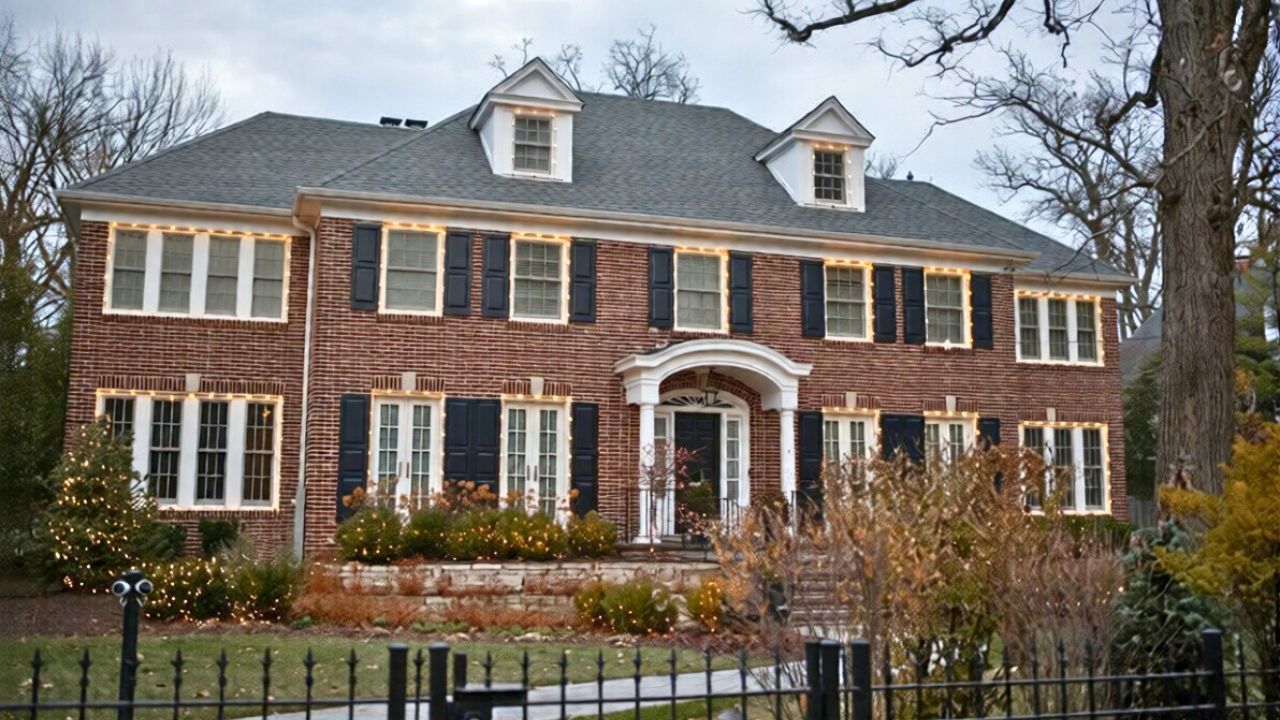
When you think of holiday movies, you probably picture the red‑brick Georgian facade that framed Kevin McCallister’s adventures in Home Alone. That house was not a soundstage, it was and is a real residence in the Chicago suburbs, which meant that the moment the film became a classic, an ordinary family home was recast as a public landmark. You see the fantasy on screen, but for the people who actually lived there, the front steps and driveway were no longer just part of their daily routine, they became a backdrop for strangers’ photos and a destination on holiday sightseeing lists.
Over time, the house’s fame hardened into something like infrastructure, a fixed point on the cultural map that you and millions of others can instantly recognize. That recognition is powerful, and it is part of why the property has been so heavily documented, from fan pilgrimages to real‑estate listings. Yet the more the house is treated as a shared cultural object, the more the private life inside its walls has to fight for space, a tension that sits at the heart of modern debates about what counts as public and what you should be allowed to keep to yourself.
From Winnetka address to global tourist stop
If you type the address into your GPS, you are heading to 671 Lincoln Ave in Winnetka, Illinois, a quiet, affluent village that never asked to host a year‑round film festival on its sidewalks. Travel guides now treat the property as a must‑see stop, with one family travel account describing how the house at 671 Lincoln Ave in Winnetka has become a regular feature on Chicago‑area itineraries. For you as a visitor, it is a quick detour and a photo; for the neighbors, it is a steady stream of rental cars, ride‑shares, and people craning for a better angle.
Local coverage has spelled out how the famed movie home, located in the Chicago area, draws fans who want to stand on the sidewalk and re‑create scenes, even as the current owners try to maintain some semblance of normalcy. Reports on where the house is and what to know about the iconic movie home in the Chicago area underline that the property is a private residence, not a museum, yet the crowds keep coming to the same suburban block that By Matt Stefanski and NBC Chicago Staff describe as trying to preserve everyday life. You might see a front lawn; the people inside see a stage they never auditioned for.
What the original owners actually signed up for
Long before the house became a pilgrimage site, the owners who agreed to let a film crew in were just trying to make a practical decision about their property. According to a detailed account of the production, writer Richard Roeper once stopped by the house and spoke with the family, and that reporting, cited in an Architectural Digest feature, traces how the owners weighed the disruption against the opportunity. The piece notes that, according to an article written in 2015 for the Chicago Sun‑Times, Roeper’s visit shed light on the Abendshiens’ 25‑year residency and how they navigated the sudden fame that came with having their home immortalized on screen, a story you can see reflected in According to an article that revisits the house’s history.
For you, the idea of renting out your home for a movie might sound like a one‑time adventure, a few weeks of chaos in exchange for a good story and a check. For the Abendshiens, it became a defining feature of their lives, shaping how neighbors saw them and how strangers treated their front yard. That gap between what you think you are agreeing to and what actually unfolds is a recurring theme in modern privacy dilemmas, from social media posts that travel far beyond your intended audience to data‑sharing agreements that quietly outlive your original consent.
Regret, memoirs, and the cost of being recognizable
Years later, the man who once opened his front door to a film crew has been candid about the tradeoffs. In interviews tied to his memoir, Home But Alone No More, Abendshien has described how the attention never fully faded and how people were still arriving at the house to take photos and relive their favorite scenes. Speaking to Fox News, he explained that people were drawn to the property because the movie was so special to them, a sentiment that sounds flattering until you imagine that level of sentimentality parked outside your own living room every weekend, a dynamic captured in coverage that notes how Speaking about his regret, he framed the experience as more complicated than fans might assume.
For you, his story is a reminder that recognizability is not a simple asset. Once your home, your face, or your online handle becomes a reference point for other people’s nostalgia, you lose some control over how and when it appears. Abendshien’s reflections in Home But Alone No More read like an early case study in the emotional cost of being “always on,” long before smartphones made it normal for anyone walking past your house to broadcast it to the world in seconds.
When a Zillow listing becomes a global spectacle
The market eventually caught up with the mythology. When the property at 671 Lincoln Ave in Winnetka, IL 60093 appeared on real‑estate platforms, it was not just another listing, it was a chance for the public to peek inside the movie set they had memorized. One listing on Zillow shows the home as Closed at a sale price of $5,500,000, with 5 beds, 6 baths, and 9,126 sqft, details that turn a cinematic backdrop into a spreadsheet of square footage and valuation, all visible to anyone who clicks on Zillow for 671 Lincoln Ave in Winn.
For you as a casual browser, those numbers are trivia, something to marvel at between meetings. For the people who live there, they are a public ledger of their private investment, tied to a house that already attracts more attention than most. The listing illustrates how, in the digital real‑estate era, your home is not just where you live, it is a data object, complete with photos, floor plans, and price history, all of it searchable and shareable far beyond your immediate community.
Blurring the house on Google Maps, and why that feels so satisfying
At some point, the owners of the “Home Alone” house decided that if they could not stop people from driving by, they could at least limit how easily the internet could peer in. Users noticed that the entire house was blurred out on a major mapping service, a feature that lets property owners request that their home be obscured from street‑view imagery. One discussion thread points out that it has been 30 years since Home Alone debuted and that the McCallisters’ house, an actual home in the Chica area, was valued at about $1.7 million when people first started talking about its digital visibility, a conversation captured in a post noting that Dec brought renewed attention to the blurred listing.
If you have ever zoomed in on your own house in a mapping app, you know the strange mix of fascination and discomfort that comes with seeing your front door framed by a corporate camera. The decision to blur the “Home Alone” house is a small but potent act of resistance, a way of saying that not every famous facade has to be instantly accessible from every screen. It also highlights a privilege: you need to know that the option exists, and you need the time and persistence to request it, which means that the people most exposed to unwanted digital scrutiny are often the least equipped to push back.
From movie set to legal precedent: when your home is data
The story of the “Home Alone” house sits alongside a broader legal and cultural reckoning over what happens when your home becomes a data point. In New York City, lawmakers responded to concerns about landlords tracking tenants through smart locks and key fobs by passing a Tenant Data Privacy Act that sets strict Use Restrictions on how access information can be collected and shared. The Act expressly prohibits using smart access data for any purpose other than granting access to the building, and it limits how long that data can be retained, a framework laid out in guidance that explains how Use Restrictions in The Act are meant to keep your comings and goings from turning into a surveillance dossier.
For you as a tenant or condo owner, that kind of law is a reminder that your front door is now a sensor, not just a lock. Every time you tap a fob or open an app, you create a record that can, in theory, be analyzed to infer when you are home, when you are away, and who might be visiting. The Tenant Data Privacy Act tries to draw a line between necessary security and intrusive tracking, but it also underscores how much of your domestic life is already mediated by systems you did not design and cannot easily audit.
When street‑view photos feel like trespassing
Long before smart locks, people were already testing the limits of how much of your home could be captured and shared without your consent. A widely discussed case involved a couple from Pennsylvania, the Borings, who sued a mapping company for invasion of privacy and trespassing after a camera car drove up their private driveway and published images of their house and pool. A detailed commentary on the case notes that the Borings’ lawsuit prompted the company to expand its opt‑out tools, including a feature that lets you request blurring of your home, an option that became particularly popular in Germany, as described in a reflection on how Pennsylvania residents like the Borings pushed back.
If you have ever felt uneasy seeing your backyard or front windows on a global platform, their case probably resonates. It shows that the line between public and private is not just a matter of where your property ends, it is also about how images are captured, labeled, and distributed. The Borings did not win every argument in court, but they helped establish that you are not powerless when your home appears online without your blessing, even if the tools you have are imperfect and often reactive.
Inside your walls is not as private as you think
Even if you manage to blur your house and lock down your smart‑access data, what happens inside your walls is increasingly exposed to outside eyes. Investigative reporters have shown how unsecured security cameras, baby monitors, and smart TVs can be accessed by strangers, sometimes with nothing more than a default password and a search query. One televised investigation, branded as 13 Investigates, documented how what you do inside your own home might not be as private as you think, with reporter Bob Segall demonstrating how easy it was to pull up live feeds from living rooms and nurseries, a warning that plays out in a segment where Investigates walks viewers through the risks.
For you, the convenience of checking your doorbell camera from your phone or asking a smart speaker to dim the lights can obscure the fact that each device is a potential listening post. The “Home Alone” fantasy of outsmarting intruders with paint cans and toy cars feels quaint next to the reality that someone halfway around the world could be watching your hallway in real time. The more you wire your home for comfort and security, the more you have to think like a systems administrator, managing passwords, firmware updates, and privacy settings just to keep your private life from leaking into the open internet.
Like Fix It Homestead’s content? Be sure to follow us.
Here’s more from us:
- I made Joanna Gaines’s Friendsgiving casserole and here is what I would keep
- Pump Shotguns That Jam the Moment You Actually Need Them
- The First 5 Things Guests Notice About Your Living Room at Christmas
- What Caliber Works Best for Groundhogs, Armadillos, and Other Digging Pests?
- Rifles worth keeping by the back door on any rural property
*This article was developed with AI-powered tools and has been carefully reviewed by our editors.