The new HGTV organizing approach that’s more realistic than the perfect pantry trend
Television has spent years selling you a fantasy pantry, lined with identical jars and color coded snacks that never seem to run out or get messy. The newest wave of HGTV organizing content is quietly walking that back, shifting the focus from picture perfect shelves to systems that survive real life. Instead of chasing a flawless grid of containers, you are being invited to build storage that bends with your habits, your budget, and your actual appetite.
That pivot matters, because the pressure to maintain a showroom kitchen or closet often leaves you feeling like you have failed before you even start. The more realistic approach treats organizing as a tool for living better, not as a performance for social media, and it is reshaping everything from on screen makeovers to the way experts talk about trends, clutter, and even color.
From “perfect pantry” fantasy to livable order
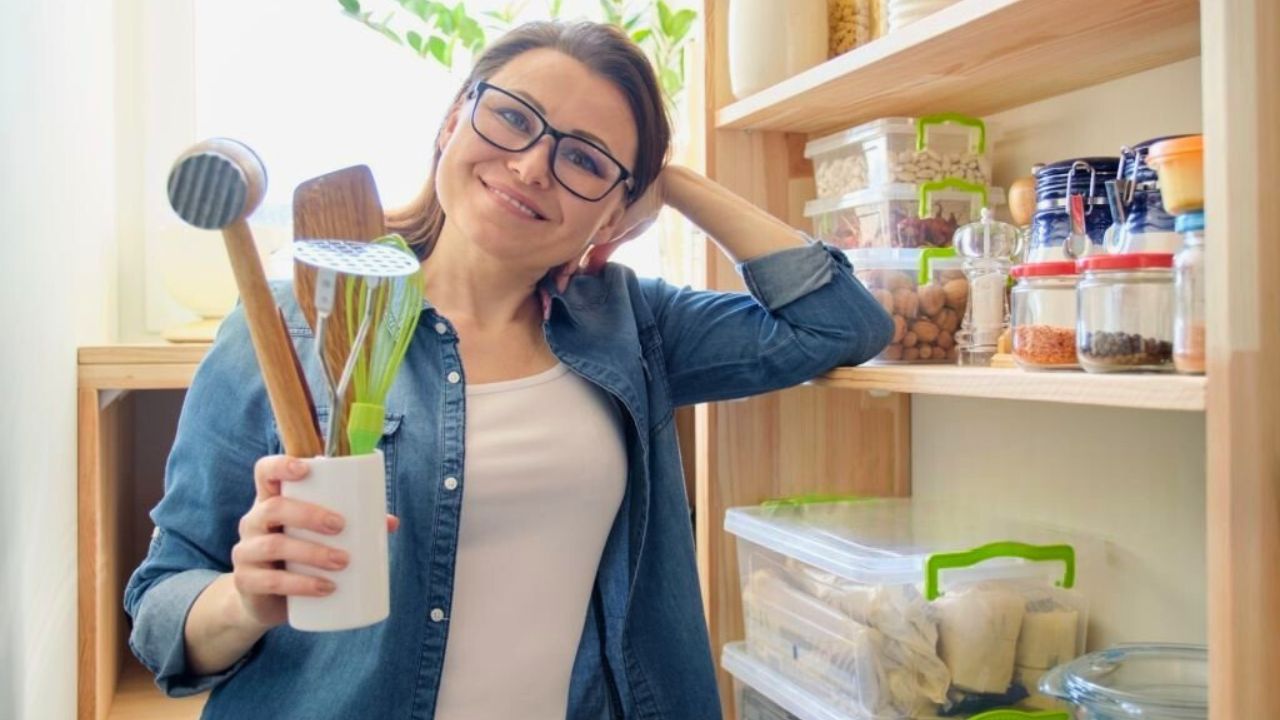
The perfect pantry trend grew out of a simple promise: if every box and bag disappeared into matching bins, your kitchen would finally feel calm. In practice, that aesthetic often demands constant decanting, label making, and restocking that only works if you have time, money, and a near professional level of discipline. The new HGTV driven mindset treats those Instagram ready shelves as optional, not mandatory, and reframes success as being able to find tonight’s pasta without moving six canisters out of the way.
Instead of designing for a single photo, you are encouraged to design for the way you actually cook, snack, and shop. That means accepting that some packaging will stay visible, that kids will shove cereal back on the wrong shelf, and that your storage has to flex when you switch from bulk buying to smaller grocery runs. It is a subtle but important shift, away from a rigid ideal and toward a system that can absorb a hectic week without collapsing into chaos.
How 2025 design trends are softening the rules
Home design trends for 2025 are already moving away from rigid perfection, and that change is helping realistic organizing take root. Softer lines, layered textures, and more relaxed styling make it easier for a pantry or mudroom to look intentional even when every item is not perfectly aligned. When you lean into this mood, a mix of baskets, open shelves, and closed cabinets can hide visual noise while still keeping daily essentials within reach, which is exactly what a lived in organizing system needs.
That same spirit shows up in the way designers are talking about kitchens and storage more broadly. Instead of insisting that every surface stay bare, they are embracing zones where you can keep appliances out, cookbooks stacked, and produce bowls visible, as long as the overall layout still feels coherent. You see this in the latest round of 2025 home design ideas, which favor spaces that look curated but not staged, giving you permission to prioritize function over flawless symmetry.
Why experts say one-size-fits-all systems are out
Organizing professionals are increasingly blunt about the limits of one-size-fits-all systems, especially in high traffic spaces like kitchens and entryways. A pantry that works for a family of five who bulk buy snacks will not serve a single person who cooks twice a week, and any system that ignores those differences is likely to fail. The new HGTV approach borrows from that realism, encouraging you to start with your routines, not with a shopping list of containers.
That philosophy lines up with broader advice that the beauty of getting organized is the ability to tailor every shelf and drawer to your style, your space, and your stuff. Instead of copying a celebrity pantry, you are urged to build systems around your own needs and lifestyle, a point underscored in organizing trend predictions that highlight customization as the real status symbol. In that world, success is not measured by matching bins but by how easily you can reset your space after a long day.
Clear containers, but only where they earn their keep
Clear bins and jars are not disappearing, but their role is being right sized. Instead of decanting every dry good, you are encouraged to reserve that effort for items that genuinely benefit from visibility and airtight storage, like baking staples or snacks that tend to go stale. The logic is simple: if you can see what you have, you are less likely to overbuy or let food expire, but only if the system is easy enough that you actually maintain it.
Practical guidance now emphasizes using transparent storage strategically, pairing it with labels and grouping like items together so you can scan a shelf in seconds. Advice on how to store food in clear containers stresses that visibility should serve you, not the camera, and that you can mix see through bins with original packaging without losing control. In a realistic pantry, a row of labeled jars might sit beside a basket of bagged snacks and a crate of canned goods, each chosen for how you actually grab and put away food.
When design trends tell you to let go of perfection
Even in broader design conversations, there is a growing appetite for spaces that feel less choreographed. Some of the same voices that once championed hyper curated kitchens are now calling for a reset, arguing that certain rigid layouts and aesthetics have run their course. That includes a more relaxed take on open shelving and display, where a bit of visual variety is seen as character rather than clutter.
In discussions of what to leave behind, stylist Ellie has pointed out that while open concept kitchens can stay, the way you use them is changing, with more emphasis on zones and storage that actually support daily life. That perspective dovetails with the shift away from a single, spotless view of the pantry and toward layered solutions that can hide mess when needed and reveal essentials when you are cooking. The message is clear: you do not have to erase every sign of use to have a stylish home.
HGTV’s new organizing star and the value of “good enough”
On screen, the most telling sign of this new realism is the kind of host being elevated to talk about clutter and storage. In the series Junk or Jackpot?, designer Bobby Berk steps into homes that are overflowing with collections and sentimental items, not just mismatched cereal boxes. His job is not to shame people into minimalism, but to help them sort, edit, and display what matters while letting go of what does not, all within real budgets and constraints.
Bobby Berk, who is introduced as an American designer with a long track record in budget conscious home design solutions, brings that sensibility to every episode of Junk or Jackpot. Instead of chasing a sterile after photo, he helps Los Angeles collectors create systems that honor their passions without swallowing their homes, modeling a version of organizing where “good enough” is not a compromise but a goal. For viewers, that is a powerful cue that your own pantry or closet can be functional and personal, even if it would never pass a white glove inspection.
New year, new systems you can actually keep up
The pressure to overhaul your home peaks every January, when fresh planners and storage sales collide with resolutions. The more realistic HGTV approach treats that moment not as a chance to reinvent yourself, but as an opportunity to make small, sustainable changes. Instead of emptying every cabinet, you are encouraged to tackle one shelf or one category at a time, building momentum rather than burnout.
That incremental mindset shows up in seasonal organizing advice that frames the new year as a fresh start without demanding perfection. In one widely shared segment titled Get Organized in 2025, the host notes that when Jan arrives and you flip to a new calendar, everyone thinks about starting over, but the real progress comes from simple, repeatable habits like a weekly reset or a five minute tidy. By treating organizing as a routine rather than a one time event, as seen in Get Organized in 2025, you give yourself a far better chance of keeping your pantry and closets under control long after the resolution glow fades.
Designing storage around how you actually live
The most radical part of this new organizing philosophy is its insistence that your home should reflect your life, not an abstract trend cycle. That means acknowledging that some weeks you will cook every night and others you will live on takeout, that kids’ activities will explode across the mudroom, and that hobbies come with gear that does not fit neatly into a single bin. Instead of fighting those realities, you are urged to design storage that absorbs them, with flexible zones and catchall spots that can be reset quickly.
Content creators are echoing that message, urging you to emphasize organization in a way that is realistic for your lifestyle rather than adhering to strict aesthetics. One designer, Brandy J Jackson, argues that neutral decor and simple systems can make it easier to maintain order because they reflect the daily lives of their inhabitants instead of chasing the latest color trend. Her advice to emphasize organization as a support for real routines, not as a decorative performance, dovetails neatly with HGTV’s more grounded take on pantries and closets.
How to bring the “realistic HGTV” mindset into your own pantry
Translating this shift into your own home starts with a simple question: what do you reach for most, and how fast do you need to find it. Instead of buying a full set of containers, begin by grouping your most used items into zones, like breakfast, baking, or weeknight dinners, and give each zone a dedicated shelf or bin. If you cook pasta twice a week, keep it at eye level in a simple basket; if you bake once a month, tuck flour and sugar into a sturdier bin that can live on a higher shelf without demanding constant attention.
From there, layer in just enough structure to keep things from unraveling. A few clear bins for snacks, a lazy Susan for oils, and a crate for backstock can deliver most of the benefits of a “perfect” pantry without the upkeep. As you refine your system, borrow selectively from the more polished looks you see on HGTV trend roundups, but filter every idea through a single test: will you still be doing this on a busy Thursday night. If the answer is no, skip it, and trust that a slightly imperfect shelf you can maintain is far more stylish than a flawless one that falls apart in a month.
Like Fix It Homestead’s content? Be sure to follow us.
Here’s more from us:
- I made Joanna Gaines’s Friendsgiving casserole and here is what I would keep
- Pump Shotguns That Jam the Moment You Actually Need Them
- The First 5 Things Guests Notice About Your Living Room at Christmas
- What Caliber Works Best for Groundhogs, Armadillos, and Other Digging Pests?
- Rifles worth keeping by the back door on any rural property
*This article was developed with AI-powered tools and has been carefully reviewed by our editors.