The “one gun does everything” myth that new landowners fall for
New landowners often arrive on their acreage with a tidy fantasy: one firearm that will guard the house, humanely harvest game, and swat every pest from the garden to the tree line. The reality on the ground is less cinematic and more technical, because the jobs you expect a gun to do on rural property pull in very different directions. If you treat a single purchase as a magic key to safety, food, and peace of mind, you risk overspending on the wrong tool and underpreparing for the situations that actually arise.
The smarter approach is to understand why the “one gun does everything” idea is so persistent, where it breaks down, and how experienced homesteaders quietly solve the problem. When you unpack the tradeoffs between rifles, shotguns, and handguns, and listen to people who live with firearms as everyday tools, you can build a small, purpose driven battery instead of chasing a unicorn.
The seductive promise of a single do‑it‑all gun
When you first sign closing papers on land, the urge to simplify is powerful. You are juggling septic systems, fence lines, and tractor repairs, so the notion that one firearm can cover home defense, hunting, and pest control feels like a relief. Retail counters and online forums reinforce that hope with confident claims that a particular platform, often an AR pattern rifle or a 12 gauge, will handle anything you throw at it. The pitch is that a modern semi automatic like the AR, with its lightweight, high velocity round, can serve as both a defensive carbine and a practical field rifle in a worst case WROL scenario, so you can buy once and forget the rest.
That story is emotionally appealing because it promises control in an environment that can feel unpredictable, but it glosses over the way different tasks demand different ballistics, ergonomics, and legal considerations. Even advocates who praise the AR for its effectiveness in home defense or WROL quietly acknowledge that they are choosing it as a compromise, not a perfect fit for every role, and that is before you factor in local restrictions or your own physical comfort with recoil and noise. The myth persists because it is tidy, not because it matches how rural life actually works.
Why experienced shooters rarely stop at one firearm
If you look at how long term gun owners behave, especially in rural areas, you see a very different pattern from the one gun fantasy. People who live with firearms as tools tend to build redundancy and specialization into their setups, often keeping multiple guns staged in different parts of the home or carried on their person. One explanation is the simple “theory of redundancy,” the idea that you do not want a single point of failure when your safety or your livestock are on the line, so you keep more than one tool in case you misplace, damage, or break the one you have, and you spread them around the property so they are accessible when needed.
That same logic shows up in how northern gun owners describe their own habits, where it is common to treat three firearms as a basic starter kit rather than an indulgence. In that pattern, you keep a .22 LR for targets and small pests, a shotgun for birds, and a heavier rifle or handgun for larger animals or personal defense, because each fills a distinct niche that the others cannot cover well. When you see people who have lived on the land for decades defaulting to a small collection instead of a single “do everything” piece, it is a signal that the one gun narrative is out of step with real world demands.
How the AR and the .22 LR became competing “only gun” fantasies
Within gun culture, the “if you could only have one” debate often narrows to two very different answers, each with its own mythology. On one side are those who argue that the AR is the obvious choice, pointing to its modularity, light recoil, and the way its high velocity cartridge can bridge the gap between home defense and medium game hunting. In that view, the AR is a flexible platform that can be tuned with optics, lights, and different uppers to stretch into multiple roles, which is why some writers frame it as the rifle they would pick if they could only own one and why they highlight its performance in defensive or WROL contexts.
On the other side are advocates for the humble .22 rifle, who argue that if you truly had to live with a single firearm, the ability to shoot cheaply, quietly, and accurately would matter more than raw power. That camp notes that you cannot realistically conceal carry a rifle, even a takedown version, so the “only gun” thought experiment is already divorced from daily carry realities, and they emphasize how a .22 LR with its heeled, outside lubricated bullet can handle small game, training, and pest control with minimal recoil. However, even those who champion the .22 as a theoretical one gun solution usually concede that it is a constrained scenario and that in normal life you are better off acknowledging the pros and cons of each category instead of forcing one platform to cover everything.
The shotgun’s reputation as the rural multitool
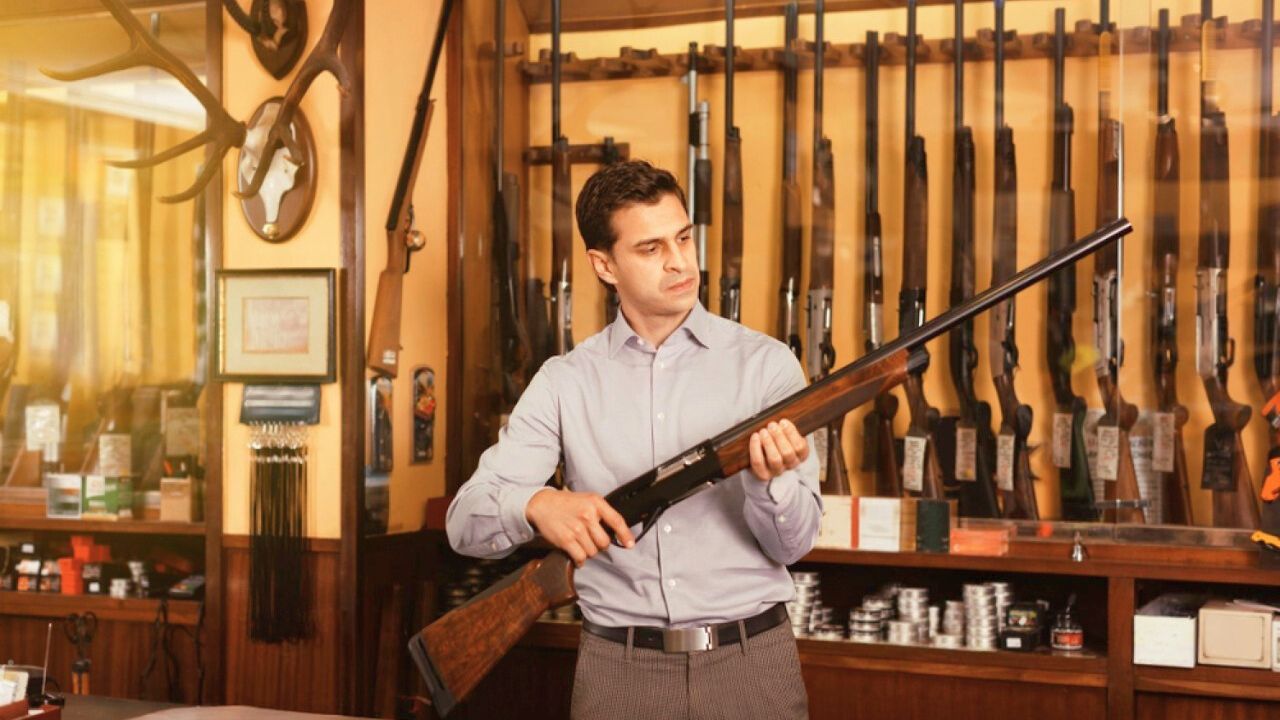
When you move from theory to the chores that stack up on a homestead, the shotgun often emerges as the closest thing to a practical multitool, which is why so many rural voices keep circling back to it. A good 12 gauge or 20 gauge can be loaded with birdshot for upland birds and rabbits, buckshot for close range defense, or slugs for larger game, and that flexibility is why some guides describe the shotgun as supremely versatile, capable of taking fowl of the air, rabbits, squirrels, and even deer with the right barrel and a simple slide action. The same platform can guard the farmhouse at night and put meat in the freezer in the morning, which is a powerful argument for new landowners trying to stretch a budget.
Defensive trainers also point out that shotguns bring significant stopping power at typical home distances, which is why they remain a favored option for people who want a straightforward, reliable tool in high stress situations. At the same time, modern overviews of “do it all” guns stress that while a shotgun might be the most versatile firearm on the market and can both harvest animals and defend you effectively, it is still a compromise that requires you to manage recoil, pattern spread, and ammunition selection carefully. When you see experts praising the shotgun as the most versatile firearm with the right ammunition, yet still treating it as one part of a broader toolkit, it underlines how hard it is for any single gun to truly do everything well.
Home defense, hunting, and pest control pull in different directions
The core problem with the one gun idea is that the three main jobs you expect a firearm to do on rural property are structurally different. Home defense prioritizes maneuverability in tight hallways, quick target acquisition, and controlled penetration so you do not send rounds through walls into bedrooms or neighboring houses, which is why some instructors favor shotguns with appropriate loads for their close range stopping power and reliability in high stress situations. Hunting, by contrast, often demands precision at varying distances, ethical terminal performance on game, and the ability to carry the gun comfortably over long walks, which pushes you toward rifles or carefully set up shotguns with slugs and proper sights.
Pest control is its own category again, because you are often dealing with small, fast moving targets near barns, gardens, or equipment you do not want to damage. For that work, a .22 LR or a light shotgun load is usually more appropriate than a centerfire rifle or a heavy defensive shotgun setup, since you want minimal recoil, low noise, and limited risk of overpenetration. When you line these roles up side by side, it becomes clear that a configuration that excels in one will be compromised in the others, and that is before you consider local regulations on magazine capacity, ammunition types, or where you can legally discharge a firearm on your land.
What homesteaders actually say when asked for “just one gun”
If you want a reality check on the one gun fantasy, you do not need a glossy catalog, you need to listen to people who are already living the life you are stepping into. When homesteaders are asked what firearm they would choose if they could only have one on their property, the answers are all over the map, from pump shotguns to lever action rifles to .22s, and the discussion quickly turns into a debate about terrain, local predators, and personal comfort with recoil. In one widely shared thread, a user named Ponder8 framed the question directly, asking, “If you could only have one firearm on your homestead, what would it be?” and the responses ranged from .30 30 lever guns to .243 rifles, with people openly acknowledging that they were making tradeoffs and that in practice they owned more than one gun.
Another conversation, titled “A Homesteader’s View on Guns (They are an essential tool),” makes the same point from a different angle, with the author stressing that firearms on a homestead are not political props but everyday implements used to protect livestock, deter predators, and put food on the table. In that discussion, the writer notes that guns are controversial in the broader culture but insists that on the land they are as essential as a chainsaw or a tractor, which implicitly undercuts the idea that a single tool could cover every job. When people who treat guns as tools rather than toys talk about their needs, they rarely pretend that one platform can handle every scenario they face across seasons and years.
Even industry insiders admit no single gun fits every scenario
The skepticism about a universal firearm is not limited to homesteaders or online debates, it shows up in how industry professionals talk about their own products. When a manufacturer introduces a specialized AR variant like the Wilson Combat Southpaw Protector Series AR in .300 HAM’R, the marketing language still concedes that no single gun is the perfect fit for every scenario and that every firearm represents a set of compromises. In that framing, a rifle that is brilliant for certain defensive or hunting roles might make for a tragically poor safari gun, which is a polite way of saying that context matters more than brand loyalty or platform hype.
That same logic appears in broader conversations about safety and technology, where groups focused on reducing gun violence emphasize that there is no single solution and not even a single technological fix that can address every risk. One consortium responding to skeptical citizens puts it bluntly, stating that there is no single solution and not even a single technological answer that can solve the problem, which mirrors the way experienced shooters talk about hardware. When both safety advocates and rifle makers are telling you that there is no one size fits all answer, it is a strong signal that you should resist any sales pitch that suggests otherwise.
Why more tools can actually simplify your decisions
Paradoxically, owning more than one firearm can make your life simpler, not more complicated, because it lets you match tools to tasks instead of forcing one gun into roles it handles poorly. A useful analogy comes from military discussions of land precision strike, where planners note that having more than one tool in the box for any particular task complicates matters for anyone trying to defend against them. In a civilian context, that same diversity of tools means you can choose a quiet .22 for dispatching pests near a barn, a shotgun for close range defense, and a centerfire rifle for deer, without trying to thread an impossible needle with a single platform.
When you look at how rural gun owners in northern regions describe their setups, you see this logic in action, with people casually noting that most gun owners they know have a minimum of three firearms: a .22 LR for targets and small pests, a shotgun for birds, and a heavier rifle or handgun for larger animals and personal protection. That pattern is not about collecting for its own sake, it is about reducing cognitive load in stressful moments, because you do not have to wonder whether your “one gun” is overpowered for a raccoon in the chicken coop or underpowered for a bear at the tree line. Instead, you reach for the tool that fits the job, the same way you would choose a specific wrench instead of trying to do everything with a single adjustable spanner.
Building a realistic starter battery for new landowners
If you are standing at the threshold of rural life and trying to make smart, defensible choices, the way forward is to think in terms of a small, staged battery rather than a single mythical firearm. A practical starting point might be a .22 rifle for training and pests, a pump shotgun for birds and home defense, and, if your budget allows, a centerfire rifle or handgun tailored to the largest animals or specific threats in your area. Guides that survey “do it all” guns often highlight how a good shotgun can harvest animals and defend you effectively, and how in North America a 12 gauge with the right loads can stop a threat brilliantly, but they still present it as one component in a broader set of options rather than a universal answer.
Traditional hunting and survival writers echo that view, describing the shotgun as the most versatile firearm because with the right ammunition it can handle almost anything, from close range birds to larger game that remain lethal well past 100 yards with proper slugs. Rural living manuals go further, calling the shotgun supremely versatile because it can fire birdshot for fowl and small game or single projectiles for bigger animals, especially when paired with a suitable barrel and a simple slide action. If you treat that versatility as a cornerstone instead of a cure all, and then layer in a .22 and a purpose built defensive or hunting gun over time, you avoid the trap of expecting one purchase to solve every problem on your land.
How to pressure test your own “only gun” instincts
Before you swipe a card for the firearm you secretly hope will do everything, it is worth running your choice through a few hard questions. Start by listing the actual tasks you expect to face in the next year on your property, from skunks under the porch to deer in the back pasture to the kind of home defense scenario you are realistically willing to train for, then ask whether a single platform can handle all of them without unacceptable compromises. If you find yourself mentally changing loads, optics, and even barrels to make it work, that is a sign you are trying to force a one gun solution onto a multi gun problem, much like trying to use a precision rifle as a safari gun in terrain and conditions it was never designed for.
You can also borrow a page from safety advocates who remind skeptical citizens that there is no single solution and not even a single technological fix for complex problems, and apply that humility to your own gear decisions. Instead of chasing a mythical firearm that promises to do it all, you can accept that different tools excel in different roles, that redundancy is a feature rather than a bug, and that a modest, well thought out battery will serve you better than any one gun ever could. Once you see the “one gun does everything” story as a comforting myth rather than a plan, you are free to build a setup that actually matches the land you now own and the life you intend to live on it.
Like Fix It Homestead’s content? Be sure to follow us.
Here’s more from us:
- I made Joanna Gaines’s Friendsgiving casserole and here is what I would keep
- Pump Shotguns That Jam the Moment You Actually Need Them
- The First 5 Things Guests Notice About Your Living Room at Christmas
- What Caliber Works Best for Groundhogs, Armadillos, and Other Digging Pests?
- Rifles worth keeping by the back door on any rural property
*This article was developed with AI-powered tools and has been carefully reviewed by our editors.