The outdoor structure trend that’s replacing sheds in rich neighborhoods
Across affluent suburbs, the humble backyard shed is quietly being retired in favor of fully fledged outdoor rooms that feel closer to boutique hotel suites than storage boxes. Instead of a padlocked structure full of paint cans, you are now more likely to see glassy pavilions, garden studios, and insulated “pods” wired for Wi‑Fi, wellness, and work. The shift is reshaping how you think about square footage, turning the far corner of the lawn into the most coveted “room” in the house.
These new structures are not just prettier sheds, they are part of a broader move to treat the garden as an extension of your interior, with the same level of design discipline and comfort. In wealthy neighborhoods, that means climate control, layered lighting, and custom millwork, all wrapped in architecture that flatters the main residence instead of hiding behind it.
From storage box to status symbol
If you live in a high‑end enclave, a basic timber shed now reads less like a practical necessity and more like a missed opportunity. Where you once might have tucked away lawn equipment, you are now expected to carve out a destination space, whether that is a quiet office, a gym, or a retreat for guests. The structure itself has become a shorthand for lifestyle, signaling that you value wellness, flexible work, and entertaining as much as you value square footage.
Retailers still sell traditional models such as the farmhouse‑style unit marketed as Cedarshed The storage shed, which is pitched as a cottage‑like extra bedroom or craft space, and the bright, cabin‑style YOUR IDEAL RETREAT AWAITS! Introducing the Madison wood shed, described as a radiant haven for poolside lounging or reading. Yet in luxury markets, those off‑the‑shelf buildings are increasingly treated as starting points, not end goals, as you commission bespoke garden rooms that match your main home in finish and ambition.
The rise of garden rooms as everyday living space
The structure that is truly displacing the classic shed in wealthy areas is the fully insulated garden room, designed to be used every day rather than only on mild weekends. Instead of thin walls and a single bulb, you are looking at double glazing, proper foundations, and integrated services that make the space feel like a small house. The appeal is simple, you gain a new room without the disruption or cost of a full extension.
Specialist builders stress Year Round Usability, noting that, unlike flimsy sheds or summerhouses, modern garden rooms are fully insulated and often fitted with High performance glazing and heating for complete climate control. Industry data also frames these buildings as a smart investment, with one analysis pointing out that Added Value comes from the fact that Most garden rooms are cheaper than a loft conversion yet still add usable space for working, exercising, or a place to sing, read or dream in.
How “she sheds” and man caves evolved into something smarter
You have probably heard of the “man cave,” and more recently the “she shed,” as shorthand for a personal escape at the bottom of the garden. Those ideas helped normalize the notion that a backyard structure could be more than storage, but in affluent neighborhoods the concept has matured. Instead of gendered hideaways, you are now seeing flexible, multi‑use rooms that can host a Zoom call in the morning and a wine tasting at night.
Early lifestyle marketing framed the she shed as a playful counterpart to the man cave, with one guide explaining that What is a she shed comes down to a small, separate space where you can work or play in peace. That same framing now underpins higher‑end garden rooms, which borrow the idea of a dedicated retreat but layer in serious construction, acoustic insulation, and integrated technology so the space can function as a studio, office, or guest suite without feeling like a novelty.
Outdoor living as an extension of interior design
The new generation of backyard structures is inseparable from the broader outdoor living boom, in which patios, decks, and pavilions are treated as true rooms. You are no longer expected to accept a plastic chair on a concrete slab, the expectation is that your exterior spaces echo your interior in comfort and style. That shift is especially pronounced in luxury markets, where outdoor square footage is now a central part of the sales pitch.
Design advisers note that Minimalism with Warmth is shaping high‑end homes, with Clean Lines softened by a Cozy Touch in both indoor and outdoor spaces. In that context, a garden room becomes another canvas for the same palette of natural woods, textured fabrics, and layered lighting that you use inside, elevating both aesthetics and functionality in your outdoor living areas.
Why rich buyers now expect “resort” backyards
In competitive luxury markets, your backyard is increasingly judged by the standards of a boutique resort. High‑net‑worth buyers are not just looking for a lawn, they want a sequence of experiences, from a pool terrace to a covered lounge to a freestanding pavilion that can host guests. An ordinary shed, no matter how neatly painted, cannot deliver that sense of escape.
Real estate specialists describe how Creating the Ultimate Outdoor Luxury package, with resort‑style pools & spas and dedicated entertaining zones, can dramatically increase both perceived and actual property value. In that setting, a well designed garden room becomes the natural counterpart to the water features and outdoor kitchens, giving you a climate controlled hub for changing, spa treatments, or simply retreating from the sun without heading back into the main house.
Architecture that blurs the line between indoors and out
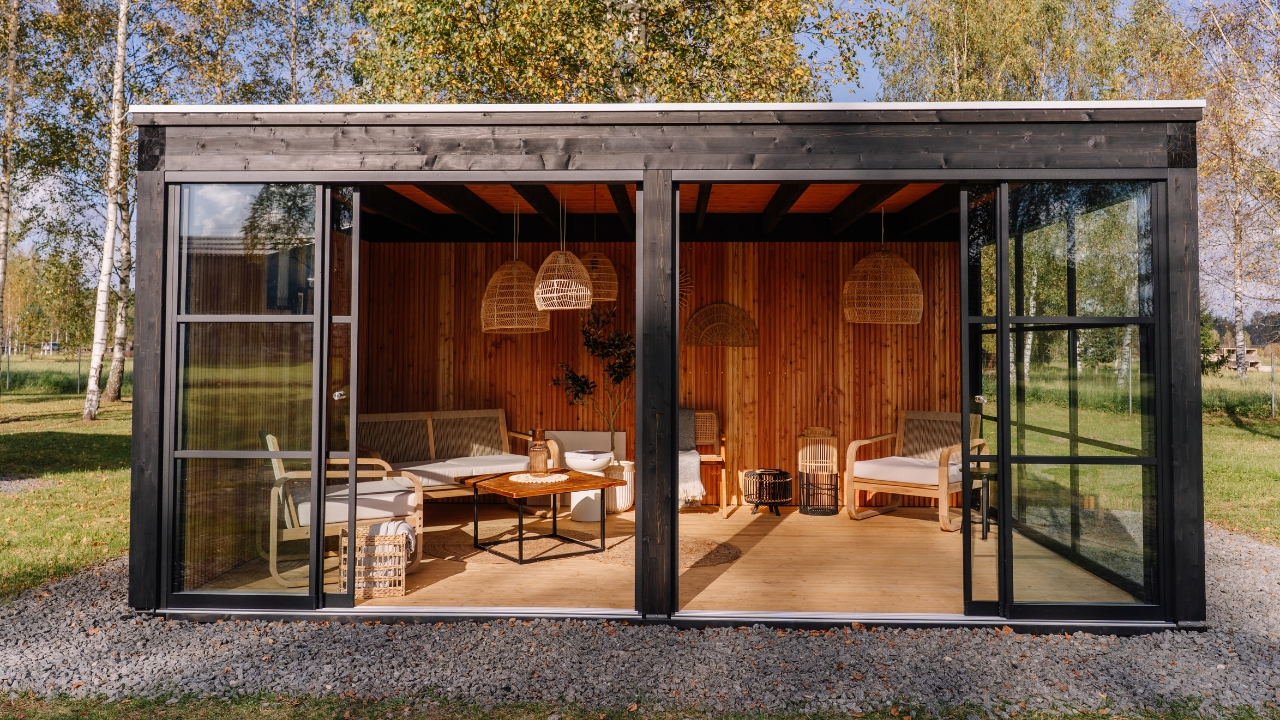
The most coveted backyard structures in wealthy neighborhoods are not hidden away, they are designed as architectural statements that frame views and pull the landscape into daily life. You are seeing more glass walls, deep overhangs, and decks that step down into planting, so the building feels like part of a larger composition rather than an afterthought. The goal is to make the journey from kitchen to garden room feel as natural as walking down a hallway.
High profile projects illustrate this approach, such as This Las Vegas residence, where Landscaped decks add intrigue to a modern exterior and emphasize the dreamy nature of the grounds. When you apply that same thinking to a garden room, you end up with a pavilion that opens wide to the elements in good weather, then closes down with insulation and glazing when temperatures drop, so you can enjoy alfresco living all year long.
Customization, from garden office to private spa
One reason these structures are supplanting sheds is the sheer range of uses you can design for. In affluent areas, you are as likely to see a Peloton and cold plunge inside as you are a desk or daybed. The building becomes a pressure valve for the main house, absorbing noisy workouts, messy hobbies, or late‑night work sessions without disturbing anyone else.
Manufacturers have responded by offering highly adaptable shells. Some suppliers highlight that Our large sheds can be fully customised with insulation, double doors, windows, and interior finishes so you can transform them into garden offices, studios, gyms, or workshops. That same flexibility underpins bespoke garden rooms, where you might specify soundproofing for a music studio, plumbing for a treatment room, or built‑in cabinetry for a serious home office.
How developers and agents are marketing the new backyard room
Developers in wealthy neighborhoods have quickly learned that a polished garden room photographs almost as well as a new kitchen. When you list a property, that freestanding structure becomes a headline feature, framed as a ready‑made office, guest suite, or wellness space. For buyers who work hybrid schedules or host extended family, the promise of a turnkey outbuilding can tip the balance.
Marketing language has evolved accordingly. Listings that once mentioned a “shed” now lean on phrases like “studio” or “retreat,” echoing consumer products such as Cedarshed The storage shed, which is promoted as a wonderful cottage and extra bedroom, or the YOUR IDEAL RETREAT AWAITS! Introducing the Madison model, described as a radiant haven perfect for poolside cabana use. In the upper tier of the market, those aspirational product descriptions are simply being realized at a higher architectural and construction standard.
What this means if you are still thinking in terms of “a shed”
If you are planning a backyard project in a wealthy area and still using the word “shed,” you risk undershooting both your own needs and future buyer expectations. The market is moving toward fully finished, year‑round rooms that can flex as your life changes, from nursery overflow to teen hangout to aging‑parent suite. Treating the project as a piece of architecture rather than a storage fix will help you make better decisions on siting, materials, and services.
Design guidance now emphasizes that Long gone are the days when outdoor spaces were just simple backdrops, and Now the line between indoors and out is deliberately blurred to bring your vision to life. If you embrace that mindset, your “shed replacement” can become the most versatile room you own, a space that quietly upgrades your daily routine while keeping your property aligned with the expectations that define rich neighborhoods today.
Like Fix It Homestead’s content? Be sure to follow us.
Here’s more from us:
- I made Joanna Gaines’s Friendsgiving casserole and here is what I would keep
- Pump Shotguns That Jam the Moment You Actually Need Them
- The First 5 Things Guests Notice About Your Living Room at Christmas
- What Caliber Works Best for Groundhogs, Armadillos, and Other Digging Pests?
- Rifles worth keeping by the back door on any rural property
*This article was developed with AI-powered tools and has been carefully reviewed by our editors.