The paperwork gap that makes “we fixed it” hard to verify
When a landlord insists a problem is fixed, you are often left with little more than your senses and your phone camera to test that claim. The gap between what is written in official records and what you actually live with can decide whether you get repairs, rent relief, or just another round of empty assurances. To close that gap, you need to understand how the paperwork is supposed to work, where it routinely breaks down, and how to build your own trail of proof that is hard to ignore.
Housing law gives you more rights than most tenants realize, but those rights only become real when they are documented in a way that courts, inspectors, and even reluctant landlords cannot easily dispute. The challenge is that the systems meant to track repairs are fragmented, slow, and often tilted toward whoever controls the formal records. If you want to turn “we fixed it” from a shrug into a verifiable fact, you have to treat every leak, crack, and outage as both a physical problem and a paperwork problem.
Why “we fixed it” is a legal claim, not just a casual promise
When a landlord or property manager tells you a repair is done, they are not just making conversation, they are effectively asserting that your home now meets basic legal standards. In most states, those standards are bundled into what courts call a warranty of habitability, the idea that your apartment must be safe, sanitary, and fit to live in. If a landlord says a repair is complete when the condition still violates that standard, they are not only wrong, they are undermining your ability to enforce your rights by muddying the record of what is actually happening inside your walls.
The problem is that this kind of claim is rarely written down in a way you can easily challenge. You might get a quick text from a superintendent, a vague note in an online portal, or nothing at all beyond a verbal assurance in the hallway. Without a clear paper trail, it becomes your word against a landlord who can point to internal work orders, contractor invoices, or inspection checklists that you never see. That imbalance is why you need to treat every “we fixed it” as a statement that should be documented, tested, and, if necessary, contradicted with your own evidence.
The hidden paperwork behind every repair request
Long before anyone argues about whether a repair is complete, there is a quieter battle over how the problem is first recorded. If you call a management office and describe a leak, someone on the other end decides how to label it, how urgent it seems, and whether it gets logged at all. That first entry, or lack of one, shapes everything that follows, from how quickly a worker shows up to how a judge later reads the history of your complaints. When the initial record is vague or missing, it becomes easier for a landlord to say the issue was minor, new, or already resolved.
To counter that, you need your own parallel record that does not depend on a sympathetic receptionist or a responsive superintendent. Written notices, especially those sent by mail or email, create a timestamped trail that is hard to erase. Tenant advocates in New York, for example, urge you to put repair requests in writing and keep copies, because those documents can later show a pattern of neglect even if a landlord’s internal files tell a different story. When you treat your first complaint as the opening page of a case file, you are already narrowing the gap between what is happening in your home and what the paperwork will eventually say.
How tenant advocates tell you to document the problem
Tenant groups that work with rent regulated and market rate renters alike tend to give the same first piece of advice, write everything down. You are encouraged to describe the problem in plain language, note when it started, and explain how it affects your daily life, whether that is mold triggering asthma, a broken lock compromising safety, or a lack of heat forcing you to rely on space heaters. Organizations that focus on New York City housing, for instance, walk you through how to send detailed letters, gather photos, and keep a log of every time you call or speak to building staff about repairs, because those records can later support claims about unsafe conditions and landlord inaction.
Some advocates go further and suggest that you coordinate with neighbors so that multiple tenants document similar issues at the same time. If several apartments report leaks from the same line or outages on the same electrical circuit, it becomes harder for a landlord to dismiss each complaint as an isolated incident. Guides on getting repairs emphasize that collective documentation can strengthen your position if you eventually need to involve city agencies or the courts, since it shows that the problem is building wide rather than a one off inconvenience.
Why written notice is your first line of defense
Once you have documented the problem for yourself, the next step is to put your landlord on formal notice in a way that can be proven later. Housing lawyers repeatedly stress that you should inform the landlord in writing of the repairs needed, not just by phone or casual conversation. A letter, email, or certified mailing that lists the specific issues and the date you sent it becomes a key piece of evidence if you later argue that the landlord knew about the problem and failed to act. Without that written notice, a landlord can claim they were unaware or that you never gave them a fair chance to fix it.
Some legal aid materials go so far as to tie your future options directly to that first written notice. One guide explains that you should inform the landlord in writing of the repairs needed and notify them that you will withhold rent if the repairs are not made within a reasonable time, and it notes that thirty days is generally considered reasonable for many issues. That advice, which appears in a resource from LawNY, shows how written notice is not just about courtesy, it is the foundation for more assertive steps like rent withholding or court petitions if the landlord continues to stall.
When you need to prove the home is still unsafe
Even with careful documentation and written notice, you may reach a point where the landlord insists everything is fixed while you are still living with dangerous or unhealthy conditions. At that stage, the question is no longer whether you complained, it is whether you can prove that your home still violates the legal standard for habitability. Tenant facing legal guides explain that to move a case forward, you need to show that your home has dangerous or unhealthy conditions that violate the Warranty of Habitab, which is shorthand for the broader warranty of habitability that courts recognize in many jurisdictions.
That proof can take several forms, from photos and videos to medical records and inspector reports, but the key is that it must connect the condition in your apartment to the legal standard you are invoking. A resource on filing a petition for repairs spells out that you need to show the court not just that something is unpleasant, but that it is dangerous or unhealthy in a way that the law recognizes as a violation. That is why detailed photos of peeling paint near a child’s bed, or logs of repeated heat outages during freezing weather, carry more weight than a general complaint that the apartment is uncomfortable.
How city enforcement systems record, and close, violations
When you bring a problem to a city housing agency, you step into a parallel paperwork system that has its own rules and blind spots. In New York City, for example, the Department of Housing Preservation and Development, often referred to as HPD, issues violations after inspectors confirm that a condition breaks the housing code. Those violations are then tracked in a database that landlords, tenants, and sometimes lenders and buyers can see. On paper, this looks like a clean loop, a complaint leads to an inspection, which leads to a violation, which leads to a correction and a closed case.
The reality is more complicated, because the process for curing a violation often relies heavily on landlord supplied proof. Guidance on the HPD Violation Cure Process explains that it begins when an owner Receive Notice of a violation, then Inspect Property, and then submit evidence that the condition has been corrected. A private compliance guide that walks owners through this process notes that HPD may accept photos, affidavits, or contractor certifications as proof, and that in some cases an inspector will return to verify the work. That same guide, available through a resource on HPD violations, shows how much of the official record of “fixed” conditions depends on what the owner submits, not on what you continue to experience in your apartment.
The landlord’s file versus your lived reality
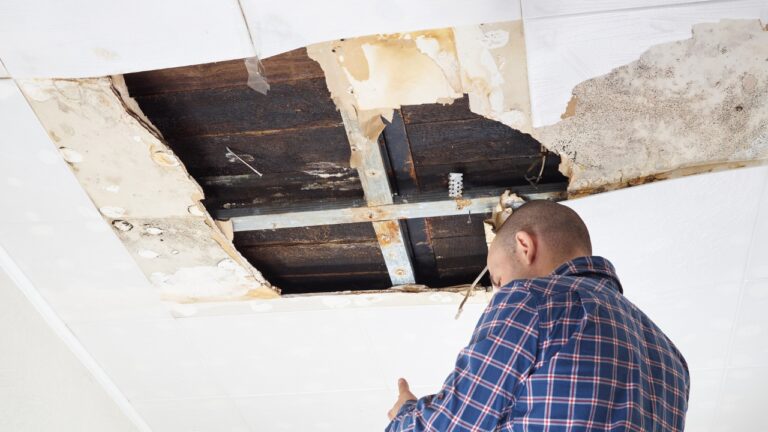
Because landlords control so much of the official paperwork, their version of events can quickly harden into the default narrative unless you actively contest it. A landlord’s file might show that a contractor visited your unit, replaced a part, and signed off on the job, which then becomes the basis for closing a violation or denying further responsibility. From the owner’s perspective, the box is checked and the risk is managed. From your perspective, the leak may have slowed but not stopped, the mold may have been painted over but not remediated, or the heat may work only intermittently.
That disconnect is where your own documentation becomes critical. If you can show that conditions persisted after the date the landlord claims the repair was completed, you create a direct conflict between their paperwork and your evidence. Time stamped photos, follow up letters, and logs of continued problems can all demonstrate that the landlord’s file is incomplete or misleading. When you later present your case to a city agency or a court, you are not just complaining about a bad repair, you are challenging the accuracy of the record that allowed the landlord to say the problem was solved.
Turning your evidence into a formal case
At some point, you may decide that internal complaints and agency inspections are not enough, and that you need a judge to order repairs or adjust your rent. To do that, you have to translate your stack of photos, letters, and logs into a coherent legal story. Tenant focused legal resources explain that when you file a petition for repairs, you are asking a court to recognize that your home has dangerous or unhealthy conditions that violate the Warranty of Habitab and to compel the landlord to fix them. The strength of that petition depends on how clearly your evidence shows both the severity of the conditions and the landlord’s failure to address them despite notice.
Courts are used to hearing landlords say that problems have been fixed, so your job is to show why that claim is not credible in your case. That might mean presenting a timeline that shows repeated complaints after the alleged repair date, or introducing inspector reports that document ongoing violations. It can also mean bringing in neighbors who have seen the same issues in their own units, which helps counter any suggestion that you are exaggerating. When you frame your evidence around the legal standard, rather than just your frustration, you give the court a clear basis to question the landlord’s assurances and to order concrete remedies.
Practical steps to narrow the paperwork gap
Like Fix It Homestead’s content? Be sure to follow us.
Here’s more from us:
- I made Joanna Gaines’s Friendsgiving casserole and here is what I would keep
- Pump Shotguns That Jam the Moment You Actually Need Them
- The First 5 Things Guests Notice About Your Living Room at Christmas
- What Caliber Works Best for Groundhogs, Armadillos, and Other Digging Pests?
- Rifles worth keeping by the back door on any rural property
*This article was developed with AI-powered tools and has been carefully reviewed by our editors.