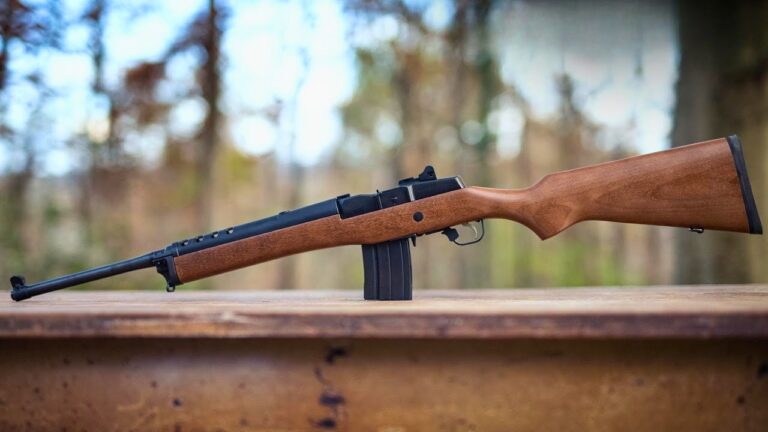
The practical rifle features that matter more than brand names on rural land
On working land, a rifle is closer to a fencing tool than a collector’s piece. You rely on it for predators, livestock emergencies, crop protection, and sometimes home defense, often in the same long day. What matters most is not the rollmark on the receiver but whether the rifle carries easily, runs every time, and lets you make clean, confident shots under pressure.
If you focus on practical features instead of prestige, you can build a rifle setup that fits your terrain, your body, and your daily chores. That means paying attention to weight, ergonomics, recoil, magazines, optics, and noise, then choosing models and accessories that support those priorities instead of chasing the latest logo.
Function over finish: what a “farm rifle” really has to do
Your primary rifle on rural ground has to live in the real world of dust, mud, and truck racks, not in a velvet-lined safe. It will ride in a UTV, lean in a barn corner, and get knocked against gates, so you need a tool you are comfortable scratching and using hard. Experienced rural shooters describe how, after firing a shot, they may have to remove the magazine, clear the chamber, and even pick up a dropped round off the ground while still managing livestock or scanning for another coyote, which is why they want a simple, robust action that tolerates abuse and dirt without drama, even if the stock and metal are subject to dings and scratches in daily use.
That reality should push you toward durable finishes, straightforward controls, and stocks you can hose off, not high-polish bluing or delicate wood. A plain synthetic stock and matte metal may look unremarkable, but they shrug off weather and rough handling in a way that glossy showpieces do not, which is exactly what you want in a rifle that lives in a truck or tractor. When you judge rifles by how they behave in that “farm rifle” role rather than how they look on a sales counter, the brand name on the side fades and the practical details, like how easily you can clear and reload in the field, move to the front of your decision.
Rifle weight and balance: carrying all day versus shooting steady
On big acreage, you feel every unnecessary ounce long before you fire a shot, yet you still need enough mass for stability when you finally shoulder the rifle. Guidance on Selecting the Right Rifle Weight for Your Needs notes that a lightweight rifle, generally between 5 to 8 pounds, is preferable for hunting and long walks, while a heavier rifle offers added precision for long distance shots. That tradeoff is central on rural land, where you might hike fence lines in the morning and take a 250 yard shot at a hog that evening. If your rifle is too heavy, you will leave it behind; if it is too light, it can be harder to hold steady offhand when a coyote breaks from cover.
Modern “general purpose” concepts try to split the difference, recommending a medium profile barrel in the 16 to 18 inch range to keep Weight manageable without giving up accuracy or durability. That kind of middle ground suits a ranch rifle that has to ride in a truck, clear brush, and still hit reliably across a pasture. You should shoulder candidate rifles with a sling attached, imagine them in your hands after a long day on your feet, and prioritize balance around the magazine well or front hand rather than chasing the lightest or heaviest spec on paper.
Ergonomics and recoil: fit that lets you shoot under stress
How a rifle fits your body often matters more than its chambering or price tag, especially when you are tired, cold, or rushed. When you pick up a rifle that truly fits, it comes to your shoulder naturally, your eye lines up with the sights without strain, and the controls fall under your fingers, which is why Ergonomics are described as More Than Comfort and Beyond simple feel, because good fit directly supports control and efficiency in the field. On rural land, that can be the difference between a clean shot on a predator and a rushed miss that sends you hiking farther than you planned.
Recoil management is just as practical. Research on rifle design notes that the stock also transmits recoil into the shooter’s body and that Yuan and Lee examined the effect of rifle weight and handling on shooting performance among infantry soldiers, showing how design choices change what you feel at the shoulder. Technical guidance on recoil reduction explains that recoil velocity is inversely related to rifle mass and that features like a recoil lug between the barrel and action help eliminate movement at the muzzle, which is why Jan guidance on recoil control emphasizes both stock design and overall weight. For you, that means choosing a stock shape, pad, and rifle weight that let you stay on target for a fast second shot instead of flinching away from the trigger.
Capacity, magazines, and how you actually reload in the field
On open land, the way your rifle feeds and reloads can matter as much as its caliber. Detachable box magazines make topping off fast, but they also introduce small parts you can lose in tall grass or mud. Historical analysis of assault rifle design points out that detachable feeding devices such as magazines were a defining feature, and that Let the concept of Detachable Feedin devices shape how modern rifles are used and regulated. For a ranch rifle, the question is simpler: can you keep the gun running when you are juggling gloves, gates, and maybe a flashlight.
Policy definitions of a modern sporting rifle often focus on a semi automatic rifle that accepts a detachable magazine capable of holding more than 10 rounds of ammunition, which is how one influential description of a detachable magazine frames the issue. That capacity can be useful when you are dealing with a sounder of hogs or multiple coyotes, but it also means you must manage spare magazines and keep them clean. Lever actions with detachable box magazines, like the TM22-LA, show another angle: this feature means that reloading the TM22-LA is faster than any tubular magazine fed lever action, but if the magazine is lost or damaged the rifle is effectively useless, as feeding stops entirely, which is why one review of lever action rimfires highlights that tradeoff. You should decide whether you prefer the speed of detachable magazines or the simplicity of internal magazines that cannot be misplaced when you are miles from the house.
Barrels, accuracy, and the realities of rural distances
Most shots on working land are not extreme long range, but they are rarely point blank either, and your barrel profile and length shape how confidently you can hit. Practical shooters note that a thicker, heavier steel barrel is less likely to cause your shots to move as the barrel heats and cools, which means better consistency if you have to fire multiple rounds in quick succession, and that insight from Aug discussions of hunting versus target rifles applies directly to coyote stands and hog control. On the other hand, a heavy barrel adds weight you will feel every time you climb a terrace or step over a downed tree.
New hunting rifles try to balance that equation. One example, the Wilson Combat NULA Model 20 Bolt Action Centerfire Rifle, lists a Length of 39.38 inches and a Weight of 5.17 pounds with a carefully profiled Barrel, showing how modern designs chase stiffness and accuracy without turning into boat anchors. At the same time, manufacturers like Browning are expanding their X-Bolt 2 line with models such as the X-Bolt 2 Western Hunter LR, described as New for hunters who want long range capability in a Western Hunter LR configuration that still uses standard Browning rotary magazines. For your land, you should match barrel profile and length to your longest realistic shot, not to internet bragging rights, and accept a bit of extra weight only if it buys you accuracy you will actually use.
Compact, handy rifles for trucks, tractors, and tight spaces
Rural life often means shooting from awkward positions, whether you are braced on a truck hood, squeezed in a side by side, or stepping out of a barn doorway. In those moments, a compact rifle that mounts quickly and clears door frames without snagging can matter more than a full size gun that prints better on paper. Advocates of short rifles point out that Smaller, lightweight rifles are easy to carry and store in or on a pack, and that these are important features for people constantly on the move who may need to take a quick shot to protect livestock or harvest a food source, which is why one guide to compact carbines emphasizes how Smaller rifles fit into daily life.
Modern designs like The GOAT-15 show how far that idea can go. The GOAT-15 is not just smaller, it is smarter, and it is described as Engineered to be 20 percent more compact than a standard AR-15 while still giving you the maneuverability of a small AR platform without sacrificing accuracy or durability, which is why the The GOAT concept appeals to people who need a GOAT sized rifle in tight spaces. For you, the lesson is not that you must buy that specific model, but that overall length, folding or collapsible stocks, and how the rifle handles in a truck cab or tractor seat are practical features worth ranking above brand prestige when you choose a working gun.
Optics, rails, and mounting that match your chores
On rural land, you may use the same rifle for close work around buildings and longer shots across fields, so your optic setup has to be flexible. Side gate lever guns and traditional bolt actions are increasingly offered with modern mounting options, such as a 45 70 Side Gate rifle topped with an extended section of Picatinny rail so you can mount a scope further forward on the barrel to fit your eye relief and shooting style, which is why one ranch focused guide highlights how a 45 70 Side Gate setup with Picatinny rail can support both magnified optics and backup irons. That kind of rail space lets you tailor your sight picture to your terrain instead of forcing you into one fixed scope position.
Even in heavy calibers, modern rifles are being updated with new feature sets rather than entirely new models. One manufacturer notes, “Right now we are focused on adding feature sets to existing models,” and explains that On the Model 70 you will find added features like improved stocks, threaded muzzles, and other accessories, which is why Right now the emphasis is on modularity rather than reinventing the wheel. At the extreme end, precision platforms such as the .408 CheyTac show how different optic mounting options let shooters customize their rifle for different missions and environments, and that Its ability to accept various mounts helps operators stay effective on duty for hours at a time, which is why one technical overview of the 408 cheytac emphasizes mounting flexibility. For your land, the key is to choose rails and rings that keep your optic low, solid, and easy to use with gloves, not to chase the most tactical looking setup.
Noise, suppressors, and being your own first responder
Living far from town often means you are your own backup when something goes wrong, and your rifle may double as a home defense tool. Practical guidance on rural defense stresses that Settings matter and that The Foundation of your plan is to First and foremost select a quality rifle with the performance and power you need, then configure it for fast handling and reliable operation in and around your home, which is why one rural defense guide on Settings and The Foundation of your setup focuses on First and most critical choices like caliber and layout. In that role, muzzle blast and flash are not just comfort issues, they affect how quickly you can make follow up shots in the dark and whether you can still hear your family or neighbors after firing indoors.
That is part of why suppressors have moved from niche accessories to mainstream tools for hunters and rural landowners. Recent analysis notes that Sound reduction technology adoption has increased by 73% among outdoor enthusiasts in recent years, and that this trend is driven by both hearing protection and better communication in the field, which is why Jul Key Takeaways on suppressors highlight Sound reduction as a central benefit. On your property, a threaded barrel that accepts a suppressor or at least a flash hider can make your rifle more manageable in barns, vehicles, and around livestock, and it is a feature worth prioritizing even if it is not tied to a particular brand.
Matching features to your land, not to marketing
When you strip away marketing language, the right rifle for rural land is the one whose features line up with your actual chores and terrain. That starts with weight and portability, since the weight of your rifle can impact your overall hunting and working experience, and guidance on Weight and Portability The Heavier rifles provide better stability and reduced recoil, while lighter ones are easier to carry but may be harder to hold steady. You should map that tradeoff onto your land: if you mostly shoot from vehicles or fixed stands, a heavier, steadier rifle may be ideal; if you walk miles of pasture, a lighter carbine will see more use.
Caliber and action type matter, but they are only part of the picture. Modern sporting rifles with semi automatic actions and detachable magazines can be very effective for pest control, yet a simple bolt gun or lever action may fit your local regulations and personal comfort better. New bolt guns like the X-Bolt 2 Western Hunter LR from Browning show how traditional actions continue to evolve with features like improved triggers and stocks, while semi automatic platforms like the modern sporting rifle category emphasize detachable magazines and modular accessories. If you focus on how quickly you need follow up shots, how you carry the rifle, and how you mount optics, you will end up with a tool that serves your land, regardless of which logo is engraved on the receiver.
Supporting sources: Farm Rifles – GUNS Magazine.
Like Fix It Homestead’s content? Be sure to follow us.
Here’s more from us:
- I made Joanna Gaines’s Friendsgiving casserole and here is what I would keep
- Pump Shotguns That Jam the Moment You Actually Need Them
- The First 5 Things Guests Notice About Your Living Room at Christmas
- What Caliber Works Best for Groundhogs, Armadillos, and Other Digging Pests?
- Rifles worth keeping by the back door on any rural property
*This article was developed with AI-powered tools and has been carefully reviewed by our editors.