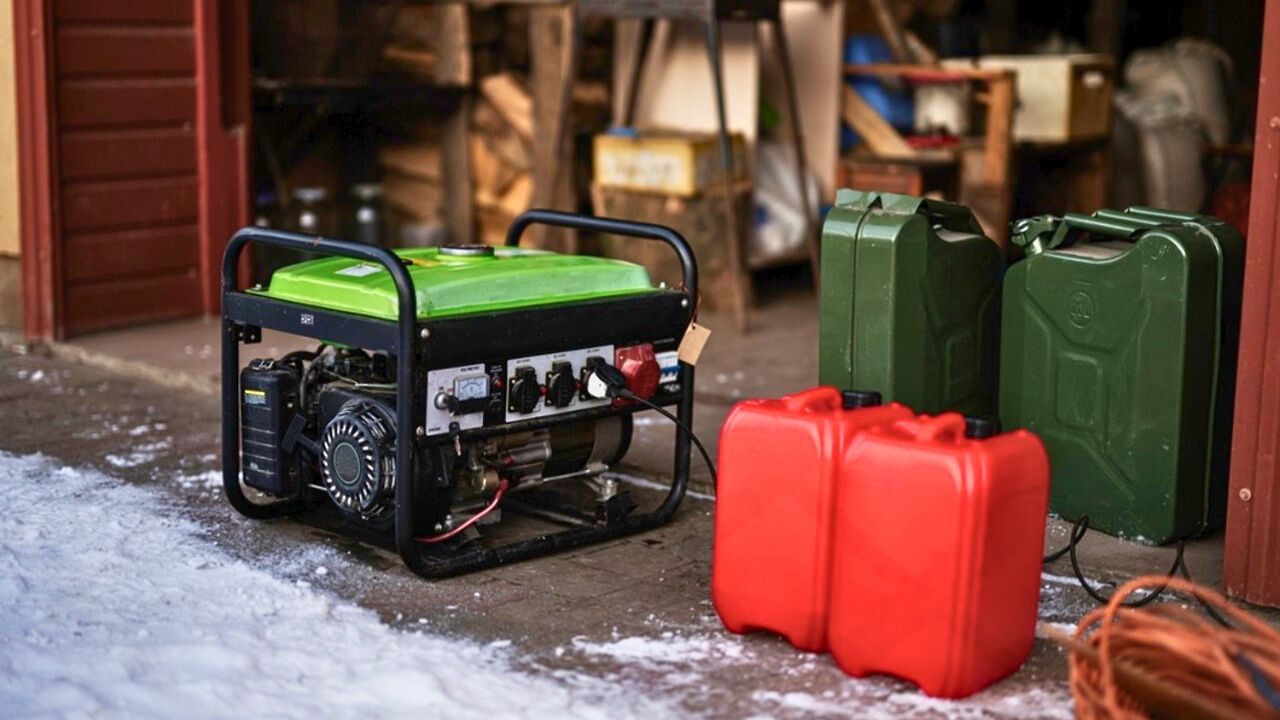
The safest generator distance rule people ignore because it’s inconvenient
When the lights go out and the house falls silent, a portable generator can feel like a lifeline. Yet the same machine that keeps your refrigerator humming can quietly fill your home with a lethal gas if you park it in the wrong spot. The safety rule that matters most is also the one people are most tempted to bend: how far you keep that engine from your doors, windows, and walls.
Distance feels negotiable when you are juggling extension cords, rain, and a dark backyard, but carbon monoxide does not negotiate. To keep your family safe, you need to treat generator placement as non‑optional, even when it is inconvenient, and understand why experts keep pushing the minimum distance farther away from the house.
The rule everyone wants to cheat: at least 20 feet, and often more
The core safety guidance is blunt: you should place a portable generator well away from your home, not tucked under an eave or just outside the back door. Safety agencies and manufacturers have converged on a minimum of about 20 feet of separation from the house, with the exhaust pointed away from any openings, because that buffer sharply reduces the chance that exhaust will drift back inside. Some guidance now goes further and urges you to treat 20 feet as a floor, not a target, especially if wind or building layout could funnel fumes toward your living space.
That distance rule is not a guess, it reflects years of incidents in which carbon monoxide slipped through cracks, vents, and soffits even when generators were technically “outside.” Detailed placement advice from Jul on how far a portable generator should be from your home stresses that trusted safety sources recommend at least 20 feet of clearance and a clear path for exhaust, and it pairs that with a practical Generator Safety Checklist to keep you honest about that separation every time you roll the unit out.
Why 5 or 10 feet is not “close enough” for carbon monoxide
When you are standing in the rain with a heavy machine, 5 or 10 feet from the door can feel like a reasonable compromise, but carbon monoxide does not respect that shortcut. The gas is colorless and odorless, so you will not smell danger building up if exhaust curls under a soffit, into a dryer vent, or through a slightly open window. Once inside, it can accumulate quickly, especially in tight, energy‑efficient homes, and people often feel only vague symptoms like headache or nausea before they lose consciousness.
Safety officials in Texas warn that if you own a portable generator, you must place it outdoors and far from doors, windows, and vents because carbon monoxide is invisible, odorless, and potentially deadly, and they fold that warning into broader guidance on how to safely set up and run the unit. That same message is echoed in distance‑specific advice that tells you to place your portable generator 20 feet away from the house and route the exhaust or any extension pipe away from doors, windows, and vents, a standard that appears in detailed placement tips for portable generator distance safety.
The 20‑20‑20 shortcut that makes distance easier to remember
Because it is easy to forget exact measurements in an emergency, some local emergency managers have boiled generator placement into a simple rule of thumb. The idea is to give you a quick mental checklist that covers distance, ventilation, and detection in one line, so you are less likely to improvise a risky setup when the power fails at night. Instead of juggling multiple safety leaflets, you can run through three numbers and know you have the basics covered.
In New Orleans, the NOLA Ready program tells residents that if they are using a generator during a power outage, they should follow a “20‑20‑20” rule: Keep generators 20 feet away from the house, doors, and windows, keep the exhaust 20 feet away from neighbors’ doors and windows, and keep a working carbon monoxide alarm to detect any buildup inside, guidance that is spelled out in the city’s power outage tips. That framing reinforces that distance is not just about your own walls, it is also about the people living next door or upstairs who could be exposed to your exhaust even if your own windows are shut.
Why experts now push beyond 20 feet for some setups
As more data has emerged from storms and prolonged outages, safety experts have started to argue that 20 feet should be treated as a minimum, not a comfortable default. In dense neighborhoods, narrow side yards, or homes with complex rooflines, exhaust can behave unpredictably, swirling back toward the structure even when the generator is technically outside the 20‑foot bubble. That is why some guidance now urges you to go farther whenever you have the space, especially if you notice wind or architectural features that could trap fumes.
One detailed guide on portable generator distance notes that if you are in doubt, you should go further than 20 feet so the machine remains a lifeline, not a liability, and it frames that advice as part of a broader push to keep generators away from windows, vents, and other openings that can channel exhaust indoors, a point underscored in its reminder that if in doubt, go further. Jul’s guidance on why experts recommend at least 20 feet also stresses that you should avoid placing a generator on wooden decks or near spilled fuel, because fire risk compounds the invisible threat of fumes when you crowd the machine against the house, a warning folded into its explanation of why experts recommend at least 20 feet.
Indoors, garages, and carports: the hard no that still gets ignored
Even with clear distance rules, one of the most stubborn and deadly mistakes is running a generator in a garage, carport, or enclosed porch because it feels “almost outside.” The logic is understandable: you want to keep the unit dry, protect it from theft, and shorten the cable run. Yet those semi‑enclosed spaces trap exhaust, and the gas can seep through interior doors or shared walls into bedrooms and living rooms in minutes, especially if the generator runs overnight.
Texas safety officials spell this out in plain language, warning you to never use a generator indoors, including in garages, even if the door is open, because carbon monoxide can build up and spread into the home, a point driven home in their guidance on using a generator safely. The same agency notes that carbon monoxide is colorless, odorless, and potentially deadly, and folds that warning into its broader advice on how to set up and run portable units, emphasizing that you must treat the gas as a silent killer whenever you are tempted to tuck the machine under a roof or inside a structure, a message repeated in its overview of how to use a portable generator.
Real‑world tragedies that pushed the distance rule outward
Generator placement rules did not appear out of thin air, they hardened after repeated tragedies in storms and heat waves where families were poisoned in their sleep. Investigators have documented cases where generators running outside still sent exhaust into homes through attic vents or neighboring windows, especially when the units sat close to exterior walls or under overhangs. Those incidents have convinced safety advocates that “outside” is not enough, you need meaningful separation and a clear exhaust path.
One detailed discussion of portable generator placement recounts how carbon monoxide from a poorly sited unit can drift into a home or even a neighboring home, turning a convenience into a catastrophe, and uses that history to argue for good portable generator placement on a hard, level surface away from openings, a point made explicit in its section on portable generator placement for safety. Broader reporting on the “generator rule” that prevents carbon monoxide deaths notes that guidance for homeowners has converged on keeping units well away from the house so exhaust cannot be pulled into soffit vents, attic spaces, and then into cracks and vents inside, a pattern described in detail in coverage of the generator rule that prevents deaths.
From 20 feet to 25: the new federal warning on stationary units
While portable generators get most of the attention, a quieter shift has been unfolding around permanently installed standby units. For years, many installations followed a 5‑foot clearance rule from openings, which made it easier to tuck a stationary generator beside the house. After clusters of carbon monoxide poisonings in major storms, federal officials began pushing for a much larger buffer, arguing that the old standard underestimated how exhaust behaves around walls and rooflines.
In Louisiana, a new federal warning now tells homeowners to keep generators 25 feet from homes because of carbon monoxide worries that spiked after Hurricane Ida, a change highlighted in local coverage that describes how the guidance was tightened to reduce poisonings across Southeast Louisiana and urges residents to keep generators 25 feet from homes. That shift has filtered into consumer discussions as well, with one widely shared “Federal Warning” post in the generator community bluntly stating that stationary generators should be 25 feet from homes, not 5 feet, and summarizing the updated advice under the heading “Federal Warning: Stationary Generators Should Be 25 Feet from Homes (Not 5 ft!),” a phrase that appears prominently in the discussion of stationary generators.
Why “safer” inverter models still need the same distance
As generator technology has improved, inverter models have gained a reputation for being cleaner, quieter, and more refined than traditional open‑frame units. They are often marketed for sensitive electronics, camping, and tailgating, and their compact size can lull you into treating them more like oversized battery packs than combustion engines. That perception can be dangerous, because even the most advanced gasoline or propane inverter still produces carbon monoxide whenever it runs.
Home improvement guidance that walks you through whether you need a home generator notes that inverter generators create current that is sufficiently stable to charge electronics and that models in the 2,000 to 2,200 watt range can be light enough to carry while still delivering the power you need, a selling point highlighted in its section titled “Inverter Generators Charge Up Electronics Inverter”. That convenience does not change the physics of exhaust, so you should treat an inverter model exactly like any other engine: keep it at least 20 feet from the house, never run it in a garage or tent, and route its exhaust away from people and openings, even if it looks small enough to sit on a porch.
Turning the rule into a habit: practical ways to keep your distance
Knowing the distance rule is one thing, building your routine around it is another. The easiest time to make good decisions is before the storm, when you can walk your property in daylight and pick a safe operating spot that is at least 20 feet from the house, clear of doors and windows, and on a stable surface. Mark that location mentally, or even with a small stake or paver, so you are not improvising in the dark with a flashlight and a tangle of cords.
Jul’s Generator Safety Checklist encourages you to think through extension cord length, fuel storage, and weather protection in advance so you can always run your generator outside at a safe distance without being tempted to cheat, a mindset baked into its broader advice on how far a portable generator should be from your home. If you treat that buffer as non‑negotiable, just like buckling a seat belt, you are far more likely to keep the machine where it belongs, even when the weather is bad, the outage drags on, or the nearest outlet is inconveniently far from the only safe patch of ground.
Like Fix It Homestead’s content? Be sure to follow us.
Here’s more from us:
- I made Joanna Gaines’s Friendsgiving casserole and here is what I would keep
- Pump Shotguns That Jam the Moment You Actually Need Them
- The First 5 Things Guests Notice About Your Living Room at Christmas
- What Caliber Works Best for Groundhogs, Armadillos, and Other Digging Pests?
- Rifles worth keeping by the back door on any rural property
*This article was developed with AI-powered tools and has been carefully reviewed by our editors.