The simple biosecurity routine small farms skip that matters most when flu news spikes
When headlines about bird flu spike, small farms often scramble to lock down their flocks, yet the most effective protection is not a new product or a high-tech gadget. It is a simple, repeatable biosecurity routine that you perform every single time you step near your birds. If you treat that routine as non‑negotiable, you can sharply cut the odds that a virus rides in on your boots, hands, or equipment, even when regional risk is high.
The core idea is straightforward: you control what crosses the invisible line between the outside world and your coop. That means setting up a clear entry point, changing or cleaning footwear, washing hands, and handling feed and visitors in a disciplined way, day after day, not just when social media is buzzing about outbreaks.
Why flu headlines should change how you walk onto your own farm
Every time avian influenza makes the news, you are seeing the visible tip of a much larger disease ecosystem that is constantly in motion. Wild birds, especially migratory waterfowl, are a major reservoir, and avian influenza is spread by these wild birds as they move across landscapes and mix with domestic poultry. When you keep your flock away from wild waterfowl and their droppings, you are not only reducing disease risk, you are also cutting down on predators that follow the same food and water sources, as outlined in guidance on how avian influenza is spread.
That broader context matters because it explains why your own habits are so critical. You cannot control what wild ducks do on a nearby pond, but you can control whether your boots, tools, and vehicles act as a bridge between that pond and your coop. Biosecurity experts describe disease prevention as a set of everyday practices anyone can use, from wearing clean clothing around birds to keeping a strict separation between “clean” and “dirty” areas, which is how state guidance defines biosecurity practices anyone can use.
The overlooked routine: a strict entry ritual every single visit
The routine that most small farms skip, even when flu anxiety is high, is a strict, scripted entry ritual for every person who crosses into poultry space. Instead of drifting from the driveway to the coop in the same shoes you wore to town, you need a defined point where you stop, change or disinfect footwear, and clean your hands before you touch a latch or feeder. National flock protection materials describe this as keeping your distance by restricting access to your property and birds, and they emphasize that you should wash your hands before and after contact with poultry and wear dedicated clothing when you enter bird areas, echoing the advice to keep your distance.
On a small farm, that ritual can be as simple as a bench and boot rack at the coop gate, a handwashing or sanitizer station, and a clear rule that no one steps past that point without following the steps. Federal poultry health campaigns stress that everyone who has contact with your flock should follow the same biosecurity principles, including washing hands before and after contact and changing clothes and shoes when moving from an old poultry facility to a new one, which is why they urge you to make sure everyone follows biosecurity.
What the science says about small lapses and big outbreaks
It is tempting to think that a few backyard hens or a modest pastured flock are too small to matter in the bigger disease picture, but research on commercial farms tells a different story. One study of avian influenza virus, often shortened to Avian Influenza Virus or AIV, found that AIV was alarmingly prevalent in commercial chicken farms, with 40% of the 225 investigated farms testing positive, and it identified six farm management factors that sharply changed infection risk, including how workers moved between sheds, how vehicles were handled, and how equipment was shared, as detailed in the highlights on AIV prevalence.
Those numbers are a warning for small operations because the same pathways exist on your property, even if you only have one coop and a single vehicle. When you skip your entry routine “just this once” to save a few minutes, you are effectively removing one of the six protective barriers that larger farms rely on. Extension specialists emphasize that in any disease outbreak, basic protective measures for people, equipment, and other animals are the first line of defense, and that public health and animal health officials will determine proper control procedures based on how well those measures are in place, which is why they stress protective measures for people.
Feet first: why designated boots and footbaths matter more than masks
When flu stories surge, many small farmers reach for masks and gloves, but the more important upgrade is usually on your feet. Poultry health advisories urge you to have designated footwear that you only use in poultry areas and to place footbaths at entrances to those areas so you can disinfect soles before you step inside, a practice highlighted in recent high‑pathogenic avian influenza updates that recommend you have designated footwear.
Backyard‑scale guidance echoes the same point in even plainer language, advising you to use designated footwear by keeping a separate pair of shoes for your coop and never wearing them elsewhere, so you are not tracking in germs from parking lots, feed stores, or neighboring farms, which is why small flock resources urge you to use designated footwear.
How to build a practical “clean line” on a small property
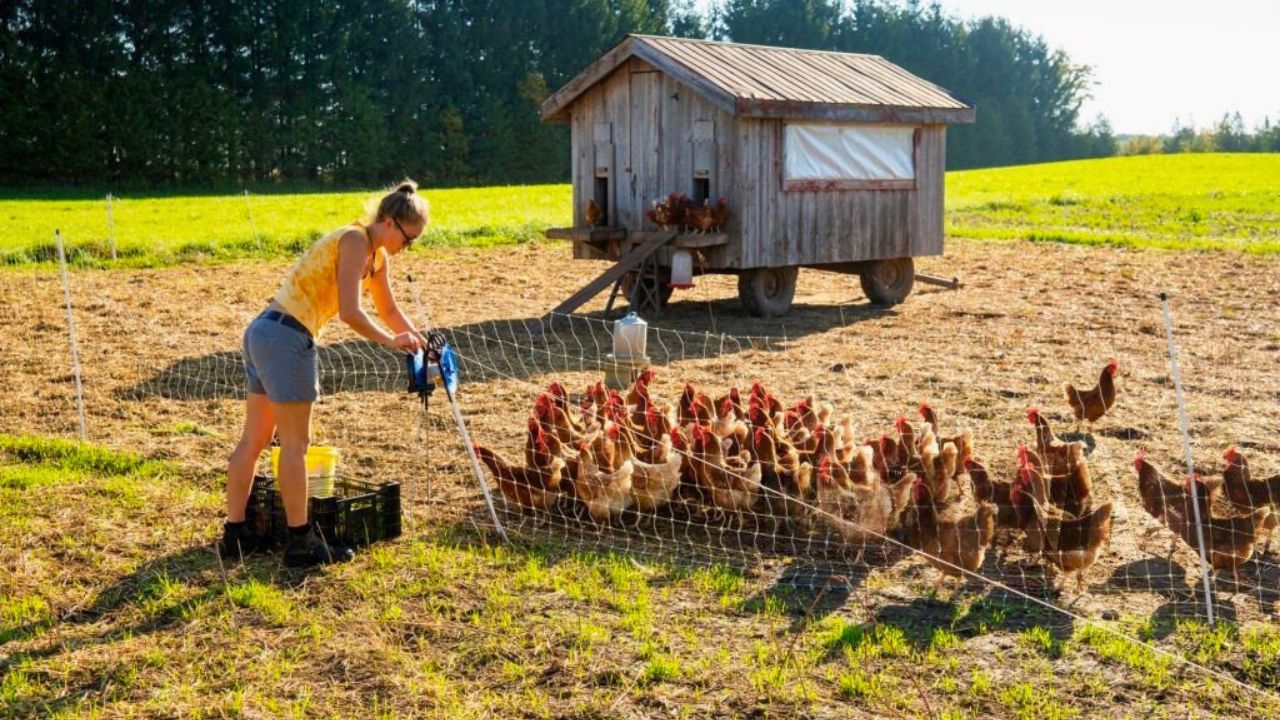
Creating a clean line on a small farm starts with deciding exactly where your poultry zone begins and then making that boundary obvious. Extension materials for small flocks recommend that the primary caretaker be the only person who regularly enters the pen, that you keep your distance and restrict visitors, and that you wear dedicated clothing and boots when you are inside the pen, which is why they frame these steps as simple tips to keep your distance and restrict visitors.
Once that line is set, you can support it with small design choices that make the right behavior easy. European guidance on farm access control advises that people, vehicles, and equipment should only enter farms when absolutely necessary and that you should apply disinfection and full clean‑out procedures to reduce the chance of animal diseases entering the farm, which is why they emphasize strict access control for people and vehicles.
Feed, water, and tires: the hidden ways flu walks in
Even if you perfect your entry ritual, you still need to think about what else is crossing that boundary. Small flock biosecurity guidance notes that feed bins should be secured, feed should be stored so it does not attract wild birds or rodents, and egg cartons should not be shared between farms, all to prevent contaminated material from moving between flocks, which is why they stress that feed bins should be secured.
Vehicles are another overlooked risk, especially when you or a neighbor drive from one farm to another in the same truck. Farm biosecurity advocates point out that on farms, avian influenza commonly spreads through contaminated manure, equipment, and vehicles, including germs tracked in on tires that move from barnyards or fields into poultry areas, which is why they warn that tracking in germs on tires can carry bird flu.
People as vectors: visitors, family, and your own habits
Human movement is one of the most powerful drivers of disease spread on farms, and that includes well‑meaning friends who want to see your new chicks. Disease control specialists describe humans as a likely route of transmission because they can carry virus on hands, clothing, and shoes, and they recommend that in any disease outbreak, you limit who enters poultry areas and follow basic hygiene steps before and after contact, which is why they highlight people as a transmission risk.
When flu risk is elevated, you should treat your coop like a hospital ward, not a petting zoo. Strategic biosecurity guidance for high‑pathogenic avian influenza prevention recommends human factor controls such as limiting access to essential visitors only, providing a biosecurity briefing for those visitors, and making sure they follow your entry routine before they step into bird areas, which is why they call for specific human factor controls.
Turning routine into culture: training, checklists, and daily habits
A routine only works if you and everyone who helps you actually follow it, even on busy days. Poultry health campaigns advise that you make sure everyone who has contact with your flock understands and follows biosecurity principles, including washing hands, changing clothes and shoes, and not bringing outside birds or equipment into your flock without proper quarantine and cleaning, which is why they urge you to enhance biosecurity through consistent behavior.
Turning that advice into culture can be as simple as a laminated checklist at the coop door and a short walk‑through for new helpers. National guidance on keeping birds healthy distills this into six simple steps, including keeping your distance, keeping it clean, not bringing disease home, and watching for warning signs of infectious diseases, which is why they frame the question “How Do I Keep My Birds Healthy?” around a few core habits that keep my birds healthy.
When flu news spikes: tightening the routine without panicking
When reports of high‑pathogenic avian influenza increase, your goal is not to reinvent your system overnight but to tighten the routine you already have. Recent biosecurity alerts stress that it is what you do every day that protects your flock, and they recommend that you isolate your flock from other birds, both wild and domestic, keep feed in covered feeders inside the house, and care for your own birds before you visit other flocks or public poultry events, which is why they emphasize that it is what you do every day that matters.
In practice, tightening the routine might mean pausing nonessential visitors, adding a second footbath at a gate, or upgrading your cleaning supplies. Biosecurity guidance for farms notes that on farms, avian influenza commonly spreads through manure, equipment, and vehicles, and that broader biosecurity on farms is essential for protecting farms from bird flu, which is why they frame biosecurity on farms as the key to protecting farms from bird flu.
Cleaning that actually works: footbaths, PPE, and what to watch for
Cleaning is only as good as the way you do it, especially when it comes to footbaths. Farm biosecurity specialists caution that all organic matter should be removed from footwear before it goes into a footbath and that the disinfectant solution needs to be replenished regularly, and they recommend providing clean boots and covers for visitors so that the system does not become a dirty puddle that no longer kills germs, which is why they stress that all organic matter should be removed before disinfection.
Personal protective equipment, often shortened to PPE, is another layer that protects both you and your birds. State avian influenza guidance notes that PPE such as gloves, masks, and eye protection can help keep people and animals on your farm healthy and safe, especially when you are cleaning up droppings or handling sick birds, and it frames biosecurity as a set of practices that include wearing clean clothing around birds, which is why they highlight the role of PPE and clean clothing.
Recognizing trouble early and knowing when to call for help
Even the best routine cannot guarantee that a virus will never reach your flock, so you also need to be ready to spot trouble quickly. Disease experts explain that biosecurity measures are designed to reduce the chance that susceptible birds are exposed to other birds that are infected, and they note that infected birds can shed avian influenza viruses in saliva, nasal secretions, and feces, which is why they describe how HPAI infected birds can expose susceptible birds.
When you see sudden drops in egg production, respiratory signs, or unexplained deaths, you should treat that as a potential emergency and contact your veterinarian or state animal health officials. National flock protection materials advise you to keep your distance, keep it clean, and watch for signs of illness, and they encourage you to report unusual sickness or death in your birds so that animal health authorities can investigate and guide next steps, which is why they urge you to protect them from avian influenza by acting quickly.
Bringing it all together: a simple daily script you can actually follow
When you put the pieces together, the most important biosecurity step is not a single product but a short script you follow every time you approach your birds. European and U.S. guidance converge on the same pattern: limit access, control how people and vehicles enter, clean and disinfect footwear, wear dedicated clothing, secure feed, and keep wild birds and outside flocks at a distance, all of which are captured in practical advice on tips for maintaining biosecurity and similar resources.
If you want a simple starting point for the next time flu news spikes, you can borrow a framework from national campaigns that encourage you to keep germs away by giving visitors disposable shoe covers, keeping a separate pair of boots for use on the farm, and cleaning and disinfecting equipment and vehicles that enter your property, which is why they recommend you keep germs away with a few consistent steps. Once that script becomes habit, you will not need a headline to remind you to protect your flock, because your daily routine will already be doing the quiet, crucial work of keeping disease at the gate.
Like Fix It Homestead’s content? Be sure to follow us.
Here’s more from us:
- I made Joanna Gaines’s Friendsgiving casserole and here is what I would keep
- Pump Shotguns That Jam the Moment You Actually Need Them
- The First 5 Things Guests Notice About Your Living Room at Christmas
- What Caliber Works Best for Groundhogs, Armadillos, and Other Digging Pests?
- Rifles worth keeping by the back door on any rural property
*This article was developed with AI-powered tools and has been carefully reviewed by our editors.