The small entryway fix that makes guests feel comfortable right away
Your entryway sets the tone for everything that follows, and guests decide how comfortable they feel in those first few steps. The smallest adjustment, giving people a clear, intuitive place to land their things the moment they walk in, can instantly lower shoulders and soften the mood. By turning that first three feet of floor and wall space into a calm, organized landing zone, you make visitors feel considered before you even say hello.
Instead of chasing elaborate decor, you can focus on one strategic fix: creating a simple, well‑designed drop spot that quietly handles coats, bags, and keys. When clutter is under control and movement feels effortless, the rest of your home reads as more welcoming, no matter its size or style.
The real “small fix”: a dedicated landing zone
The most powerful change you can make in a tight foyer is not a new paint color or a bigger rug, it is carving out a dedicated landing zone that guests understand at a glance. When there is an obvious place to set a bag, hang a coat, and tuck away shoes, visitors are not left guessing what to do, which immediately reduces social awkwardness. That landing zone can be as simple as a narrow surface paired with a few hooks, but it signals that you have planned for other people’s comfort, not just your own convenience.
Designers often frame this as a matter of function first, then style, which is why so much professional advice centers on how you Maximize Space in the few square feet by the door. When you treat that area as prime real estate for Multifunctional Entryway Furniture, you can combine storage, display, and a drop spot in one compact move. The goal is not to create a showpiece, it is to make the first thirty seconds in your home feel effortless for anyone walking through the door.
Why clutter makes guests tense before they sit down
If the landing zone is the fix, clutter is the problem it quietly solves. When visitors step into a foyer where every surface is buried in mail, shoes, and shopping bags, they instinctively pull in their elbows and watch their step, which makes the space feel smaller than it is. Reporting on cramped foyers notes that Clutter piles can make Even a generously sized entry feel tight long before anyone reaches the living room.
Clearing that visual noise is not about perfection, it is about giving the eye a place to rest. When the floor is mostly open and the main surface holds only a few intentional items, guests can move without fear of knocking something over. Designers point out that color and reflection are some of the easiest tools to help here, since lighter tones and reflective accents can make a small foyer feel as if it has expanded even when the walls have not moved an inch.
The console table or floating shelf that changes everything
Once you have committed to a landing zone, the next decision is how to build it into your footprint. A slim console table or a wall mounted ledge can act as the anchor that tells guests, “Set things here.” Even in a narrow hallway, a shallow profile table or a simple plank bracketed to the wall gives you a surface for keys, mail, and a small tray, which keeps those items from spilling across the rest of the house.
Design guidance on small foyers repeatedly highlights the impact when you Add a Console Table or Floating Shelf as a Chic Drop point near the door. That single piece can double as decor and storage, especially when you tuck baskets underneath or choose a design with drawers. By keeping the styling restrained, perhaps one lamp and one decorative object, you preserve most of the surface for actual use, which is what makes guests feel they are allowed to occupy the space instead of just admire it.
Hooks, mirrors, and the psychology of feeling “settled”
Comfort in an entryway is as much psychological as it is visual. Guests relax when they can quickly shed outer layers and check that they look presentable, which is why designers consistently recommend a combination of wall hooks and a mirror near the door. These pieces do not take up floor space, but they give visitors a clear script: hang your coat, drop your bag, glance in the mirror, then move inside.
Reporting on inviting foyers notes that Key Points shared by designers include Coat hooks and mirrors as wall mounted decor that almost always appear in warm, welcoming entries, often paired with a Runner rug to guide movement. A Statement Mirror can also double as a design focal point, which is why Interior Design Tips for a truly Welcoming Entryway often start with that element. When you combine reflective surfaces with practical hanging space, you help guests feel both considered and composed within seconds of arriving.
Making a “fake foyer” when you walk straight into the living room
Many homes and apartments do not have a formal foyer at all, which can leave guests stepping directly into your main seating area with nowhere obvious to pause. The solution is to create the idea of an entry, even if there is no architectural separation. You can do this by defining a small zone just inside the door with a rug, a piece of furniture, or a change in lighting, so visitors understand that this is where they transition from outside to inside.
Designers who specialize in compact spaces suggest that you Think vertically and use the wall by the door for hooks, art, and a narrow shelf, so the floor stays as open as possible. Advice on Small Entryway Ideas that Greet Guests in Style emphasizes treating this zone as an extension of your home, not an afterthought, even if it is only a few feet wide. Earlier guidance on tiny spaces also notes that a great piece of art near the door can visually anchor this “fake foyer,” and that one or two pieces are enough, which aligns with the recommendation from Aug design advice to keep wall decor edited rather than crowded Aug.
Light, reflection, and color that open up tight spaces
Even the best landing zone will feel less effective if the entry is dim or visually heavy. Good lighting and reflective surfaces can make a small foyer feel brighter and more expansive, which in turn makes guests more at ease. A single overhead fixture is rarely enough; layering a table lamp on your console or a sconce near the mirror can eliminate shadows and highlight the path into the rest of the home.
Designers point out that good lighting and reflective surfaces are especially important in compact entries, where every square foot has to work harder. When you pair a Statement Mirror with a warm lamp, you bounce light around the space and give visitors a flattering reflection as they arrive, a combination that shows up repeatedly in professional Statement Mirror recommendations. Color also matters: lighter walls and a pale rug can visually widen the area, while a darker console or hooks provide just enough contrast to keep the space from feeling washed out.
Rugs, runners, and the comfort of a clear path
Underfoot comfort is another subtle cue that tells guests they are welcome. A well chosen rug or runner defines the path from the door into the home and softens the acoustics, so footsteps sound less harsh. It also signals where shoes should land if you prefer a no shoes policy, which helps visitors avoid the awkward “Do I take these off?” moment.
Guides to refreshing the front of your home recommend that you Step into a more welcoming, functional entry by starting with simple upgrades like Clean It and Clear the floor, then layer in a runner that fits the proportions of the space Step. In narrow halls, a Runner rug visually elongates the space and guides movement, which is why it appears alongside Coat hooks and mirrors in many professional checklists of inviting entry features. Choosing a low pile, easy to clean material keeps the area practical while still adding warmth and style.
Storage that works as hard as your square footage
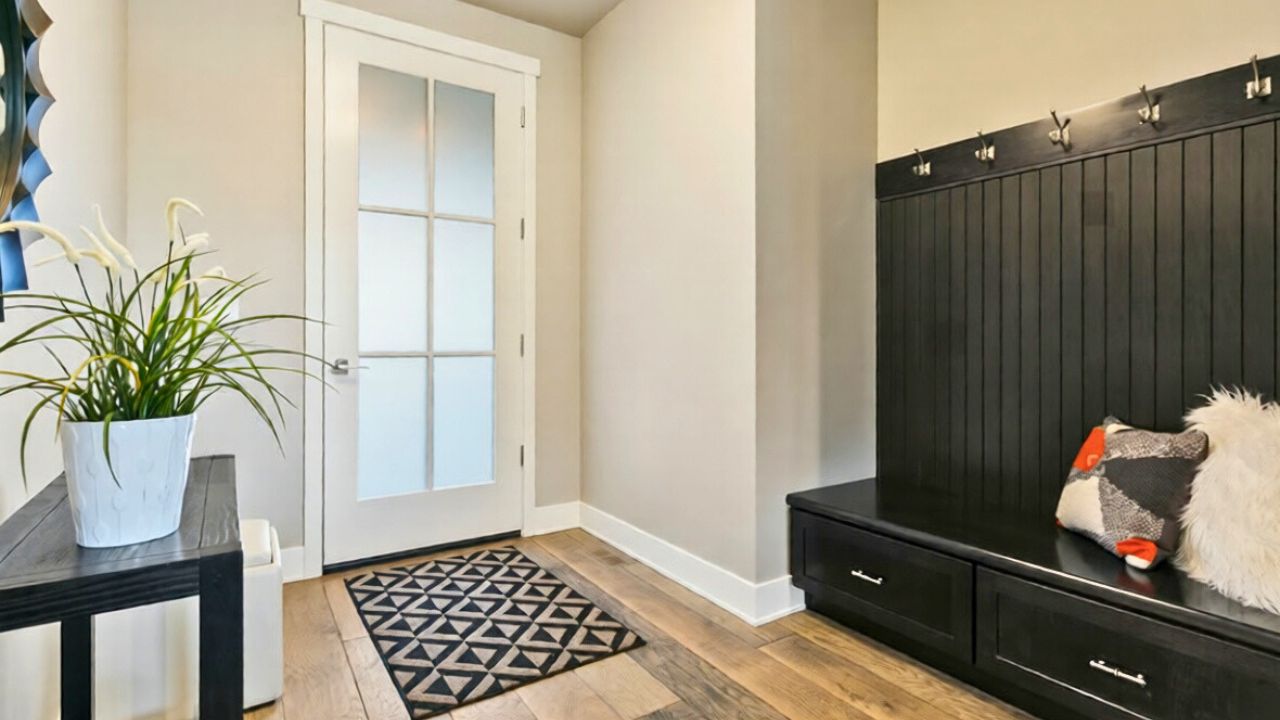
Behind every calm entryway is storage that quietly absorbs daily life. Guests feel more comfortable when they are not stepping over your gym bag or your child’s backpack, and you feel more relaxed welcoming people in when you know there is a place to stash those items quickly. Closed storage, like a small cabinet or lidded baskets, hides visual clutter, while open solutions, like a bench with cubbies, make it easy to see where things belong.
Advice on Creating an entryway that exudes warmth stresses that you should make it effortless to store and access everyday essentials, from keys to umbrellas, so the space functions smoothly for both residents and visitors Creating. Multifunctional Entryway Furniture, such as a bench with built in drawers or a console with shelves, lets you pack more utility into a small footprint without sacrificing aesthetics. When everything has a home, you can reset the space in seconds before guests arrive, which is the real secret behind those seemingly effortless foyers.
Finishing touches that make guests feel personally welcomed
Once the structure is in place, the final layer is what makes your entry feel like you, and makes guests feel they are entering a lived in home rather than a showroom. A small vase of greenery, a framed photo, or a favorite candle on the console can communicate warmth without crowding the surface. The key is restraint: a few meaningful details are more inviting than a crowded collection that competes with the practical functions of the space.
Home experts often remind you that Your entryway is the first thing guests see when they walk through the door, so it should reflect the style and mood of the rooms beyond, not feel like an unrelated afterthought Your entryway is the first thing guests see. When you combine that sense of personality with a clear landing zone, good lighting, and smart storage, you create a threshold where visitors feel oriented, cared for, and ready to enjoy the rest of your home from the moment they step inside.
Like Fix It Homestead’s content? Be sure to follow us.
Here’s more from us:
- I made Joanna Gaines’s Friendsgiving casserole and here is what I would keep
- Pump Shotguns That Jam the Moment You Actually Need Them
- The First 5 Things Guests Notice About Your Living Room at Christmas
- What Caliber Works Best for Groundhogs, Armadillos, and Other Digging Pests?
- Rifles worth keeping by the back door on any rural property
*This article was developed with AI-powered tools and has been carefully reviewed by our editors.