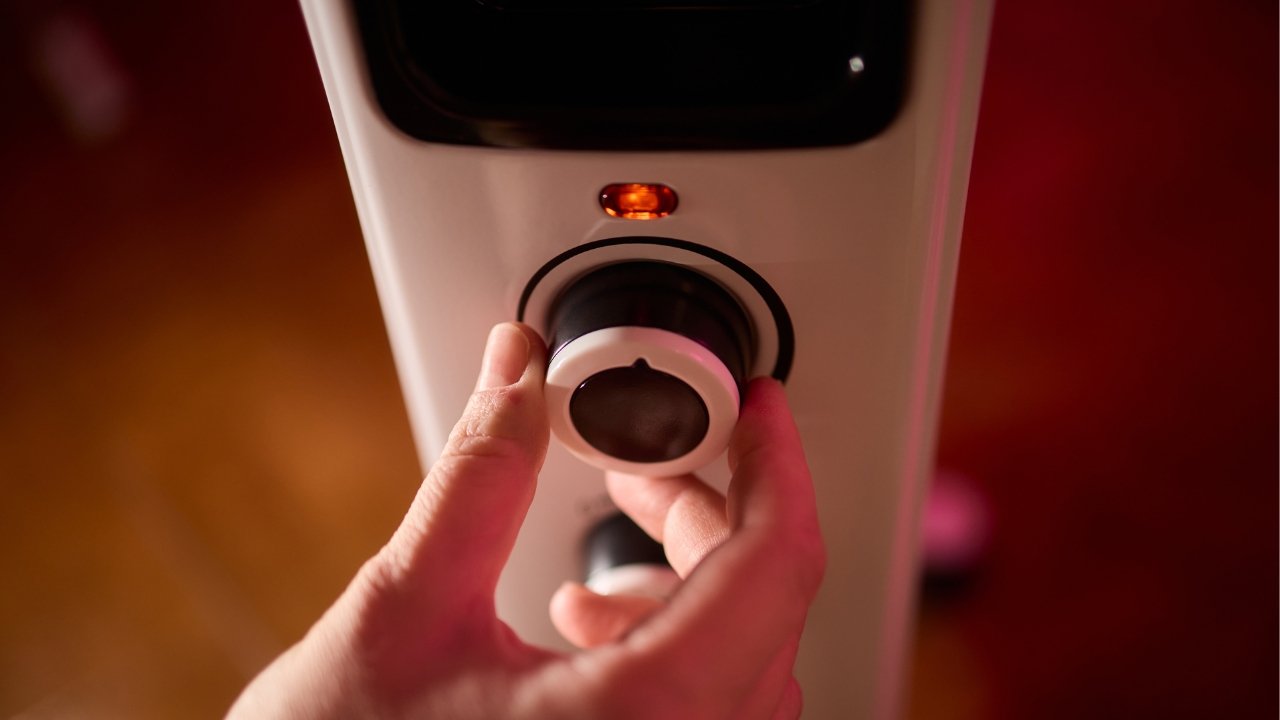
The space heater setting that wastes money and still leaves you cold
Winter exposes a costly myth in many homes: that cranking a portable heater to its highest setting is the fastest path to comfort. In reality, that habit often drains your wallet while still leaving your fingers numb and your living room chilly. If you understand how space heaters interact with your central system, your room size, and even your thermostat strategy, you can stop paying for heat you never really feel.
The key is not just which heater you buy, but how you set and use it. From the temperature on your wall thermostat to the wattage dial on a compact unit under your desk, small choices determine whether you are efficiently warm or quietly wasting money on electricity that seeps into the walls and out the windows.
The “all‑high, all‑the‑time” setting that quietly burns cash
The most expensive way to run a space heater is also the most common: you plug it in, twist the knob to maximum, and leave it blasting for hours. That habit ignores how much power even a small unit can pull and how quickly those watts add up on your bill. When you run a heater at full output for long stretches, you are paying for peak consumption every minute, even after the room has already reached a comfortable temperature, which is why guidance on how much energy space heaters use stresses that overall cost depends heavily on how long you leave them running.
That “set it to high and forget it” approach is especially wasteful when you are trying to warm more than a small, enclosed room. A portable unit is designed to heat a limited area, not an entire floor or an open‑plan apartment, so running it flat out in a large space simply forces it to work continuously without ever catching up. Energy experts who walk through the numbers on why space heaters do not really save money point out that even a compact model can draw a lot of power, so using one as a primary heat source in a big area is a recipe for high bills and lingering cold spots.
Why your thermostat strategy matters more than you think
If you are leaning on a space heater because your central system feels inefficient, the first place to look is actually your thermostat. According to guidance that cites the US Department of Energy, setting your main heat to 68 degrees strikes a balance between comfort and energy savings, keeping you warm without overworking the system. If you keep the thermostat much higher and then add a space heater on top, you are essentially paying twice to heat the same air, which is why the more efficient move is often to lower the central setting slightly and use a portable unit only where you are actually sitting.
How you combine those tools matters. If you are using a space heater to warm one or two rooms you occupy most, energy advice on using space heaters efficiently recommends turning down your central heating so you are not paying to heat unused rooms. On the other hand, if your goal is to keep the entire home comfortable, guidance on whether to turn up the thermostat or use a space heater is clear that your main system is the better tool for whole‑house warmth. In that scenario, relying on a portable unit at maximum output is the worst of both worlds: you still run the furnace and then layer an inefficient, localized heat source on top.
The hidden cost of heating the wrong space the wrong way
Even if you set your thermostat wisely, you can still waste money by asking a space heater to do a job it was never meant to handle. Portable units are most effective in enclosed rooms where you can shut a door and trap the warmth, which is why guidance that bluntly states that House Size Matters also notes that space heaters work best in smaller, contained areas. If you park one in the middle of a drafty, open living room and crank it to high, the heat simply drifts away, so the unit keeps drawing full power without ever making you truly comfortable.
The structure of your home and the way you maintain it can magnify that waste. If you let warm air leak out and cold air creep in around windows, doors, or unsealed gaps, you force any heating source to run longer and harder. Energy advice that lists Letting Warm Air Escape and Drafts In as a top mistake is blunt about the result: no matter how efficient your system is on paper, you will run it too often and waste money if you ignore those leaks. In that context, a space heater on its highest setting is not a solution, it is a bandage over a structural problem that keeps bleeding heat.
The heater‑buying mistakes that lock in higher bills
The way you choose a space heater can lock you into higher costs long before you plug it in. Many shoppers focus on price or appearance and overlook basic safety and efficiency features that directly affect how much electricity the unit will use. Guidance on 7 mistakes to avoid when buying a room heater highlights how Ignoring Safety Features, Choosing the Wrong Size for Your Room, and Overlooking Energy Efficiency Ratings can all lead to a heater that runs longer, wastes power, and still fails to keep you warm.
Maintenance habits matter just as much as the model you pick. If you never clean the filter on a unit that has one, or you let dust clog vents and fans, the heater has to work harder to push out the same amount of warm air. Advice that lists Skipping Regular Maintenance and Filter Cleaning among the top heating mistakes notes that One of the most common errors is simply neglecting these basic tasks. When you combine a poorly chosen unit with poor upkeep and then run it on high, you are essentially paying a premium for underperformance.
How to actually feel warmer without overspending
Once you understand why the “max heat” habit is so expensive, you can start to use space heaters in a way that actually delivers comfort. The first step is to match the heater to the room and your routine: use a unit that is appropriately sized for the square footage, place it where air can circulate, and close doors so the warmth stays where you need it. Practical guidance on how to use space heaters efficiently emphasizes checking the sizing table on the box and focusing on the one or two rooms you occupy most, rather than trying to heat the entire home with a single portable device.
Safety and placement are just as important as efficiency. You should keep a clear buffer around the unit, avoid extension cords that can overheat, and choose models with automatic shutoff features so you are not tempted to leave a high‑powered heater running unattended. Consumer guidance that opens with Here are some safety tips stresses that you should Keep flammable items away and Place the heater at least three feet from anything that could catch fire, while also ensuring proper ventilation for any fuel‑burning models. When you combine those precautions with a moderate thermostat setting and a realistic view of what a portable unit can do, you end up warmer, safer, and far less likely to be surprised by your next utility bill.
When you are better off skipping the space heater entirely
There are situations where a space heater is not just inefficient, it is the wrong tool altogether. If your entire apartment is cold, or your central system is underperforming across every room, you are usually better served by addressing the core heating problem instead of layering a portable unit on top. Practical advice on how to heat an apartment without overspending notes that Sometimes the only way to beat the cold is to turn up the heat, and that Unfortunately space heaters are typically pretty inefficient at warming more than a small amount of square footage. In other words, if every room feels icy, the answer is usually to work with your landlord or a technician on the main system, not to scatter portable units around and run them all on high.
Even when you are only trying to warm a single room, you should be honest about whether a space heater is solving a real problem or just masking one. If your windows leak, your insulation is thin, or your vents are blocked, you will keep nudging the heater higher and higher without ever feeling truly comfortable. Energy experts who argue that They do not save money point out that Running a small space heater still takes a lot of power, so you are often better off sealing drafts, improving circulation, and optimizing your central thermostat than relying on a portable unit as a permanent crutch. When you fix the underlying issues and reserve space heaters for short, targeted use at moderate settings, you finally stop paying for heat that never quite reaches you.