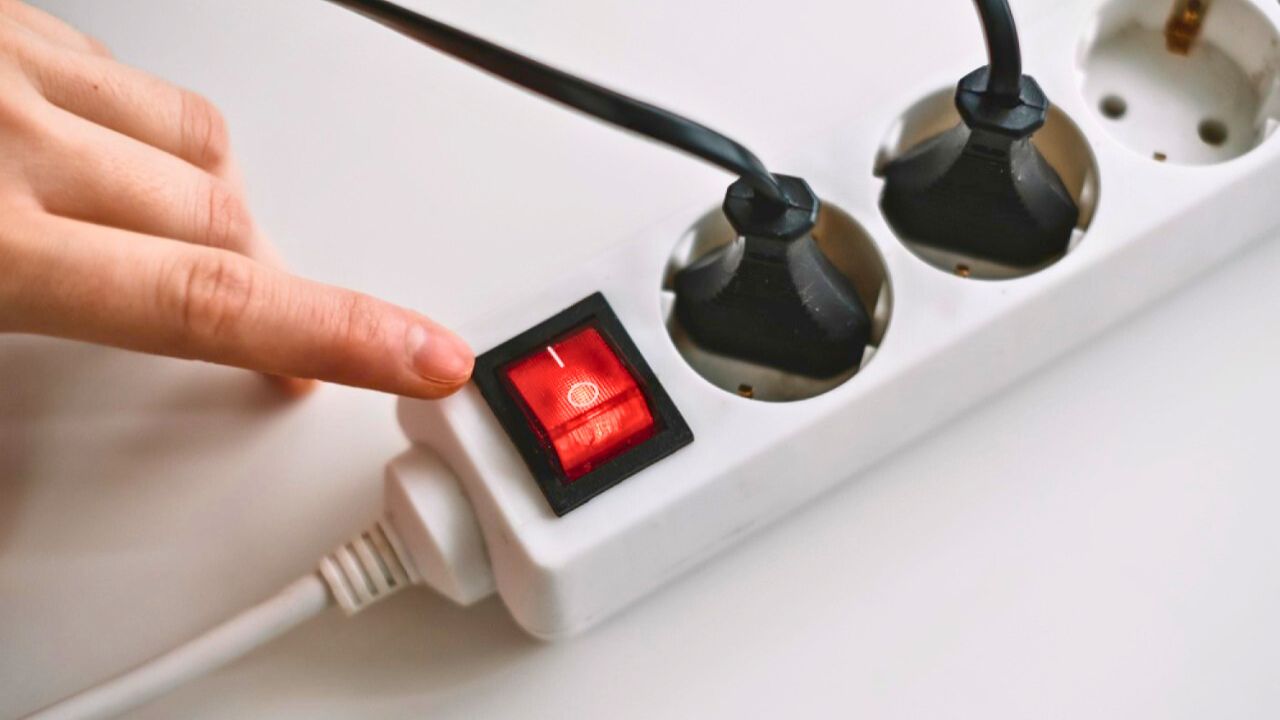
The surge protector myth that gives people false confidence
You probably feel a little safer every time you plug your laptop, TV, or game console into a chunky “protected” strip. The packaging promises peace of mind, and the glowing light on the end of the cord looks like a shield against anything the grid can throw at you. Yet that quiet confidence is exactly where many people go wrong, because the way surge protection really works is far more limited, conditional, and perishable than the marketing suggests.
To protect your electronics, you need to understand what these devices actually do, what they cannot do, and how easily a few common myths can leave you exposed. Once you see how surges behave in the real world, and how different types of protection interact, you can replace that false sense of security with a plan that actually matches the risks in your home.
Why the “plug it in and forget it” mindset is so dangerous
The most seductive myth is that once you plug into a surge device, you are done thinking about power quality. You treat that strip like a seat belt that always works the same way, no matter how many times it has been “used.” In reality, having a surge “protector” sometimes means you are only protected from small, routine spikes, while the rare but destructive events that carry billions of joules of power can still overwhelm the hardware in a single hit. When you assume blanket protection, you are more likely to stack expensive gear on one outlet, run long daisy chains, and skip other safeguards like proper grounding or whole‑home devices.
That complacency mirrors the way people treat other technical risks. Despite clear warnings, organisations still cling to cyber security myths that lull them into a false sense of security, and the same pattern plays out with electrical safety in homes and small businesses. You see the reassuring label, you see a light, and you mentally check the box, even though no surge protector can guarantee survival in every scenario and every device has a finite lifespan. The gap between what you think you bought and what you actually have is where the real damage happens.
Myth 1: “Power strips and surge protectors are all the same”
One of the most persistent misunderstandings is the idea that any bar of outlets on a cord is automatically protective. You might grab the cheapest multi‑outlet strip at a supermarket, plug in your gaming PC and 4K TV, and assume you are covered because it looks like the gear you have seen in offices. In practice, a basic power strip is just an extension of the wall, with no components designed to absorb or divert excess voltage. When there is a surge, your expensive TV can get fried and destroyed, because a power strip does nothing besides give you extra sockets.
Manufacturers and electricians repeatedly stress that you need to distinguish between simple Power Strips and true surge devices, and that the two are not interchangeable. The confusion is so widespread that you will find people on consumer forums insisting that “Power Strips Are Basically Surge Protectors,” only to be corrected by professionals who label that belief as a clear Myth. If there is a surge, then you need a surge protector, not just more outlets, and treating those two products as identical is one of the fastest ways to lose hardware in a storm or grid fault.
Myth 2: “Any device with a light must be protecting you”
Another comforting illusion is the little LED on the end of the cord. You probably read that light as a simple yes or no signal: if it is on, you are safe, if it is off, you are not. The reality is more complicated. Many surge strips use internal components that sacrifice themselves when they absorb a hit, and once those parts are spent, the device quietly reverts to being a plain strip. Most people do not know that a Surge Protector power strip can be a one‑shot deal, and once the protective element takes a hit and burns out, it is no longer functional as surge protection even though it may still power your devices.
Some designs include an indicator that is supposed to go dark when that happens, but there is no universal standard for how clearly that status is labeled or how long the light circuitry itself will last. The experts at Electrical Connections point out that these devices work by absorbing excess voltage into a metal oxide component, and once that material is used up there is no more protection being provided even if the strip still looks normal. If you never check the fine print or replacement guidance, you can end up with a row of glowing lights that mean nothing, while your most valuable electronics sit exposed.
Myth 3: “Once you buy one, it lasts forever”
Because surge devices are solid pieces of hardware, you may treat them like furniture: buy once, keep for a decade, forget about it. That is not how the underlying technology behaves. A typical surge protector, also known as a surge suppressor, is built to protect electronic equipment from unwanted voltage increases, often called power surges or spikes, by shunting that excess energy into sacrificial components. Every time it does that job, it uses up a little of its capacity, and a big event can consume that capacity in a single moment.
Over time, heat, minor surges, and simple aging degrade those parts until the device is effectively empty, even though it still passes power. People on long‑running tech forums have been warning for years that Once the internal element takes a serious hit, it burns out and the strip is no longer functional as surge protection, yet it will keep working as a basic outlet bar. When you assume the plastic housing and cord will last as long as your furniture, you miss the fact that the protective core is a consumable, more like brake pads than a steel frame, and you need to plan for periodic replacement instead of indefinite use.
Myth 4: “Surge protectors are voltage regulators and cure all power problems”
It is easy to treat a surge device as a magic box that fixes anything wrong with your electricity. In reality, these products are designed for one job: clipping short, sharp spikes that rise above normal line voltage. They are not built to correct long‑term undervoltage, brownouts, or frequency issues, and they do not smooth out every kind of noise on the line. Users in electrical communities are blunt about this, reminding each other that Surge protectors are not regulators, and that you still need separate solutions if your home suffers from chronic low voltage or flickering lights.
That distinction matters when you are troubleshooting strange behavior in your gear. If your desktop keeps rebooting during heat waves or your refrigerator compressor struggles, a surge strip will not raise a sagging supply back to normal. Some advanced systems use filters that remove powerline noise and have the added benefit of improving the quality of A/V signals, and those filters work continuously, Unlike simple shunt devices that only react when voltage crosses a threshold. When you understand that difference, you stop expecting a single plug‑in bar to solve every power quality problem and start matching tools to specific risks.
Myth 5: “Whole‑home protection makes plug‑in devices pointless”
On the other end of the spectrum, you might hear that the only serious option is a whole‑home unit at the panel, and that once you install one, you can forget about anything at the outlet. There is a grain of truth here: a properly installed service‑level device can intercept large surges before they spread through your wiring, and some electricians on discussion boards argue that the best and only option that will actually consistently protect your electronics is a well‑sized unit at the main. Others push back, pointing out in a Comments Section that All protectors have same response time and that Only the most easily deceived believe premium labels alone guarantee better performance.
The more accurate picture is layered defense. A panel‑mounted device can blunt the worst of a surge, but smaller spikes can still appear inside the home from motors, appliances, or wiring quirks. Some engineers argue that Removing high‑frequency noise at the branch level has its own benefits, and that Filters near sensitive equipment can keep working continuously even when a big event never occurs. Instead of treating whole‑home and plug‑in options as rivals, you are better off seeing them as complementary, with the panel unit handling bulk energy and the local devices cleaning up what is left before it reaches your most fragile electronics.
Myth 6: “Lightning protection is just a bigger surge strip”
Lightning occupies a special place in the surge conversation, and for good reason. When a strike couples into your wiring, the energy involved can dwarf anything a typical consumer device is rated to handle. No surge protector can guarantee survival in a direct or very close strike, and even heavy‑duty units are designed around realistic, limited scenarios rather than worst‑case hits. Electricians interviewed in Oct have described homeowners asking for “one of those surgy things in the panel” as if a single gadget could tame the sky, and they are clear that expectations need to be set carefully.
That does not mean you are helpless. Proper bonding, a well‑designed grounding system, and a combination of panel‑level and point‑of‑use devices can dramatically reduce the odds that a distant or indirect event will destroy your gear. Some manufacturers also emphasize that their designs focus on clamping realistic surge profiles rather than promising miracles. When you see viral clips claiming that surge protectors are lying to you, with Wires everywhere and a Crazy tangle of cords, the real lesson is not that protection is useless, but that you must understand the limits of what any single device can do against nature and design your system accordingly.
Myth 7: “If it has a ground pin, you are automatically safe”
Grounding is another area where half‑understood details can lead you astray. You might assume that if a strip has a three‑prong plug and the outlet accepts it, then any surge energy will neatly flow away into the earth. In practice, Grounded in this context simply means there is an electrical path to earth available, not that the path is low‑impedance, properly bonded, or free of faults. If your home’s grounding electrode system is corroded, undersized, or poorly connected, a surge device has nowhere effective to send the excess energy, and it may end up arcing through your equipment instead.
Online debates about whether you can always trust in surge protectors often circle back to this point. Commenters like Patrol and others note that even the best hardware is only as good as the wiring and installation behind it, and that Wikipedia entries on surge protection stress the importance of a solid reference to earth. When you move into an older house, or when you add new circuits for a home office or workshop, it is worth having a qualified electrician verify that your grounding and bonding are up to modern standards before you rely on any plug‑in device to save your electronics.
Myth 8: “Marketing labels and big numbers tell the whole story”
Walk down an aisle of surge products and you will see a blizzard of claims: joule ratings, response times, “premium” branding, and sometimes vague promises about filtering or conditioning. It is tempting to treat the biggest number on the box as the only metric that matters, but that approach can mislead you. Having a surge protector sometimes means you are only protected from a certain class of events, and even a high joule rating does not change the fact that real lightning can involve billions of joules of power that no consumer strip can absorb. When you focus only on marketing figures, you miss questions about how the device fails, how it signals that failure, and how it interacts with the rest of your system.
Professionals like Eddie Nichols, listed as Owner at 5th Generation Electric LLC, have taken to social platforms to call out the idea that a single Myth about Power Strips Are Basically Surge Protectors can be fixed just by slapping bigger numbers on packaging. At the same time, consumer advocates remind you that no surge protector can guarantee absolute protection and that protectors have a finite lifespan regardless of what the box says. The pattern is similar to cyber security, where Despite an increasing awareness of threats, myths about simple tools or buzzwords still lull organisations into a false sense of security. In both domains, you need to look past slogans and understand how the technology actually behaves under stress.
How to build real protection instead of false confidence
Once you strip away the myths, a practical strategy comes into focus. Start by making sure you are using true surge devices, not just multi‑outlet bars, for anything you cannot easily replace. There is a reason communities dedicated to practical advice spell out the difference and explain Why YSK that There is a misconception that Power strips offer protection against power surges, and that They do not. A surge protector, properly defined, uses internal components to divert or absorb spikes, and you should see that function clearly labeled rather than implied by shape alone.
Next, think in layers. Consider a properly sized whole‑home unit at the panel, backed up by quality point‑of‑use devices for sensitive gear like gaming PCs, NAS boxes, and home theater receivers. Pay attention to grounding, and remember that All of this hardware depends on a solid path to earth to work as intended. If you live in an area with frequent storms or unreliable infrastructure, talk with a licensed electrician about recommendations that fit your specific service, and review discussions in electrical forums where Edited comments from experienced users walk through real‑world setups. Finally, treat every surge device as consumable: note the purchase date, watch for status lights that indicate failure, and replace units proactively instead of waiting for a catastrophic event to reveal that your protection quietly expired years ago.
Like Fix It Homestead’s content? Be sure to follow us.
Here’s more from us:
- I made Joanna Gaines’s Friendsgiving casserole and here is what I would keep
- Pump Shotguns That Jam the Moment You Actually Need Them
- The First 5 Things Guests Notice About Your Living Room at Christmas
- What Caliber Works Best for Groundhogs, Armadillos, and Other Digging Pests?
- Rifles worth keeping by the back door on any rural property
*This article was developed with AI-powered tools and has been carefully reviewed by our editors.