The thrift-store furniture detail that tells you it’s worth buying before you lift it
The smartest thrift shoppers do not start by lifting a dresser or chair to judge its quality. They start by reading a single, quiet detail that reveals how the piece was built long before anyone slapped on paint or hardware. Once you know how to read that clue, you can separate future heirlooms from wobbly space-wasters in seconds.
That detail is the joinery, the way the wood connects at corners and edges. When you train your eye to spot solid joinery, you can tell whether a piece is worth your energy before you ever strain your back, and you can walk into any secondhand store with the confidence of a professional buyer instead of relying on guesswork.
The one detail that matters before you lift: joinery
When you stand in front of a thrift-store dresser, the most important thing to inspect is not the color, the style, or even the scratches. It is the joinery, the seams where one piece of wood meets another. Those seams tell you whether a builder took time to cut and fit solid parts together or simply stapled and glued thin boards into a box. If the corners of drawers and frames interlock in a deliberate pattern instead of meeting in a flat butt joint, you are looking at a piece that was designed to be opened, closed, and moved for decades.
Joinery matters because it spreads stress across the structure instead of forcing a single nail or screw to carry the load. Guidance on how to identify quality wood furniture stresses that you should zero in on these construction details, since careful joinery is a simple way to confirm that something is made with care rather than speed, and that advice is echoed in explanations of how Another simple way to check a piece’s quality is to study how the parts connect. Once you know what you are looking at, that one detail becomes your shortcut to deciding whether a piece deserves a closer inspection or should stay on the shelf.
Why joinery reveals quality more reliably than weight
Many shoppers still rely on weight as a quick test, assuming that a heavy dresser must be solid and a light one must be cheap. That habit is understandable, but it is unreliable. A piece can be heavy because it is loaded with low grade particleboard, thick hardware, or even hidden metal brackets, while a well designed chair in solid ash or beech can feel surprisingly light in your hands. Weight tells you something about mass, not about craftsmanship, and it can mislead you into dragging home a bulky item that starts sagging within a year.
Joinery, by contrast, reveals how the furniture was engineered. When you see dovetails, mortise and tenon joints, or tight corner blocks, you are seeing the builder’s priorities in plain view. Guides that walk you through construction details emphasize that these joints allow pieces to hold together without relying on nails or screws alone, which is why they show up in furniture that survives generations of use. When you train yourself to read those seams first, you stop being impressed by sheer heft and start recognizing the quiet signs of real structure.
How to read drawer corners like a pro
Drawers are your best classroom for learning joinery because they compress a lot of engineering into a small space. Start by pulling a drawer all the way out and flipping it slightly so you can see the side meeting the front. If you see a series of interlocking wedge shapes, that is dovetail joinery, a hallmark of careful construction. Hand cut dovetails are often slightly irregular, while machine cut dovetails are more uniform, but in both cases the overlapping “teeth” lock the front and side together in a way that resists pulling and sagging.
If the corner is simply a flat butt joint held with staples, visible nails, or a thin metal bracket, you are looking at a shortcut that saves time but sacrifices strength. Advice on how to identify quality wood furniture points to these drawer corners as a key test, explaining that Another simple way to check a piece’s quality is to study whether the joints interlock or simply meet at a glued edge. When you can read those corners in a few seconds, you can decide whether a dresser or nightstand is worth bending down for, let alone hauling to the register.
Spotting solid wood, not just solid marketing
Once you have checked the joinery, your next move is to confirm what the piece is actually made of. Solid wood behaves differently from particleboard or thin veneer, and you can often see the difference at the edges and underside. Look for grain that continues around corners, end grain that shows real growth rings, and surfaces that feel like wood rather than plastic when you run your hand across them. If the pattern on the top does not match the pattern on the edge, or if chipped spots reveal a fuzzy interior, you are likely dealing with a manufactured core.
Guides that outline Check the materials tests emphasize that solid hardwoods such as oak, walnut, cherry, and maple are more durable and repairable than particleboard wrapped in veneer. A separate breakdown of Materials for heirloom pieces notes that solid hardwood, especially when paired with quality joinery, is what allows furniture to be refinished, sanded, and passed down. When you combine a quick joinery check with a fast scan for real wood, you can tell whether a thrift-store find has the bones to survive another decade of use.
Labels, makers, and the quiet power of a nameplate
After you have confirmed that a piece is structurally sound, it is worth hunting for labels or stamps that reveal who made it. Look along the back, inside drawers, under the seat of a chair, or on the underside of a table. A branded mark, paper label, or metal tag can tell you whether you are dealing with a mass market line, a regional workshop, or a custom maker. Even when you do not recognize the name on the spot, a quick search later can confirm whether that maker has a reputation for quality or collectible designs.
Advice on how to Look for the label frames this step as a simple way to separate generic pieces from those with documented craftsmanship, especially in secondhand environments where prices may not reflect true value. When you pair a solid joint and real wood with a recognizable maker, you are no longer just buying a cheap dresser, you are rescuing a well built piece that was designed to last, often at a fraction of its original cost.
Reading vintage clues without getting fooled
Joinery also helps you understand age, which matters if you are hunting for vintage furniture rather than recent reproductions. Older pieces often show hand cut dovetails that are slightly uneven, tool marks on the underside, and wood that has mellowed in color over time. Newer items that imitate older styles may copy the silhouette but rely on machine cut shortcuts, visible screws, or thin veneers that give away their recent origin. When you see a mix of careful joints and age appropriate wear, you are likely looking at something that has already proved its durability.
Guides that focus on Identifying Vintage Furniture explain that recognizing age is a blend of research, observation, and knowledge of construction methods, while another breakdown of how to Understand What Makes Furniture vintage stresses that construction details reveal whether a piece was built to hold together without relying on modern fasteners. When you learn to read those clues, you can distinguish genuinely older furniture from items that only look aged because of a distressed paint job.
Using your hands as much as your eyes
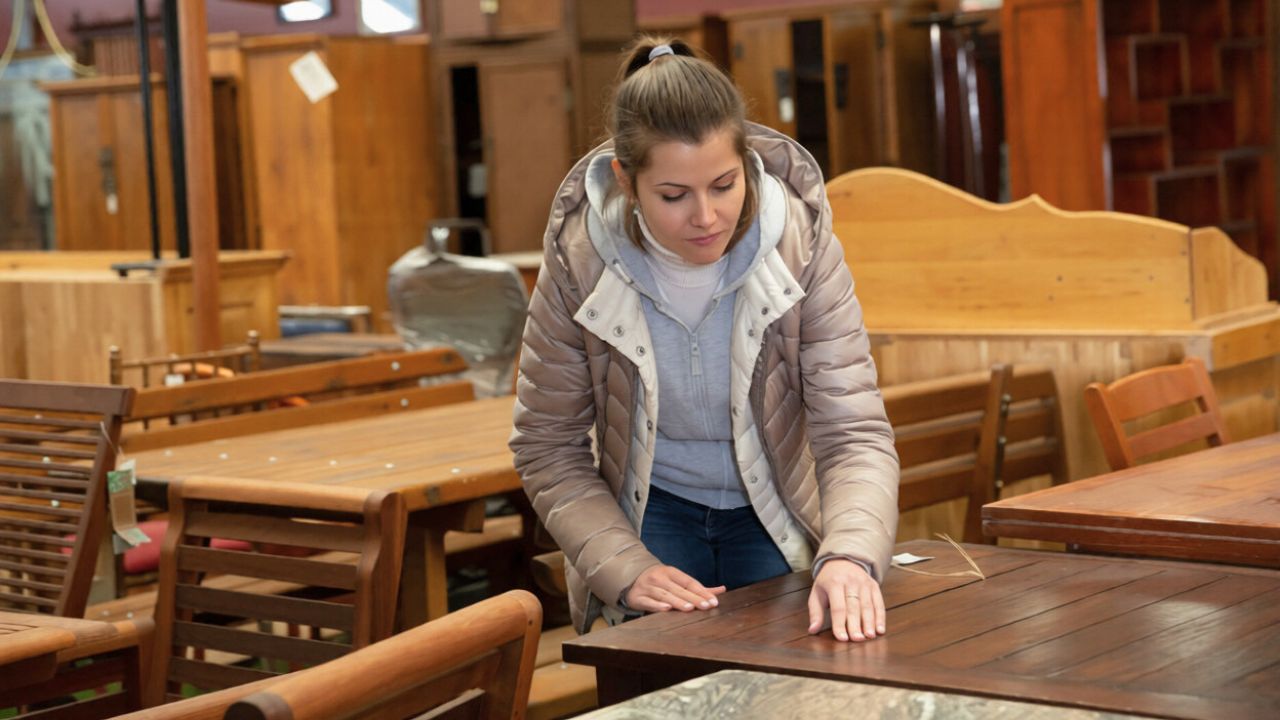
Even when you are focused on joinery, you should not rely on sight alone. Running your hand along edges, drawer fronts, and chair arms tells you whether surfaces are smooth, whether corners are slightly rounded from use, and whether any sharp transitions suggest a quick factory cut. Interior designer Alex Spielman, founder of The Little Things, advises that you Don’t Just Look With Your Eyes when you evaluate secondhand furniture, because touch reveals flaws and strengths that a quick glance can miss.
As you feel the piece, gently open and close drawers, lean on table edges, and shift a chair side to side. Guidance on Sturdy Construction suggests that you Gently test for wobble and listen for creaks, since tight joints and corner blocks are signs of skilled craftsmanship. When your hands confirm what your eyes saw in the joinery, you can be confident that the piece will feel solid in daily use, not just look good in a photo.
Matching construction quality to what you should buy used
Not every category of furniture demands the same level of scrutiny, and understanding where joinery matters most helps you prioritize. Case goods such as dressers, sideboards, and dining tables rely heavily on strong joints, since they carry weight and endure constant movement. That is why designers and interior experts often recommend shopping secondhand for items like solid wood tables and storage pieces, especially when they are made of solid wood and beautifully detailed, a point underscored in advice on why designers and interior experts often turn to thrift stores for these categories.
Soft seating, by contrast, introduces upholstery and foam into the equation, which can complicate your assessment. You still want to check the frame joinery on a sofa or armchair, but you also need to factor in the cost of reupholstery and the condition of cushions. Broader guides on how to How can I tell if furniture at a thrift store is high quality emphasize that solid wood construction is preferable to particleboard, especially for items you plan to use daily. When you align your expectations with the category, you can reserve your strictest joinery standards for the pieces that do the heaviest lifting in your home.
When craftsmanship justifies the effort of a heavy lift
Once you have confirmed that a piece has strong joinery, solid materials, and, ideally, a reputable maker, the effort of lifting it suddenly makes sense. At that point, you are not just hauling random secondhand furniture, you are investing sweat into something that can anchor a room for years. Guidance on how to Spot True American Craftsmanship in Furniture suggests running your hand over the wood to feel how the finish highlights the grain rather than masking it, a tactile confirmation that the builder respected the material.
Similarly, breakdowns of Heirloom standards explain that when solid hardwood, careful joinery, and thoughtful finishing come together, you are looking at furniture that can be repaired, refinished, and passed down. Broader advice on how to Check the construction of thrift-store finds reinforces that these structural details are what separate disposable pieces from those worth the cost of delivery or the strain of carrying them up a walk-up staircase. When you let joinery guide your choices, you reserve your energy for furniture that will reward you every time you open a drawer or set down a cup.
Like Fix It Homestead’s content? Be sure to follow us.
Here’s more from us:
- I made Joanna Gaines’s Friendsgiving casserole and here is what I would keep
- Pump Shotguns That Jam the Moment You Actually Need Them
- The First 5 Things Guests Notice About Your Living Room at Christmas
- What Caliber Works Best for Groundhogs, Armadillos, and Other Digging Pests?
- Rifles worth keeping by the back door on any rural property
*This article was developed with AI-powered tools and has been carefully reviewed by our editors.