The under-sink leak that can ruin cabinets before you notice
The quiet drip under a kitchen sink rarely announces itself with drama. It seeps into plywood and particleboard in the dark, softening edges and feeding mold until the cabinet floor buckles and the doors no longer close cleanly. By the time you notice, the damage can rival a small flood, even if the leak itself has only ever been a slow, steady trickle.
Protecting your cabinets means treating that hidden space as a high‑risk zone, not an afterthought. When you understand how these leaks start, how they silently spread, and which simple upgrades buy you time, you can turn a vulnerable cavity into one of the most resilient parts of your kitchen.
Why the space under your sink fails before anything else
The cavity beneath your sink combines plumbing, wood, and darkness, which is exactly the mix that lets moisture do its worst. Supply lines, shutoff valves, drainpipes, garbage disposals, and filters all converge in a tight space, so there are more joints and seals here than almost anywhere else in your kitchen. At the same time, the cabinet box is usually built from particleboard or medium density fiberboard, materials that soak up water quickly and lose strength long before you see obvious staining or swelling on the outside panels.
Because the doors stay closed most of the day, humidity and heat build up around any small drip, accelerating decay. Specialists who track kitchen failures point out that under‑sink cabinet interiors are especially vulnerable, since enclosed spaces trap moisture and hide early warning signs until the damage has already spread into the base, sides, or even the nearby wall. Once that happens, you are no longer dealing with a minor plumbing fix but with a carpentry and remediation project.
The slow leak that quietly destroys your cabinets
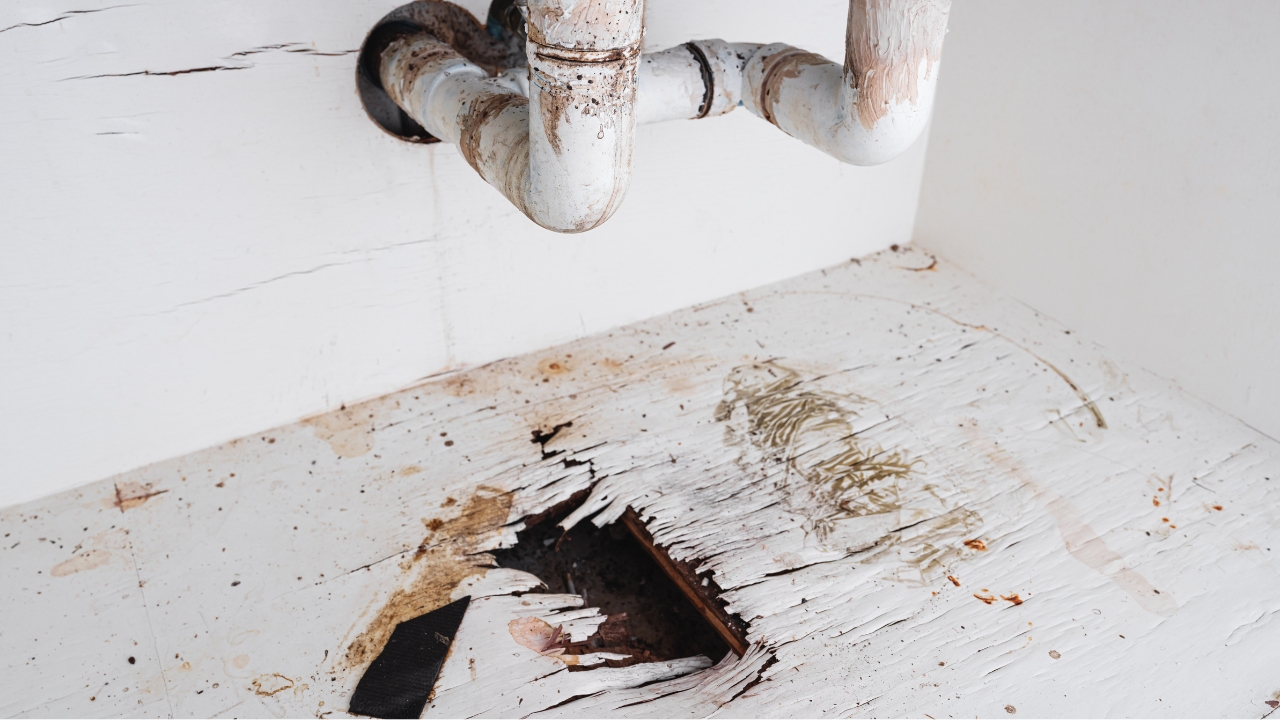
Most catastrophic cabinet failures do not start with a burst pipe. They begin with a slow leak that seems too minor to matter, or that you never see at all. A single drip from a compression fitting or a pinhole in a drain line can land on the same spot of wood for weeks, soaking in faster than it can evaporate. Over time, the floor of the cabinet becomes spongy, the finish bubbles, and the structure starts to sag, even though you may never see standing water.
Moisture specialists warn that one slow drip is enough to ruin a cabinet if it is allowed to continue unchecked, especially where the wood is unsealed around pipe cutouts or along the back edge. That same persistent dampness also creates ideal conditions for mold growth, which can spread into adjacent cavities and wall cavities long before you notice discoloration. By the time the cabinet floor caves in or the doors go out of alignment, the leak that caused it may have been active for months.
Common plumbing failures that start the problem
When you trace a cabinet failure back to its source, the culprit is often a small but predictable plumbing defect. Over time, vibration from garbage disposals, temperature swings in hot and cold lines, and simple aging can loosen threaded connections or crack plastic fittings. Corrosion on metal parts and mineral buildup inside traps and joints also contribute, especially in homes with hard water or older plumbing systems.
Plumbing guides note that leaks under the sink typically come from corrosion, loose connections, clogged P‑traps, or worn seals that no longer hold pressure. Another detailed breakdown of kitchen sink failures explains that THE worn gaskets in drains and supply connections are often the primary cause of leaks, since rubber hardens and cracks over time before a small leak appears. If you treat these components as consumables that need periodic replacement, rather than permanent fixtures, you dramatically reduce the odds that a hidden drip will ever get started.
The subtle warning signs you tend to overlook
Because the under‑sink space is out of sight, you have to train yourself to notice indirect clues that water is getting where it should not. One of the earliest is smell: a faint musty or damp odor when you open the doors, even if you do not see visible water. Another is texture, such as a cabinet floor that feels slightly soft under your fingers, or shelf liner that seems to cling because the surface beneath it has swelled.
Plumbing specialists list several telltale signs of a leak under the sink, including a musty or damp smell when you open the cabinet, swollen or warped cabinet floors, and visible moisture around pipe fittings or drain components. Broader water damage guidance adds that discolouration, such as stains or patches on the cabinet base or nearby wall, is another early indicator that water is escaping. If you treat these subtle changes as a prompt to investigate immediately, rather than something to wipe away and forget, you can often catch a leak while the cabinet is still salvageable.
How quickly “minor” moisture turns into major damage
Once water begins to infiltrate the cabinet structure, the damage curve is steep. Particleboard and MDF are engineered from wood fibers and resin, so they act like a sponge when exposed to moisture. The edges swell first, then the surface layer delaminates, and finally the fasteners that hold the box together lose their grip. At that point, even if you fix the plumbing, the cabinet may never regain its original strength or alignment.
Restoration experts emphasize that even slow leaks can warp cabinet floors and cause mold growth, especially when they are hidden behind stored items and go unnoticed between periods of sink use or plumbing work. Another detailed overview of kitchen water damage notes that appliance leaks, failed seals, and even rainwater intrusion can saturate cabinetry and surrounding timber materials over time, turning what started as a localized issue into a broader structural problem. The longer the wood stays damp, the more likely you are to face not just replacement costs but also mold remediation and potential insurance complications.
Why ignoring a drip can cost you more than a new cabinet
It is tempting to postpone dealing with a small drip, especially if you can catch it with a towel or a bucket. That delay can be expensive. Beyond the obvious cost of replacing cabinets, persistent moisture can damage flooring, subflooring, and nearby walls, and it can also create health risks if mold takes hold. In some cases, insurers may treat long‑term, unaddressed leaks differently from sudden accidents, which can affect how much help you receive when you finally file a claim.
Plumbing risk assessments explain that Why a leak is not just about the inconvenience of a wet cabinet. Constant moisture exposure can quickly deteriorate wood, encourage mold, and, if you do not act promptly, even jeopardize an insurance claim on the grounds that the damage was gradual and preventable. Another breakdown of under‑sink risks stresses that cabinet damage from small leaks is common, and that homeowners often underestimate how quickly a seemingly minor issue can escalate into a full replacement and remediation project.
Smart materials and liners that buy you crucial time
While you cannot eliminate every plumbing risk, you can design the cabinet interior to be more forgiving when water does escape. One of the simplest upgrades is to add a waterproof liner that contains small spills and keeps them off the wood. This does not replace the need to fix leaks, but it buys you time, turning a sudden drip into a visible puddle that you can spot and address before it soaks into the structure.
Cabinet specialists recommend that you use a Rubber on the cabinet floor, since one of the most effective ways to protect this area is to create a barrier that contains minor spills or leaks. Manufacturers of protective trays and mats add that these liners can hold a surprising amount of water and channel it toward the front edge, where you are more likely to notice it. For new installations, moisture‑resistant cabinet materials and factory‑applied sealants around cutouts and seams provide another layer of defense, slowing the rate at which any water can penetrate the box.
Sealing, caulking, and other defenses that stop damage at the edges
Beyond liners, you can harden the cabinet itself against moisture by sealing the most vulnerable entry points. The cutouts where pipes pass through, the seams where the floor meets the sides, and the raw edges at the back are all places where water can wick into the wood. Applying a high quality sealant or caulk in these areas turns exposed fibers into a more water resistant surface and helps direct any leaks toward visible, easy to clean zones.
Sealant experts note that sealing under‑sink cabinets is a practical way to prevent water damage and mold growth, since closing off gaps and raw edges limits the paths water can take into the structure. Broader guidance on preventing moisture problems under cabinets explains that common causes of include leaks from plumbing fixtures and appliances that slowly saturate particleboard or timber materials over time. By sealing joints and penetrations, you reduce the chance that such leaks will quietly migrate into hidden cavities where they are harder to detect and repair.
Routine checks that keep you ahead of hidden leaks
The most effective protection is not a product but a habit. If you treat the space under your sink like a mechanical room rather than a storage closet, you are far more likely to catch problems early. That means keeping the area relatively uncluttered, so you can see the back wall and the cabinet floor, and building a simple inspection into your weekly or monthly cleaning routine. A quick look and a pass of your hand around the pipes can reveal moisture long before it becomes visible damage.
Water damage specialists stress that prevention tips for water under the sink start with regular inspections, prompt repair of any drips, and the use of protective barriers as a first line of protection against water damage. Broader kitchen guidance recommends that you stay alert to most common signs areas, since detecting issues early is crucial to prevent further deterioration. If you pair that vigilance with occasional checks of nearby zones, such as pulling out your fridge or inspecting adjacent cabinets as suggested in kitchen water damage guidance, you create a routine that keeps small leaks from ever becoming the kind of under‑sink disaster that ruins your cabinets before you notice.
Supporting sources: How You Can, Water Leaking Behind.
Like Fix It Homestead’s content? Be sure to follow us.
Here’s more from us:
- I made Joanna Gaines’s Friendsgiving casserole and here is what I would keep
- Pump Shotguns That Jam the Moment You Actually Need Them
- The First 5 Things Guests Notice About Your Living Room at Christmas
- What Caliber Works Best for Groundhogs, Armadillos, and Other Digging Pests?
- Rifles worth keeping by the back door on any rural property
*This article was developed with AI-powered tools and has been carefully reviewed by our editors.