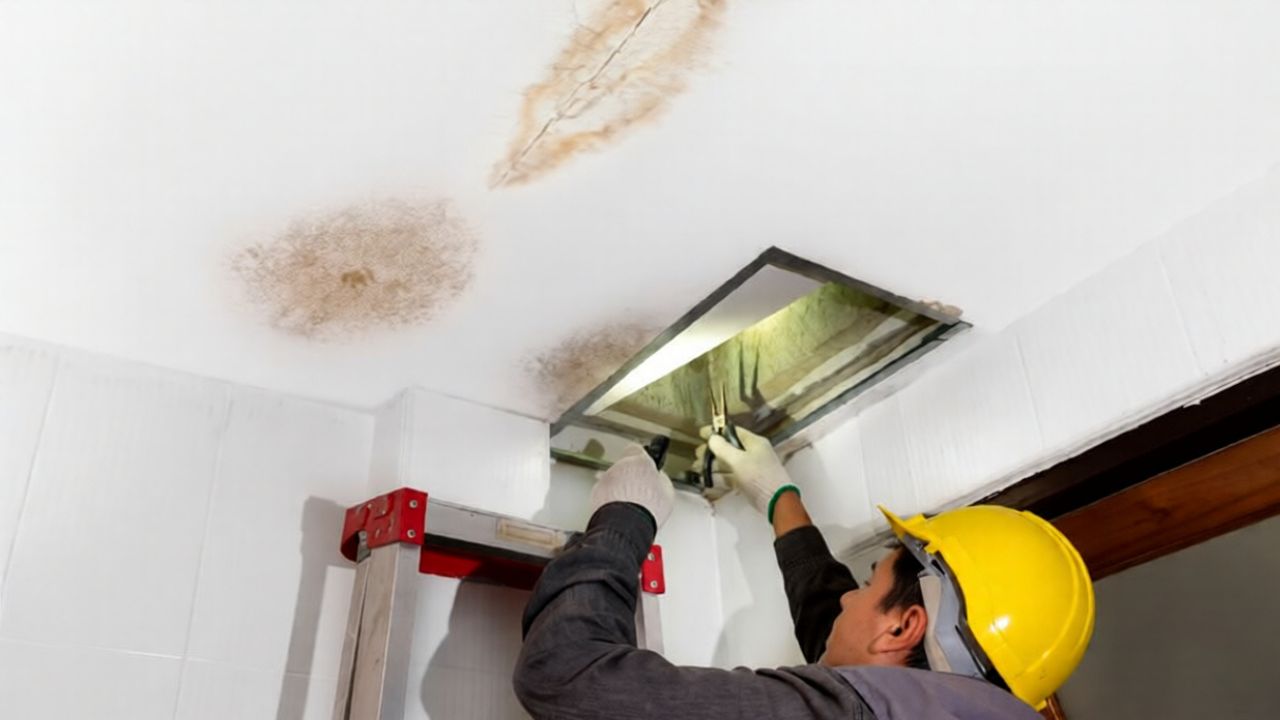
The winter leak pattern contractors keep seeing in older houses
Across the country, contractors are walking into the same winter scene in older houses: a brown stain on the ceiling, a musty smell in a back bedroom, and a homeowner insisting it “only happens when the snow melts.” The pattern is so consistent that many roofers and restoration crews can now predict where the water will show up before you even point it out. What looks like a sudden leak is usually the final act of a slow failure that winter conditions quietly accelerate.
If you live in a pre-1990s home, you are squarely in the risk zone for this seasonal drip drama. Aging roofs, tired plumbing, and thin insulation combine with snow, ice, and deep cold to push water into the same weak spots year after year. Understanding how that pattern works, and where it tends to surface first, is your best chance to catch problems early instead of discovering them through a major insurance claim.
The recurring winter leak pattern in older homes
Contractors describe a familiar script in older houses: water appears in late winter at a ceiling joint or along an exterior wall, then vanishes once temperatures stabilize, only to return the next cold season a little worse. You see the symptom in a living room or hallway, but the real trouble usually starts higher up, where snow and ice sit on a roof that was never designed for today’s freeze and thaw swings. As temperatures bounce around the freezing mark, Small cracks in shingles, punctures in membranes, or ponding around low spots open just enough for meltwater to slip in, then refreeze and expand the damage.
In older neighborhoods, that pattern is amplified by past “band-aid” fixes that have aged out. Contractors who work in places like Many Evansville streets report that Older Patch Repairs Break Down in Cold Weather, especially where mismatched shingles or cheap sealants were used around chimneys and vents. Those quick repairs may have survived a few mild winters, but repeated cold snaps harden and crack them, so the first warm-up after snow sends water straight through the weakest seam. If your house has a history of piecemeal roof work, that is often where the winter leak pattern starts to show.
Why winter exposes weaknesses that summer hides
Winter does not just add moisture, it changes how your entire building behaves. Cold Weather shrinks wood framing and stiffens roofing materials, which can widen tiny gaps around nails, flashing, and vent boots that stayed tight in summer. At the same time, snow and ice linger on the roof for days instead of running off in a quick rain, so meltwater has more time to find those openings. Roof specialists note that in Oct and other shoulder months, Small cracks or punctures that would be obvious in summer can stay hidden under snow for weeks, which lets water work into the structure long before you see a stain.
Inside the house, winter also drives warm, humid air upward, where it meets cold roof decking and exterior walls. That temperature clash can create condensation that mimics a roof leak, especially in older homes with thin insulation and poor ventilation. Contractors who investigate “mystery drips” in January often find frost on the underside of roof boards or damp insulation around recessed lights, not a hole in the shingles. Over time, that trapped moisture can rot wood and feed mold, even if the exterior roof looks intact. When you finally notice damage in late Winter, the underlying problem may have been building quietly since the first cold snap.
Ice dams: the classic winter culprit above the stain
Ask any roofer what they expect to find above a midwinter ceiling stain in an older house, and the answer is usually the same: an ice dam at the eaves. Ice dams form when heat from your living space melts snow high on the roof, then the meltwater refreezes at the colder edge near the gutters, creating a ridge of Ice that traps more water behind it. According to detailed guidance on removal, the worst conditions are Heavy snowfall followed by rapid drops in temperature, a Weather pattern that encourages thick ridges and deep pools of water that can back up under shingles. Homeowners are often told to use a Quick fix: Open soffit vents or clear channels so trapped water can escape before it reaches the gutters, but that is a temporary measure rather than a cure.
In practice, that backed up water tends to find the same weak points in older roofs: nail holes that have rusted open, brittle felt underlayment, or flashing that has pulled away from a chimney. Over time, the repeated cycle of freezing and thawing at the eaves can lift shingles and saturate the roof deck, so even a modest snow can trigger leaks. Guides to Signs an Ice Dam Is Forming emphasize watching for icicles, uneven snow melt, and water stains near exterior walls, all of which show that heat loss and poor drainage are combining in a way that puts older houses at particular risk.
Roof details that fail first on older houses
Even without dramatic ice buildup, specific roof components on older homes tend to give way first in winter. Shingles that have lost their protective granules become brittle in the cold, so they crack under snow load or wind, exposing the underlayment. Around chimneys, skylights, and plumbing vents, metal flashing can corrode or pull loose as the structure shifts slightly with temperature changes. Roofing specialists warn that Damaged Shingles or Flashing are prime entry points for meltwater, especially when snow piles up against those details and keeps them wet for days.
Flat and low slope roofs, which are common on midcentury additions and porches, have their own winter failure pattern. Instead of shedding snow quickly, they collect drifts and then shallow ponds of meltwater that can exploit even tiny seams in the membrane. Specialists in Preventing Winter Roof Leaks note that Causes and Effective Solutions for flat roofs often revolve around improving drainage and reinforcing vulnerable transitions where the roof meets parapet walls. In older houses, those transitions may have been patched repeatedly, so winter moisture finds its way through the newest layer of sealant into much older, softer materials below.
Hidden plumbing and wall leaks that masquerade as roof problems
Not every winter leak that shows up on a ceiling starts at the roof. In many older homes, aging supply lines and drain pipes run through uninsulated exterior walls or crawlspaces, where they are exposed to deep cold. As temperatures drop, those pipes can contract, joints can loosen, and slow drips can begin long before a dramatic burst. Insurance data highlighted recently points out that Winter is exposing a quiet weakness in older homes, with aging plumbing and hidden lines behind walls increasingly showing up in claims. When those pipes seep for weeks, the first sign you see may be a stain that looks like a roof leak but is actually a plumbing failure.
The damage pattern inside the wall is often subtle at first. Moisture behind walls can cause your paint or wallpaper to blister, bubble, or peel, long before actual water damage appears on the surface. Plumbing experts list that kind of Moisture change as one of the key warning signs of a hidden leak, especially in older houses where original galvanized pipes or early copper lines are still in service. In winter, when you run hot showers and dishwashers more often while the exterior of the house stays cold, those stressed pipes and fittings are under maximum load, so a small flaw can quickly turn into a steady drip inside the wall cavity.
Attics, insulation, and the energy leaks that become water leaks
Above your ceiling, the attic in an older house often tells the real story of winter leaks. Thin or patchy insulation lets heat escape unevenly, which warms some sections of the roof deck while leaving others icy cold. That uneven temperature profile is exactly what drives ice dams and condensation. Specialists in thermal imaging describe how Insulation Deficiencies such as Missing or damaged batts in attics and crawlspaces create hot spots that show up clearly on infrared scans, along with Air Leaks and Draft paths that carry warm indoor air straight to the roof.
Those same energy leaks are often the missing link in the winter water pattern. When warm, moist air from bathrooms and kitchens escapes through gaps around light fixtures or attic hatches, it can condense on cold surfaces and drip back down, staining ceilings and feeding mold. Guidance on Why Are Air Leaks a Problem notes that Older homes are more likely to develop these gaps because they were built to less stringent standards and have settled over time. By using simple methods to find and seal air leaks in Winter, such as smoke pencils or blower door tests, you can cut heat loss and reduce the moisture that fuels both ice dams and interior condensation, turning an energy upgrade into a leak prevention strategy.
Where contractors keep finding winter water inside the house
When restoration crews respond to cold season calls, they tend to check the same locations first, because the pattern repeats across older housing stock. The Roof is the obvious starting point, but technicians also look at window heads, sill plates, and the junction where exterior walls meet ceilings, since those are common entry points for water that has traveled along framing. A detailed overview of Common Water Leaks in Winter explains that while water damage emergencies can happen at any time of year, cold weather tends to concentrate problems around roofs, attics, and exterior plumbing, where freezing and thawing are most intense.
Inside, contractors often find the first visible signs in finished basements and over unheated garages, where insulation is thinnest and temperature swings are sharp. In older homes, those spaces may have been converted from storage to living areas without upgrading the building envelope, so pipes, ducts, and wiring penetrations remain exposed to drafts. When water does get in, it can run along joists and beams before surfacing far from the original entry point, which is why a ceiling stain in the middle of a room may trace back to a leak at the edge of the roof or a pipe in an adjacent wall. Understanding Where To Find Them helps you direct a contractor to the most likely sources instead of chasing symptoms room by room.
How winter turns tiny leaks into major insurance events
From an insurance perspective, the most troubling part of the winter leak pattern is not the first drip, it is how quickly a small problem can escalate once temperatures drop. Industry analysts have flagged a winter insurance claim trend in which small water damage that might have been a minor repair in summer becomes a large loss after weeks of hidden seepage. Explanations of Why winter turns tiny leaks into major events focus on the way Cold conditions slow evaporation and keep materials saturated, so by the time you see a single puddle, framing, subfloors, and insulation may already be compromised.
Regional reports from Jan in ARLINGTON, UNITED STATES describe how, As the holiday season winds down and households return to routine, restoration companies see a spike in calls from North Texas homeowners who discover that Small leaks that worsen gradually have turned into significant water damage. Another Jan briefing on winter water damage in North Texas stresses that Addressing water damage early is critical, because When moisture is left untreated, it can weaken structural materials and drive up the cost of reconstruction later in the year. For owners of older houses, where materials may already be brittle or outdated, that escalation can be even faster.
Why contractors say winter is the best time to investigate
It may feel counterintuitive, but many roofing and restoration professionals argue that the coldest months are actually the best time to assess an older home’s vulnerabilities. In FAIRFIELD COUNTY, CT, UNITED STATES, specialists have urged homeowners to use Winter conditions as a stress test for their roofs, since snow loads and freeze thaw cycles reveal weaknesses that stay hidden in mild weather. They point out that winter weather places unique and often underestimated strain on shingles, flashing, and underlayment, and that careful inspections now can prevent water intrusion once temperatures rise and meltwater flows more freely. That perspective is echoed in advice that winter is the right time for Connecticut homeowners to assess roof health and plan repairs before spring storms.
Contractors also emphasize that winter is when you are most likely to notice subtle interior clues if you pay attention. Seeing mysterious leaks or brown spots on your ceiling in the middle of winter is a red flag that should not be ignored, especially since it is likely NOT rain causing the problem. Experts who walk homeowners through these scenarios explain that the vast majority of midwinter stains trace back to condensation, ice dams, or attic air leaks, not a simple shingle failure. Short educational videos on Seeing these signs encourage you to treat them as an early warning system, a chance to fix underlying issues before they harden into the kind of structural damage that shows up in insurance files.
Practical steps you can take before the next thaw
Once you recognize the winter leak pattern in older houses, you can start to break it with targeted, practical steps. Begin outside by clearing gutters and downspouts so meltwater has a clear path away from the roof, then look closely at eaves, valleys, and roof penetrations for cracked sealant or lifted shingles. If you live in a snow prone area, consider adding heat cables or improving attic ventilation to reduce ice dam formation, and schedule a professional roof inspection that focuses on the details contractors know fail first. In regions like FAIRFIELD COUNTY, CT, UNITED STATES, where winter roof stress is a recurring issue, local experts recommend using this season to document any suspicious areas and plan repairs before spring rains test them again, advice that aligns with broader guidance on why Winter is the right time to assess roof health.
Inside, turn your attention to the hidden paths water and warm air use to move through your home. Seal gaps around attic hatches, recessed lights, and plumbing penetrations to cut down on Draft paths, and use the principles behind thermal imaging of Air Leaks to guide where you add insulation or weatherstripping. Follow detailed checklists on Why Are Air Leaks a Problem in Older homes, which explain how tightening the building envelope improves comfort and indoor air quality while also reducing the moisture that feeds winter leaks. Finally, keep an eye on plumbing in exterior walls and unheated spaces, especially in properties flagged as vulnerable in Jan reports on hidden old house failures, since catching a slow drip now can be the difference between a small repair and a major claim once the next thaw arrives.
Supporting sources: Winter Water Damage Risks Rise as North Texas Homes …, The hidden “old house” failure that’s showing up in claims …, Why Winter Is the Right Time for Connecticut Homeowners to ….
Like Fix It Homestead’s content? Be sure to follow us.
Here’s more from us:
- I made Joanna Gaines’s Friendsgiving casserole and here is what I would keep
- Pump Shotguns That Jam the Moment You Actually Need Them
- The First 5 Things Guests Notice About Your Living Room at Christmas
- What Caliber Works Best for Groundhogs, Armadillos, and Other Digging Pests?
- Rifles worth keeping by the back door on any rural property
*This article was developed with AI-powered tools and has been carefully reviewed by our editors.