These bathroom mat choices trap moisture and stink fast
You probably do not think about your bath mat until it smells musty or feels damp underfoot. Yet the material you choose can either release moisture quickly or trap it, turning a simple rug into a bacteria friendly sponge. If you keep fighting sour odors in your bathroom, you are likely using one of the common mat types that hold onto water and start to stink fast.
The good news is that you can swap those problem materials for designs that dry in minutes instead of hours. By understanding how different fibers, foams, rubbers, woods, and stones behave, you give yourself a better shot at a bathroom that smells fresh and feels clean without constant laundering.
Why plush fabric and memory foam mats go funky first
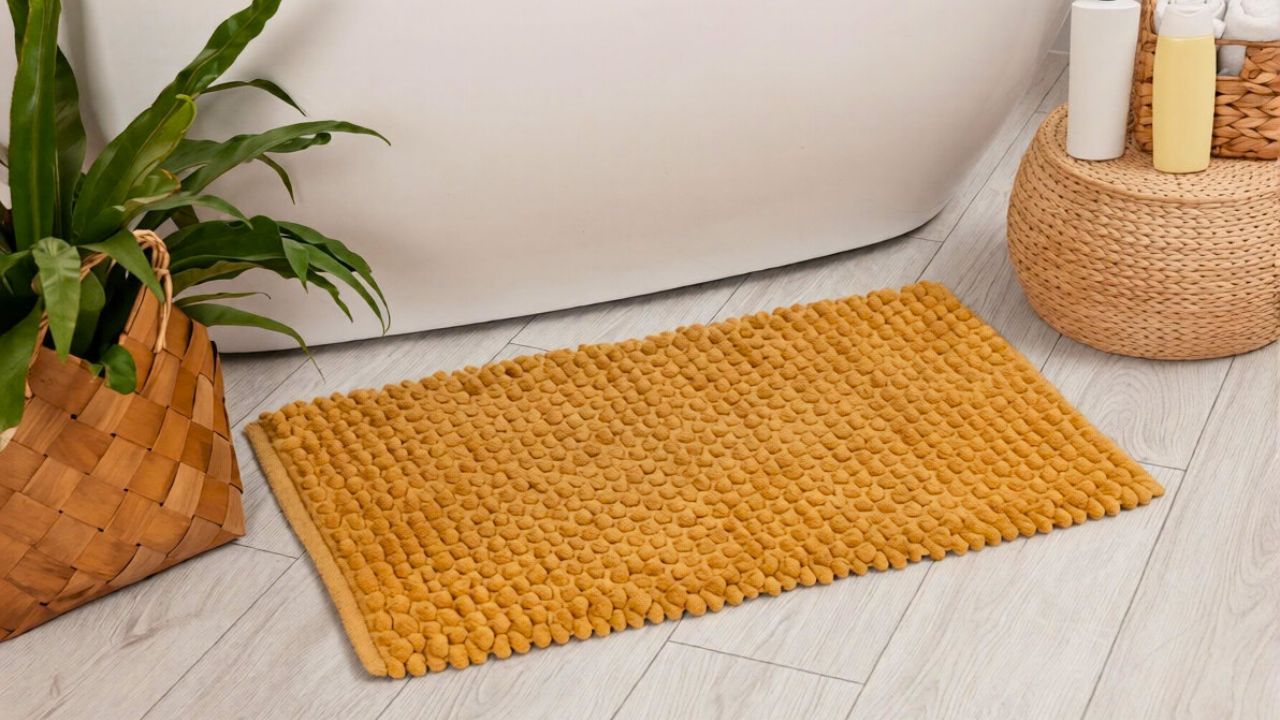
The softest mats often give you the biggest odor problems, because the same thickness that feels cushy also locks in moisture. Deep pile polyester and shaggy microfiber can trap water between thousands of tiny fibers, so the backing stays damp long after the surface feels dry to your toes. Testing of bath rugs has consistently highlighted how fluffy styles, including popular memory foam designs, tend to dry more slowly than leaner options, even when they are labeled as quick dry. Guides that compare materials point out that among fabric choices, thinner microfiber mats dry faster than plush rugs because Among fabric options you get better evaporation when fibers spread moisture over a larger surface area.
Memory foam creates its own set of issues. You sink into that cushion, which feels luxurious, but the foam core can behave like a sponge that never fully dries in the middle. Even antimicrobial versions, such as rugs that use HeiQ technology and promise both comfort and odor control, still rely on you to let them breathe between uses and to wash them regularly. Product descriptions for items like the Truly Calm memory foam bath rug emphasize antimicrobial safety, but that treatment is there to slow the growth of odor causing bacteria, not to compensate for a mat that never fully dries.
Rubber backed mats and suction cups that never get to breathe
Rubberized bath mats solve one problem and create another. You get non slip security, which matters on wet tile, but the solid backing or suction cup base can trap a thin film of water between the mat and the floor. That hidden moisture warms up with every shower and becomes an ideal zone for mildew. Customer guidance for products such as a Glacier Bay Bath Mat stresses that you need to wash and clean the mat regularly to avoid buildup, which is another way of saying the material will harbor residue if you leave it in place.
Even when brands add odor resistant claims, you still have to fight the basic physics of a sealed underside. Listings that highlight certifications such as an OEKO TEX Certification Number and describe a Bath Mat with a Rubber Back can reassure you that the textile itself has been tested for harmful substances, but they do not change how quickly water gets trapped under a non porous base. If you rarely lift or hang these mats, you give moisture nowhere to go, and odor follows.
Cheap “quick dry” claims that do not match real bathroom use
Retail search pages are full of buzzwords that promise a fresh smelling bathroom without effort. You see lists of features like Popular, Memory Foam, Antimicrobial, Machine Washable, Non slip, and Set Of 2 on quick dry product grids, which makes it hard to tell what actually dries fast and what simply markets itself well. When you look closer at options grouped under quick dry bath searches, you often find thick foam cores, dense microfibers, or rubber bases that still need long air circulation to release water.
Some newer mats try to solve this with layered construction that moves moisture away from the surface. A design like the Homergy Quick Dry Bath Mat, described in the Product Description as an upgrade that blends comfort and safety, uses a NAPA leather look top, a cushioned middle, and an absorbent base to keep the surface from feeling soggy. The listing for the Homergy Quick Dry Bath Mat highlights that structure as a way to stay absorbent and safe to use, but even then, you still need to wash and fully dry the mat on a schedule that matches how often your household showers.
Materials that actually resist odor, from stone to wood
If you are tired of fabric mats that never quite smell clean, you can shift to hard surfaces that handle water differently. Stone bath mats made from diatomaceous earth behave more like ceramic than cloth, pulling moisture into a porous structure and releasing it quickly. Product pages for items such as the Bath Stone Rain Slate explain that Our chic mat is Created with diatomaceous earth so it dries instantly under your feet and helps prevent mold, mildew, and bacteria from taking hold. When you look at the Bath Stone details, you see that instant drying is the core promise, which directly addresses the moisture trap problem.
Other diatomite designs echo that approach. A modular stone mat describes how Diatomite is a naturally porous mineral that absorbs water quickly, and a bathroom mat listing at a major retailer highlights that the surface is made from 100% PURE DIATOMACEOUS EARTH so the mat dries quickly between uses. You can see that language in the PURE DIATOMACEOUS EARTH description, which underlines how the mineral structure works to avoid the constant dampness that breeds odor.
Smarter fabric and hybrid choices when you still want softness
You might still prefer the feel of fabric under bare feet, and you can get that without inviting mildew if you choose the right construction. Among textile options, guidance from bathtub mat experts points out that microfiber styles tend to outperform plush mats because Their fine fibers spread moisture thinly and let it evaporate faster. Some rugs, such as a Leaintexbazh bath mat, even call out how the quick dry feature of The TPR rubber backing helps the mat avoid the mildew smell that cheaper bath mats often develop, which you can see in the The TPR description.
Hybrid mats that combine firm, non porous surfaces with thin cushioning also give you a middle ground. Products described as Non Slip, Quick Dry, Stain Resistant Bath Mat Rug for Bathroom Floor and Easy Care Shower Rug show how brands are trying to bring stone like behavior into textile form. A listing that summarizes a MontVoo Bath Mat in those terms positions it as a way to keep floors dry while staying simple to clean, which you see in the Product Summary. When you pair that kind of design with regular washing and full air drying, you give your bathroom a much better chance of staying free of that telltale damp rug smell.
Like Fix It Homestead’s content? Be sure to follow us.
Here’s more from us:
- I made Joanna Gaines’s Friendsgiving casserole and here is what I would keep
- Pump Shotguns That Jam the Moment You Actually Need Them
- The First 5 Things Guests Notice About Your Living Room at Christmas
- What Caliber Works Best for Groundhogs, Armadillos, and Other Digging Pests?
- Rifles worth keeping by the back door on any rural property
*This article was developed with AI-powered tools and has been carefully reviewed by our editors.