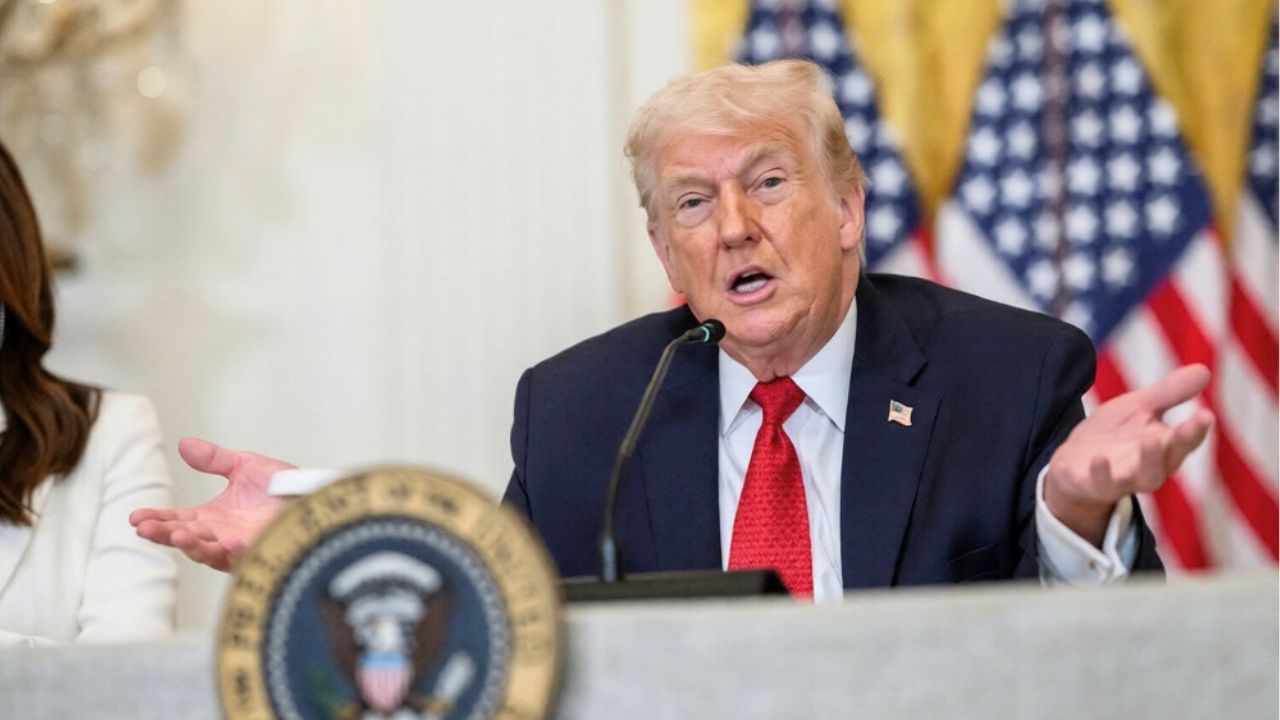
Trump says Iran war will end soon because there’s “practically nothing left” to target
U.S. President Donald Trump is telling Americans the war in Iran is nearing its end, arguing that intensive strikes have left “practically nothing left” to hit and that the conflict could wrap up “soon.” The claim caps a week of increasingly confident rhetoric from the White House, even as fighting continues and regional actors warn of a longer confrontation.
His language is designed to project control and victory, yet it also raises hard questions about civilian harm, the durability of Iran’s military and nuclear infrastructure, and whether Washington’s stated goals can really be met through air power alone.
Trump’s “nothing left” claim and the message to Axios
In an interview with Axios, Trump said the war with Iran could end “soon,” adding that there is “practically nothing left to target” after American and Israeli strikes on Iranian facilities and command nodes. According to accounts of that conversation, he framed the campaign as so successful that further large-scale bombing would have diminishing returns.
The comment fits a broader pattern in which he has highlighted the scale of damage inflicted on Iranian assets while insisting that U.S. forces can escalate further if needed. In public remarks amplified on social media, he has told reporters that the United States has already destroyed a large share of Iran’s critical sites and that the country could be taken out “in an instant” if Washington chose to do so.
The president’s confidence is paired with a simple narrative: Iran’s conventional and nuclear capabilities have been mauled, its leadership is under pressure, and the United States holds overwhelming leverage. That storyline is aimed at domestic audiences wary of a long Middle East war and at regional actors watching to see whether Washington intends a short, sharp campaign or a drawn-out confrontation.
Mixed timelines and shifting rhetoric
Trump’s Axios remarks are not the first time he has predicted a quick end to the fighting. In a briefing to Republicans on Capitol Hill, he said the Iran war may end “pretty quickly,” signaling to his own party that the operation would be limited in duration and scope. The briefing, described by accounts of what Trump told, was part of a broader effort to shore up political backing as the war entered its second week.
At the same time, Trump has sent less consistent signals in media interviews. In a phone call with CBS, he described the conflict as “very complete,” suggesting that the main phase of combat operations had already achieved its goals. Yet in other comments highlighted by coverage of how he has given mixed messages about, he has also emphasized that operations can continue if Iran or its allies escalate.
Earlier this month, Trump told supporters that his administration had originally “projected four to five weeks” for the conflict, but that the United States had the capability to go much longer if required. He paired that with a warning that Iranian missiles could have been capable of reaching U.S. soil “soon,” an argument he has used to justify the intensity of the opening strikes.
These shifting timeframes reflect the tension between military planning and political messaging. War planners may prepare for contingencies that stretch over months, while the president highlights best-case scenarios that promise a rapid conclusion.
What “practically nothing left” really signals
Trump’s assertion that there is almost nothing left to bomb is intended as proof of success, but it also hints at the limits of an air-focused campaign. If the most obvious military and nuclear targets in Iran have already been hit, the remaining options increasingly involve either repeat strikes on damaged facilities or attacks on dual-use infrastructure that carry higher risks for civilians.
Accounts of the Axios interview, cited in reports that Trump told the outlet the war could end soon and that there was “practically nothing left” to target, describe a president eager to show that American and Israeli strikes have already degraded Iran’s capabilities and nuclear program. That framing suggests Washington believes it has largely achieved the objective of blunting Iran’s most threatening systems.
Iranian officials, however, have signaled that they are prepared for a long confrontation. In coverage of Tehran’s response, Iranian leaders have warned of a potential “war of attrition” against the United States and its allies, arguing that dispersed missile units, proxy forces, and cyber capabilities give them tools to keep pressure on U.S. interests even after heavy damage to fixed sites.
The gap between Trump’s language and Iran’s posture points to a core uncertainty. Destroying visible infrastructure does not necessarily erase the networks, expertise, and political will that underpin Iran’s regional strategy and nuclear ambitions.
Economic and political incentives for optimism
Trump’s insistence that the war is “very complete” and nearing its end also plays into financial and political dynamics at home. Investors reacted positively when he signaled that the conflict might not drag on, with major indexes rebounding after his comments about the war’s completeness and the limited economic impact of the fighting. Coverage of how stocks rebound after highlighted how sensitive markets are to any suggestion that oil flows and shipping lanes in the region will remain secure.
Politically, promising a quick end helps Trump manage anxiety inside his own party. Some Republicans who supported initial strikes have been wary of an open-ended commitment, especially after long U.S. campaigns in Iraq and Afghanistan. By telling Republicans that the Iran war may end “pretty quickly,” Trump offers reassurance that he is not leading the country into another multi-year occupation.
At the same time, he has continued to stress his own toughness on Iran in ways that resonate with his base. He has repeatedly framed the conflict as a necessary response to Iranian missile development and regional aggression, pointing to assessments that Iran was working on intercontinental ballistic missiles capable of reaching U.S. territory by 2035. In a separate interview, he argued that Iranian missiles could have hit America “soon,” a claim that aligns with earlier warnings reported by analysts who track Iran’s ICBM development.
Iran’s capabilities and the risk of miscalculation
Trump’s portrayal of Iran as largely defanged sits uneasily with the country’s demonstrated ability to absorb punishment and still strike back through proxies. The conflict has already involved American and Israeli attacks on Iranian Revolutionary Guard units, missile storage sites, and elements of the nuclear program. Iranian-backed groups in Iraq, Syria, Lebanon, and Yemen have responded with rocket and drone attacks on U.S. and allied positions.
Analysts caution that declaring victory too early can invite miscalculation. If Tehran believes Washington is ready to move on, it may seek to demonstrate continued relevance through asymmetric attacks that fall below the threshold of triggering another large wave of U.S. strikes. Conversely, if U.S. planners assume Iran is too damaged to respond, they may underestimate the risk to American forces and regional partners.
Iran’s leadership has also tried to frame the conflict as a test of national resilience. Public funerals for Iranian military commanders killed in the strikes, described in coverage of how people attend ceremonies, have been used to rally support and portray the war as a defense of sovereignty against American and Israeli aggression.
Iran’s ability to regenerate military capacity is another open question. Even if key facilities have been destroyed, the country retains a large scientific and industrial base, as well as experience rebuilding after previous rounds of sanctions and sabotage. Trump’s suggestion that there is almost nothing left to hit may underestimate the speed with which Iran can disperse and reconstitute elements of its program.
Regional stakes and what comes next
Like Fix It Homestead’s content? Be sure to follow us.
Here’s more from us:
- I made Joanna Gaines’s Friendsgiving casserole and here is what I would keep
- Pump Shotguns That Jam the Moment You Actually Need Them
- The First 5 Things Guests Notice About Your Living Room at Christmas
- What Caliber Works Best for Groundhogs, Armadillos, and Other Digging Pests?
- Rifles worth keeping by the back door on any rural property
*This article was developed with AI-powered tools and has been carefully reviewed by our editors.