Water heater rules keep shifting and what that means for your next replacement
When your water heater fails, you usually have hours, not weeks, to make a replacement decision, yet the rules shaping what you are allowed to buy keep changing underneath you. Federal efficiency standards, tax credits, and even fuel-type restrictions are all shifting, and those policy moves are quietly rewriting the menu of water heaters available in the aisle. Understanding where those rules are headed now can help you avoid a panicked, expensive choice later and line up a replacement that fits both your budget and the new regulations.
Why water heater rules are changing so quickly
Water heaters sit at the intersection of climate policy, household budgets, and building codes, which is why they have become a prime target for new efficiency rules. The Department of Energy, often shortened to the The Department of Energy, is tightening standards as part of a broader push toward net zero emissions, and water heating is a relatively straightforward place to cut energy waste. For you, that means the familiar mix of gas and electric tanks is giving way to models that use less energy per gallon of hot water, even if the upfront price can be higher.
At the same time, federal tax policy is being used as a carrot to steer you toward more efficient equipment. Under a program summarized as “Homeowners Can Save Up to $3,200 on Taxes for Energy Efficient Upgrades,” you can offset part of the cost of qualifying water heaters and other improvements through credits on your federal return. Through this mix of stricter minimums and targeted incentives, regulators are trying to shift the market without forcing you to give up hot showers, but the result is a landscape that looks different every few years.
The next big federal rule and what it actually requires
The most consequential change on the horizon is a new federal rule that tightens efficiency requirements for residential water heaters later this decade. Under the section labeled “Starting in 2029, most newly manufactured water heaters will need to comply with stricter efficiency standards,” the Department of Energy, often referenced simply as DOE, is effectively pushing manufacturers to redesign common tank-style units. The rule does not rip existing heaters out of your basement, but it does change what new models can be made and sold once the compliance date hits.
For homeowners, the key takeaway from “The Basics of the New Rule” is that higher efficiency will be mandatory, not optional, for most standard sizes. Supporters argue that the rule will lower utility bills and benefit both homeowners and the planet over the life of the equipment, while critics warn that upfront prices could rise and that some households may rush to replace older units early to avoid potential price increases. You do not need to memorize the technical efficiency formulas, but you should recognize that the rule is designed to make today’s least efficient models disappear from the market.
Heat pump water heaters and “The Big Shift”
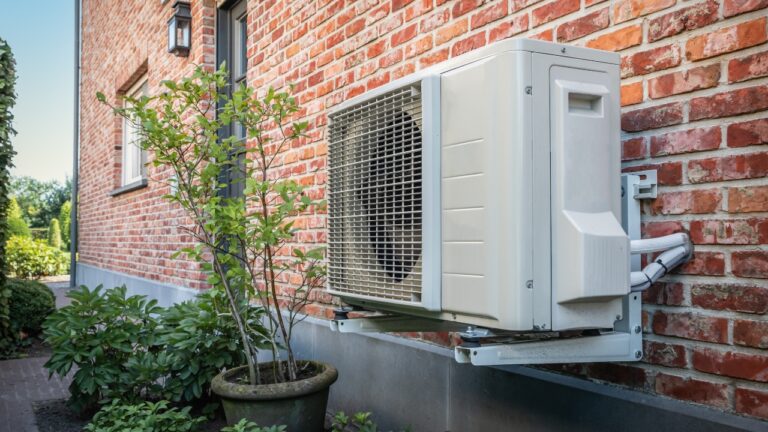
One of the clearest outcomes of these rules is what one industry explainer calls “The Big Shift: Heat Pump Water Heaters Become the New Standard for Larger Tanks.” If you currently have, or will need, an electric tank in the larger size range, your options will increasingly tilt toward heat pump technology rather than simple resistance coils. Heat pump water heaters move heat instead of generating it directly, which is why they can deliver the same hot water with far less electricity.
Manufacturers and training programs are already preparing for this pivot, and some commercial standards are following the same path. Under “Commercial Water Heater Regulatory Requirements,” Smith notes that certain commercial categories will require heat pump technology to meet the new minimums. For you, the practical implication is that if you are planning a replacement in the next few years, especially for an electric tank, you should expect heat pump models to dominate the higher capacity end of the aisle and to become the default recommendation from many installers.
Tax credits and rebates that can soften the sticker shock
Higher efficiency equipment often costs more upfront, which is why federal tax credits are a crucial part of the story for your next replacement. Under the program described as “Through December 31, 2025, federal income tax credits are available for certain energy efficient home improvements,” you can claim credits for qualifying water heaters, heat pumps, and other upgrades, up to a combined annual limit of $3,200. These credits reduce your tax liability rather than acting as a rebate at the register, so you see the benefit when you file your return.
Heat pump water heaters get special attention in the “Heat Pump Water Heater Tax Credits” section of a Federal Rebate Guide, which explains “What Is the $2,000 Federal Tax Credit for Heat” pump water heaters. That $2,000 figure is a ceiling for how much of your purchase and installation costs you can offset for a qualifying model in a single year. If you are comparing a basic electric tank to a heat pump unit, running the numbers with that credit included can flip the math in favor of the more efficient option, especially when you factor in lower monthly bills over time.
Gas, tankless, and the Biden-era restrictions
Gas-fired water heaters are also under pressure, particularly certain tankless designs that have been popular for their endless hot water and compact size. A widely discussed rule from the Biden administration, summarized under the headline “Biden bans natural gas-fired water heaters,” describes how, under the new ruling issued by outgoing President Joe Biden, new non-condensing gas tankless models that cannot meet the updated efficiency thresholds are effectively pushed off the market. Under the, President Joe Biden framed the move as part of a broader climate agenda, but for you it shows up as fewer low-efficiency gas options on store shelves.
Industry groups have warned that the Department of Energy’s latest rule could make tankless installs more complicated and expensive. One trade analysis notes that a new DOE rule will effectively require higher efficiency levels that many existing gas instantaneous models cannot meet, which some installers interpret as those products being effectively banned from the market. If you are committed to gas tankless, you will want to confirm that any model you are considering complies with the new standards and be prepared for more complex venting or condensate handling requirements.
How commercial and tankless standards spill into homes
Even if you are only shopping for a single-family home, the commercial side of the market can shape what is available and how much it costs. Under “New DOE Minimum Efficiency Standards,” the Department of Energy, often abbreviated as DOE, sets national minimum energy efficiency standards for commercial water heaters, including gas instantaneous (gas tankless) units. The document notes that for some very small gas tankless models under 2 gallon capacity there is no change, but larger categories face tighter requirements that can drive design changes and costs that eventually filter down to residential offerings.
Manufacturers like State and American are aligning their product lines with these rules, which can simplify service and parts but also reduce the variety of lower efficiency models. The same pattern appears in the The Department training materials, where commercial and residential standards are discussed side by side and heat pump technology is highlighted as a compliance path. For you, the practical effect is that even if a specific rule is labeled “commercial,” it can still influence which technologies are widely produced and supported, and therefore what your installer is most comfortable recommending.
Tax breaks for gas, oil, and propane units
While policy is nudging the market toward electric heat pumps, there are still incentives on the table if you stick with combustion-based equipment. A federal program for gas, oil, and propane water heaters explains that “This tax credit is effective for products purchased and installed between January 1, 2023, and December 31, 2025” and that you should Claim the credits using the IRS Form 5695. These credits are smaller than the headline $2,000 heat pump benefit, but they can still trim the net cost of a high efficiency gas or propane unit that meets the qualifying criteria.
In practice, that means you should not assume that choosing gas automatically disqualifies you from federal help. If you are replacing a failing atmospheric vent tank with a more efficient condensing model, for example, you may be able to pair the gas-specific credit with the broader “Taxes for Energy Efficient Upgrades” framework, as long as you stay within the annual dollar caps. The paperwork is not glamorous, but if you are spending several thousand dollars on a new heater and venting work, taking the time to document the model and installation date can pay off at tax time.
How to tell if you should replace now or later
With all these rules in flux, timing your replacement becomes a strategic decision rather than a purely reactive one. If your current unit is already near the end of its expected life, you may decide to replace it on your schedule instead of waiting for a catastrophic leak that forces a rushed choice under future, possibly stricter, standards. Guidance under the heading “How Long Do Water Heaters Last” explains that, based on the manufacturer’s suggested service life, the average life expectancy of a water heater is typically around a decade, and that repair-versus-replace decisions should factor in age, condition, and the overall cost.
Other plumbing experts narrow that range further for standard tanks. One advisory notes that Conventional tank water heaters last between 8–12 years, and that if yours is in this age range, it may be more cost effective to replace it with a newer, more efficient model that offers significant energy savings. If your heater is already in that window, you can weigh whether it makes sense to upgrade now while certain tax credits are still available through December 31, 2025, or to ride it out and accept that your eventual replacement will almost certainly be a higher efficiency, possibly heat pump, unit.
Reading the warning signs before it fails
Beyond age, your water heater often sends signals that it is nearing the end of its useful life, and catching those signs early can give you time to navigate the changing rules instead of scrambling. A service guide titled “Strange Noises If your water heater makes popping, cracking, or rumbling noises, it is telling you something is wrong” explains that sediment buildup, temperature swings, discolored water, or reduced hot water volume are all red flags. If you notice these symptoms, it is wise to schedule an inspection before the tank fails outright.
Those extra weeks or months can be invaluable as you sort through options that comply with the new Department of Energy rules and qualify for available credits. Instead of grabbing the only model your local supplier has in stock, you can compare heat pump versus high efficiency gas, check whether a tankless unit will be affected by the latest New Standards for Tankless Water Heaters Set to Cut Utility Bills and Climate Pollution, and confirm that your electrical panel or gas line can support the upgrade. In a regulatory environment that keeps shifting, the best advantage you can give yourself is time to plan, rather than letting a flooded basement make the decision for you.
Like Fix It Homestead’s content? Be sure to follow us.
Here’s more from us:
- I made Joanna Gaines’s Friendsgiving casserole and here is what I would keep
- Pump Shotguns That Jam the Moment You Actually Need Them
- The First 5 Things Guests Notice About Your Living Room at Christmas
- What Caliber Works Best for Groundhogs, Armadillos, and Other Digging Pests?
- Rifles worth keeping by the back door on any rural property
*This article was developed with AI-powered tools and has been carefully reviewed by our editors.