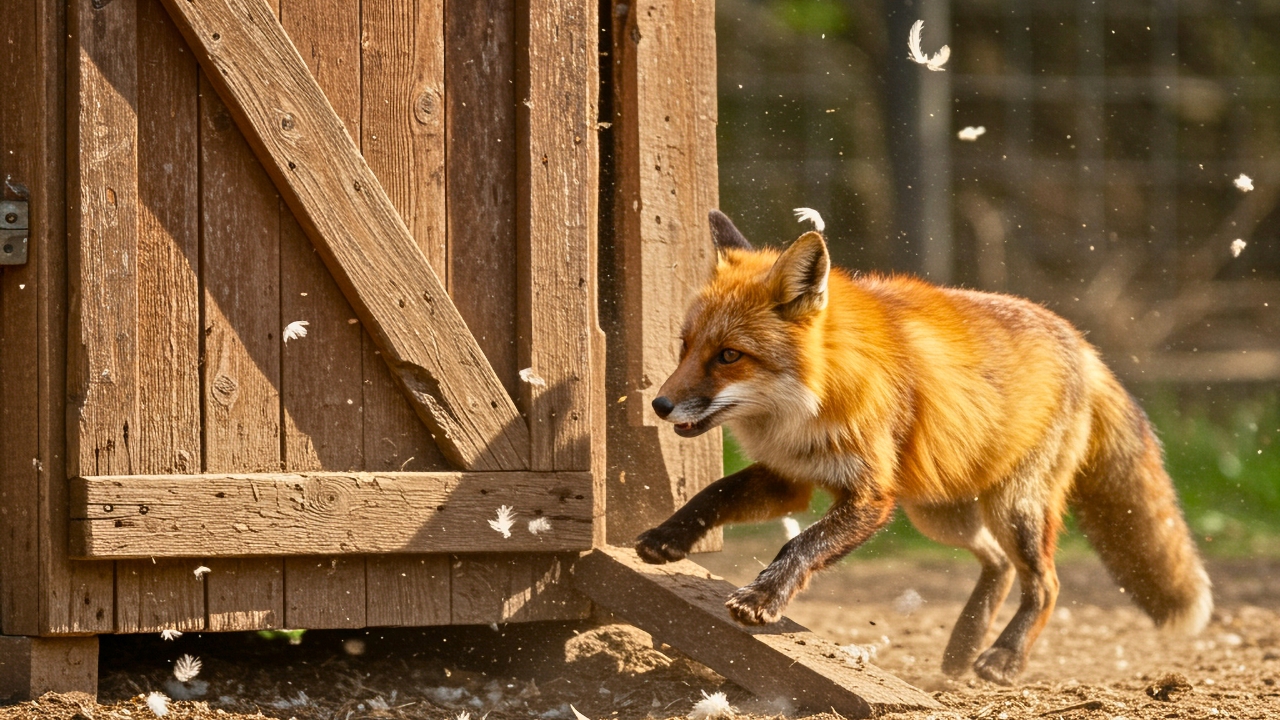
What Caliber Makes the Most Sense for Foxes, Bobcats, and Other Chicken Killers?
If something’s sneaking into the coop at night, you don’t have the luxury of guessing. You need a caliber that will actually put down a fox or bobcat cleanly, without sending bullets sailing through the neighbor’s pasture or tearing everything up around it. The good news is you don’t need a huge rifle to deal with “chicken killers,” but you do need to be picky about what you’re shooting and how far you’re shooting it.
Before you grab whatever’s in the safe, it’s worth thinking through range, terrain, and how close those barns, roads, and fence lines really are. A few calibers consistently rise to the top for small predators—and some are a lot more practical for a homestead than others.
Start with your laws, backdrop, and typical shot distance
Before caliber even comes into the conversation, check local regulations on night hunting, predators, and minimum calibers. Many states treat foxes and bobcats as furbearers or game animals, and the rules change fast.
Then be honest about where you’ll actually be shooting. Are you taking 40–70 yard shots behind the barn or 200-yard shots across an open pasture? A small, fast centerfire may be perfect in open country but too much in a tight backyard with houses nearby. Your backdrop, not just the animal, should drive what you pick.
Why rimfires are marginal for foxes and bobcats
A .22 LR will absolutely kill a fox or bobcat with perfect shot placement, but it doesn’t give you much margin for error. The slower speed and lighter energy mean more wounded animals if your angle isn’t ideal or the animal moves at the last second.
On top of that, rimfire bullets are more likely to deflect off bone or brush. Most experienced predator hunters step up to a small centerfire so they get flatter trajectory and cleaner kills, especially as ranges stretch past 50–75 yards.
.223 Remington: the practical starting point
For a lot of small predator work, .223 Remington is the sweet spot. It’s cheap, easy to find, has light recoil, and works well in both bolt guns and AR platforms. Loaded with a good varmint bullet, it hits foxes and bobcats plenty hard out to typical homestead distances.
The key is ammo choice. Skip bulk FMJ and look for varmint loads designed to expand quickly and dump energy, not just poke through. That helps you anchor animals fast and reduces the risk of overpenetration compared to heavier big-game bullets.
.22-250 Remington when you’ve got real distance
If your “yard” is 40 acres of pasture and your shots might be 200+ yards, the .22-250 Remington is worth a hard look. It pushes light .224 bullets very fast, with a flat trajectory and excellent accuracy, which is why it’s been a classic predator cartridge for decades.
The tradeoff is more muzzle blast and the potential for pelt damage if you’re keeping hides. With the right frangible varmint bullets and careful shot placement, that can be managed, but this is more of an open-country, “see them far and hit them hard” round than a backyard option.
When a .243 Winchester makes sense
If you’re also dealing with coyotes or want a rifle that can double for deer, a .243 Winchester starts to make more sense. With lighter varmint bullets, it’s extremely effective on foxes and bobcats and stays accurate out past 300 yards.
The downside is recoil and overkill on small predators, especially at close range. A .243 is not what you grab for a 40-yard shot toward a neighbor’s pasture. But if you’re in big, open country and like the idea of one rifle doing several jobs, it’s a strong crossover choice.
“Fur-friendly” options: .22 Hornet and .17-caliber rounds
If you care about pelts and shoot at closer ranges, the smaller, older rounds still earn their keep. The .22 Hornet and .17 Hornet are both fast, relatively quiet, and designed around small game and predators. Hunters like them because they hit harder than rimfire but don’t blow apart a fox the way a big deer round can.
They shine inside about 150 yards with careful shot placement. Ammo can be pricier and harder to find locally, so they’re better for someone who’s already deep into predator hunting than a new homesteader buying their first rifle.
Matching the caliber to your actual problem
If your “chicken killers” are mostly foxes slipping the fence at 60 yards, a .223 with good varmint loads is usually plenty. If you’ve got bigger country and want more reach for bobcats and coyotes, .22-250 or a carefully loaded .243 can step in.
Whatever you pick, the priorities are the same: legal, safe for your backdrop, and capable of a fast, ethical kill. The right caliber helps, but it doesn’t replace knowing your land, your rifle, and your limits.
Like Fix It Homestead’s content? Be sure to follow us.
- I made Joanna Gaines’s Friendsgiving casserole and here is what I would keep
- Pump Shotguns That Jam the Moment You Actually Need Them
- The First 5 Things Guests Notice About Your Living Room at Christmas
- What Caliber Works Best for Groundhogs, Armadillos, and Other Digging Pests?
- Rifles worth keeping by the back door on any rural property
*This article was developed with AI-powered tools and has been carefully reviewed by our editors.