What helped when my raised beds kept drying out faster than the rest of the yard
Gardeners who shift from in-ground rows to raised beds often discover an unwelcome surprise: the boxes that were meant to be easier to manage can dry out far faster than the rest of the yard. The problem is not imagination or poor watering habits; it is baked into how these structures expose soil to air, sun, and wind. Once beds start to behave like oversized containers, the solution has to begin with structure and water management, not just another pass with the hose.
Experience from home growers and extension researchers points to a consistent pattern. Raised beds reward good soil preparation and smart irrigation, but they punish shallow soil, thin mulch, and sporadic watering. The fixes that work best are not glamorous, yet they are repeatable: more organic matter, deeper profiles, shade at the right time of day, and watering that reaches roots instead of crusting the surface.
Why raised beds dry out so quickly
Extension specialists describe raised beds as a useful technique for improving soil structure and drainage, but they also warn that these structures dry out more quickly than surrounding ground. Because the soil is elevated, gravity pulls water away from roots and out the sides, while wind strips moisture from the exposed surface and frame.
Together, those forces turn a sunny raised bed into something closer to a giant pot. The same guidance that applies to containers suddenly matters at garden scale: more soil volume means slower drying, and organic matter becomes the main tool for holding water between irrigations. When gardeners ignore that physics, they end up watering twice and still finding dust under the mulch.
Community conversations echo this. In one discussion, a gardener identified only as Jun asked, “How do you keep your raised beds from drying out?” and described watering twice yet finding the beds “always dry.” Others in that thread pointed out that raised beds, by design, sit higher than the surrounding yard and therefore lose moisture faster than in-ground plots, a point that matches the extension research.
Depth, size, and placement matter
One of the simplest structural changes is to go deeper. Advice shared with Jun stressed that a shallow box filled with light mix will behave like a window planter, while a deeper bed with true garden soil will stay moist longer. A related Facebook reply noted that the elevation of a raised bed changes how water drains, especially when the frame is narrow and the soil is light.
Guidance from the same extension source notes that beds should be where water access is easy and light is appropriate for the crops. That detail matters for moisture. A bed that bakes in full sun from dawn to dusk will lose water far faster than one that gets strong morning light and partial afternoon shade, even if both receive the same irrigation schedule.
Another gardener in the Jun thread, identified through the snippet as Tielke Baker, responded “Yes and no” when asked if shade alone solves the problem, and went on to describe a situation where the yard did not get much sun. The exchange underlined a subtle point: too little light can stunt plants even if soil stays damp, so the goal is not simply to hide beds from the sun but to balance exposure with water retention strategies.
Building soil that holds water instead of repelling it
Dry raised beds are often suffering from more than evaporation. In hot spells, growers in another group reported that their soil turned hydrophobic, meaning water beaded on top instead of soaking in. One gardener blamed heat for killing beneficial bacteria and described how compost and mulch helped restore the soil ecosystem and bring moisture back into the profile.
Soil specialists consistently recommend organic matter as the first line of defense. Guidance on how to amend garden soil before planting emphasizes topping off beds with compost and fine mulch instead of relying only on fresh potting mix. That approach increases the soil’s capacity to absorb and retain water while also feeding microbes that keep the structure loose.
Another gardener wrestling with dry soil asked how to make it “not so dry” and mentioned mowing grass near an Oriental Bittersweet infestation. Responses in that thread pointed toward compost and organic mulches as tools to improve the soil ecosystem, a reminder that water problems often track with depleted biology rather than just heat.
Where beds are already established, a separate conversation about how to amend soil for water retention recommended surface applications of Mulch even if it breaks down slowly. Contributors argued that the benefit of Mulch for moisture and soil life outweighs short term nutrient tie-up, especially when the alternative is crusted, lifeless topsoil.
Mulch, mulch, then mulch again
Mulch is the simplest fix that many gardeners skip. A practical guide on how to Keep My Raised framed mulch as the first strategy, not an afterthought. A layer of straw, shredded leaves, or composted bark insulates the soil surface, slows evaporation, and buffers temperature swings that can stress roots.
Nursery advice on how to retain moisture in garden beds reinforces that point. Experts there highlight that more soil takes longer to dry, and they pair that with a call to add organic material like compost and mulch at the base of plants. The combination of depth and cover keeps the root zone damp longer than bare soil ever could.
Gardeners who revived hydrophobic beds with compost and mulch also reported better infiltration after rain. Instead of water skimming off the surface, it sank into the top few inches and then moved more slowly through the profile, which reduced the need for daily watering during heat waves.
Smarter watering, not just more water
Overwatering shallowly is one of the hidden reasons raised beds still look dry even when the gardener is diligent. Extension guidance on watering vegetable beds stresses slow, deep irrigation that soaks the root zone, rather than frequent light passes that wet only the top crust. That advice applies even more strongly to raised structures that are already prone to fast drainage.
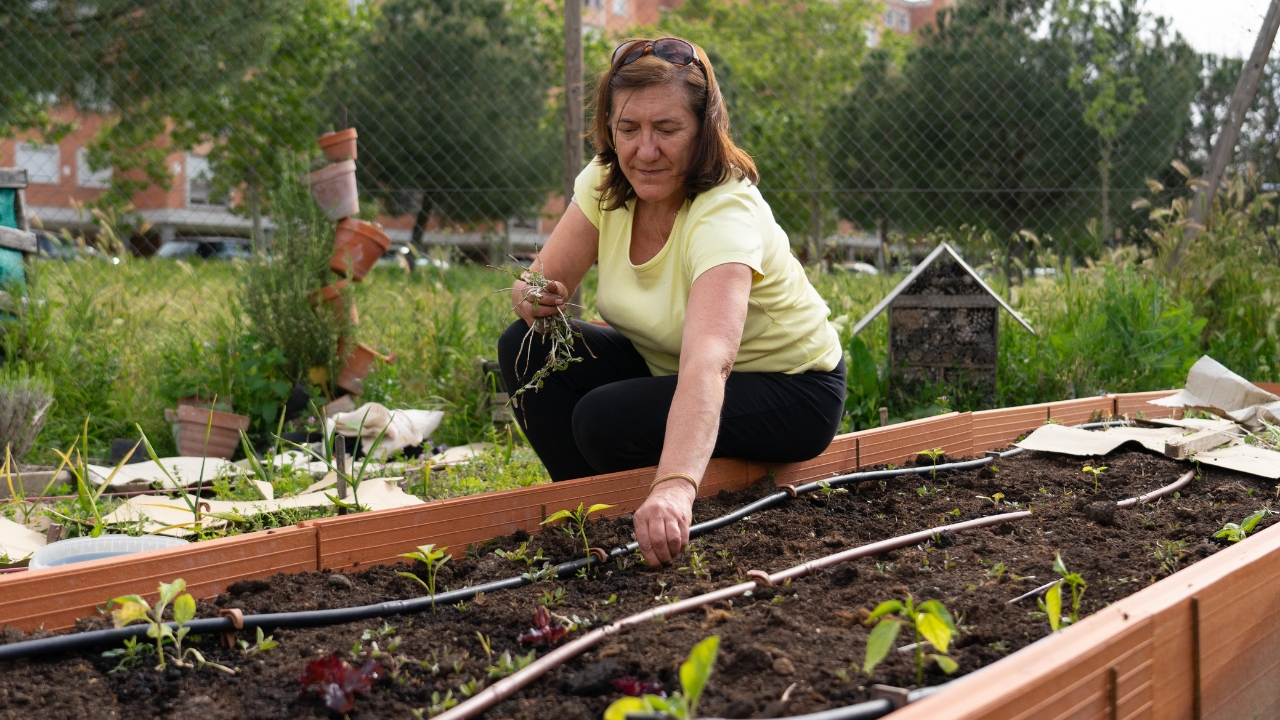
One video guide on drip irrigation for raised beds described the system as a “game changer” that saves water and time while keeping plants thriving with accurate coverage. The principle is straightforward: emitters deliver small amounts of water directly to the soil at the base of each plant, which reduces evaporation and runoff from exposed paths.
Another short demonstration on the right way to irrigate a raised bed showed a system where little appears to be happening at the surface, yet the soil below stays evenly moist. The creator contrasted this with overhead sprinklers that wet foliage and mulch but leave deeper layers inconsistent.
For gardeners who travel, a separate discussion on how to keep raised beds watered while away suggested using a timer on irrigation and asking a neighbor or dog sitter to check the system. Contributors warned against planting new starts right before a trip, since young roots need daily water and are more likely to suffer in a raised bed that dries quickly.
Shading and protecting the soil surface
Sun exposure is not just about plant photosynthesis. In one Facebook thread, a gardener asked What is the best way to retain moisture in raised garden beds in full sun and described beds in constant exposure. Responses pointed toward heavier mulch, drip lines, and in some cases temporary shade cloth during peak heat to keep plants healthy during hot weather.
Another contributor in the discussion with Jun, captured in the snippet as How, hinted that location and exposure can be as important as watering frequency. Beds that sit in a wind tunnel or against a reflective surface like a fence or wall can lose moisture more quickly than those protected by shrubs or structures, even if both receive the same irrigation.
When structural changes are worth the effort
Like Fix It Homestead’s content? Be sure to follow us.
Here’s more from us:
- I made Joanna Gaines’s Friendsgiving casserole and here is what I would keep
- Pump Shotguns That Jam the Moment You Actually Need Them
- The First 5 Things Guests Notice About Your Living Room at Christmas
- What Caliber Works Best for Groundhogs, Armadillos, and Other Digging Pests?
- Rifles worth keeping by the back door on any rural property
*This article was developed with AI-powered tools and has been carefully reviewed by our editors.