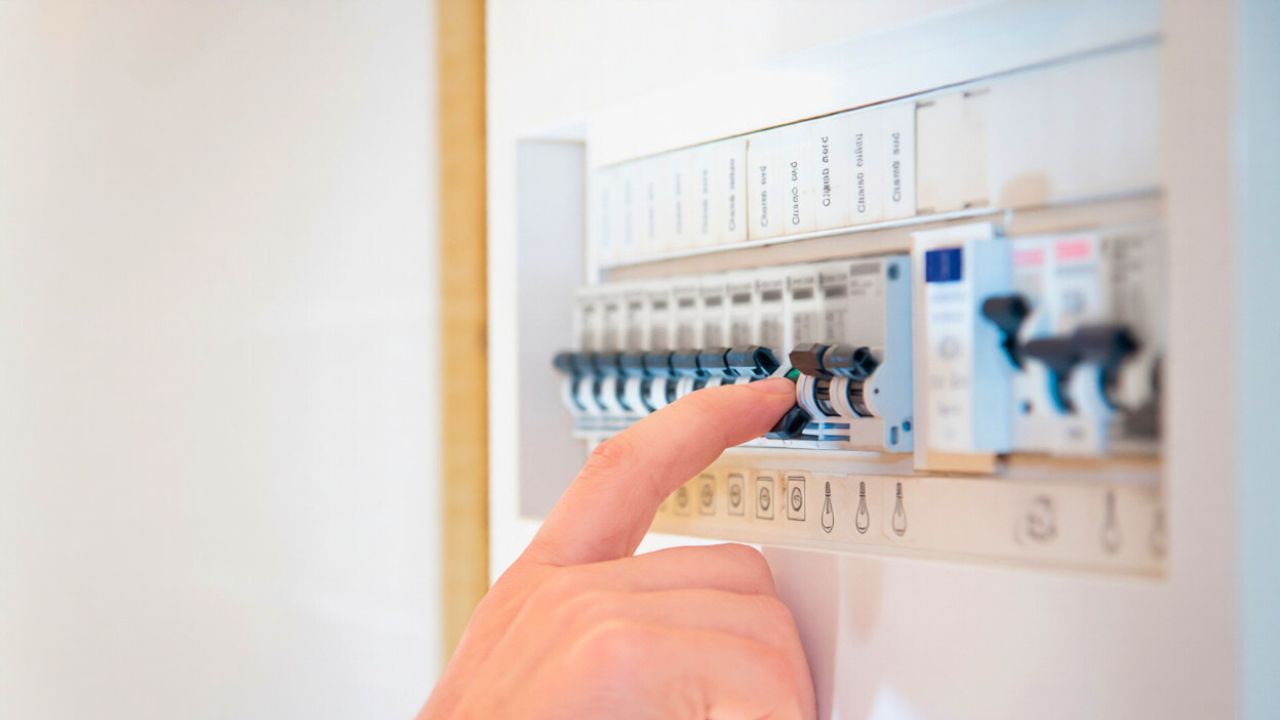
What homeowners get wrong about breaker capacity
Every time a breaker trips, it is quietly telling you something about the limits of your wiring, yet most homeowners misread that signal. Instead of seeing a protective device doing its job, you might assume the breaker is weak, the panel is undersized, or that you can simply swap in a larger switch and move on. That misunderstanding of breaker capacity is what turns a routine nuisance into a serious fire risk.
If you understand how much current a breaker is actually designed to carry, how long it can safely carry it, and how that relates to the wiring and the panel, you can make smarter decisions about new appliances, renovations, and DIY projects. The goal is not to turn you into an electrician, but to give you enough clarity to stop guessing at capacity and start respecting it.
Why breaker capacity is not the number on the handle
When you look at a breaker labeled 15 or 20 amps, it is tempting to treat that number as a hard line you can run right up to. In reality, that rating is the maximum under test conditions, not the everyday target. Standard residential breakers are designed to protect wiring and equipment, and they are calibrated to trip before conductors overheat, not to serve as a convenient upper limit for plugging in every device you own. That is why you can have a bedroom with four LED lamps, a television, and a computer on one circuit and still be within limits, yet a space heater or hair dryer can suddenly push things over the edge once you add up the total load on that same branch.
Professional guidance treats the breaker rating as a ceiling that you should stay comfortably below for continuous use. In one explanation of bedroom loads, a scenario with four LED bulbs, a TV, and a computer is used to show how quickly everyday electronics add up on a single circuit, even before you consider higher draw appliances that might share that line, which is why you are urged to calculate the total wattage on a circuit rather than trusting that a 15 or 20 amp label means unlimited headroom for more outlets or devices on that run of wire.
The 80% rule that trips up homeowners
One of the most persistent myths is that a breaker is supposed to carry its full rating indefinitely, so if a 20 amp breaker trips at 16 amps you assume something is wrong. The reality is that standard breakers are not meant to run at 100 percent of their rating for hours at a time. In a widely shared discussion, Other commenters point out that nobody says a breaker cannot physically hold 80%, the code simply says not to load a circuit breaker more than 80,%. That shorthand reflects a deeper rule about continuous loads, the kind that run for three hours or more without a break.
Manufacturers describe the same idea more formally. One technical FAQ explains that an 80% (standard rated) breaker can only be applied continuously at 80% of its continuous current rating, so a 100 amp device is intended to carry 80 amps for long periods, not the full 100. That guidance, which references the NEC, is why electricians size circuits so that base loads like lighting, furnaces, or EV chargers sit below that 80% threshold. If you treat the handle number as a comfortable everyday target instead of a maximum, you are already overloading the system in a way the code is trying to prevent.
Why “just a bigger breaker” is the wrong fix
When a breaker trips repeatedly, your first instinct might be to assume the breaker is weak or defective. That leads to a dangerous shortcut: replacing it with a larger size so it will stop tripping. Professional electricians warn that when the breaker is tripping, it is almost never a good idea to replace it with a larger one, because doing so increases the risk that the wiring or the receptacle will overheat before the breaker responds. As one safety explainer puts it, When the breaker is doing its job, the problem is usually the load or the circuit, not the device itself.
The reason is simple physics. Breakers are designed to match the capacity of the wiring in a circuit, not your patience. A 15 amp breaker pairs with 14 AWG copper conductors, and a 20 amp breaker is intended for 12 AWG. If you swap a 15 for a 20 on the same 14 AWG run, you are now allowing more current than that wire is rated to carry, which can lead to melted insulation and fire hazards long before the breaker trips. That is why one guide titled Why Amp Ratings stresses that Breakers must be matched to the AWG size of the conductors, and any change in breaker size should be treated as a wiring project, not a quick panel swap.
Panel ratings, subpanels, and the “too many amps” illusion
Another common misunderstanding is the idea that the sum of all the breaker ratings in your panel must not exceed the main breaker rating. Homeowners sometimes add up every 15, 20, and 30 amp handle and panic when the total dwarfs a 100 or 200 amp main. In reality, Quite often the total on the breakers will exceed the main breaker, because you do not use all the power at the same time. One detailed answer on a DIY forum explains that You might only be using a fraction of the theoretical maximum at any given moment, which is why panels are designed with diversity in mind rather than assuming every circuit is fully loaded simultaneously.
The same confusion shows up when you add a subpanel. Jul guidance for homeowners notes that Many people get confused by the numbers and think that Just because you have a 200 amp main panel you cannot install a 200 amp subpanel. In fact, a 200 amp rated panel can be used as a subpanel on a feeder protected by a smaller breaker, as long as the load calculation calls for that and the feeder conductors are sized correctly. One explainer on subpanels spells out that a 200 amp rated panel does not mean you are actually delivering 200 amps to that location, only that the equipment is capable of handling that current if the upstream protection and wiring are designed for it.
How code actually sizes breakers and loads
Behind the simple numbers on your breakers is a set of rules that treat different types of loads differently. The code distinguishes between continuous loads, which run for three hours or more, and non continuous loads, which cycle on and off or run briefly. Technical guidance summarizing the nec says we should size the circuit breaker at 100% of the non continuous loads and 125% of the continuous loads, so we have to account for that extra margin when we design a feeder or main. In one example, that approach leads to a frame circuit breaker set at 900 amps to handle a mix of loads, illustrating how the 100% and 125% factors are applied in practice.
For you as a homeowner, the takeaway is that a circuit serving baseboard heaters or a tankless water heater is treated very differently from one serving a bathroom outlet that only sees a hair dryer for a few minutes. When an electrician calculates whether your panel can support a new EV charger or induction range, they are not just adding up nameplate ratings, they are applying those 100% and 125% factors to see how much current might realistically flow at once. That is why a professional load calculation can show that your existing service is adequate even when the raw sum of breaker handles looks alarming, and why a document on 100% and 125% sizing is central to how professionals think about capacity.
Short circuits, breaking capacity, and why trips matter
Most homeowners focus on how many amps a breaker can carry, but an equally important rating is how much fault current it can interrupt safely. In large utility systems, using a circuit breaker with insufficient capacity can cause catastrophic failures or fires, because the device may not be able to open under the enormous magnetic and thermal forces of a short circuit. A technical guide on Icu, Ics, and Icw explains that this breaking capacity is a separate specification from the continuous current rating, and it is chosen based on the available fault current at that point in the system.
In a typical house, you do not calculate Icu or Ics yourself, but you do rely on the fact that your panel and breakers were selected to match the utility transformer and service conductors feeding your home. That is why swapping in off brand or mismatched breakers is more than a cosmetic issue. One discussion of panel compatibility notes that a contributor wrote, Oh I KNOW that Schneider has tested and classified the HomeLine breakers in competitor’s panels, and that testing is what allows certain breakers to be listed for use in specific enclosures. If you ignore those listings and install devices that were never evaluated together, you are gambling with both the continuous capacity and the fault interrupting performance of your system.
DIY panel work and the hidden capacity traps
Homeowners who are comfortable with basic wiring often underestimate how easy it is to create subtle hazards inside a panel. A popular video by Jul walks through common breaker panel mistakes DIYers unknowingly make, from double lugging neutrals to misusing tandem breakers in slots that are not designed for them. Those errors can leave you with circuits that appear to work but violate listing requirements, reduce the effective capacity of the bus, or create loose connections that overheat under load. The fact that This content is not always available does not change the underlying point, which is that panel work is less forgiving than swapping a light fixture.
Even if you never touch the breakers themselves, you can still run into capacity issues when you add new appliances. Next, you are supposed to check how many open spaces remain for additional circuit breakers, and Some panels have empty slots that can accept new circuits while others are already at their designed limit. A homeowner guide on electrical limits warns that certain situations make panel upgrades unavoidable, because cramming more circuits into a crowded box creates code violations and hazards. That is why a professional will look at both the physical space in the panel and the calculated load before agreeing to add another 240 volt breaker for a sauna, hot tub, or EV charger.
Reading the signs that your system is at its limit
Your breakers and wiring give you clues long before a failure, if you know what to watch for. One often misunderstood aspect of home electricity is what to do when breakers trip, and One safety focused guide explains that a trip is a protective response to an overload or fault, not an inconvenience to be reset mindlessly. Here, the advice is to unplug devices, identify patterns, and only then reset the breaker, rather than repeatedly forcing it back on while the underlying problem persists. If a particular circuit trips whenever you run the microwave and toaster together, that is a sign the load is too high for that branch, not that the breaker is weak.
Other warning signs are more subtle. For example, your electrical breaker might lack space for additional breakers, and you might run out of electrical outlets in rooms that now host far more electronics than they did when the house was built. A guide on older wiring notes that an electrician may recommend upgrading your panel or wiring when the existing system cannot meet your current needs for electricity without resorting to extension cords and power strips. If you find yourself daisy chaining surge protectors or relying on plug in heaters in multiple rooms, you are likely brushing up against the original design capacity of your home, and it is time to think about a more permanent solution.
Practical steps to stay within safe limits
Like Fix It Homestead’s content? Be sure to follow us.
Here’s more from us:
- I made Joanna Gaines’s Friendsgiving casserole and here is what I would keep
- Pump Shotguns That Jam the Moment You Actually Need Them
- The First 5 Things Guests Notice About Your Living Room at Christmas
- What Caliber Works Best for Groundhogs, Armadillos, and Other Digging Pests?
- Rifles worth keeping by the back door on any rural property
*This article was developed with AI-powered tools and has been carefully reviewed by our editors.